South Korea’s main opposition party launched sharp criticism against President Lee Jae-myung on Sunday for what it characterized as a “complacent” assessment of transboundary air pollution risks, as high levels of fine dust and yellow sand swept across much of the country less than two weeks after he stated that concerns over pollution from China had largely eased. The timing of the severe pollution episode has intensified political tensions surrounding an environmental issue that has periodically strained relations between Seoul and Beijing for more than a decade.
Seoul has long attributed a significant share of its hazardous fine dust episodes to pollution drifting in from China, a claim Beijing has disputed at times, making cross-border air quality a recurring and politically sensitive issue that has become increasingly enmeshed with broader geopolitical considerations between the neighbors. The environmental dispute intersects with historical grievances, economic competition, and national security concerns, transforming what might otherwise be a purely technical environmental cooperation challenge into a highly charged political flashpoint.
Build the future you deserve. Get started with our top-tier Online courses: ACCA, HESI A2, ATI TEAS 7, HESI EXIT, NCLEX-RN, NCLEX-PN, and Financial Literacy. Let Serrari Ed guide your path to success. Enroll today.
Opposition Condemns Presidential Remarks Amid Pollution Crisis
The People Power Party (PPP) stated that nationwide alerts for hazardous air quality directly undermined Lee’s comments made during a state visit to China in early January, when he asserted that the problem of Chinese-origin fine dust had “largely been resolved” and described the situation as showing “tremendous progress.” The president’s optimistic characterization drew immediate controversy given South Korea’s persistent struggles with seasonal air pollution episodes that regularly disrupt daily life and public health.
“The president’s perception runs counter to the reality citizens are experiencing,” Choi Bo-yoon, the party’s senior spokesperson, said in a statement on Sunday. “Barely 10 days after those remarks, fine dust and yellow sand from China have once again covered the Korean Peninsula, with air quality reaching the worst levels in many regions.”
During his China visit, President Lee had defended China vigorously on the fine dust issue, arguing that Koreans had reacted emotionally while praising China for what he described as its rapid transition to renewable energy, which he claimed would help reduce the problem. His comments sparked immediate backlash from opposition politicians and environmental advocates who questioned whether the president was prioritizing diplomatic relations with Beijing over accurate assessment of ongoing environmental threats to Korean citizens.
Severe Pollution Episode Grips Western Regions
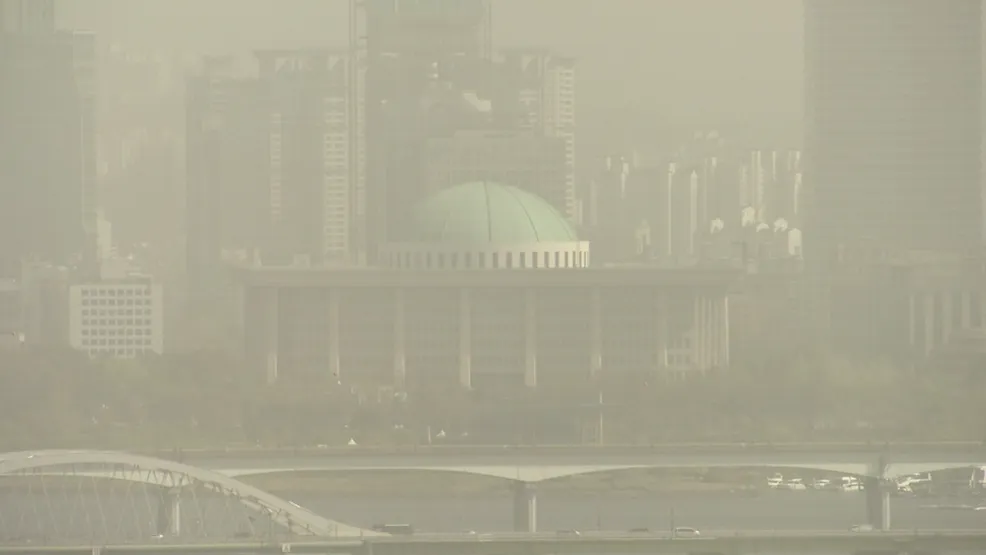
According to Air Korea under the country’s climate ministry, fine particulate matter, or PM2.5, levels in Seoul and much of the country’s western regions, including the capital area and Chungcheong provinces, stood at “bad” levels of 36–75 micrograms per cubic metre last Thursday. These concentrations significantly exceed World Health Organization guidelines and represent air quality conditions associated with measurable health impacts across exposed populations.
In parts of Daejeon, South Chungcheong and North Jeolla provinces, PM2.5 concentrations surged to “very bad” levels of 76 micrograms per cubic metre or higher, prompting the year’s first fine dust advisories in some areas. South Chungcheong province activated a 24-hour pre-emptive pollution reduction measure, which requires public institutions to take steps to curb emissions ahead of a potential emergency order that could restrict vehicle use and industrial activities.
Authorities indicated that the pollution was driven by an inflow of fine dust from China carried on relatively warm southwesterly winds, followed by northwesterly air currents bringing additional dust and sand from desert regions. The meteorological conditions created a perfect storm for pollution accumulation, with warm air masses preventing vertical dispersion of pollutants while wind patterns continuously transported additional particulates from continental sources.
The National Institute of Environmental Research forecasted that high pollution levels would persist through Sunday, with atmospheric stagnation allowing both foreign and domestically generated particles to accumulate across most regions except the eastern Gangwon area. The institute also confirmed that yellow sand originated in the Gobi Desert and Inner Mongolia earlier in the week and would pass over South Korea through Sunday morning, compounding the pollution crisis.
Devastating Health Implications of PM2.5 Exposure
Recent research underscores the gravity of particulate matter exposure as a public health threat. Studies indicate that PM2.5 exposure has been a major contributor to mortality across Asia over recent decades, with research from Nanyang Technological University finding that between 1980 and 2020, fine particulate matter was linked to approximately 135 million premature deaths worldwide. Asia had the highest number of early deaths caused by PM2.5 pollution, totalling a staggering 98.1 million deaths over this four-decade period.
Global health research published in The Lancet Planetary Health found that approximately 1 million premature deaths per year from 2000 to 2019 were attributable to short-term PM2.5 exposure alone, representing 2.08 percent of total global deaths or 17 premature deaths per 100,000 population. More than a fifth of deaths attributed to short-term PM2.5 exposure worldwide occurred in cities, with the mortality burden highest in crowded, highly polluted areas in eastern Asia, southern Asia, and western Africa.
The health effects of PM2.5 exposure extend far beyond respiratory impacts. Research documents links to cardiovascular disease, stroke, lung cancer, chronic obstructive pulmonary disease, lower respiratory infections, type 2 diabetes, dementia, and adverse birth outcomes. The State of Global Air 2025 report indicates that in 2023, PM2.5 pollution contributed to 4.9 million deaths worldwide, with deaths from PM2.5 exposure increasing by about 24 percent from 2013 to 2023 despite slight overall decline in PM2.5 exposures globally.
PPP’s Choi emphasized the severity of the current episode, noting that in some areas visibility had dropped to as little as 50 metres, making it difficult for people to breathe comfortably outdoors. “Fine dust is not a temporary inconvenience. It is a disaster that directly threatens public health and daily life,” she stated, calling for more aggressive government action to address both domestic sources and transboundary pollution.
Complex Science of Cross-Border Pollution Attribution
The question of how much of South Korea’s air pollution originates from China versus domestic sources has been subject to extensive scientific investigation and considerable political controversy. In 2019, a joint scientific report released by the governments of China, Korea, and Japan indicated that China was responsible for 32 percent of fine dust pollution in Korea. Despite this finding, no binding agreement and policy commitment on cross-border air pollution has been agreed upon among the three nations.
Research published in multiple academic journals suggests that China causes 30 to 50 percent of the PM2.5 in South Korea on days of average air quality, but 60 to 80 percent on days with the worst air quality. China is particularly blamed when slow air currents in colder months create smog-like conditions that trap both locally generated and transported pollutants in Korean airsheds.
However, many environmental scientists emphasize that Korea’s heavy reliance on coal-fired power plants and diesel fuel consumption represents a major part of the problem that can be addressed through domestic policy action. Fine dust particles from China together with domestic air pollutants contribute to the surge in concentration of pollutants in Korean air, with the relative contributions varying substantially based on meteorological conditions, seasonal factors, and specific pollution events.
Research examining transboundary fine dust pollution concludes that the issue is not purely environmental but rather deeply entangled with international politics that have impeded environmental negotiations between Korea and China. The pollution dispute intersects with other bilateral tensions including the THAAD missile defense controversy, historical disputes over ancient kingdoms, maritime boundary disagreements, and economic competition concerns.
One decision can change your entire career. Take that step with our Online courses in ACCA, HESI A2, ATI TEAS 7, HESI EXIT, NCLEX-RN, NCLEX-PN, and Financial Literacy. Join Serrari Ed and start building your brighter future today.
Yellow Sand Phenomenon and Climate Change Connections
The yellow sand component of the current pollution episode originates from desert dust storms in the Gobi Desert region spanning Mongolia and northern China. These seasonal dust events have been occurring for centuries, with the first known record of an Asian Dust event in Korea dating to 174 AD during the Silla dynasty, but their frequency and intensity have increased dramatically in recent decades.
Sandstorms have been on the rise since the 1960s due to rising temperatures and reduced precipitation in the Gobi wilderness, with Chinese officials reporting that sandstorms in the area have become increasingly common. Since the 1960s, the number of days observing dust storms increased from 18 days per year in the 1960-1969 period to 57 days in 2000-2007 based on meteorological station data throughout Mongolia, representing more than a three-fold increase over four decades.
In recent years, so-called “winter yellow sand” events, once rare occurrences, have become more frequent—a trend scientists directly link to climate change and warmer conditions in parts of Mongolia and northern China that disrupt traditional seasonal patterns. The warming creates conditions where dust can be lofted into the atmosphere during seasons when ground would historically have been frozen or stabilized by snow cover.
Research published in Nature Communications indicates that Mongolian cyclones, defined as long-living and mobile atmospheric depressions, explain almost half of the Gobi’s total dust emissions and are the primary driver of high-impact dust storms that affect downwind regions including the Korean Peninsula and Japan. Dust emitted from East Asian Gobi Desert sources takes approximately 3 days to reach the Korean Peninsula, 3.5 days to reach Japan, and 7 days to reach the western coast of the United States and Canada.
Political Tensions Over Environmental Cooperation
Choi urged the government to press China for “substantive and verifiable” measures to cut emissions, including stricter standards and caps on total output of yellow sand and industrial pollutants. However, the political complexities of the bilateral relationship create significant obstacles to effective environmental cooperation despite shared interests in improving regional air quality.
During his luncheon with presidential correspondents in Shanghai, President Lee became visibly frustrated when confronted with questions about anti-China sentiment in Korea. He called out his countrymen for what he described as “selective anger,” defending China’s positions on multiple contentious issues while dismissing concerns as exaggerated or emotionally driven rather than factually grounded.
The president’s approach drew criticism from opposition politicians who argue that downplaying legitimate environmental and health concerns to preserve diplomatic comity with Beijing represents a failure of presidential responsibility to protect Korean citizens. Public opinion polling consistently shows air pollution as the top reason for unfavorable views of China among South Korean citizens, surpassing even historical disputes and trade tensions in shaping attitudes toward the neighboring power.
Media reports linking China to fine dust air pollutants increased fourfold between 2015 and 2017, with the proportion of articles blaming China for South Korea’s air quality rising twofold from approximately 36 percent in 2015 to 75 percent in 2017. This media coverage has coincided with deteriorating public sentiment toward China, though questions persist about whether media emphasis on Chinese sources has diverted attention from domestic pollution sources that Korean policymakers could more directly control.
Policy Responses and Institutional Developments
The criticism comes as South Korea’s climate and environment ministry announced that a revised bill to extend the mandate of the national fine dust countermeasures committee had passed parliament. The panel, which advises on major air quality policies and plans, will now operate until February 2031, five years longer than previously scheduled, to oversee the government’s second comprehensive fine dust management plan for 2025–2029.
This institutional extension reflects recognition that air quality management remains a long-term challenge requiring sustained policy attention and coordination across multiple government agencies, local governments, and international partners. High pollution episodes in South Korea often coincide with warmer winter conditions, which weaken cold air flows that would otherwise disperse domestic emissions, while westerly winds carry particulates from abroad.
The bilateral environmental cooperation framework between Korea and China includes the 24-hour real-time data-sharing system established following President Xi Jinping’s visit to Seoul in 2014, covering 35 major Chinese cities and 3 Korean cities with severe records of fine dust pollution. President Moon Jae-in’s visit to Beijing in 2017 led to inauguration of the Korea–China Environmental Cooperation Center as a permanent research body, though practical cooperation has been limited by political tensions and divergent national priorities.
Recent Progress and Future Challenges
Despite the current pollution episode and political controversy, South Korea has achieved measurable progress in improving air quality over the past decade. According to Environment Ministry data, the national average concentration of PM2.5 hit an all-time low in 2024—the lowest since monitoring began in 2015, representing significant achievement through combination of domestic emission controls and regional cooperation efforts.
Fine dust concentrations in northeastern China and surrounding regions fell by 45.2 percent in 2024 compared to 2015, reaching their lowest levels in nearly a decade according to South Korean Environment Ministry assessments. This dramatic improvement in Chinese air quality has contributed significantly to Korea’s cleaner skies, demonstrating that transboundary cooperation and Chinese domestic pollution control efforts can produce measurable benefits for downwind nations.
Weather conditions have also worked in South Korea’s favor in recent years, with increased rainfall and fewer stagnant air days helping reduce fine dust accumulation. However, experts warn that shifting weather patterns tied to climate change could complicate future progress, with the “climate penalty” effect potentially causing rising temperatures to accelerate pollution reactions and intensify health impacts even as emission rates decline.
Environmental chemistry professor Charles Driscoll of Syracuse University emphasized that the climate-air quality connection means countries must reduce emissions even further to account for the effects of warmer temperatures. “If we control pollutants, not only do we improve the climate, but also air quality and health outcomes,” he noted, highlighting the co-benefits of integrated climate and air quality policy approaches.
Socioeconomic Costs and Public Distress
The economic and social costs of air pollution episodes extend far beyond direct health impacts. A research study estimated the total socio-economic cost of yellow dust damage in South Korea in 2002 at between $3.9 billion and $7.3 billion, accounting for between 0.6 percent and 1.0 percent of the nation’s GDP, or $81.48 to $152.52 per resident. These figures include health costs, opportunity costs of outdoor activities, costs of preventive measures, and psychological distress—though they likely underestimate total impacts by excluding many indirect effects.
A 2018 study by the Ministry of Environment found that 97 percent of Korean adults felt physical or psychological pain due to dust pollution. Sixty percent thought the problem was “serious” while another 30 percent considered it “extremely serious,” reflecting widespread public anxiety about air quality impacts on health and quality of life.
The psychological and behavioral impacts manifest in daily life disruptions. Citizens report carrying masks wherever they go, avoiding outdoor activities during pollution episodes, purchasing air purifiers for homes and offices, and experiencing constant anxiety about air quality conditions—particularly for parents concerned about children’s exposure during commutes to school or outdoor recreation.
Path Forward Requires Balancing Multiple Priorities
The current political dispute highlights enduring tensions between environmental cooperation imperatives and broader geopolitical considerations in Northeast Asia. Effective management of transboundary air pollution requires sustained cooperation between source and receptor nations, but such cooperation proves difficult when embedded in relationships characterized by historical grievances, territorial disputes, and strategic competition.
For South Korea, the challenge involves simultaneously pursuing domestic emission reductions within its control while building cooperative frameworks with China that can produce meaningful pollution reductions in source regions. This dual-track approach requires navigating difficult political terrain where strong public pressure for action on Chinese pollution sources conflicts with diplomatic imperatives to maintain constructive bilateral relations on multiple fronts.
The scientific consensus that both transboundary and domestic sources contribute substantially to Korea’s air pollution burden suggests that effective policy must address both dimensions rather than treating the issue as purely bilateral environmental diplomacy. Domestic measures including transition away from coal power, stricter vehicle emission standards, and industrial pollution controls can deliver measurable air quality improvements regardless of progress on cross-border cooperation.
Regional frameworks including the Tripartite Environment Ministers Meeting bringing together South Korea, China, and Japan provide institutional mechanisms for cooperation, with the three countries set to draft their fourth Tripartite Joint Action Plan (2026-2030) prioritizing air quality improvements. Whether these frameworks can overcome political obstacles to produce binding commitments and verifiable emission reductions remains an open question that will significantly influence regional air quality trajectories in coming years.
As climate change continues altering weather patterns and potentially exacerbating pollution accumulation through the climate penalty effect, the urgency of comprehensive regional cooperation intensifies. The current political controversy demonstrates that environmental challenges increasingly cannot be separated from broader geopolitical dynamics, requiring sophisticated policy approaches that integrate environmental science, public health imperatives, diplomatic considerations, and domestic political realities.
Ready to take your career to the next level? Join our Online courses: ACCA, HESI A2, ATI TEAS 7 , HESI EXIT , NCLEX – RN and NCLEX – PN, Financial Literacy!🌟 Dive into a world of opportunities and empower yourself for success. Explore more at Serrari Ed and start your exciting journey today! ✨
Track GDP, Inflation and Central Bank rates for top African markets with Serrari’s comparator tool.
See today’s Treasury bonds and Money market funds movement across financial service providers in Kenya, using Serrari’s comparator tools.
photo source: Google
By: Montel Kamau
Serrari Financial Analyst
20th January, 2026