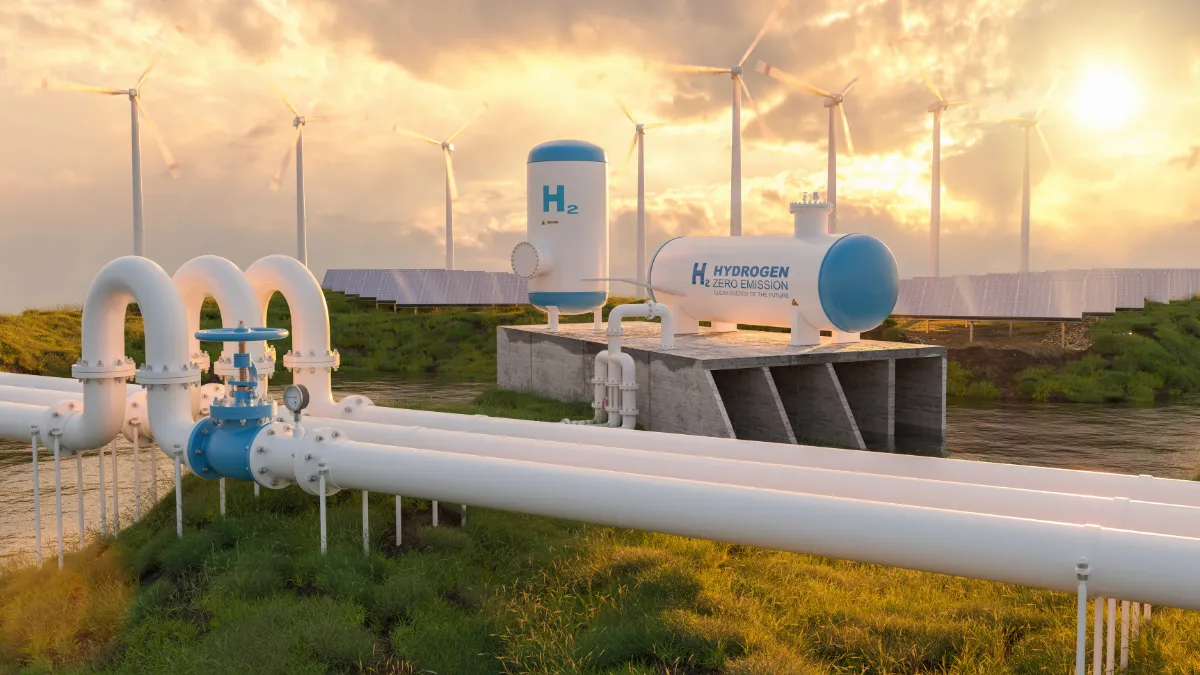
KAHRE Renewable Energy Group has unveiled what could become one of the most ambitious private sector energy transition initiatives yet proposed in South Africa—a fully integrated net-zero industrial corridor that would connect massive renewable energy generation in the Northern Cape with green industrial processing and export infrastructure in the Western Cape. The audacious development plan carries a projected investment pipeline ranging between R794 billion ($50 billion) and R2.3 trillion ($150 billion) over 15 years, positioning South Africa to become a major player in the burgeoning global green hydrogen economy.
The announcement comes at a critical juncture for South Africa’s energy landscape, as the country grapples with aging coal infrastructure, persistent grid constraints, and mounting pressure to decarbonize its economy while maintaining energy security and creating economic opportunities. KAHRE’s integrated approach represents a bold private sector bet that South Africa can leapfrog traditional energy development pathways by building entirely new infrastructure specifically designed for the clean energy economy.
Build the future you deserve. Get started with our top-tier Online courses: ACCA, HESI A2, ATI TEAS 7, HESI EXIT, NCLEX-RN, NCLEX-PN, and Financial Literacy. Let Serrari Ed guide your path to success. Enroll today.
A Comprehensive Vision: Four Integrated Projects Form One Ecosystem
At the heart of KAHRE’s strategy lies the integration of four distinct but interconnected projects that together form what the company describes as a “scalable energy and infrastructure ecosystem.” This integrated platform comprises KTE.energy for renewable power generation, the GreenLink corridor for transmission and pipeline infrastructure, Velddrif Water & Power for desalination and processing facilities, and EcoVision Velddrif for sustainable urban development.
“What began as a vision years ago is now taking concrete shape,” said Dominic Kahre, founder and Chief Executive Officer of KAHRE Renewable Energy Group. “With our integrated South African platform – KTE.energy, Velddrif Water & Power, EcoVision Velddrif and GreenLink – we are building a scalable energy and infrastructure ecosystem designed to support long term industrial growth, water security, clean power generation and sustainable urban development.”
The project’s scope is staggering: at full scale, the corridor is expected to incorporate up to 20 GW of hybrid solar and wind capacity, supported by large-scale electrolysis and industrial facilities. Initial development targets include up to 6 GW of generation and 3.5 GW of electrolysis capacity by 2030, with full build-out of the corridor and associated eco-city development near Velddrif targeted for 2039.
Harnessing the Northern Cape’s Exceptional Renewable Resources
The Northern Cape province has been selected for the generation hub due to its exceptional solar and wind resources, widely regarded among the best globally. President Cyril Ramaphosa has characterized the Northern Cape as being “at the forefront of the clean energy revolution” and experiencing a significant surge in power projects, notably solar and green hydrogen initiatives.
The region’s advantages extend far beyond mere sunlight and wind. According to renewable energy experts, the Northern Cape offers cost-effective renewable electricity generation critical for competitive hydrogen production, proximity to the Orange River for water resources, availability of large sparsely populated land areas for renewable energy installations, and strategic positioning for potential export markets.
KAHRE’s KTE.energy project will be located on 85,000 hectares in the Northern Cape, leveraging extreme sun and nighttime winds to aim for 20GW of near-baseload power. The company claims it can produce solar electricity at approximately 1.5 US cents per kilowatt-hour—significantly lower than current domestic rates in South Africa. This cost advantage could prove crucial for the commercial viability of green hydrogen production, which remains heavily dependent on the price of input electricity.
The selection of the Northern Cape aligns with broader provincial and national strategies. The Northern Cape government has set out an ambition to develop 40 GW of electrolysis capacity by 2050, with a master plan for a green hydrogen Special Economic Zone already in development. This provincial commitment provides an important policy foundation for large-scale private investments like KAHRE’s corridor.
The GreenLink Corridor: Private Transmission Bypassing Grid Bottlenecks
One of the most innovative and potentially transformative aspects of KAHRE’s plan is the 450-kilometer GreenLink corridor, which will run alongside the existing Sishen-Saldanha railway line connecting the Northern Cape generation facilities with coastal processing and export infrastructure. This multi-purpose corridor is designed to transport green electricity via high-voltage transmission lines, hydrogen or ammonia through dedicated pipelines, water, and data—all along a common, state-of-the-art route.
By aligning generation, transmission and processing within a single privately-owned platform, the project seeks to address the grid bottlenecks that have severely constrained renewable energy expansion in resource-rich regions across South Africa. Eskom’s latest grid assessment shows there is zero remaining capacity for new power projects in the Northern Cape based on current grid rules, making private transmission infrastructure essential for unlocking the region’s renewable potential.
The strategic decision to route the corridor alongside the existing Sishen-Saldanha railway aims to streamline land acquisition and avoid the lengthy delays that have plagued other major infrastructure projects in South Africa. This approach could significantly accelerate project development timelines compared to greenfield transmission corridors that must navigate complex land rights negotiations and environmental approvals from scratch.
The integration of multiple infrastructure types into a single corridor also offers economic and environmental advantages. Consolidating transmission lines, pipelines, and other utilities reduces environmental impacts, simplifies approval processes, and enables more resource-efficient implementation than constructing separate corridors for each type of infrastructure.
Coastal Processing: From Desalination to Green Fuels
At the coastal terminus of the GreenLink corridor, renewable electricity will power an integrated complex of desalination and green fuel production facilities linked to export infrastructure in the Saldanha Bay Special Economic Zone. This coastal processing hub represents the critical link between renewable generation and global markets for green hydrogen derivatives.
Water supply infrastructure is planned to scale to 150 million liters per day to support production of hydrogen, ammonia, and sustainable aviation fuel. The reliance on desalination reflects both the water scarcity challenges facing South Africa and the opportunity to leverage abundant seawater resources along the Atlantic coast. Studies have shown that Saldanha Bay’s excellent solar and wind resources make it ideal for large renewable energy electricity at competitive costs, which in turn enables cost-effective desalination for hydrogen production.
The development aims to establish a globally competitive platform for green hydrogen and derivative industries, including ammonia, e-methanol and sustainable aviation fuel. These products address some of the most challenging sectors for decarbonization, where direct electrification remains impractical and hydrogen-based fuels offer one of the few viable pathways to eliminate emissions.
Annual export revenues from the corridor are estimated at between $5 billion and $8 billion, reflecting rising global demand for low-carbon fuels. This export orientation aligns with international efforts to establish green shipping corridors, with announced green hydrogen projects near the ports of Boegoebaai, Saldanha and Walvis Bay potentially meeting the corridor’s fuel needs including high-demand scenarios.
Job Creation and Economic Impact
The employment and economic development implications of KAHRE’s corridor are substantial. The company estimates the development could generate around 40,000 direct jobs and 120,000 indirect jobs across construction, operations, manufacturing and logistics over the project’s development timeline. These figures position the corridor among the most significant job-creation initiatives in South Africa’s renewable energy sector.
The job creation potential is particularly important given South Africa’s persistently high unemployment rates, which have long plagued the economy and contributed to social instability. Green hydrogen development offers opportunities for both construction employment during the build-out phase and longer-term operational jobs once facilities are producing at scale.
Beyond direct employment, the corridor could catalyze broader economic development in the Northern Cape and Western Cape regions. President Ramaphosa has emphasized that the Northern Cape could become “the new heartbeat of the economy” once the energy transition unfolds as envisaged, supported not just by traditional mining industries but through special economic zone development, industrial park development and major infrastructure projects.
The project also aligns with South Africa’s Just Energy Transition commitments, which emphasize the need to create new economic opportunities while managing the social impacts of moving away from coal-based industries. The hydrogen economy is projected to contribute approximately 3.6% to South Africa’s GDP and create approximately 360,000 jobs by 2050, positioning KAHRE’s corridor as a significant component of this broader transformation.
Strategic Positioning in Saldanha Bay Special Economic Zone
The choice to anchor the coastal processing facilities in Saldanha Bay is strategically significant. Saldanha Bay was selected as a premium destination for a green hydrogen hub following a memorandum of understanding signed between Freeport Saldanha Industrial Development Zone and Sasol in October 2022. The region offers several crucial advantages for hydrogen export operations.
Freeport Saldanha represents South Africa’s first freeport—a special economic zone and customs controlled area dedicated to maritime, energy, logistics and engineering sectors. The facility offers tax and investment incentives along with world-class infrastructure and deep-water port access that are essential for hydrogen export operations. These advantages significantly improve the investment case for green hydrogen projects by reducing operational costs and streamlining regulatory processes.
The deep-water port at Saldanha Bay is a critical asset. As one of the deepest natural ports in the southern hemisphere, it can accommodate the large vessels required for bulk export of green ammonia and other hydrogen derivatives. This port infrastructure, combined with existing industrial facilities and utilities, provides a foundation that would be prohibitively expensive to replicate at a greenfield site.
ArcelorMittal Saldanha’s development of renewable energy along with Freeport Saldanha’s infrastructure and the Transnet National Ports Authority deep-water port in the region create crucial synergies for clean energy development. The presence of existing industrial users and export infrastructure reduces the market risk for new hydrogen production facilities by providing potential anchor customers and proven export logistics.
Navigating South Africa’s Complex Energy Transition Landscape
KAHRE’s corridor must navigate a complex and rapidly evolving policy and regulatory environment as South Africa seeks to transform its energy system. The country’s Integrated Resource Plan 2025, approved by cabinet in October 2025, sets out a bold roadmap for the transformation of South Africa’s energy landscape with projected implementation costs of R2.2 trillion through 2039.
The plan emphasizes state-led procurement through large-scale bid windows but also creates space for private sector initiatives. However, realizing this vision depends critically on addressing legal and regulatory bottlenecks, ensuring policy coherence, and strengthening public-private collaboration—challenges that KAHRE’s integrated private development model seeks to address through its end-to-end control of generation, transmission, and processing infrastructure.
South Africa’s Renewable Energy Masterplan, released in March 2025, outlines a comprehensive framework to develop the country’s burgeoning renewable energy industry with aims to fast-track government procurement, develop domestic component manufacturing, and promote inclusive development by supporting Black-owned firms, small businesses and former coal communities. KAHRE’s corridor could play a significant role in these objectives through its procurement requirements and employment commitments.
The Just Energy Transition Investment Plan, which has attracted over R1 trillion of new investment commitments to the South African economy, identifies green hydrogen as one of six key portfolios alongside electricity infrastructure, new energy vehicles, skills development, and municipal support. This national policy framework provides important context and support for large-scale hydrogen developments, though implementation challenges remain significant.
One decision can change your entire career. Take that step with our Online courses in ACCA, HESI A2, ATI TEAS 7, HESI EXIT, NCLEX-RN, NCLEX-PN, and Financial Literacy. Join Serrari Ed and start building your brighter future today.
Private Sector Stepping In Where State Capacity Falls Short
KAHRE’s initiative reflects a broader trend in South Africa where the private sector is increasingly stepping in to develop critical energy infrastructure as state-owned entities struggle with financial constraints, aging assets, and operational challenges. The comparison to Eskom’s grid constraints and Transnet’s railway difficulties is unavoidable and central to KAHRE’s strategic rationale.
Eskom remains hamstrung by a debt-heavy balance sheet and an aging coal fleet, while Transnet’s operational challenges have severely constrained export logistics for South African commodities. KAHRE’s investment represents a significant private-led development of essential national infrastructure, circumventing rather than waiting for resolution of state-owned enterprise challenges.
The South African government has recently announced a $500 million credit-guarantee vehicle designed to support private-sector transmission investments, complemented by the Independent Transmission Projects program with state-backed guarantees expected to mobilize R390 billion. These initiatives signal policy support for private infrastructure development, though KAHRE’s corridor appears to be proceeding independently of these specific programs.
The shift toward private infrastructure development comes as South Africa’s renewable energy sector has attracted substantial foreign direct investment, with the UN Conference on Trade and Development noting that the sector drew $16 billion in investments between 2020 and 2023 alone. The government’s commitment to market liberalization and private sector participation has been a key driver of this capital inflow.
Technical and Commercial Challenges Ahead
Despite the compelling strategic vision, KAHRE’s corridor faces formidable technical, commercial, and execution challenges that will test the project’s viability over its extended development timeline.
Grid integration remains a critical technical challenge even for a project designed to bypass Eskom’s network. The coastal processing facilities will require grid connections for operational flexibility and reliability, and any ambitions to sell excess electricity into the South African market will require engagement with the evolving electricity market framework. The Draft Market Code issued in April 2024 aims to establish a transparent trading platform by April 2026, with a fully competitive market expected by 2031, creating both opportunities and uncertainties for large private generators.
Water availability for the massive desalination operations planned at Velddrif represents another significant technical challenge. While seawater is abundant, desalination at the scale envisioned—150 million liters per day—requires substantial capital investment and ongoing energy consumption, even when powered by renewable electricity. The environmental impacts of brine disposal and the permitting requirements for large-scale coastal desalination add complexity to project development.
The commercial viability of green hydrogen production hinges critically on achieving cost competitiveness with conventional hydrogen and fossil fuel alternatives. South Africa could produce green hydrogen for $1.60 per kilogram by 2030 according to some estimates, which would represent one of the lowest costs worldwide. However, achieving such costs at scale requires not just cheap renewable electricity but also substantial reductions in electrolyzer costs, which remain a significant challenge for the global hydrogen industry.
Market development for green hydrogen derivatives poses another major risk. While European and Asian markets have announced ambitious hydrogen import targets to support decarbonization efforts, actual long-term offtake agreements that would provide revenue certainty for large capital investments remain scarce. KAHRE will need to secure substantial customer commitments before reaching final investment decisions on the processing facilities.
Coordination with Broader South African Hydrogen Strategy
KAHRE’s corridor represents a significant private contribution to South Africa’s broader national hydrogen strategy, which aims to position the country as a major global player capturing a 4% global market share by 2050. The government’s Hydrogen Society Roadmap sets ambitious targets including deploying 10 GW of electrolysis capacity in the Northern Cape by 2030 and producing approximately 500,000 tonnes of hydrogen annually by 2030.
The corridor must be coordinated with other major green hydrogen initiatives already underway in South Africa. The Prieska Power Reserve Project, also in the Northern Cape, is expected to start producing green hydrogen and ammonia in 2026, with initial production of 72,000 tonnes of green ammonia per year expanding to over 500,000 tonnes by 2030. The Coega Green Ammonia Project, a $5.7 billion facility established by Hive Hydrogen and Linde at the Coega Special Economic Zone, plans to produce up to 1.2 million tons per year of green ammonia powered by 3.5 GW of renewable energy.
The Boegoebaai port development in the far north of the Northern Cape represents another major hydrogen export initiative. Sasol has signed a memorandum of agreement with the Northern Cape Development Agency to lead feasibility studies exploring Boegoebaai’s potential as an export hub for green hydrogen and ammonia. That project envisions 9 GW of renewable energy generation, 400,000 tonnes of green hydrogen production annually, and 6,000 direct jobs.
These parallel initiatives both validate the strategic rationale for South Africa’s green hydrogen ambitions and create potential coordination challenges around infrastructure sharing, export capacity allocation, and competition for financing, skilled labor, and equipment procurement. KAHRE will need to position its corridor as complementary to rather than competitive with these other major projects, perhaps through infrastructure sharing arrangements or differentiated market positioning.
Financing Strategy and Investment Timeline
Mobilizing the R794 billion to R2.3 trillion in projected investment over 15 years represents one of the most daunting aspects of KAHRE’s corridor development. The wide range in the investment estimate reflects uncertainty around the ultimate scale of the build-out and the specific technologies and configurations that will be deployed.
The project is being developed in cooperation with public and private stakeholders, including port and special economic zone authorities in Saldanha Bay, though specific financing commitments and partnerships have not been publicly disclosed. The phased approach targeting 6 GW of generation and 3.5 GW of electrolysis by 2030 suggests a strategy of demonstrating commercial viability at smaller scale before committing to the full 20 GW vision.
Blended finance mechanisms that combine concessional funding from development finance institutions with commercial capital are increasingly common for large African energy infrastructure projects. Recent examples include Scatec’s 1.1 GW solar project in Egypt backed by nearly $480 million from British International Investment, the African Development Bank and the European Bank for Reconstruction and Development.
South Africa has received grant funding from the European Union totaling approximately $35 million to enhance green hydrogen initiatives, with funds directed toward both infrastructure expenses and value chain development. Additional international climate finance could become available as the project reaches more advanced stages of development and demonstrates credible pathways to commercial operation.
The involvement of port authorities, special economic zone operators, and potentially Eskom or private transmission companies in the corridor suggests opportunities for risk-sharing and co-investment arrangements that could reduce KAHRE’s direct capital requirements. However, the company will likely need to demonstrate substantial equity contributions and secure anchor offtake agreements before attracting the large-scale debt financing required for such an ambitious project.
Eco-City Development: Beyond Energy Infrastructure
An often-overlooked but potentially significant component of KAHRE’s integrated platform is the EcoVision Velddrif eco-city development near the coastal processing facilities. This planned sustainable urban center aims to combine living, working, education, research and leisure in a low-emission, intelligently designed environment with complete supply of green energy and desalinated water.
The eco-city concept reflects recognition that major industrial developments like the green hydrogen corridor will require substantial support infrastructure and create housing needs for workers and their families. Rather than relying on existing municipalities to accommodate this growth, KAHRE is planning its own urban development specifically designed around sustainability principles and integration with the energy infrastructure.
The eco-city plans include establishment of international technology, AI and research companies along with integration of industrial and commercial areas with energy-intensive operations such as data centers and power-to-X applications. This industrial diversification strategy could provide additional revenue streams beyond hydrogen exports while creating a more resilient economic base for the development.
However, new city development in South Africa faces substantial challenges including land acquisition complexities, provision of social services, governance structures, and integration with existing regional planning frameworks. The ambitious nature of the eco-city component adds another layer of execution risk to an already highly complex project.
Regional and Continental Context
KAHRE’s corridor must be understood within the broader context of Africa’s emerging role in the global green hydrogen economy. Multiple African countries are positioning themselves as future hydrogen exporters, leveraging abundant renewable resources and relatively low population density in suitable regions.
Namibia, with its abundant solar resources, has launched initiatives to develop green hydrogen projects for both domestic use and export. The country’s proximity to South Africa and shared Atlantic coastline create both competitive and potentially cooperative dynamics. Egypt is also advancing large-scale green hydrogen projects, including Scatec’s 1.1 GW solar development that reached financial close in 2024.
Morocco is opening the Nador West Med deepwater port in 2026, including North Africa’s first LNG terminal and green hydrogen export capabilities, signaling the region’s intent to anchor energy-linked supply chains to European markets. These North African developments may have advantages in terms of proximity to European customers but face different challenges around water availability and political stability.
South Africa’s competitive advantages in this regional contest include an established industrial base, relatively developed financial markets and legal systems, existing port infrastructure, and significant expertise in Fischer-Tropsch processes that can be applied to hydrogen derivative production. The country also benefits from abundant platinum group metals production, which are essential for electrolyzers and fuel cells, potentially enabling domestic value chain development.
The African Hydrogen Partnership, established as the first non-profit association on the African continent dedicated to developing green hydrogen and related technologies, provides a platform for coordination and knowledge sharing across African initiatives. South Africa’s ability to leverage this continental cooperation while competing for investment and export market share will influence the corridor’s ultimate success.
Environmental and Social Considerations
Large-scale renewable energy and industrial development inevitably raises environmental and social concerns that KAHRE will need to address through the project development process. The 85,000 hectares required for the KTE.energy generation facilities in the Northern Cape, while located in sparsely populated areas, will require environmental impact assessments addressing biodiversity, land use, visual impacts, and effects on local communities.
The 450-kilometer GreenLink corridor traversing from the Northern Cape to the Western Cape will cross multiple ecosystems and potentially affect sensitive areas. Routing the corridor alongside existing railway infrastructure helps minimize new environmental disturbance, but construction and operation of high-voltage transmission lines, pipelines, and associated facilities will require careful environmental management and stakeholder engagement.
Water consumption for hydrogen production, even when sourced from desalination rather than competing with other water users, raises questions about marine ecosystem impacts from intake operations and brine discharge. The scale of planned desalination—150 million liters per day—will require comprehensive environmental permitting and ongoing monitoring to ensure compliance with environmental regulations.
Social impacts including land acquisition, community displacement, benefits sharing with local communities, and ensuring local employment and enterprise development will be critical to maintaining the project’s social license to operate. South Africa’s history of unequal development and the country’s constitutional commitment to redressing historical disadvantages create both challenges and opportunities for KAHRE to demonstrate inclusive development practices.
The eco-city component offers potential to showcase sustainable urban development but also raises questions about new settlement patterns, integration with existing communities, and ensuring accessibility for diverse income levels rather than creating an isolated enclave for project workers.
Pathway to Implementation: Next Steps and Milestones
With the February 2026 announcement of the corridor, KAHRE has moved from concept to public presentation of a comprehensive vision. However, translating this vision into operational reality will require numerous intermediate steps and milestones over the coming years.
Securing all necessary environmental approvals and permits for generation facilities, transmission corridors, processing plants, and urban development represents a critical path activity that could take several years given the scale and complexity of the integrated project. South Africa’s environmental approval processes, while important for protecting sensitive areas and ensuring stakeholder consultation, have sometimes resulted in lengthy delays for large projects.
Completing detailed engineering and design work across all project components will be necessary to refine capital cost estimates, optimize configurations, and prepare for procurement of major equipment and construction services. The evolving nature of green hydrogen technology means that some design decisions may need to be adjusted as newer, more efficient electrolyzers and processing equipment become available.
Securing anchor offtake agreements for hydrogen derivatives will be essential for obtaining project financing. KAHRE will need to demonstrate credible long-term revenue streams, likely through power purchase agreements, hydrogen sales contracts, or other structured arrangements that provide payment certainty for investors and lenders.
Reaching financial close on initial project phases—likely starting with a subset of the planned 20 GW capacity—will represent a crucial validation of the project’s commercial viability and KAHRE’s ability to mobilize capital at scale. The phased approach targeting 6 GW of generation and 3.5 GW of electrolysis by 2030 provides clear interim milestones.
Commencing construction on early project components will begin the transition from planning to execution, with initial job creation and visible progress that can build momentum for subsequent phases. The 2030 timeframe for initial capacity suggests construction could begin in the next few years, subject to successful completion of planning and financing milestones.
Implications for South Africa’s Energy Future
If successfully implemented, KAHRE’s corridor would represent a transformative contribution to South Africa’s energy landscape and economic development trajectory. The project embodies a vision of private sector-led infrastructure development that could catalyze broader transformation beyond the specific hydrogen export value chain.
The corridor could serve as a proof point for large-scale private investment in critical energy infrastructure, potentially encouraging similar initiatives in other sectors and regions. Success would validate the model of integrated, end-to-end project development that circumvents bottlenecks in state-owned infrastructure systems.
The substantial job creation and GDP contributions projected for the green hydrogen economy could provide important economic diversification for South Africa, reducing dependence on traditional mining sectors while leveraging the country’s mineral resources for domestic value addition rather than raw material export.
The export revenue potential—estimated at $5-8 billion annually at full scale—could provide significant foreign exchange earnings to support South Africa’s balance of payments, though this also creates questions about domestic energy access versus export prioritization.
For the Northern Cape and Western Cape regions, the corridor represents potential economic transformation from historically peripheral areas to centers of clean energy production and export. This geographic rebalancing of economic activity could have important implications for migration patterns, urbanization, and regional development.
Conclusion: A Vision That Demands Execution
KAHRE Renewable Energy Group’s announcement of a 20 GW net-zero industrial corridor represents one of the most ambitious and comprehensive clean energy development proposals yet unveiled in Africa. The integrated vision connecting desert solar and wind resources with coastal processing and export infrastructure, all linked by private transmission and pipeline corridors, addresses many of the systemic challenges that have constrained renewable energy development in South Africa.
The projected investment of R794 billion to R2.3 trillion over 15 years, the potential for 40,000 direct jobs and 120,000 indirect jobs, and annual export revenues of $5-8 billion at full scale position the corridor as potentially transformative for South Africa’s energy transition and economic development. The alignment with national and provincial green hydrogen strategies, the selection of locations with exceptional renewable resources, and the integration with Saldanha Bay’s special economic zone infrastructure provide important strategic foundations.
However, the gulf between vision and implementation for such an audacious project remains vast. KAHRE faces formidable challenges in securing necessary environmental and regulatory approvals, mobilizing unprecedented levels of capital, demonstrating commercial viability for green hydrogen at scale, coordinating with other major projects, managing complex construction across multiple project components, and maintaining stakeholder support over a 15-year development timeline.
“This project establishes a scalable and investable platform for South Africa’s net zero economy,” Kahre emphasized. “By integrating renewable power generation, transmission, industrial processing and export logistics, we are building long term economic infrastructure that is globally relevant and locally anchored.”
Whether this vision can transition from compelling presentation to operational reality will unfold over the coming years as KAHRE navigates South Africa’s complex policy environment, demonstrates its ability to mobilize capital and execute at scale, and proves that private sector-led energy infrastructure development can succeed where state capacity has fallen short. The corridor’s success or failure will have implications far beyond KAHRE itself, potentially validating or cautioning against similar private mega-projects as South Africa and the broader African continent navigate the energy transition.
Ready to take your career to the next level? Join our Online courses: ACCA, HESI A2, ATI TEAS 7 , HESI EXIT , NCLEX – RN and NCLEX – PN, Financial Literacy!🌟 Dive into a world of opportunities and empower yourself for success. Explore more at Serrari Ed and start your exciting journey today! ✨
Track GDP, Inflation and Central Bank rates for top African markets with Serrari’s comparator tool.
See today’s Treasury bonds and Money market funds movement across financial service providers in Kenya, using Serrari’s comparator tools.
photo source: Google
By: Montel Kamau
Serrari Financial Analyst
16th February, 2026