The Republic of South Africa has officially acceded to the Establishment Agreement of the African Export-Import Bank (Afreximbank), marking a watershed moment in continental economic integration as Africa’s most industrialized economy becomes the institution’s 54th member state. This historic accession, formalized on February 4, 2026, in Johannesburg, brings with it an ambitious $8 billion Country Programme designed to deepen South Africa’s industrial capacity, strengthen regional supply chains, and significantly boost intra-African trade and investment flows.
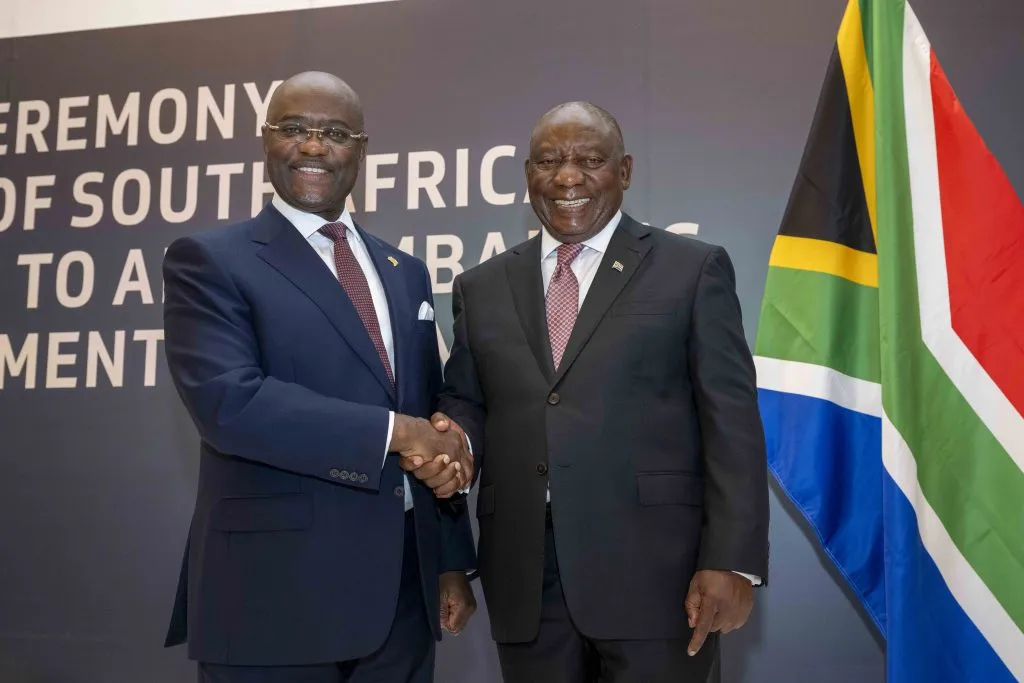
The signing ceremony, attended by President Cyril Ramaphosa and Afreximbank President Dr. George Elombi, represents the culmination of a three-decade journey to integrate Africa’s industrial powerhouse into the continent’s leading multilateral financial institution. The move follows the South African Parliament’s historic approval of the accession in 2025, cementing a strategic partnership at a time when global trade is increasingly shaped by protectionism and shifting economic blocs.
Build the future you deserve. Get started with our top-tier Online courses: ACCA, HESI A2, ATI TEAS 7, HESI EXIT, NCLEX-RN, NCLEX-PN, and Financial Literacy. Let Serrari Ed guide your path to success. Enroll today.
Full Continental Coverage and Enhanced Financial Sovereignty
South Africa’s accession is particularly significant because it provides Afreximbank with full continental coverage for the first time in its history. The move also entitles South Africa to a seat on the board of directors as a Class A sovereign shareholder, elevating the country’s influence in shaping the pan-African lender’s strategic direction and policy frameworks.
President Ramaphosa framed the moment as critical for advancing Africa’s economic integration. “Today we mark a major milestone in our quest to realize what I would call the economic integration of our continent,” he stated during the ceremony. “South Africa’s accession to Afreximbank affirms our commitment to African industrial development and to deepening trade, investment and development across our continent.”
Dr. George Elombi, President and Chairman of Afreximbank’s Board of Directors, described South Africa’s membership as “a decisive step towards uniting around the continent’s economic interests.” He emphasized that the accession brings South Africa into the heart of Afreximbank’s mission to promote fundamental changes in the structure of Africa’s trade while ensuring complete continental representation within the institution.
The $8 Billion Country Programme: Strategic Sectors and Priorities
The $8 billion Country Programme, developed in collaboration with South Africa’s Department of Trade, Industry and Competition under Minister Parks Tau, targets key strategic sectors aligned with the nation’s National Development Plan 2030 and broader industrial policy framework.
Dr. Elombi outlined the programme’s comprehensive scope during his address: “We intend to invest heavily in the local processing of natural resources, thereby helping retain value within our economies, create jobs and generate wealth for our people.” The programme specifically prioritizes mineral beneficiation and processing, recognizing South Africa’s vast mineral wealth and the importance of moving up the value chain from raw commodity exports to processed goods.
Automotive manufacturing expansion represents another critical priority area. The programme aims to strengthen South Africa’s position as a regional automotive hub, building on existing capabilities to create a more integrated continental automotive value chain. This aligns with Afreximbank’s broader Continental Automotive Strategy launched under the African Continental Free Trade Area framework.
The development and expansion of industrial parks and special economic zones forms a third pillar of the country programme. These zones are viewed as critical infrastructure for attracting both domestic and foreign investment, facilitating technology transfer, and creating employment opportunities at scale.
Energy generation and transmission infrastructure receives particular emphasis in the programme. Dr. Elombi stressed that “we plan to invest in the development of critical infrastructure, and this should include what we consider extremely important for South Africa and for many countries on our continent – energy generation and transmission.” This focus addresses South Africa’s persistent power supply challenges while supporting the transition to renewable energy sources.
$3 Billion Transformation Fund: Addressing Historical Economic Exclusion
Beyond the core $8 billion package, Afreximbank has committed an additional $3 billion through an inclusive financing programme developed in collaboration with the Department of Trade, Industry and Competition and the National Transformation Fund. This initiative specifically targets small and medium-sized enterprises, black industrialists, and businesses owned by women and youth—groups historically marginalized under apartheid.
The $3 billion Transformation Fund will be structured as a special purpose vehicle incubated by the National Empowerment Fund, focusing on priority sectors chosen for their capacity to deliver jobs and industrial impact. These sectors include renewable energy, manufacturing, agro-processing, logistics, and digital infrastructure. The fund will offer a comprehensive package of financial instruments including grants, loans, equity investments, and business development support.
President Ramaphosa emphasized the transformative potential of this funding during his address. “One of those areas that we are going to focus on with immediate effect is to give muscle to our Transformation Fund, to support black businesses who were held back by the evil apartheid system from being active participants in the economy of our country,” he declared. His remarks highlighted the government’s determination to address the economic legacy of apartheid through targeted financial support for previously disadvantaged entrepreneurs.
The inclusive financing package represents a direct response to South Africa’s transformation goals, recognizing that sustainable economic growth requires the active participation of all citizens in the economy. By providing access to appropriate financing—often the critical survival factor for small firms—the programme aims to unlock entrepreneurial potential that has been constrained by historical inequities and ongoing barriers to capital access.
Strategic Implementation Through Partnership
To maximize impact and ensure effective deployment of the financing, Afreximbank will partner with key South African institutions including the Industrial Development Corporation (IDC), the Development Bank of Southern Africa (DBSA), and the Public Investment Corporation (PIC). The programme will also engage commercial banks such as Rand Merchant Bank, Standard Bank, Absa, and Nedbank, creating a comprehensive ecosystem of financial support.
This partnership-oriented approach leverages the specialized expertise and existing relationships of local institutions while bringing Afreximbank’s pan-African perspective and trade finance capabilities to bear. The collaboration aims to ensure that financing reaches the intended beneficiaries efficiently while maintaining rigorous standards for project viability and development impact.
The programme also includes joint initiatives beyond the core country package. Both parties have agreed to pursue several trade and development initiatives including the South Africa-Africa Trade and Investment Promotion Programme, the Afreximbank Guarantee Programme, financing for industrial parks and special economic zones, export trading company financing, project and asset-based finance, conventional trade finance solutions, project preparation facilities, and funding support for the creative and cultural industries. Advisory services will form an integral part of the collaboration, helping to build capacity within South African institutions and businesses.
Existing Pipeline and Past Engagement
Afreximbank’s support for South Africa predates the country’s full membership in the institution. Dr. Elombi revealed that the bank’s current pipeline of projects in South Africa, at various stages of review, exceeds $6 billion and spans critical sectors including healthcare, financial services, manufacturing, energy, industrial development, and mining.
Past collaborations demonstrate the depth of the existing relationship. Since 2018, Afreximbank has invested in South Africa’s economy through initiatives including a $1 billion South Africa-Africa Trade and Investment Promotion Programme launched in partnership with the Export Credit Insurance Corporation. The bank has also supported state-owned enterprises including Eskom and Transnet, and contributed to the $300 million Zimbabwe-South Africa water infrastructure project.
Additionally, Afreximbank has provided base financing for the preparation of a $500 million titanium dioxide manufacturing plant in the Richards Bay Industrial Development Zone, with $175 million already approved for the development phase of that project. The bank has also supported South African banks’ participation in the BDP5 natural gas project through a risk-sharing scheme, demonstrating its capacity to structure complex financing arrangements that mobilize private sector capital.
A particularly strategic outcome of the accession is the planned evolution of South Africa’s Export Credit Insurance Corporation into a fully-fledged national Export-Import Bank. This transformation, supported by Afreximbank’s technical expertise and operational experience, will enhance South Africa’s capacity to support exporters and compete more effectively in global markets.
South Africa’s Strategic Position in Intra-African Trade
South Africa’s accession comes at a particularly opportune moment given the country’s dominant position in intra-African commerce. As the continent’s highest regional contributor to intra-African trade, South Africa accounted for 19.1% of Africa’s total intra-continental trade in 2024, making it uniquely positioned to leverage Afreximbank’s trade infrastructure, expertise, and pan-African reach.
The timing of the accession also reflects urgent economic realities. The $8 billion support package comes at a critical juncture for South Africa, which faces trade headwinds particularly with the United States, one of its top trade partners. The financing provides a new funding stream close to home at a time of fragmented global cooperation and increasing economic nationalism in major markets.
Dr. Elombi emphasized this context during his remarks: “The fate of our economies and the destiny of African people can no longer be tied to the benevolence of others.” His statement underscored the imperative for African nations to build resilient, internally-focused economic structures that reduce dependency on external actors and factors, particularly as global trade relationships become more unpredictable.
One decision can change your entire career. Take that step with our Online courses in ACCA, HESI A2, ATI TEAS 7, HESI EXIT, NCLEX-RN, NCLEX-PN, and Financial Literacy. Join Serrari Ed and start building your brighter future today.
The African Continental Free Trade Area Connection
South Africa’s accession to Afreximbank strengthens the institution’s capacity to support implementation of the African Continental Free Trade Area (AfCFTA), which aims to create a single market of 1.4 billion people across the continent. Afreximbank has positioned itself as a stalwart supporter of the AfCFTA, recognizing that the agreement’s success depends fundamentally on the availability of appropriate trade finance and payment infrastructure.
The bank has launched the Pan-African Payment and Settlement System (PAPSS), which was adopted by the African Union as the official payment and settlement platform to underpin AfCFTA implementation. PAPSS enables instant, cross-border payments in local African currencies, addressing one of the most persistent barriers to intra-African trade—the cost, complexity, and delays associated with cross-border transactions that previously required routing through offshore correspondent banks.
The system is expected to save the continent more than $5 billion annually in payment transaction costs. By processing transactions entirely within Africa in local currencies, PAPSS reduces dependency on hard currencies, shortens settlement times from days to seconds, and provides African central banks with greater transparency and control over cross-border financial flows.
Working with the AfCFTA Secretariat and the African Union, Afreximbank has also established a $10 billion Adjustment Fund to support countries in effectively participating in the free trade area. This comprehensive support infrastructure positions the bank as a critical enabler of continental economic integration.
South Africa’s manufacturing base and regional economic influence are viewed as essential to boosting intra-African trade, which currently represents less than 20% of total continental commerce—far below the 65% intra-regional trade share seen in Europe. The partnership between Afreximbank and South Africa is explicitly designed to leverage the country’s industrial capabilities to strengthen regional value chains and expand market access for businesses across the continent.
Addressing Critical Infrastructure Gaps
The country programme places particular emphasis on infrastructure development, recognizing that South Africa has made infrastructure a cornerstone of its economic policy as the nation seeks to revive growth and create jobs after more than a decade of economic stagnation. The infrastructure focus aligns with both national priorities and continental needs.
Beyond direct financing for infrastructure projects, Afreximbank has established a joint project preparation facility with Infrastructure South Africa aimed at unlocking up to $750 million in bankable projects. This technical support addresses a critical gap in the infrastructure development pipeline—the shortage of well-prepared, investment-ready projects that meet international standards for financial viability and development impact.
The energy sector receives particular attention given South Africa’s persistent power supply challenges. The country has experienced years of load-shedding—scheduled power cuts necessitated by insufficient generation capacity—that have constrained economic activity and deterred investment. The programme’s emphasis on energy generation and transmission infrastructure, including renewable energy sources, directly addresses this fundamental constraint on economic growth.
Implications for African MSMEs and Regional Integration
For African micro, small, and medium enterprises, particularly those operating in manufacturing, agribusiness, energy, creative industries, and export services, South Africa’s accession to Afreximbank signals expanded access to structured finance, guarantees, and trade-enabling infrastructure. The partnership opens new continental opportunities in an increasingly complex global economy characterized by supply chain realignments, trade tensions, and economic fragmentation.
The Transformation Fund’s focus on SMEs recognizes that these enterprises are critical drivers of job creation, innovation, and economic dynamism but often face insurmountable barriers to accessing capital. By providing tailored financial products including grants, loans, and equity investments alongside business development support, the programme aims to help capable entrepreneurs scale their operations and integrate into formal supply chains.
The emphasis on sectors such as agro-processing, manufacturing, and logistics reflects strategic choices about where SME support can generate maximum impact. These sectors offer opportunities to create employment at scale, build regional value chains, and reduce Africa’s dependency on imported goods while capturing more value from the continent’s abundant natural resources.
The Broader Context: African Economic Self-Determination
The accession ceremony was notable for its explicit framing around themes of African economic sovereignty and self-determination. Both President Ramaphosa and Dr. Elombi emphasized that the partnership represents a fundamental shift in how African nations approach economic development—moving away from dependency on external actors toward building robust, internally-driven growth models.
Dr. Elombi’s reference to the signing as performing “the traditional rites of membership of the clan” invoked powerful symbolism of reunification and collective identity. This framing positions economic integration not merely as a technical policy matter but as part of a broader project of African renewal and empowerment that extends beyond the colonial and apartheid eras.
President Ramaphosa’s remarks highlighted continuity between the political decolonization of the 1960s and the ongoing struggle for economic self-determination. The ceremony, held more than 60 years after many African nations achieved political independence, underscored that true sovereignty requires not just political autonomy but economic control and the capacity to chart an independent development path.
This philosophical foundation is particularly relevant in the current global context, where rising economic nationalism, fragmenting multilateral cooperation, and increasing use of economic statecraft as a geopolitical tool make African economic unity and self-reliance more urgent than ever.
Afreximbank’s Three-Decade Track Record
President Ramaphosa praised Afreximbank’s three-decade track record of resilience, innovation, and measurable impact. For over 30 years, the bank has been deploying innovative structures to deliver financing solutions that support transformation of Africa’s trade structure, accelerating industrialization and intra-regional trade to boost economic expansion across the continent.
The bank’s record of intervening during times of crisis has been particularly noteworthy. Through the Pandemic Trade Impact Mitigation Facility launched in April 2020, Afreximbank disbursed more than $6.5 billion to help member countries manage the adverse impacts of financial, economic, and health shocks during the COVID-19 pandemic. This rapid response demonstrated the institution’s capacity to mobilize significant resources quickly when member states face urgent challenges.
Beyond crisis response, Afreximbank has pioneered innovative financing structures that address specific barriers to African trade and development. The bank’s expertise in trade finance, export credit insurance, project finance, and advisory services provides a comprehensive toolkit for supporting African businesses and governments. This technical capacity, combined with deep understanding of African markets and challenges, makes Afreximbank uniquely positioned to support South Africa’s development objectives.
Looking Ahead: Expected Impact and Implementation Timeline
The country programme is expected to have immediate and transformative effects on South Africa’s economy. The initial focus on strategic projects within the trade and industrial cluster, particularly the Transformation Fund, reflects recognition that quick wins can build momentum and demonstrate the partnership’s value to key constituencies.
Beyond the immediate financial injection, the programme aims to catalyze broader systemic changes in how South African businesses engage with continental markets. By reducing barriers to cross-border trade, expanding access to regional markets, and improving participation in continental value chains, the initiative seeks to reorient South Africa’s trade patterns toward greater intra-African engagement.
The partnership also positions South Africa to serve as a gateway for other African businesses seeking to access the country’s sophisticated financial markets, logistics infrastructure, and industrial capacity. This two-way flow—facilitating both South African expansion into African markets and African access to South African capabilities—has the potential to create virtuous cycles of trade, investment, and technology transfer.
For entrepreneurs and business owners across Africa, the message is clear: South Africa’s accession to Afreximbank opens new pathways for collaboration, partnership, and market access. The combination of structured finance, guarantees, payment infrastructure, and technical support creates an enabling environment for businesses that can deliver quality products and services to seize opportunities in a rapidly integrating continental market.
Conclusion: A New Chapter in Pan-African Economic Cooperation
South Africa’s accession to Afreximbank, accompanied by the $8 billion Country Programme and $3 billion Transformation Fund, represents far more than a financial transaction. It marks a decisive commitment to continental economic integration, African self-determination, and inclusive growth that addresses historical injustices while building future prosperity.
The partnership brings together Africa’s most industrialized economy and its leading multilateral trade finance institution at a moment when global economic fragmentation makes African unity and cooperation more critical than ever. By pooling resources, expertise, and political will, South Africa and Afreximbank are creating a model for how African institutions can drive transformation at scale.
As Dr. Elombi noted, this partnership “could not have come at a better time,” referencing global economic uncertainties and the imperative to build resilient, internally-focused economic structures. The combination of substantial financing, strategic alignment with national development priorities, explicit focus on transformation and inclusion, and integration with continental initiatives like the AfCFTA creates a comprehensive framework for sustainable economic advancement.
For the millions of entrepreneurs, workers, and citizens across Africa who stand to benefit from expanded trade, increased investment, and greater economic opportunity, South Africa’s formal entry into the Afreximbank family signals that the vision of African economic integration is moving from aspiration to concrete reality—one billion-dollar programme, one transformed business, and one new job at a time.
Ready to take your career to the next level? Join our Online courses: ACCA, HESI A2, ATI TEAS 7 , HESI EXIT , NCLEX – RN and NCLEX – PN, Financial Literacy!🌟 Dive into a world of opportunities and empower yourself for success. Explore more at Serrari Ed and start your exciting journey today! ✨
Track GDP, Inflation and Central Bank rates for top African markets with Serrari’s comparator tool.
See today’s Treasury bonds and Money market funds movement across financial service providers in Kenya, using Serrari’s comparator tools.
photo source: Google
By: Montel Kamau
Serrari Financial Analyst
13th February, 2026