










South Africa’s exports to the United States have defied expectations, jumping 37% over the first ten months of 2025 despite facing an unprecedented barrage of tariffs and the expiration of the African Growth and Opportunity Act (AGOA), according to data from the South African Revenue Service (SARS). The resilience of Africa’s most industrialized economy in the face of Washington’s protectionist measures has surprised analysts and policymakers, even as uncertainty about future trade relations continues to cloud the outlook for exporters.
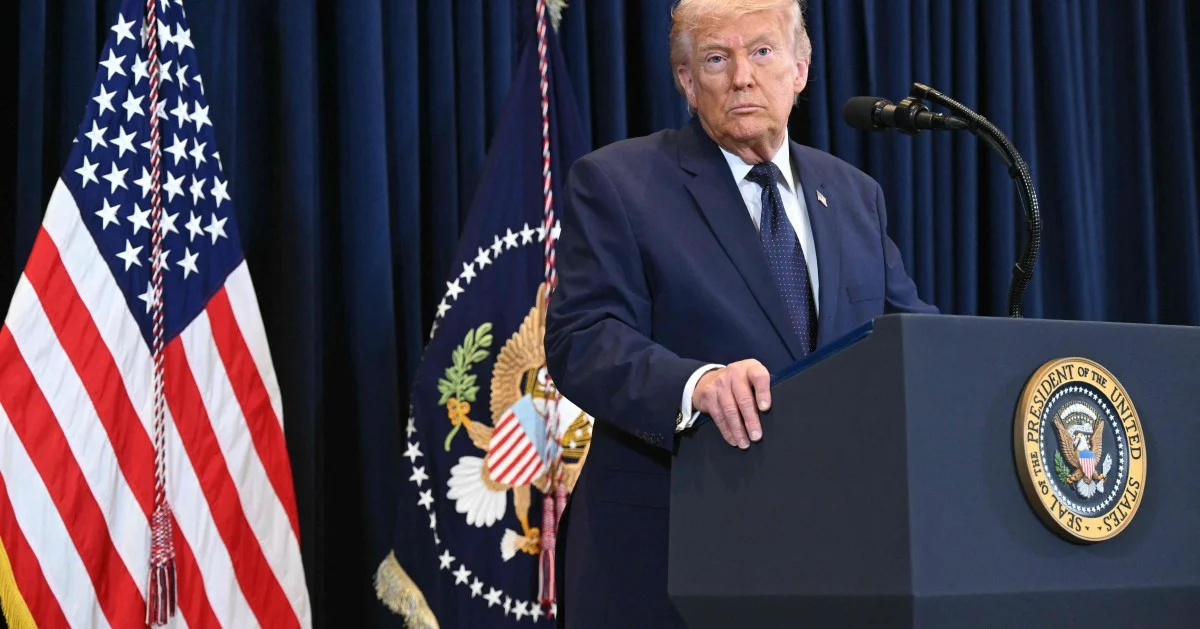
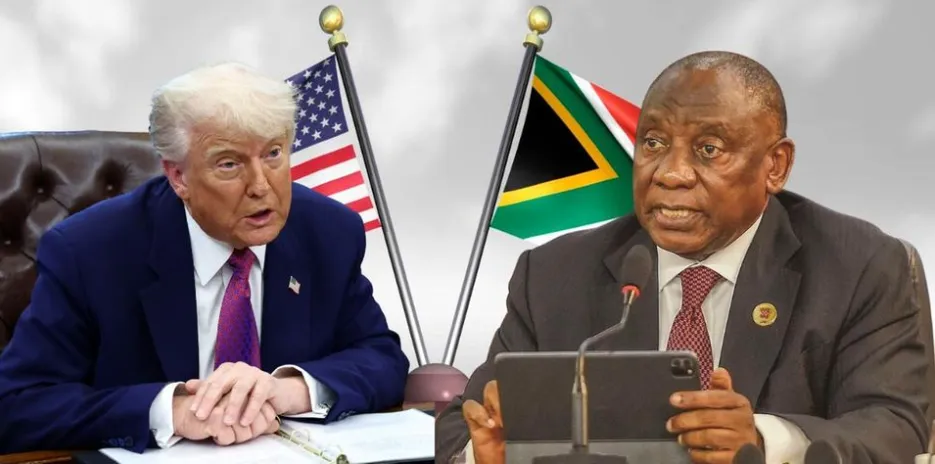
An analysis revealed that US-bound exports grew from R12.4 billion ($674 million) in January to R17 billion ($982 million) in October, reflecting a R4.6 billion ($322 million) or 37% increase during this period. This growth occurred despite multiple sector-specific tariffs and a sweeping 30% universal import tax imposed by President Donald Trump’s administration, marking the highest rate applied to any sub-Saharan African nation.
By contrast, imports from the United States fell during the same ten-month period, dropping from R17.2 billion to R16.2 billion in October. Between January and October, the rand appreciated against the dollar, so while import values fell in local currency terms, dollar-denominated imports actually increased slightly from $919 million in January to $936 million in October, reflecting the complex currency dynamics at play in bilateral trade.
Build the future you deserve. Get started with our top-tier Online courses: ACCA, HESI A2, ATI TEAS 7, HESI EXIT, NCLEX-RN, NCLEX-PN, and Financial Literacy. Let Serrari Ed guide your path to success. Enroll today.
Escalating Tariff Regime Tests South African Exporters
The stronger export earnings come even as South Africa grapples with multiple layers of punitive tariffs that have fundamentally altered the landscape for exporters. In February 2025, Washington introduced a 25% levy on steel and aluminium —major export earners for South Africa—before doubling the rate to 50% in July under Section 232 national security provisions.
Pretoria was subsequently hit with a 25% tariff on automobiles and vehicle parts in April 2025, targeting one of South Africa’s most successful manufacturing sectors. This was followed by a universal 30% tax on all US-bound goods from August 1, which the Trump administration justified as a “reciprocal” measure to address what it characterized as trade imbalances with South Africa.
Trade specialist Donald MacKay of XA Global Trade Advisors described the development as “very bad” for South Africa, noting that the country exported approximately R153 billion to the United States in 2024, making it South Africa’s second-largest export destination. MacKay highlighted that while South Africa’s tariffs averaged only 7.5%, Trump claimed the country “charged the USA” 60%, though he cautioned that “facts don’t matter” in the current political climate.
The White House has consistently argued that these measures aim to narrow the trade deficit between the two countries while supporting domestic manufacturing and job growth. However, South African policymakers had feared the tariffs would trigger major layoffs in the worst-hit sectors, deepening the country’s unemployment crisis and further weakening an already fragile economy.
AGOA Expiration Compounds Trade Uncertainty
Beyond the newly imposed tariffs, the United States failed to renew the African Growth and Opportunity Act (AGOA) after the program expired on September 30, 2025, ending duty-free access to American markets for eligible African nations. South Africa was among the countries hit by the lapse, adding to growing uncertainties over its foreign trade outlook.
AGOA, which was first enacted in 2000, had granted South Africa and other sub-Saharan African nations duty-free access to thousands of products in the US market. The program became the engine behind South Africa’s automotive, agricultural, apparel, and chemical exports. According to industry data, South Africa exported goods worth R71.5 billion through AGOA in 2024 alone, nearly half of all its exports to the United States that year.
The automotive sector had been a major beneficiary, with the industry accounting for 64% of all AGOA trade between the two nations in 2024, generating R28.6 billion in revenue from the 24,681 vehicles exported to the United States. The sector faced an immediate crisis following the tariff impositions, with vehicle exports to the US dropping by 73% in the first quarter of 2025, with further declines of 80% and 85% in April and May.
The Institute for Security Studies analysis noted that South Africa’s trade balance with the United States had steadily improved during the AGOA era, with the country consistently recording a trade surplus from 2004 onwards, rising from approximately $495 million to $1.05 billion by 2023. The share of precious metals and stones in total exports to the United States grew from 23% in the pre-AGOA era to 33% during the AGOA period.
Precious Metals Boom Lifts Gross Export Earnings
Despite the mounting trade tensions with its third-largest export destination, South Africa’s overall export earnings continued to rise dramatically, reaching R192.2 billion ($7.95 billion) in October, up from R149 billion ($11.11 billion) in January. The 30% surge was driven primarily by stronger global demand for gold, diamonds, and raw aluminium, with precious metal exports climbing from R26 billion ($1.39 billion) at the start of the year to R48.4 billion ($2.80 billion) in October—a remarkable 70% increase.
The improvement in precious metals exports coincided with a sharp gold rally in early October, when prices climbed above $4,000 per ounce, underpinned by rising geopolitical tensions and global trade uncertainty. Gold prices in South Africa surged, with 24K gold prices up 38.74% in rand terms during 2025, reaching R69,093 per ounce by late October compared to R49,200 the previous year.
Goldman Sachs projected gold prices could hit $3,700 per ounce by the end of 2025, with Morgan Stanley predicting $3,400 and UBS suggesting around $3,500 per ounce. Oliver Blagden, a gold and base metals analyst at CRU Group in London, told African Business that “confidence in the US dollar is definitely a major contributor driving gold prices,” noting that “recent events and policies from the White House have triggered chaos in global markets.”
South Africa’s gold production, while declining from its historic peaks, jumped 5.9% year-on-year in September 2025, the strongest annual gain since July 2023. The sector benefited from higher gold prices that offset some of the industry’s structural challenges including declining reserves, energy shortages, and labor unrest.
According to SARS trade statistics, month-on-month exports rose 2.8% from September’s R187 billion ($10.7 billion), helping to absorb a 7.6% rise in imports and resulting in a R15.6 billion ($902 million) trade surplus. “This surplus was attributable to exports of R192.2 billion ($11.11bn) and imports of R176.6 billion ($10.2bn), including trade with Botswana, Eswatini, Lesotho and Namibia (BELN),” SARS stated in its latest release.
However, a closer examination reveals that the surplus actually narrowed from R22.3 billion ($1.3 billion) in September, weighed down by higher energy purchases and supply-chain input costs. “Import flows increased on the back of higher importation of crude oil, petroleum oils (excluding crude), and original equipment components,” the revenue service added.
Broader Economic Recovery Defies Tariff Headwinds
South Africa’s economy is demonstrating signs of recovery that extend beyond trade performance. The unemployment rate fell for the first time this year, easing to 31.9% in Q3 2025 from 33.2% in Q2—defying expectations of deeper job losses following Trump’s punitive tariffs. This marks the lowest level recorded since Q4 2024 as the economy added 248,000 new jobs.
The Statistics South Africa Quarterly Labour Force Survey reported that the number of employed persons increased to 17.1 million, while the number of unemployed persons decreased by 360,000 to eight million. Six of ten industries recorded job gains, led by construction (+130,000), community services (+116,000), and trade (+108,000), while losses were concentrated in manufacturing (-62,000) and finance (-54,000).
Broader economic activity strengthened in the three months leading to September, with real GDP expanding by 0.5%—reflecting the fourth consecutive quarter of growth. On a year-on-year basis, GDP surged 2.1%, well above the forecasted 1.8%, bringing the economy closer to the 1.2% full-year growth projection from the National Treasury.
Nine out of ten major sectors recorded expansion in Q3, including mining and construction, both of which had been under pressure in recent quarters. Mining was the strongest contributor, growing 2.3% on higher output of platinum group metals, manganese, coal, and copper. The sector benefited from reduced load shedding and better energy availability, though long-term output still depends on transport reliability and regulatory clarity.
Analysts point to stronger commodity prices, fiscal discipline, subdued inflation, and improved credit ratings as key drivers behind the momentum. “If policy reform continues and fixed capital investment gains momentum, we could lift growth sustainably above the current levels,” said Maarten Ackerman, Chief Economist at Citadel Wealth Management.
The World Bank, in its latest Africa Pulse report, forecasts that South Africa’s average GDP growth will edge up from 0.5% in 2024 to 0.9% in 2025, before accelerating to 1.2% in 2026 and 2027. Still, risks remain significant. The economy continues to underperform relative to pre-pandemic levels, constrained by elevated unemployment, weak business conditions, and persistent supply chain bottlenecks, the bank noted.
One decision can change your entire career. Take that step with our Online courses in ACCA, HESI A2, ATI TEAS 7, HESI EXIT, NCLEX-RN, NCLEX-PN, and Financial Literacy. Join Serrari Ed and start building your brighter future today.
AGOA 2.0 Legislation Threatens South African Access
A tougher AGOA agreement being pushed by US lawmakers could further dampen South Africa’s trade outlook. After the program expired in September, the AGOA Extension and Bilateral Engagement Act, dubbed “AGOA 2.0,” was introduced in Congress by Senator John Kennedy (R-La.), proposing terms that differ sharply from the original pact.
The bill would extend AGOA for two years but only for countries that support US economic and foreign policy priorities—a criterion lawmakers argue South Africa has not met. Senator Kennedy stated that Pretoria has aligned itself too closely with America’s “competitors and adversaries,” including China and Russia.
“China is using Africa to expand its influence at America’s expense. We need to rethink our relationships in the region while strengthening trade with African countries that share our values,” Kennedy said when introducing the legislation. “This bill makes sure AGOA works for America’s interests—not against them.”
In a notable hardening of stance, the draft legislation contains a clause allowing Washington to revoke South Africa’s AGOA benefits entirely. Before such a step can take effect, however, officials must conduct a comprehensive review of the bilateral relationship, followed by a sign-off from President Trump certifying that Pretoria has violated US national security interests.
The AGOA 2.0 bill also incorporates Kennedy’s US-South Africa Bilateral Relations Review Act, which would require a classified list of South African government officials and members of the ruling African National Congress eligible for sanctions under the Global Magnitsky Act. The proposal represents a significant departure from the original AGOA framework, which focused primarily on economic development and trade facilitation rather than geopolitical alignment.
The proposal marks the latest escalation in a months-long diplomatic standoff. US officials have repeatedly accused South Africa of undermining American interests, citing the country’s stance on the Israeli-Palestinian conflict, its decision to bring a genocide case against Israel at the International Court of Justice, its participation in the BRICS+ currency initiative, and its neutral position on the Russia-Ukraine conflict. Meanwhile, Pretoria insists its foreign policy is non-aligned and driven by domestic priorities and constitutional principles.
Diplomatic and Economic Responses
The South African Presidency responded to the tariff impositions by reiterating the country’s desire for a new bilateral trade agreement. “The tariffs affirm the urgency to negotiate a new bilateral and mutually beneficial trade agreement with the US, as an essential step to secure long-term trade certainty,” the Presidency stated in April 2025.
The automotive industry, despite the devastating first-half performance, showed surprising resilience in the third quarter. South African vehicle exports delivered an unexpected surge in September 2025, jumping to 38,772 units according to the National Association of Automobile Manufacturers of South Africa (NAAMSA). This marked a 32.9% increase from the 29,180 vehicles exported in September 2024, pushing year-to-date exports 6.0% ahead of the same period last year.
The recovery demonstrates what NAAMSA called the industry’s “resilience despite global supply chain disruptions and US automotive tariffs.” Industry analysts suggest that South African automakers successfully pivoted to alternative markets, particularly in Europe and other African countries, to compensate for reduced US demand.
For companies already exporting branded products rather than raw materials, the impact has been more manageable. Brandon Heimstra, founder of House of Macadamias, a company specializing in premium macadamia nut products that exports from South Africa to the United States, explained to African Business that “a 30% tariff in my case doesn’t mean you lose a 30% margin.”
“Of course, the tariffs aren’t ideal, but it’s not devastating for us. I think it’s partly because we have a brand, and we are selling an end product here so we get a lot of the value capture, whereas we would have been impacted a lot more if we were selling a raw material,” Heimstra said, noting that his company has been working with local suppliers to mitigate increased costs.
Strategic Reorientation and Alternative Markets
Growing tensions between the two nations have fueled discussions about whether South Africa should reorient its trade strategy eastward—toward China, its largest bilateral trading partner. However, analysts caution that such a shift will not be automatic, as many products that gained US market share under AGOA have seen declining demand in China.
Business Leadership South Africa CEO Busisiwe Mavuso acknowledged the reality that “we have to accept that AGOA may be gone for good and start building new trade channels.” China has already announced duty-free access for all African nations with which it maintains diplomatic relations, signaling an alternative route for exporters. Meanwhile, South Africa’s membership in BRICS and participation in the African Continental Free Trade Agreement (AfCFTA) could help diversify markets, although these frameworks still face challenges around infrastructure and regulatory alignment.
UN Trade and Development (UNCTAD) analysis warns that without AGOA’s preferential treatment, the 32 countries that received preferences until September 2025 would face a second wave of tariff increases as country-specific and sectoral tariffs would be added on top of most-favored nation rates. African exports of agricultural goods and manufactured products would be subject to tariffs that are 2-to-3 times higher than those applied to fuels and minerals.
The International Trade Centre calculated that across all sectors, tariff measures introduced in 2025 are estimated to reduce projected exports of AGOA beneficiaries by about 8% by 2029. The expiry of AGOA adds a further decline of 0.6 percentage points, or $189 million, with $138 million of that accounted for by reductions in exports of apparel and textile products.
David Luke, a director at the Firoz Lalji Institute for Africa at the London School of Economics, suggests that AGOA’s demise might present an opportunity for African nations to boost regional trade. “In the short term, business is going to be hit by losing the market, but in the longer term it may change the habit of exporting out the continent to looking at the internal market,” Luke told African Business.
At home, Mavuso argues that South Africa must strengthen what it can control: logistics, port performance, and freight rail efficiency. Improving these systems would help South African goods compete globally, regardless of which trade partner is on the other side of the table. The government has made progress on Transnet’s rail recovery, with freight volumes up 5% in Q3 2025, though substantial infrastructure challenges remain.
Sector-Specific Impacts and Vulnerabilities
The tariff structure reveals a strategic targeting of South Africa’s manufactured exports while largely exempting raw materials. The 30% universal tariff exempts platinum, titanium, and other raw materials that account for about one-third of South African exports to the United States. These mineral exports are responsible for the trade surplus with the United States.
The tariffs instead fall heavily on manufactured goods, especially automobiles, refined metals, and other value-added exports. In essence, they are effectively designed to block countries in the global South, including South Africa, from exporting manufactures as part of a broader protectionist agenda. This approach contradicts stated development goals of helping African countries move up the value chain through industrialization and export diversification.
The automotive sector faces the most significant disruption, with the 25% tariff threatening over $1.34 billion in annual automotive exports to the United States based on 2023 figures. BMW and Mercedes-Benz South Africa, which both export luxury cars to America, are particularly vulnerable. MacKay cautioned that “selling those two cars into the US is going to be a problem” given the combined impact of the 25% automotive tariff and the 30% universal levy.
While platinum group metals (PGMs) are exempted from the new tariffs, analysts warn that minerals such as platinum, palladium, and rhodium—vital for producing autocatalysts used in vehicle exhaust systems—remain vulnerable to indirect effects. A slowdown in vehicle and car parts sales could suppress demand for these metals, leading to price volatility in the near term.
The agricultural sector faces mixed prospects. Two-thirds of South Africa’s agricultural exports to the United States benefited from tariff-free treatment under AGOA, reaching a record $646 million in 2022. Loss of AGOA access will significantly affect provinces like the Western Cape where agricultural exports are a prominent source of income and employment. Citrus products, which enjoyed a 1.9 US cent per kilogram preference under AGOA, now face the full impact of the 30% reciprocal tariff.
Long-Term Outlook and Policy Implications
If enacted, the AGOA 2.0 bill would strip South Africa of duty-free access to the US market—a major setback for exporters already grappling with steep tariffs and a strained domestic economy. The legislation has been sent to the Senate Committee on Finance, where it is currently under review, though its prospects for passage remain uncertain given the complex political dynamics in Congress.
Former South African diplomat Mohamed Cassimjee notes that even if AGOA is extended, “it is unlikely to lead to a more favorable deal for African countries” given the “current transactional approach in the US.” He maintains that South Africa must push to diversify its markets while continuing to engage with the United States through diplomatic channels.
The Department of Trade, Industry and Competition has indicated that trade negotiations with the United States are ongoing, with some optimism about potential agreements. Trade Minister Parks Tau has been actively engaged in discussions with US Trade Representative Jamieson Greer, though concrete outcomes remain elusive.
The 37% surge in exports to the United States during 2025 masks significant structural vulnerabilities. The growth has been overwhelmingly concentrated in precious metals, particularly gold, which benefited from exceptional price increases driven by global uncertainty. The sustainability of this export performance depends critically on continued strength in commodity prices and resolution of the tariff disputes.
For South Africa’s manufacturing sectors, particularly automotive and refined metals, the outlook remains challenging. Without restoration of preferential access or negotiation of reduced tariff rates, these industries face the prospect of permanent market share losses in the United States, forcing difficult decisions about production capacity, employment levels, and strategic reorientation toward alternative markets.
The experience highlights the vulnerability of export-dependent economies to sudden shifts in trade policy, particularly when relationships are affected by broader geopolitical considerations beyond purely economic factors. As South Africa navigates these turbulent waters, the imperative for economic diversification—both in terms of export destinations and domestic economic development—has never been more apparent.
The resilience demonstrated by South African exporters in 2025 provides some grounds for optimism, but sustained success will require not just favorable commodity prices but also structural reforms to enhance competitiveness, diplomatic efforts to secure stable market access, and strategic pivots to reduce dependence on any single trading partner. The stakes for South Africa’s economy, employment, and development trajectory could hardly be higher as these dynamics continue to unfold in the months ahead.
Ready to take your career to the next level? Join our Online courses: ACCA, HESI A2, ATI TEAS 7 , HESI EXIT , NCLEX – RN and NCLEX – PN, Financial Literacy!🌟 Dive into a world of opportunities and empower yourself for success. Explore more at Serrari Ed and start your exciting journey today! ✨
Track GDP, Inflation and Central Bank rates for top African markets with Serrari’s comparator tool.
See today’s Treasury bonds and Money market funds movement across financial service providers in Kenya, using Serrari’s comparator tools.
Photo source: Google
By: Montel Kamau
Serrari Financial Analyst
9th December, 2025
Article, Financial and News Disclaimer
The Value of a Financial Advisor
While this article offers valuable insights, it is essential to recognize that personal finance can be highly complex and unique to each individual. A financial advisor provides professional expertise and personalized guidance to help you make well-informed decisions tailored to your specific circumstances and goals.
Beyond offering knowledge, a financial advisor serves as a trusted partner to help you stay disciplined, avoid common pitfalls, and remain focused on your long-term objectives. Their perspective and experience can complement your own efforts, enhancing your financial well-being and ensuring a more confident approach to managing your finances.
Disclaimer: This article is for informational purposes only and does not constitute financial advice. Readers are encouraged to consult a licensed financial advisor to obtain guidance specific to their financial situation.
Article and News Disclaimer
The information provided on www.serrarigroup.com is for general informational purposes only. While we strive to keep the information up to date and accurate, we make no representations or warranties of any kind, express or implied, about the completeness, accuracy, reliability, suitability, or availability with respect to the website or the information, products, services, or related graphics contained on the website for any purpose. Any reliance you place on such information is therefore strictly at your own risk.
www.serrarigroup.com is not responsible for any errors or omissions, or for the results obtained from the use of this information. All information on the website is provided on an as-is basis, with no guarantee of completeness, accuracy, timeliness, or of the results obtained from the use of this information, and without warranty of any kind, express or implied, including but not limited to warranties of performance, merchantability, and fitness for a particular purpose.
In no event will www.serrarigroup.com be liable to you or anyone else for any decision made or action taken in reliance on the information provided on the website or for any consequential, special, or similar damages, even if advised of the possibility of such damages.
The articles, news, and information presented on www.serrarigroup.com reflect the opinions of the respective authors and contributors and do not necessarily represent the views of the website or its management. Any views or opinions expressed are solely those of the individual authors and do not represent the website's views or opinions as a whole.
The content on www.serrarigroup.com may include links to external websites, which are provided for convenience and informational purposes only. We have no control over the nature, content, and availability of those sites. The inclusion of any links does not necessarily imply a recommendation or endorsement of the views expressed within them.
Every effort is made to keep the website up and running smoothly. However, www.serrarigroup.com takes no responsibility for, and will not be liable for, the website being temporarily unavailable due to technical issues beyond our control.
Please note that laws, regulations, and information can change rapidly, and we advise you to conduct further research and seek professional advice when necessary.
By using www.serrarigroup.com, you agree to this disclaimer and its terms. If you do not agree with this disclaimer, please do not use the website.
www.serrarigroup.com, reserves the right to update, modify, or remove any part of this disclaimer without prior notice. It is your responsibility to review this disclaimer periodically for changes.
Serrari Group 2025