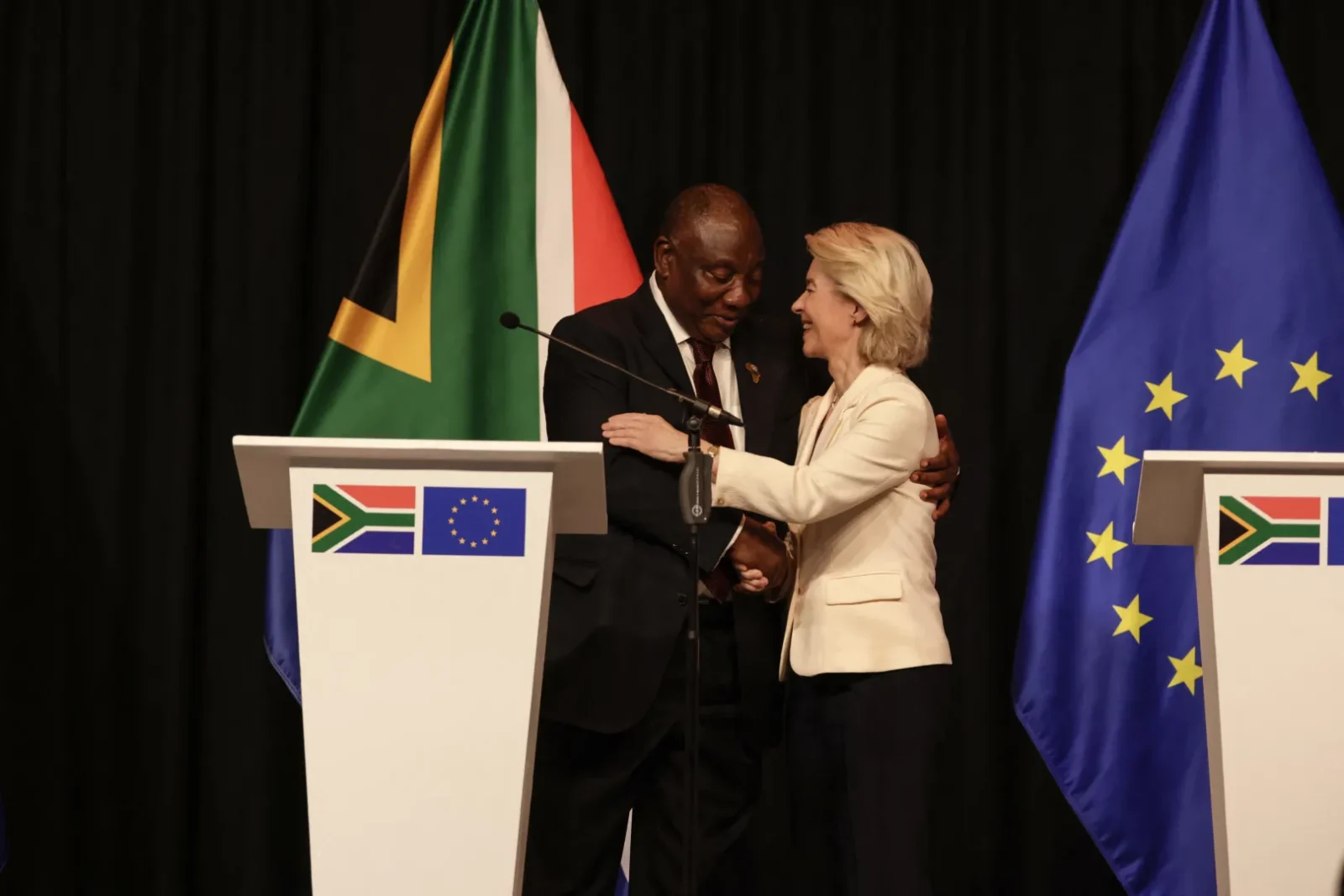
South Africa and the European Union have moved the Clean Trade and Investment Partnership (CTIP) into active implementation, holding the inaugural Business-to-Government Dialogue on Tuesday 3 March 2026 — a milestone that marks the shift from diplomatic endorsement to on-the-ground engagement between industry and policymakers from both sides.
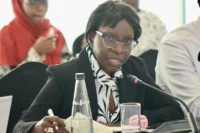
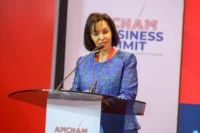
The dialogue, convened in the context of the Africa Energy Indaba in Johannesburg, drew over 150 representatives from industry, financial institutions, and government. It was opened by South Africa’s Deputy Minister of Trade, Industry and Competition, Alexandra Abrahams, and co-facilitated by the European Commission’s Deputy Director General for Trade and Economic Security, Maria Martin-Prat. Their combined presence signalled that the CTIP — which was signed on 20 November 2025 by European Commission President Ursula von der Leyen and President Cyril Ramaphosa — is now in active implementation mode.
Build the future you deserve. Get started with our top-tier Online courses: ACCA, HESI A2, ATI TEAS 7, HESI EXIT, NCLEX-RN, NCLEX-PN, and Financial Literacy. Let Serrari Ed guide your path to success. Enroll today.
What the CTIP Is, and Why It Matters
The CTIP is not a conventional free trade agreement. According to the European Parliament’s research service, CTIPs are designed as fast, targeted “mini trade deals” — more flexible and more narrowly scoped than the EU’s full free trade agreement architecture, but intended to complement it by delivering quicker results in specific sectors. They are part of a broader set of trade tools the European Commission calls “alternative forms of engagement,” conceived to align EU external trade policy with industrial objectives, including supply chain security and the clean energy transition.
South Africa is the EU’s first CTIP partner and its largest investment partner in Sub-Saharan Africa. Annual trade flows between the two economies stood at approximately €45 billion in 2024, and the EU represents over 40% of foreign direct investment into South Africa. The Deputy Minister noted that total bilateral trade has grown by 56% since 2016, underscoring the depth of the existing economic relationship that the CTIP is now designed to reshape and accelerate.
The CTIP was originally announced by Commission President von der Leyen in 2024 as an external instrument of the EU’s Clean Industrial Deal, which was launched at the beginning of 2025 with the objective of promoting decarbonisation while enhancing the competitiveness of European industry. Formal talks were launched at the 8th EU-South Africa Summit in Cape Town in March 2025, and the partnership was signed within the same year — a timeline that reflects both the strategic urgency of the initiative and the political will on both sides to move quickly.
Reshaping Value Chains, Not Just Trade Volumes
Deputy Minister Abrahams was precise about what South Africa seeks from the partnership. The goal, she said, is not simply to increase the volume of trade, but to fundamentally reshape South Africa’s position within global clean supply chains — moving the country from a supplier of raw materials toward an active industrial partner that captures more value domestically.
“It will align decarbonisation with industrialisation, and investment with local economic development, ensuring that South Africa participates as an industrial partner in clean supply chains rather than as a supplier of raw materials,” she said at the dialogue’s opening.
This framing is deliberate and politically significant. South Africa holds enormous natural endowments that are central to the global clean energy transition — including 91% of the world’s platinum group metal (PGM) reserves, which are critical catalysts in proton exchange membrane electrolysers used to produce green hydrogen. As Afripoli’s analysis of South Africa’s PGM sector notes, PGMs are essential across the hydrogen value chain — from upstream electrolysis through to downstream fuel cell applications — making South Africa structurally irreplaceable in any serious green hydrogen supply chain.
Von der Leyen made this point explicitly at the Cape Town summit in March 2025. “You have clean energy in abundance from wind to sun. You have raw materials that are critical for electrolysers, including 91% of the world’s PGM reserves,” she said, pointing to South Africa’s plans to ramp up clean hydrogen production for export.
The CTIP is designed to support not just extraction, but beneficiation — the processing of raw materials within South Africa before export, a principle that President Ramaphosa described as “unprecedented” at the signing ceremony. Ramaphosa said that South Africa had never before signed an agreement where partners agreed to move beyond extractive minerals trade toward in-country processing and value addition.
The Scale of the Investment Opportunity
Maria Martin-Prat of the European Commission offered a vivid illustration of the scale of investment the partnership is intended to mobilise. “Look at South Africa’s ambition to reform its electricity sector and construct approximately 14,500 km of new transmission lines in the next decade,” she said. “The scale of opportunity is immense.”
She identified three prerequisites for turning ambition into reality: private companies ready to invest in clean supply chains, catalytic public financing via Global Gateway to de-risk capital deployment, and a conducive regulatory environment to allow investments to scale.
The Global Gateway investment package supporting the CTIP is substantial. At the EU-South Africa Summit in March 2025, the EU announced a €4.7 billion investment package through Global Gateway — the EU’s strategic infrastructure investment initiative often described as its answer to China’s Belt and Road Initiative. That commitment was subsequently expanded: at the Global Gateway Forum in October 2025, Team Europe — the EU, its member states, and European development finance institutions — mobilised a combined investment package of nearly €12 billion for South Africa, covering the just energy transition, critical raw materials, digital connectivity, and pharmaceutical value chains.
Within that package, €350 million was committed to support Transnet in modernising and decarbonising its rail, port, and pipeline infrastructure, and approximately €330 million was directed toward green hydrogen, e-batteries, and sustainable critical raw materials value chains.
One decision can change your entire career. Take that step with our Online courses in ACCA, HESI A2, ATI TEAS 7, HESI EXIT, NCLEX-RN, NCLEX-PN, and Financial Literacy. Join Serrari Ed and start building your brighter future today.
The Geopolitical Backdrop: Supply Chain Security and Strategic Competition
The CTIP’s launch cannot be understood without reference to the broader geopolitical context in which it is embedded. As the European Council on Foreign Relations has documented, the global energy transition has triggered intense industrial competition among major economies racing to control clean supply chains — in renewables, batteries, critical minerals, and green hydrogen. America’s Inflation Reduction Act, the EU’s own Critical Raw Materials Act, and China’s mineral processing dominance all reflect a shared logic: that the energy transition is as much an industrial opportunity as an environmental imperative.
For the EU, the CTIP is partly a diversification strategy. SAIIA’s December 2025 analysis notes that the EU adopted its first list of 13 strategic projects on critical minerals outside the bloc in June 2025, including the Zandkopsdrift project in South Africa, which plans to produce 17,000 tonnes of rare earth elements (REEs) by 2027. The EU is currently highly dependent on China for REEs, and South African projects like this offer a route to supply chain diversification.
Von der Leyen also directly referenced the withdrawal of the United States from the Just Energy Transition Partnership (JETP) for South Africa. “We know that others are withdrawing,” she said in March 2025, in a pointed reference to the Trump administration’s decision to quit the programme. “We are doubling down with our support; we are here to stay.” The CTIP, in this light, is also a geopolitical signal about Europe’s long-term commitment to South Africa as a strategic partner — particularly as Washington reconfigures its global development and climate finance posture.
From Business Input to Policy Action: How the Dialogue Works
The Business-to-Government Dialogue held on 3 March is designed to be the key mechanism through which industry interests are translated into concrete CTIP implementation priorities. Industry representatives at the dialogue shared their views on regulatory barriers, financing gaps, and risk-mitigation measures that would most effectively facilitate trade and investment across South African and EU clean supply chains. According to the EEAS press release, these recommendations will feed directly into the Government-to-Government dialogue planned for later in 2026 — where South African and EU policymakers will translate business priorities into regulatory and policy action.
The EU-EC factsheet on the CTIP outlines the targeted cooperation tools the partnership will deploy: investment measures to improve the business environment for EU companies; mobilisation of sustainable finance through EU development banks and export credit agencies; exchange of information on CTIP-related investments and Global Gateway projects; promotion of public procurement opportunities in clean sectors; and regulatory cooperation on trade, investment, energy, and climate issues. The CTIP will also facilitate the implementation of European Investment Bank (EIB) financing under the Just Energy Transition Partnership, which has been a cornerstone of EU-South Africa climate cooperation since COP26.
A New Model for Trade Engagement
Beyond the bilateral significance for South Africa and the EU, the CTIP represents something structurally new in the EU’s trade policy architecture. As the Columbia Center on Sustainable Investment has noted, Commission President von der Leyen has explicitly positioned the South Africa CTIP as a “template” for future bespoke partnerships with other countries, as part of a comprehensive offering that aligns trade, investment, climate, energy, and development cooperation in a single framework.
This is a meaningful departure from the EU’s traditional trade negotiation model, which has typically involved years-long negotiations for comprehensive free trade agreements followed by complex ratification processes. The CTIP model is designed to be faster, more targeted, and more directly responsive to specific business interests — while still providing the legal certainty and regulatory predictability that investors require.
For South Africa specifically, the ECFR’s analysis of the partnership points to a pragmatic evolution in how Europe is engaging with African partners. Rather than demanding an immediate green transition, the EU appears to be embracing a more staggered approach to decarbonisation that acknowledges South Africa’s dependence on coal and gas and aligns with its calls for a “just” energy transition — one that protects livelihoods, builds industrial capacity, and ensures that the proceeds of the energy transition remain distributed within the country.
Deputy Minister Abrahams captured this aspiration directly in her opening remarks: “As we move into implementation, our focus is to mobilise bankable investment, address regulatory and market access constraints, and ensure that clean trade translates into economic growth and sustainable job creation.”
What Comes Next
The March 2026 Business-to-Government Dialogue is the first step in what is designed to be an ongoing, structured engagement between industry and government on both sides. The recommendations generated will be taken forward by South African and EU government representatives at the Government-to-Government dialogue scheduled for later in 2026 — feeding into the regulatory, financing, and market access reforms that will determine whether the CTIP’s ambitious objectives translate into bankable investment and measurable industrial transformation.
For South Africa, the stakes are high. The energy sector overhaul underway — including the construction of 14,500 km of new transmission infrastructure — represents one of the most capital-intensive infrastructure programmes in the country’s recent history. Access to European private capital, blended with public financing through Global Gateway and the EIB, could play a decisive role in financing that transformation. The question, as both sides move into the implementation phase, is whether the regulatory environment can be made sufficiently conducive to attract and sustain that investment at scale.
Ready to take your career to the next level? Join our Online courses: ACCA, HESI A2, ATI TEAS 7 , HESI EXIT , NCLEX – RN and NCLEX – PN, Financial Literacy!🌟 Dive into a world of opportunities and empower yourself for success. Explore more at Serrari Ed and start your exciting journey today! ✨
Track GDP, Inflation and Central Bank rates for top African markets with Serrari’s comparator tool.
See today’s Treasury bonds and Money market funds movement across financial service providers in Kenya, using Serrari’s comparator tools.
photo source: Google
By: Montel Kamau
Serrari Financial Analyst
5th March, 2026