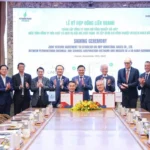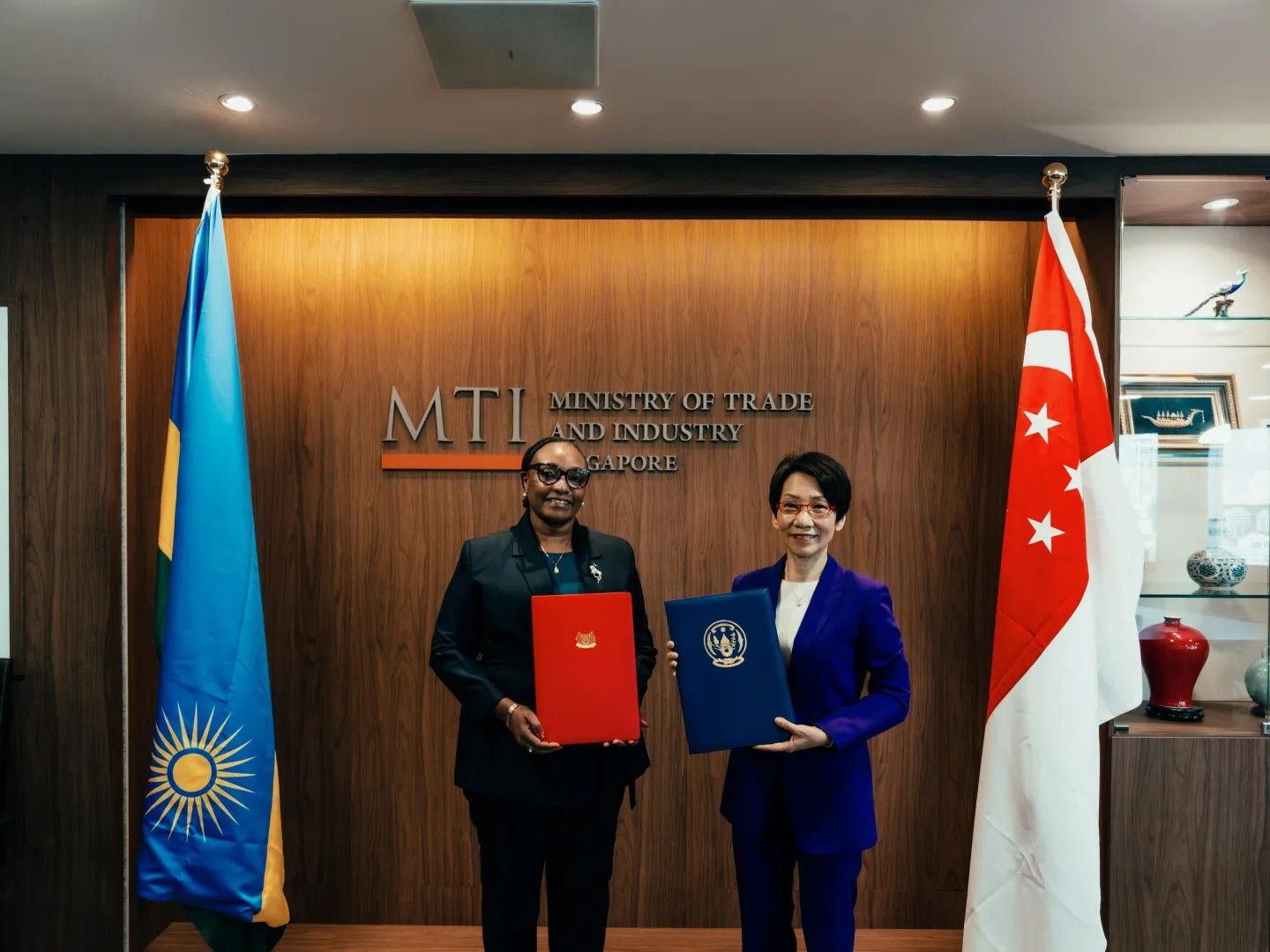
Singapore and Rwanda have jointly launched an application process for carbon credit projects under their bilateral Implementation Agreement, marking a significant milestone in cross-border climate cooperation between Southeast Asia and East Africa. This represents Singapore’s fourth call for project applications, following previous initiatives under agreements with Ghana, Peru, and Bhutan, as the city-state continues to expand its network of international carbon market partnerships.
The joint announcement signals the operationalization of the Implementation Agreement signed in May 2025 between Singapore’s Minister for Sustainability and the Environment Grace Fu and Rwanda’s Minister of Environment Dr. Valentine Uwamariya. The agreement established a framework for both nations to collaborate on generating and trading high-quality carbon credits aligned with Article 6 of the Paris Agreement, creating pathways for private sector investment in climate mitigation projects while supporting both countries’ climate ambitions.
Build the future you deserve. Get started with our top-tier Online courses: ACCA, HESI A2, ATI TEAS 7, HESI EXIT, NCLEX-RN, NCLEX-PN, and Financial Literacy. Let Serrari Ed guide your path to success. Enroll today.
Strategic Context: Singapore’s Carbon Market Infrastructure
Singapore’s carbon market strategy represents one of the most comprehensive national approaches to leveraging international carbon cooperation to meet climate targets. The framework is underpinned by the Carbon Pricing Act, which imposed a carbon tax beginning in 2019 at S$5 per tonne of emissions. This tax has progressively increased to S$25 per tonne in 2024 and 2025, with planned further increases to S$45 per tonne from 2026 onward, eventually targeting a range of S$50-80 per tonne by 2030.
To cushion the economic impact of rising carbon taxation while maintaining pressure for domestic emissions reduction, Singapore introduced the International Carbon Credit (ICC) Framework in November 2022. This framework allows carbon tax-liable companies to offset up to 5% of their taxable emissions using eligible international carbon credits starting from January 2024.
The 5% threshold is strategically calibrated to ensure that Singapore’s industrial facilities continue to prioritize direct emissions reduction while providing an additional compliance pathway particularly valuable for hard-to-abate sectors. This limit aligns with comparable jurisdictions such as South Korea and California that have adopted similar carbon pricing mechanisms with limited offset provisions.
Singapore’s approach is explicitly designed to catalyze high-quality carbon markets globally. By creating demand from Singapore-based companies for credits that meet stringent environmental integrity standards, the ICC Framework aims to channel private sector capital toward verified emissions reduction and removal projects in developing countries. This demand signal helps support the financial viability of climate projects that might otherwise struggle to attract sufficient investment.
Rwanda’s Carbon Market Development Journey
Rwanda’s participation in the Singapore partnership reflects the East African nation’s sophisticated approach to climate finance and carbon market development. In 2023, Rwanda launched its National Carbon Market Framework, a comprehensive regulatory structure designed to govern the country’s engagement with both compliance and voluntary carbon markets while ensuring environmental integrity and sustainable development co-benefits.
The framework was developed by the Rwanda Environment Management Authority (REMA), the country’s designated carbon market regulator, with technical support from the United Nations Development Programme. It establishes clear governance structures, institutional mandates, and operational procedures for project approval, carbon credit issuance, and international transfer of mitigation outcomes under Article 6 of the Paris Agreement.
By December 2020, Rwanda had already issued over 2.25 million carbon credits through both the Clean Development Mechanism and voluntary carbon market channels. Approximately 87% of these credits stemmed from clean cookstove projects—initiatives that distribute improved cooking technologies to reduce reliance on traditional biomass burning, thereby cutting greenhouse gas emissions while delivering substantial health and livelihood co-benefits to participating households.
The cookstove program exemplifies Rwanda’s strategic focus on projects that generate both climate mitigation and sustainable development outcomes. A particularly successful initiative distributed improved charcoal stoves to over 500,000 households and is projected to generate approximately Rwf27.5 billion (roughly $20 million) in carbon credit revenues by 2026 through the Standardized Crediting Framework methodology.
Rwanda’s carbon market strategy is deeply embedded within the country’s broader climate and development agenda. The nation has committed to achieving carbon neutrality by 2050 and has outlined ambitious climate actions in its revised Nationally Determined Contribution (NDC 3.0) covering the period 2025-2035. This plan requires an estimated $12 billion in climate finance, with $7 billion allocated to adaptation measures and $4.9 billion supporting mitigation efforts targeting a reduction of 14.86 million tonnes of emissions.
To operationalize its carbon market framework and build capacity for Article 6 participation, Rwanda launched a two-year $854,859 partnership with the Global Green Growth Institute in March 2025. This “Rwanda Article 6 Readiness and Carbon Market Framework Operationalization” project focuses on awareness-raising, capacity building for public and private stakeholders, establishing governance frameworks, and developing a pipeline of high-quality carbon reduction projects across key sectors including agriculture, forestry, energy, transport, and waste management.
The Singapore-Rwanda Implementation Agreement
The Implementation Agreement between Singapore and Rwanda represents the sixth such bilateral arrangement Singapore has concluded since late 2023, following earlier agreements with Papua New Guinea, Ghana, Bhutan, Peru, and Chile. This expanding network of partnerships positions Singapore as a significant player in operationalizing Article 6 cooperative approaches under the Paris Agreement.
For Rwanda, the Singapore partnership represents the country’s first Implementation Agreement with an East African focus and demonstrates the growing interest from African nations in structured bilateral carbon market cooperation. The agreement enables both governments to work together on trading high-quality carbon credits while ensuring that projects contribute to sustainable development priorities in Rwanda.
A critical feature of the framework is its alignment with Article 6.2 of the Paris Agreement, which establishes cooperative approaches for countries to engage in bilateral or multilateral transfer of mitigation outcomes. This requires implementation of “corresponding adjustments”—a mechanism ensuring that when carbon credits are transferred from Rwanda to Singapore, the emission reductions are deducted from Rwanda’s national carbon accounting to prevent double-counting of the same climate benefit.
The agreement specifies that credits generated under the framework can be used by Singapore-based carbon tax-liable companies to offset their emissions, provided the credits meet Singapore’s rigorous Eligibility Criteria. These criteria require that credits represent real, additional, quantified, verified, and permanent emissions reductions or removals with no double-counting, no net environmental harm, and no leakage.
Application Process and Requirements
The newly launched application call establishes a structured three-stage process aligned with different phases of carbon credit project development and implementation. This phased approach allows for careful evaluation and authorization before significant capital investment while providing clear milestones for project proponents.
Stage 1: Project Design and Concept Approval During the initial stage, applicants must submit detailed information about the proposed carbon credit project’s design, including methodology selection, baseline scenario determination, emissions reduction or removal quantification approach, and alignment with both Rwanda’s sustainable development priorities and Singapore’s eligibility requirements. This stage enables both governments to assess whether the proposed project concept meets fundamental criteria before significant resources are committed to detailed planning.
Stage 2: Implementation Plan Review The second stage focuses on evaluation of the comprehensive implementation plan for the carbon credit project. Applicants must demonstrate technical feasibility, financial viability, stakeholder engagement strategies, monitoring and verification approaches, and safeguards to ensure environmental and social integrity. This stage culminates in project authorization, which grants official approval for the project to proceed and establishes the basis for future carbon credit generation and transfer.
Stage 3: Corresponding Adjustments The final stage occurs after project implementation when carbon credits have been generated through verified emissions reductions or removals. At this point, the framework requires application of corresponding adjustments in accordance with Article 6, Paragraph 2 of the Paris Agreement. This technical accounting procedure ensures that credits transferred to Singapore are properly deducted from Rwanda’s national emissions inventory, maintaining the environmental integrity of the bilateral cooperation.
Interested parties can access detailed guidance on the complete application process through Singapore’s Carbon Markets Cooperation website, which provides comprehensive information on requirements, timelines, and procedures specific to the Singapore-Rwanda Implementation Agreement.
Eligible Project Types and Methodologies
The bilateral framework specifies approved carbon crediting programs and methodologies that projects must use to generate eligible carbon credits. Singapore maintains an Eligibility List that identifies approved host countries, crediting programs, and methodologies aligned with the ICC Framework requirements and Article 6 standards.
For the Singapore-Rwanda agreement, eligible projects must align with methodologies bilaterally agreed upon by both governments. Singapore has established partnerships with major international carbon crediting programs including Gold Standard, Verra’s Verified Carbon Standard, Global Carbon Council, American Carbon Registry, and the Architecture for REDD+ Transactions (ART). Projects utilizing methodologies from these programs that meet Singapore’s seven principles of environmental integrity are generally eligible for consideration.
Given Rwanda’s existing portfolio of carbon projects and development priorities, several project categories are particularly well-positioned for authorization under the bilateral framework:
Clean Cooking Initiatives: Building on Rwanda’s successful track record with improved cookstove distribution, projects that reduce reliance on traditional biomass burning for cooking can generate credits while delivering health, gender equity, and forest conservation co-benefits. These projects typically use established methodologies with strong monitoring approaches and demonstrated social impact.
Renewable Energy Deployment: Projects involving solar, hydropower, biogas, or other renewable energy generation that displace fossil fuel-based electricity or provide energy access to underserved communities align with Rwanda’s energy development priorities. The country has ambitious targets for renewable energy expansion and grid development that create favorable conditions for credible renewable energy projects.
Forestry and Land Use: Rwanda’s reforestation initiatives, sustainable forest management projects, and programs to prevent deforestation or degradation can generate carbon credits through methodologies focused on avoided emissions or carbon sequestration in biomass and soils. Given Rwanda’s commitment to landscape restoration and ecosystem conservation, this represents a priority area for project development.
Agricultural Practices: Projects implementing climate-smart agriculture, improved soil management, agroforestry, or sustainable livestock practices can generate credits while enhancing food security and farmer livelihoods. Rwanda’s predominantly agricultural economy and focus on transforming the sector create opportunities for projects that integrate carbon finance with agricultural development.
Waste Management: Initiatives addressing methane emissions from landfills, wastewater treatment, or organic waste through capture and utilization or avoidance can qualify under appropriate methodologies. As Rwanda continues urbanization and waste generation increases, sustainable waste management projects offer both climate and public health benefits.
One decision can change your entire career. Take that step with our Online courses in ACCA, HESI A2, ATI TEAS 7, HESI EXIT, NCLEX-RN, NCLEX-PN, and Financial Literacy. Join Serrari Ed and start building your brighter future today.
Environmental Integrity Safeguards
A cornerstone of Singapore’s ICC Framework is the emphasis on environmental integrity—ensuring that carbon credits represent genuine, additional climate benefits rather than merely claiming credit for emissions reductions that would have occurred anyway. The framework incorporates seven principles developed through extensive stakeholder consultation and aligned with international best practices:
No Double-Counting: Certified emissions reductions or removals cannot be counted more than once toward climate targets. This principle is operationalized through corresponding adjustments that ensure credits transferred internationally are deducted from the host country’s emissions inventory.
Additionality: Projects must generate emissions reductions or removals that exceed any reductions required by law or regulation and that would not have occurred in a conservative business-as-usual scenario. Demonstrating additionality requires showing that carbon finance is necessary for project viability.
Real and Quantified: Emissions reductions or removals must be measurable using robust methodologies and must actually occur rather than being merely projected or hypothetical. This requires rigorous monitoring, reporting, and verification by accredited independent entities.
Verified: Independent third-party verification by accredited auditors must confirm that claimed emissions reductions or removals have occurred as reported. This verification process is typically conducted by specialized firms with expertise in carbon accounting and project assessment.
Permanent: For removal projects, the carbon sequestered must be durably stored with measures to address reversal risks such as fire, disease, or land use change. This may involve buffer pools, insurance mechanisms, or long-term monitoring and replacement obligations.
No Net Harm: Projects must not cause significant environmental or social harm. This requires assessment of potential negative impacts on biodiversity, ecosystems, water resources, land rights, community livelihoods, and other dimensions of sustainable development, with measures to avoid or mitigate identified risks.
No Leakage: The project must not simply displace emissions to other locations or activities outside the project boundary. Leakage assessment examines whether project activities might cause increased emissions elsewhere that would undermine the net climate benefit.
These stringent requirements mean that not all carbon projects can generate credits eligible under the Singapore-Rwanda framework. Project developers must invest significant effort in project design, baseline setting, monitoring infrastructure, and verification processes to meet these standards. However, this rigor also means that credits meeting Singapore’s Eligibility Criteria command premium pricing and strong buyer confidence.
Economic Implications and Investment Opportunities
The Singapore-Rwanda bilateral agreement creates concrete economic opportunities for both countries while channeling climate finance toward emissions reduction in Rwanda. For Singapore-based companies facing carbon tax obligations, access to high-quality international carbon credits provides a compliance tool that can help manage the rising cost of carbon taxation as rates increase toward the planned S$50-80 per tonne range by 2030.
At Singapore’s current carbon tax rate of S$25 per tonne (approximately US$18.50), a large industrial facility emitting 1 million tonnes of CO2 equivalent annually would face a tax liability of S$25 million. The ability to offset up to 5% of emissions using international carbon credits means such a facility could potentially offset 50,000 tonnes, worth S$1.25 million in tax liability. If eligible carbon credits can be sourced at prices below the carbon tax rate, this creates immediate economic value for the purchasing company while directing funds toward climate projects in Rwanda.
For Rwanda, the agreement unlocks investment, innovation, and employment opportunities. Carbon finance can provide crucial revenue streams that make climate projects financially viable, particularly for initiatives in rural areas where traditional financing may be difficult to secure. The clean cookstove program demonstrates this dynamic: carbon revenues of Rwf27.5 billion provide substantial funding to expand distribution, subsidize stove costs for low-income households, and support ongoing maintenance and monitoring.
Beyond direct carbon revenues, authorized projects bring broader economic benefits. Construction and operation of renewable energy projects, for instance, creates employment, develops technical capacity, improves energy access, and can reduce energy costs over time. Agricultural and forestry projects can enhance soil fertility, increase crop yields, protect watersheds, and provide sustainable livelihood diversification for rural communities.
The framework also supports Rwanda’s aspiration to position itself as a leader in African carbon markets. By demonstrating capacity to develop high-integrity projects meeting international standards, Rwanda can attract investment from multiple buyer countries beyond Singapore. The country has already signed carbon market cooperation agreements with other partners including Kuwait and is actively developing its pipeline of potential projects across multiple sectors.
Broader Regional and Global Context
The Singapore-Rwanda partnership exists within a rapidly evolving global carbon market landscape shaped by the progressive operationalization of Article 6 of the Paris Agreement. Following nearly a decade of complex negotiations, countries at COP26 in Glasgow (2021) reached agreement on the core rulebook for Article 6, with subsequent refinements at later climate conferences.
Singapore has emerged as a particularly active participant in operationalizing Article 6 through bilateral agreements. As of late 2025, the city-state had signed Implementation Agreements with ten countries: Papua New Guinea, Ghana, Bhutan, Chile, Peru, Rwanda, Paraguay, Thailand, Vietnam, and Mongolia. Additional Memoranda of Understanding pointing toward future Implementation Agreements have been signed with numerous other nations across Asia, Africa, and Latin America.
This network of partnerships serves Singapore’s strategic objective to become a hub for carbon services and trading in the Asia-Pacific region. Beyond simply procuring credits for its own carbon tax compliance needs, Singapore is positioning itself as a center for carbon market infrastructure development, technical expertise, financial services, and regulatory best practices.
From the perspective of African nations, Rwanda’s engagement illustrates growing sophistication in approaching carbon markets strategically rather than simply as passive suppliers of cheap offsets. African countries collectively possess enormous potential for emissions reduction and removal through renewable energy deployment, forest conservation and restoration, agricultural transformation, and other pathways. However, realizing this potential requires not just project development but also robust regulatory frameworks, capacity building, and international partnerships that ensure fair benefit-sharing and alignment with national development priorities.
Rwanda’s National Carbon Market Framework, GGGI partnership for capacity building, and bilateral agreements with countries like Singapore represent a comprehensive approach to carbon market participation that other African nations are studying and adapting to their own contexts. This approach emphasizes country ownership, high environmental and social standards, transparent governance, and integration with broader climate and development strategies.
Implementation Challenges and Success Factors
While the Singapore-Rwanda framework creates significant opportunities, successful implementation faces several challenges that will require sustained effort from governments, project developers, and other stakeholders.
Capacity and Awareness Gaps: Despite Rwanda’s progress in developing its carbon market framework, awareness of Article 6 opportunities among potential project developers, financiers, and implementing organizations remains limited. Many private sector actors lack familiarity with the complex technical requirements for carbon project development, methodology application, monitoring protocols, and verification processes. Addressing this requires targeted capacity building, information dissemination, and technical assistance programs—precisely what initiatives like the GGGI partnership are designed to deliver.
Project Development Costs and Timelines: Developing carbon projects that meet Singapore’s stringent eligibility criteria requires substantial upfront investment in feasibility studies, baseline assessments, stakeholder consultations, methodology application, and validation by third-party auditors—all before any carbon credits can be generated or sold. These costs can be prohibitive, particularly for smaller projects or those in sectors with limited prior carbon market experience. Long timelines from concept to credit issuance can deter investment and create cash flow challenges.
Market Price Uncertainty: While premium carbon credits can command strong prices, the voluntary carbon market has experienced significant volatility and pricing pressure in recent years due to concerns about credit quality, changing buyer preferences, and evolving standards. Project developers face uncertainty about future credit prices, making financial modeling and investment decisions challenging. The emergence of Article 6 as a distinct market segment with government backing may help stabilize pricing, but uncertainty remains.
Verification and Monitoring Infrastructure: Robust carbon credit projects require ongoing monitoring of project performance and periodic third-party verification to confirm emissions reductions or removals. In some cases, this requires technical infrastructure such as measurement equipment, data management systems, and access to qualified verifiers. Building this infrastructure and ensuring its sustainability requires investment and institutional capacity.
Benefit-Sharing and Community Engagement: For projects to deliver genuine sustainable development benefits, they must involve meaningful engagement with affected communities and equitable distribution of project revenues. Ensuring that carbon finance flows benefit local populations rather than being captured by intermediaries or project developers requires transparent governance, clear contractual arrangements, and monitoring of social outcomes alongside carbon metrics.
Despite these challenges, several factors enhance prospects for successful implementation. Rwanda’s established track record with cookstove projects provides proven models that can be scaled and adapted. The government’s commitment to carbon market development, evidenced by the National Carbon Market Framework and international partnerships, creates an enabling policy environment. Growing global demand for high-integrity Article 6 credits as companies and countries face increasing pressure to meet climate commitments provides market pull. And the bilateral structure of the Singapore-Rwanda agreement allows for iterative learning and framework refinement based on implementation experience.
Future Outlook and Expansion Potential
The launch of the Singapore-Rwanda application process represents an important milestone but is only the beginning of what could become substantial bilateral climate cooperation. Both governments have expressed intentions to expand collaboration over time as experience accumulates and additional project opportunities are identified.
For Singapore, success with the Rwanda partnership complements ongoing work with other bilateral partners. In September 2025, Singapore’s National Climate Change Secretariat announced contracts for 2.175 million tonnes of nature-based carbon credits from projects in Ghana, Peru, and Paraguay, demonstrating active government procurement to help meet Singapore’s 2030 climate commitments under the Paris Agreement. The government has indicated plans for additional procurement rounds to continue building supply of eligible credits.
From Rwanda’s perspective, the application call represents an opportunity to transform climate ambition into concrete projects and investment. The country’s ambitious NDC 3.0 targets and carbon neutrality commitment by 2050 will require mobilizing the $12 billion in climate finance identified in national planning. Carbon markets represent one important financing stream alongside traditional development finance, green bonds, climate funds, and private investment.
Rwanda’s broader Climate and Nature Finance Strategy adopted in 2025 aims to scale up financial flows for climate and nature projects through diverse instruments including carbon markets, biodiversity credits, green bonds, and blended finance mechanisms. This integrated approach recognizes that no single financing mechanism can meet the full scope of climate investment needs, but carbon markets can play a catalytic role by making projects financially viable that then attract complementary funding.
The Singapore-Rwanda framework may also serve as a model for other bilateral relationships. As Article 6 continues to be operationalized globally, countries are experimenting with different cooperative approaches—some emphasizing government-to-government credit transfers, others focusing on enabling private sector participation, still others developing hybrid models. The lessons learned from implementation agreements like Singapore-Rwanda will inform the evolution of international carbon markets and potentially influence multilateral mechanisms under Article 6.4 that are also under development.
Conclusion
The Singapore-Rwanda carbon credit application process launched in January 2026 marks a tangible step toward operationalizing international carbon market cooperation under the Paris Agreement. By creating clear pathways for project authorization and credit transfer aligned with both countries’ climate objectives, the bilateral framework demonstrates how Article 6 mechanisms can channel climate finance while supporting sustainable development.
For project developers, investors, and implementing organizations, the application process represents an opportunity to develop climate projects in Rwanda that meet international standards and access financing through carbon credit sales to Singapore-based buyers. Success will require navigating complex technical requirements, securing necessary authorizations, and demonstrating genuine environmental and social benefits.
For Rwanda, the partnership opens doors to climate investment that can accelerate achievement of ambitious national climate targets while creating employment, enhancing energy access, protecting ecosystems, and supporting rural livelihoods. The framework positions the country as an increasingly sophisticated participant in global carbon markets with capacity to develop high-integrity projects attractive to discerning buyers.
For Singapore, the Rwanda agreement expands the network of bilateral partnerships that provide sources of eligible carbon credits to help companies manage carbon tax compliance while supporting the city-state’s positioning as a regional hub for carbon services and sustainable finance.
As the application process moves forward and projects are authorized, implementation experience will reveal whether the framework successfully balances environmental integrity, sustainable development, and economic viability. The outcomes will have implications not just for Singapore-Rwanda cooperation but for the broader evolution of Article 6 carbon markets as countries worldwide seek to leverage international cooperation to accelerate climate action.
Ready to take your career to the next level? Join our Online courses: ACCA, HESI A2, ATI TEAS 7 , HESI EXIT , NCLEX – RN and NCLEX – PN, Financial Literacy!🌟 Dive into a world of opportunities and empower yourself for success. Explore more at Serrari Ed and start your exciting journey today! ✨
Track GDP, Inflation and Central Bank rates for top African markets with Serrari’s comparator tool.
See today’s Treasury bonds and Money market funds movement across financial service providers in Kenya, using Serrari’s comparator tools.
Photo source: Google
By: Montel Kamau
Serrari Financial Analyst
4th February, 2026