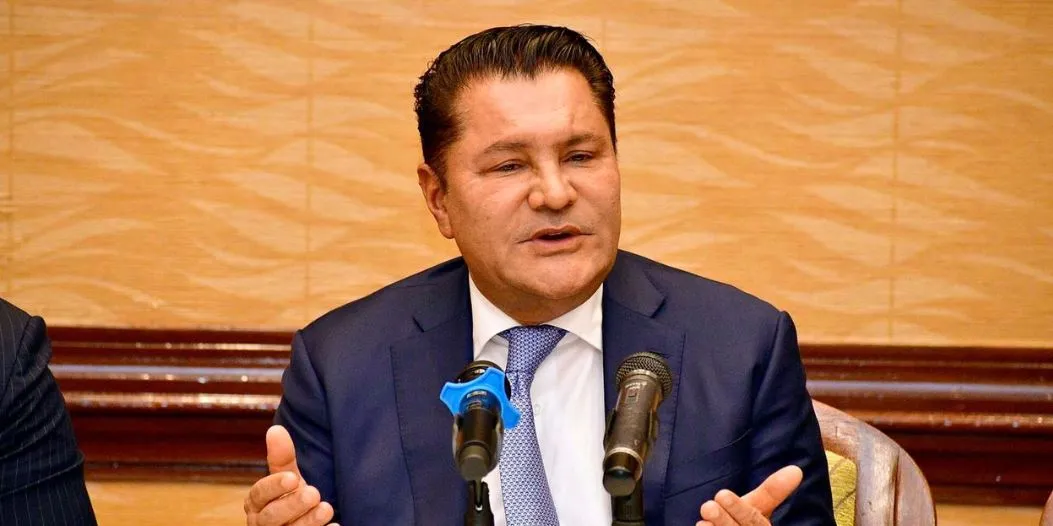











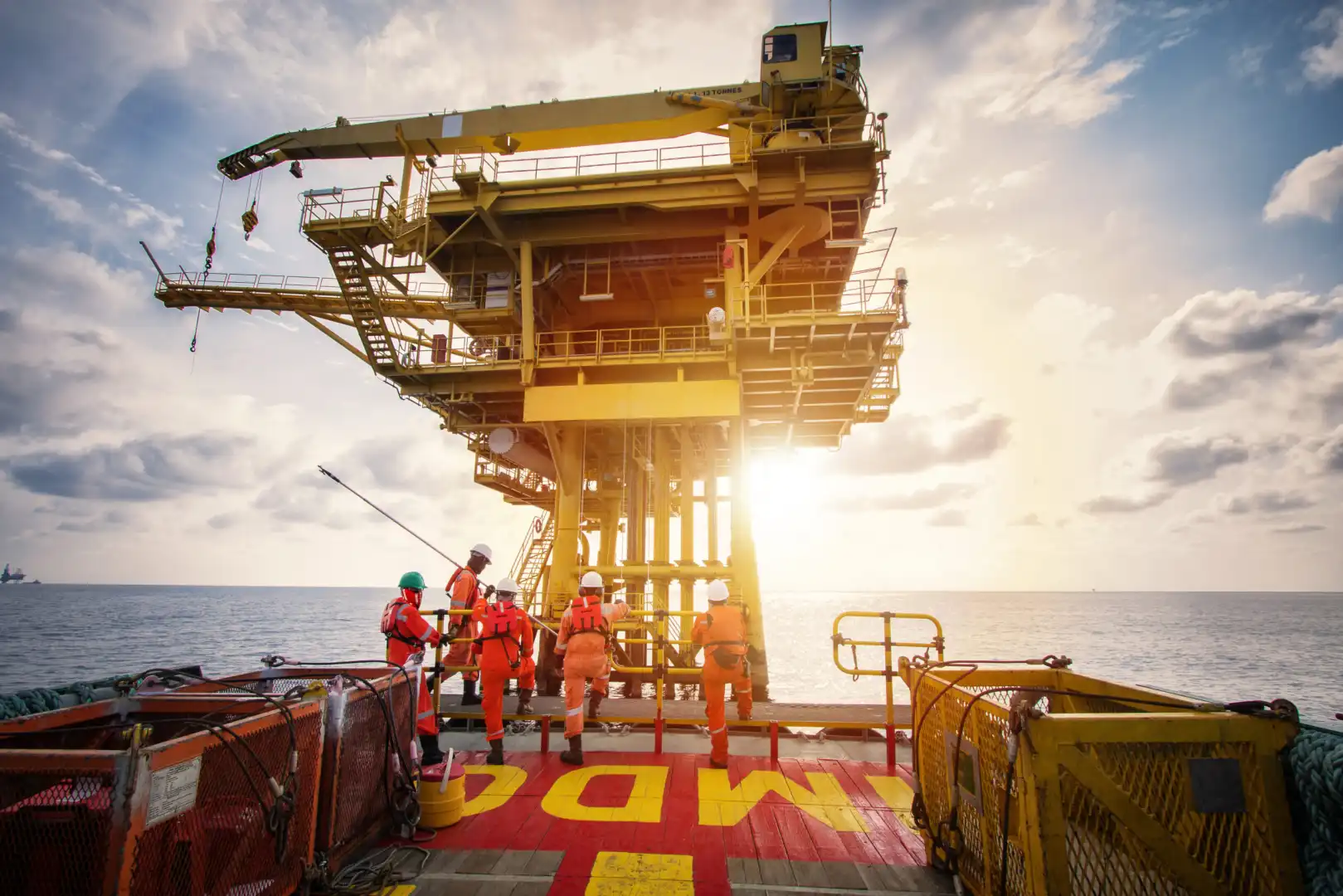
In a bold assertion of energy sovereignty, Senegal has announced plans to nationalize the Yakaar-Teranga gas project, one of the world’s largest natural gas discoveries in recent years, currently operated by Dallas-based Kosmos Energy. The move, revealed by Energy Minister Birame Souleye Diop at a conference in Diamniadio on Tuesday, marks a significant shift in the West African nation’s approach to managing its burgeoning hydrocarbon resources and aligns with a broader continental push for African nations to control their own energy destinies.
Build the future you deserve. Get started with our top-tier Online courses: ACCA, HESI A2, ATI TEAS 7, HESI EXIT, NCLEX-RN, NCLEX-PN, and Financial Literacy. Let Serrari Ed guide your path to success. Enroll today.
A Strategic Asset Returns to National Control
The Yakaar-Teranga gas field, which holds an estimated 25 trillion cubic feet of recoverable gas, surpasses even Israel’s Leviathan field, which contains approximately 22 trillion cubic feet. This massive reserve positions Senegal as a potentially major player in the global natural gas market, with the capacity to transform the nation’s energy landscape and economic trajectory.
Kosmos Energy assumed operatorship and increased its working interest to 90% in the Yakaar-Teranga field in November 2023, following British oil major BP’s strategic exit from the project. State-controlled Petrosen, Senegal’s national oil company, currently holds the remaining 10% stake. However, the existing license arrangement is time-sensitive, with Kosmos’s operating license set to expire in July 2026, adding urgency to the nationalization discussions.
“It’s a project we have operators for, and we want to nationalise it and give Petrosen, which has the expertise, the opportunity to develop this project to meet domestic gas needs… without ruling out the possibility of exporting,” Minister Diop stated at the conference, emphasizing that the decision reflects a strategic reorientation toward prioritizing Senegal’s energy security while maintaining export potential.
Petrosen’s Growing Capabilities and Expertise
The nationalization plan hinges on the capabilities of Petrosen, Senegal’s national oil company, which has rapidly evolved from a promotional entity into a sophisticated operator across the hydrocarbon value chain. Created in 1981, Petrosen initially focused on promoting Senegal’s sedimentary basin potential. By 1998, the company had expanded into upstream operations and international agreements, positioning itself for the major discoveries that would follow in the 2010s.
Petrosen’s recent track record demonstrates its operational competence. The company holds an 18% stake in the Sangomar offshore oil field, which began production in June 2024 and has already exceeded initial production forecasts. By August 2025, Sangomar had produced over 24 million barrels, prompting the Senegalese government to revise its 2025 output forecast upward to 34.5 million barrels.
Additionally, Petrosen has demonstrated its ability to manage complex, large-scale projects through its involvement in the Greater Tortue Ahmeyim (GTA) LNG project, a landmark cross-border development with Mauritania. The project, operated by BP in partnership with Kosmos Energy, Petrosen, and Mauritania’s state oil company SMH, achieved a major milestone when it loaded its first LNG cargo in April 2025, marking Senegal’s entry into global LNG exports.
The GTA project, which holds an estimated 15 trillion cubic feet of potentially recoverable gas, loaded approximately 174,000 cubic meters of LNG onto the British Sponsor carrier from the floating LNG (FLNG) vessel located 10 kilometers offshore. Phase 1 of GTA is expected to produce around 2.4 million tonnes of LNG per year, with 20-25% of output allocated for domestic consumption in both Senegal and Mauritania.
Energy Sovereignty and Continental Context
The nationalization announcement comes at a strategically significant moment, coinciding with Senegal’s hosting of the MSGBC Oil, Gas & Power 2025 conference in Dakar. President Bassirou Diomaye Faye used the platform to issue a bold call for African energy sovereignty, declaring that “Africa is ready” and emphasizing that investing in Africa should not simply be about extracting resources.
“I would like to address the entire world’s investors in these words: Africa is ready,” President Faye stated at the conference opening. “Investing in Africa is not simply about extracting resources.” His remarks reflect a broader continental shift away from the traditional model of African nations serving merely as suppliers of raw materials to becoming active determiners of their own economic destinies.
This sentiment was echoed by Dr. Omar Farouk Ibrahim, Secretary General of the African Petroleum Producers’ Organization (APPO), who stated at the conference: “I appeal to our leaders to win the African energy industry from undue dependence on foreign players. We need to promote regional centers of excellence for the oil and gas industry.”
The nationalization decision also aligns with Senegal’s 25-year economic and social development plan, launched under President Faye’s leadership, which prioritizes energy as a catalyst for national sovereignty and prosperity. The blueprint emphasizes local resource processing, aiming for 100% electricity access and full energy self-sufficiency, with incentives for value addition and domestic industrialization.
Domestic Gas Strategy and Infrastructure Development
Central to Senegal’s nationalization rationale is the imperative to meet rapidly growing domestic energy demand. The country has developed an ambitious “Gas-to-Power” strategy that envisions converting thermal power plants to natural gas, with an expected installed capacity of 335 megawatts led by the national electricity company SENELEC.
The Yakaar-Teranga project has been specifically designed with domestic market priorities in mind. Kosmos Energy stated that it has been working closely with Petrosen on a development concept that prioritizes providing cost-competitive gas to the rapidly growing domestic market, combined with an offshore LNG facility targeting exports into international markets. Development is envisioned in a phased approach, with Phase 1 providing approximately 550 million standard cubic feet of gas per day for both domestic use and LNG exports.
Senegal aims to end natural gas imports by 2027 and meet all domestic demand through local production. The Yakaar-Teranga project is structured to supply between 150 and 250 million standard cubic feet per day of gas to domestic power generation and industrial users, making it central to achieving energy independence.
At the MSGBC conference, Senegal announced plans to begin construction of a national gas pipeline network before the end of 2025 to expand energy access, power generation, and industrial growth across West Africa. This infrastructure investment will create the distribution backbone necessary to monetize gas from both Yakaar-Teranga and GTA, channeling it toward national power generation and industrial applications.
Investment Decision Timeline and Partnership Considerations
Petrosen indicated last year that it expected a final investment decision (FID) on Yakaar-Teranga in 2025, with the project estimated to require approximately $5 billion in capital investment. However, no public decision has been announced to date, and the absence of an FID likely forms part of the backdrop to the nationalization announcement.
In its statement responding to the nationalization news, Kosmos Energy noted: “Since discovering natural gas at Yakaar-Teranga in 2017 and following BP’s departure from the licence in 2023, Kosmos Energy has been working hard with Petrosen to find a suitable partner and agree a commercially viable development concept. The current Yakaar-Teranga licence expires in July 2026.”
The company’s reference to seeking “a suitable partner” suggests that negotiations over the project’s development structure and financing have been ongoing, potentially complicating matters as the license expiration approaches. Petrosen has been actively seeking additional partners to join Kosmos Energy in advancing the Yakaar-Teranga development, indicating that the project’s partnership structure remains in flux.
One decision can change your entire career. Take that step with our Online courses in ACCA, HESI A2, ATI TEAS 7, HESI EXIT, NCLEX-RN, NCLEX-PN, and Financial Literacy. Join Serrari Ed and start building your brighter future today.
Market Reaction and Financial Implications
The nationalization announcement had immediate market consequences. Kosmos Energy shares fell on Wednesday in New York, hitting a five-year low, with the stock down 6.1% at 1637 GMT. The market reaction reflects investor concerns about the company’s ability to realize value from its significant investment in the project, particularly given the uncertain compensation framework for nationalization.
The financial implications extend beyond Kosmos Energy’s immediate share price impact. The company, which operates in multiple West African jurisdictions including Ghana, Equatorial Guinea, and the Gulf of Mexico, has faced ongoing financial challenges. Analysis shows the company’s operating margin stands at -7.55%, with a net margin of -23.66%, reflecting difficulties in achieving profitability. The debt-to-equity ratio of 3.31 indicates high leverage, while liquidity metrics suggest financial constraints.
For Senegal, the nationalization represents both an opportunity and a risk. Successfully developing Yakaar-Teranga could generate substantial revenues—the government has forecast export revenues from all hydrocarbon projects approaching 900 billion CFA francs ($1.5 billion) over the period 2023-2025. However, the country must also navigate the technical and financial challenges of bringing such a large project to fruition without the deep pockets and technical expertise of a major international oil company.
Regional Integration and Export Potential
While domestic supply forms the primary rationale for nationalization, Minister Diop explicitly stated that export opportunities would not be ruled out. This dual focus reflects the project’s scale—at 25 trillion cubic feet, Yakaar-Teranga’s reserves far exceed Senegal’s domestic consumption needs for decades to come, making export revenues a natural component of any development plan.
The project’s proximity to the GTA infrastructure creates potential synergies. Both projects could leverage shared offshore facilities, logistics networks, and LNG export infrastructure, potentially reducing per-unit development costs and accelerating time to market. The experience gained from GTA’s successful startup provides a template for Yakaar-Teranga’s development, including lessons on regulatory coordination, technical execution, and commercial arrangements.
Senegal’s emphasis on regional integration, articulated by President Faye at the MSGBC conference, suggests that Yakaar-Teranga could play a role in supplying gas to neighboring countries in the MSGBC basin—Mauritania, The Gambia, Guinea-Bissau, and Guinea-Conakry. The president stressed the need to build an integrated energy market in the region, emphasizing that it represents “not just a shared geological basin but a community of shared destiny.”
Technical Considerations and Development Challenges
The Yakaar-Teranga field presents significant technical challenges that will test Petrosen’s operational capabilities. The discovery holds around 25 trillion cubic feet of advantaged gas-in-place with negligible carbon dioxide content and minimal impurities, reducing processing requirements ahead of transportation and liquefaction—a significant advantage that could lower development costs.
However, developing such a resource requires expertise in ultra-deepwater operations, subsea infrastructure, gas processing, and potentially FLNG technology if export capacity is pursued. Kosmos had envisioned an offshore development producing approximately 550 million standard cubic feet of gas per day, with domestic natural gas transported via pipeline to shore and export volumes liquefied on a floating facility similar to the GTA model.
Executing this development concept will require Petrosen to either rapidly expand its technical capabilities or secure partnerships with international companies possessing the necessary expertise. The company has been actively building its capacity, having established multiple subsidiaries including Petrosen E&P for upstream operations, Petrosen Trading & Services for downstream activities, and specialized entities for gas infrastructure and fertilizer production.
Legal and Regulatory Framework
Senegal’s move toward nationalization occurs within a legal framework established by the country’s 2019 Petroleum Code, which updated the nation’s oil and gas regulatory structure. The code reflects the spirit of Senegal’s constitution, which stipulates that the country’s natural resources belong to its people, and establishes profit-sharing mechanisms that guarantee more favorable terms to Petrosen.
Under the 2019 code, Petrosen is entitled to a minimum 10% interest in projects during the exploration phase, with this stake potentially increasing to 30% when projects reach development and exploitation stages. The code also requires oil companies to source a portion of labor and materials locally and contribute to a training fund for local workers, embedding principles of local content and capacity building into the regulatory framework.
The legal process for nationalization, including compensation mechanisms for existing stakeholders and the terms under which Petrosen would assume full control, remains to be clarified. International oil companies and investors will be watching closely to understand the precedent this sets for property rights and contract stability in Senegal’s hydrocarbon sector.
Global Energy Context and Resource Nationalism
Senegal’s nationalization decision fits within a broader global trend of resource nationalism, where producing countries seek greater control over and benefit from their natural resources. Similar moves have been observed across Africa and Latin America in recent years, as governments respond to public pressure to ensure that resource extraction generates tangible benefits for local populations.
The timing is particularly significant given global energy market dynamics. Europe’s ongoing efforts to diversify gas supplies away from Russian sources have increased demand for African LNG, potentially strengthening Senegal’s negotiating position. The International Energy Agency projects that global gas demand will continue growing through 2030, particularly in Asia and Africa, suggesting strong market fundamentals for new LNG projects.
However, the decision also carries risks. International oil companies may view the nationalization as a signal of heightened political risk, potentially affecting future foreign direct investment in Senegal’s energy sector. Balancing the desire for national control with the need for international capital, technology, and market access will be a delicate task for Senegalese policymakers.
Looking Ahead: Implications and Uncertainties
As Senegal moves forward with nationalization plans, several critical questions remain unanswered. How will Kosmos Energy be compensated for its 90% stake and the investments it has made since assuming operatorship? What timeline will govern the transition of control to Petrosen? Will the company retain any equity stake or operational role, or will it exit entirely? How will the project be financed given the estimated $5 billion capital requirement?
The answers to these questions will have significant implications not only for Yakaar-Teranga but for Senegal’s broader energy sector development. Success would validate the government’s approach and potentially encourage similar moves in other projects. Failure—whether through project delays, cost overruns, or inability to secure financing—could undermine investor confidence and slow the country’s emergence as a hydrocarbon producer.
What remains clear is that Senegal is determined to chart its own course in developing its energy resources. President Faye’s declaration at the MSGBC conference captured this spirit: “Let’s make this the decade where Africa moves from promise to power.” For Senegal, the nationalization of Yakaar-Teranga represents a concrete step toward realizing that vision, asserting control over a strategic asset that could reshape the nation’s energy future and economic trajectory for generations to come.
The success of this ambitious undertaking will depend on Petrosen’s ability to marshal the technical expertise, financial resources, and political will necessary to bring one of Africa’s largest gas discoveries from concept to commercial production—all while ensuring that the benefits flow primarily to the Senegalese people. As the July 2026 license expiration approaches, the world will be watching to see whether this bold assertion of energy sovereignty can be translated into operational reality.
Ready to take your career to the next level? Join our Online courses: ACCA, HESI A2, ATI TEAS 7 , HESI EXIT , NCLEX – RN and NCLEX – PN, Financial Literacy!🌟 Dive into a world of opportunities and empower yourself for success. Explore more at Serrari Ed and start your exciting journey today! ✨
Track GDP, Inflation and Central Bank rates for top African markets with Serrari’s comparator tool.
See today’s Treasury bonds and Money market funds movement across financial service providers in Kenya, using Serrari’s comparator tools.
Photo source: Google
By: Montel Kamau
Serrari Financial Analyst
11th December, 2025
Article, Financial and News Disclaimer
The Value of a Financial Advisor
While this article offers valuable insights, it is essential to recognize that personal finance can be highly complex and unique to each individual. A financial advisor provides professional expertise and personalized guidance to help you make well-informed decisions tailored to your specific circumstances and goals.
Beyond offering knowledge, a financial advisor serves as a trusted partner to help you stay disciplined, avoid common pitfalls, and remain focused on your long-term objectives. Their perspective and experience can complement your own efforts, enhancing your financial well-being and ensuring a more confident approach to managing your finances.
Disclaimer: This article is for informational purposes only and does not constitute financial advice. Readers are encouraged to consult a licensed financial advisor to obtain guidance specific to their financial situation.
Article and News Disclaimer
The information provided on www.serrarigroup.com is for general informational purposes only. While we strive to keep the information up to date and accurate, we make no representations or warranties of any kind, express or implied, about the completeness, accuracy, reliability, suitability, or availability with respect to the website or the information, products, services, or related graphics contained on the website for any purpose. Any reliance you place on such information is therefore strictly at your own risk.
www.serrarigroup.com is not responsible for any errors or omissions, or for the results obtained from the use of this information. All information on the website is provided on an as-is basis, with no guarantee of completeness, accuracy, timeliness, or of the results obtained from the use of this information, and without warranty of any kind, express or implied, including but not limited to warranties of performance, merchantability, and fitness for a particular purpose.
In no event will www.serrarigroup.com be liable to you or anyone else for any decision made or action taken in reliance on the information provided on the website or for any consequential, special, or similar damages, even if advised of the possibility of such damages.
The articles, news, and information presented on www.serrarigroup.com reflect the opinions of the respective authors and contributors and do not necessarily represent the views of the website or its management. Any views or opinions expressed are solely those of the individual authors and do not represent the website's views or opinions as a whole.
The content on www.serrarigroup.com may include links to external websites, which are provided for convenience and informational purposes only. We have no control over the nature, content, and availability of those sites. The inclusion of any links does not necessarily imply a recommendation or endorsement of the views expressed within them.
Every effort is made to keep the website up and running smoothly. However, www.serrarigroup.com takes no responsibility for, and will not be liable for, the website being temporarily unavailable due to technical issues beyond our control.
Please note that laws, regulations, and information can change rapidly, and we advise you to conduct further research and seek professional advice when necessary.
By using www.serrarigroup.com, you agree to this disclaimer and its terms. If you do not agree with this disclaimer, please do not use the website.
www.serrarigroup.com, reserves the right to update, modify, or remove any part of this disclaimer without prior notice. It is your responsibility to review this disclaimer periodically for changes.
Serrari Group 2025