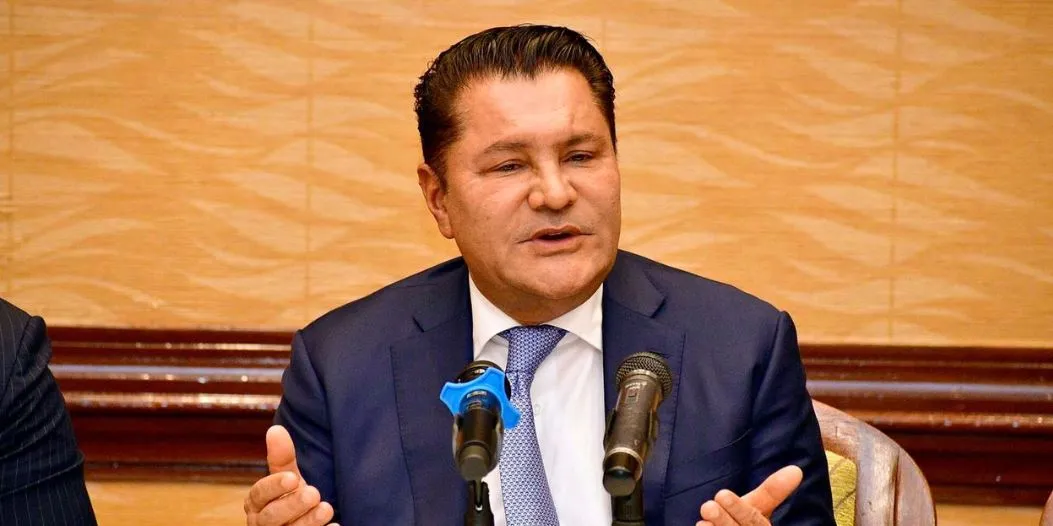











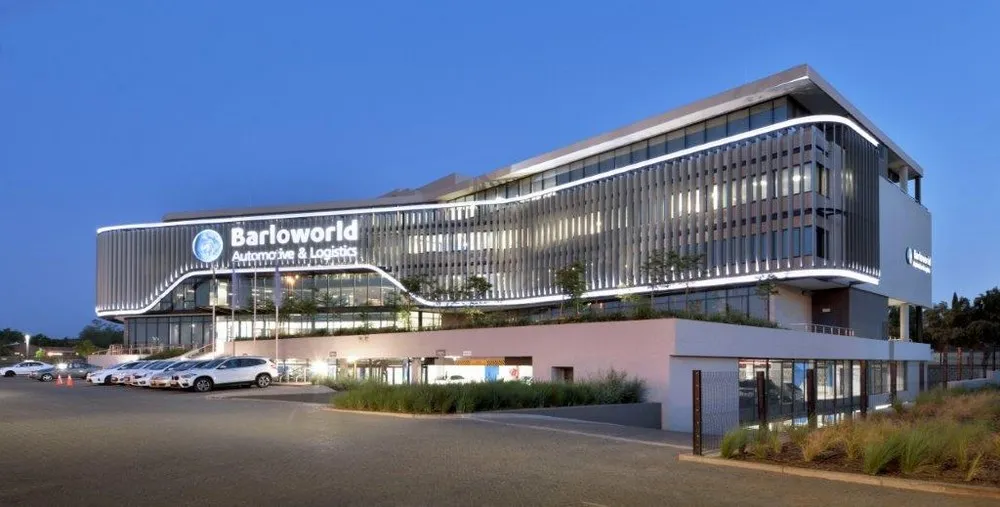
In a landmark transaction that signals the deepening commercial ties between the Middle East and Africa, Saudi Arabia’s Zahid Group has officially completed its acquisition of Barloworld Limited, the venerable South African industrial conglomerate, in a deal valued at R23 billion ($1.3 billion). The completion of this transaction marks the end of Barloworld’s 123-year history as a publicly traded company and the beginning of a new chapter under private ownership that brings together two of Caterpillar’s most significant global dealerships.
The takeover, which was finalized on January 22, 2026, represents one of the largest cross-border acquisitions in South Africa’s industrial sector and underscores the strategic importance that Gulf investors place on Africa’s infrastructure and mining economy. Barloworld’s shares were delisted from the Johannesburg Stock Exchange and A2X exchange effective January 27, 2026, bringing to a close more than eight decades of public trading that began when the company listed on the JSE in 1940.
Build the future you deserve. Get started with our top-tier Online courses: ACCA, HESI A2, ATI TEAS 7, HESI EXIT, NCLEX-RN, NCLEX-PN, and Financial Literacy. Let Serrari Ed guide your path to success. Enroll today.
A Century-Old Industrial Powerhouse Changes Hands
Barloworld’s transformation from a modest wool trading business to one of Africa’s most significant industrial distributors is a story deeply intertwined with South Africa’s economic development. Founded in 1902 by Major Ernest “Billy” Barlow in Durban, the company began as Thomas Barlow and Sons, initially selling wool products and general engineering equipment. The company’s trajectory changed dramatically in 1927 when Charles Sydney “Punch” Barlow, Major Barlow’s son, secured the exclusive Caterpillar dealership for the Natal and Transvaal regions of South Africa.
This pivotal partnership with Caterpillar, which has now spanned nearly a century, positioned Barloworld at the heart of Southern Africa’s industrial and infrastructure development. The company played instrumental roles in building South Africa’s road networks, dams, harbors, and airports, with former President Nelson Mandela acknowledging at the company’s centenary celebrations in 2002 how Caterpillar equipment had become “the builders of our economy.”
Over the decades, Barloworld evolved from a diversified conglomerate with interests spanning mining, information technology, building materials, and motor vehicles into a more focused industrial equipment and services company. The company currently operates in 16 countries worldwide, with its Equipment division serving 11 African nations as the exclusive Caterpillar distributor across Southern Africa.
The Zahid Group: A Strategic Partner with Deep Roots
The acquisition brings Barloworld under the ownership of one of Saudi Arabia’s most established business conglomerates. Founded in the 1940s by the late Sheikh Yousuf Mahmoud Zahid, Zahid Group began its journey representing American car manufacturers and has operated across construction, energy, manufacturing, finance, hospitality, and oil services sectors. Today, the Group operates across 14 sectors in 33 countries with over 7,300 employees.
The strategic alignment between Zahid Group and Barloworld runs remarkably deep, centered on their shared relationship with Caterpillar. Zahid Group has served as Caterpillar’s authorized dealer in Saudi Arabia since 1950, following what company lore describes as a fortuitous meeting between a Caterpillar representative and the Zahid family. This partnership led to the formation of Zahid Tractor & Heavy Machinery Co. Ltd. in 1967, which has grown into one of the world’s largest Caterpillar dealerships.
Over 75 years of partnership with Caterpillar, Zahid Tractor has played a pivotal role in Saudi Arabia’s infrastructure development, contributing to landmark projects including the King Fahd Causeway connecting Saudi Arabia and Bahrain, the industrial cities of Jubail and Yanbu, and more recently the Riyadh Metro and the North-South Railway. The company operates 24 branches across Saudi Arabia and manages operations spanning construction machinery, commercial vehicles, and rental divisions.
The acquisition effectively unites two of Caterpillar’s most significant global dealerships under common ownership. Barloworld operates the second-largest Caterpillar equipment remanufacturing plant in the world and holds exclusive Cat dealer rights across most of Southern Africa, while Zahid Tractor manages one of the largest Cat dealerships globally with exclusive rights across Saudi Arabia. Caterpillar itself has publicly expressed support for the transaction, recognizing the strategic value of bringing these two long-standing dealer partners together.
A Complex Journey to Completion
The path to finalizing the acquisition proved considerably more challenging than initially anticipated, requiring nearly 14 months of negotiations, regulatory approvals, and shareholder engagement. Zahid Group, which had been accumulating Barloworld shares for four years and already owned approximately 19% of the company, formally approached Barloworld’s board in February 2024.
When the consortium comprising Gulf Falcon Holding Limited (a wholly-owned subsidiary of Zahid Group) and Entsha Proprietary Limited announced its firm intention to acquire Barloworld in December 2024, it offered R120 per share, representing a 30% premium to the previous day’s closing price. The offer initially valued the entire issued share capital at approximately R22.8 billion, though a dividend payment meant shareholders would ultimately receive R123.10 per share, representing an 87% premium over the company’s 30-day average share price prior to the announcement.
However, the transaction faced immediate resistance from some of Barloworld’s largest shareholders. Silchester International Investors, representing clients who controlled almost 18% of Barloworld’s stock, publicly stated it was unwilling to accept less than R130 per share and warned that full privatization would be unlikely without support from primary shareholders.
More significantly, concerns emerged about potential conflicts of interest involving Barloworld CEO Dominic Sewela, who held ties to Entsha, the South African entity that would control 51% of the acquiring consortium. These governance concerns, combined with questions about transparency in the transaction process, led to the initial shareholder vote in February 2025 failing to achieve the required majority, with only 37% of shareholders voting in favor.
The Public Investment Corporation (PIC), South Africa’s state-owned asset manager representing 22% of Barloworld’s shares, voted against the proposal, citing concerns about corporate governance processes. The rejection triggered a standby offer mechanism, allowing the consortium to proceed with acquiring shares from willing sellers while working to address the concerns raised by major stakeholders.
Regulatory Approval and Transformation Commitments
The breakthrough came when the consortium engaged directly with the PIC and agreed to implement a comprehensive 13.5% broad-based black economic empowerment (B-BBEE) structure following Barloworld’s delisting. This commitment addressed the PIC’s public interest concerns and aligned the transaction with South Africa’s transformation objectives, leading the PIC to accept the standby offer in April 2025.
In June 2025, South Africa’s Competition Commission recommended approval of the transaction subject to several public interest conditions. The Competition Tribunal officially approved the acquisition on August 18, 2025, imposing conditions designed to protect employment and advance economic transformation.
The conditions require the merged entity to refrain from retrenching any South African employees for two years after the merger’s implementation as a direct result of the transaction. More significantly, the approval mandates a two-phase empowerment structure that will give historically disadvantaged persons and certain employees a collective 13.5% shareholding in the company.
Phase 1 of the empowerment plan retains the Barloworld Empowerment Foundation’s existing 3.5% stake. Phase 2 requires the acquisition of an additional 10% within 24 months of delisting, split equally between an employee share ownership program (ESOP) and a women-led consortium of historically disadvantaged persons. The Competition Tribunal specified that the merged entity must provide details of the proposed Phase 2 transactions at least 100 days before the 24-month period expires, including the identity of the women-led HDP consortium.
These empowerment conditions were deemed critical for securing approval, as they align the deal with South Africa’s broader transformation and public interest policies while ensuring meaningful participation by historically disadvantaged South Africans in the ownership and governance of a major industrial company.
Final Stages and Compulsory Acquisition
Following regulatory approval, the consortium’s standby offer, which remained open until November 7, 2025, successfully gathered acceptances from shareholders representing more than 90% of Barloworld’s shares. This threshold was crucial, as it allowed the consortium to invoke Section 124(1) of South Africa’s Companies Act 2008 to compulsorily acquire all remaining shares from shareholders who had not accepted the offer.
The compulsory acquisition mechanism ensured that minority shareholders who opposed the transaction or failed to tender their shares would still receive the offer price, preventing a fragmented ownership structure that could complicate the company’s transition to private ownership. The compulsory acquisition was completed on January 22, 2026, with payment made in accordance with legal requirements.
The delisting of Barloworld’s ordinary shares from both the JSE and A2X took effect from the start of trading on January 27, 2026, with both exchanges approving the delisting in line with their respective listing rules. Financial and legal advisers to the consortium included Deutsche Bank, Standard Bank of South Africa, Tamela Holdings, Bowmans, and Webber Wentzel, while global law firm Ashurst advised the consortium on what it described as the first cross-border public-to-private transaction led by a non-governmental entity based in the Gulf Cooperation Council region.
One decision can change your entire career. Take that step with our Online courses in ACCA, HESI A2, ATI TEAS 7, HESI EXIT, NCLEX-RN, NCLEX-PN, and Financial Literacy. Join Serrari Ed and start building your brighter future today.
Strategic Rationale: Africa’s Construction Boom
The acquisition reflects Zahid Group’s strategic bet on Africa’s infrastructure and construction growth trajectory. The African construction industry is projected to grow almost 27% by 2029, according to market data firm Mordor Intelligence, driven by government infrastructure investments, expanding consumer markets, and urbanization across the continent.
Barloworld’s strategic importance extends beyond its Caterpillar dealership rights. The company operates comprehensive industrial equipment and services capabilities, including the largest Caterpillar Rebuild Centre in the Southern Hemisphere and one of only 15 certified component repair centers in Caterpillar’s global dealer network. These assets provide crucial support for mining, construction, energy, and transportation industries across multiple African countries.
For the six months ended March 31, 2025, Barloworld reported group revenue of R18.1 billion, though this represented a 5.8% decline compared to the prior period. The decline was driven primarily by a 36.8% fall in revenue at the company’s Russian subsidiary Vostochnaya Technica due to ongoing international sanctions, and a 6% decline in its Southern African equipment business. However, excluding the Russian operations, group revenue decreased by only 2.2% year-on-year, while EBITDA grew by 3%, demonstrating the relative health of the core business.
The company’s operational challenges in Russia, where it has operated since 1998 through Vostochnaya Technica, highlight both the complexity of managing a geographically diverse industrial business and the rationale for private ownership. The ability to make longer-term strategic decisions without quarterly public market pressures could facilitate Barloworld’s navigation of such challenges and its focus on high-potential African markets.
Preserving Identity While Enabling Growth
Despite the scale of the transaction and the change in ownership, Zahid Group has made explicit commitments to maintain Barloworld’s South African identity and operational independence. The consortium has committed that Barloworld will continue to be a South African headquartered business operating business as usual, with no changes to working conditions foreseen as a direct result of the transaction.
The Barloworld name and brand will be retained, recognizing the goodwill associated with the company’s 122-year history in the South African market and the strength of its brand within the markets where it operates. The existing management team remains in place, with Zahid Group taking board representation but not assuming day-to-day operational control.
This approach mirrors successful private equity and strategic acquisition models where operational expertise and local knowledge are preserved while benefiting from the capital, networks, and strategic resources of new ownership. In Barloworld’s case, the combination of Zahid Group’s global capital base, its extensive experience as one of the world’s largest Caterpillar dealers, and its connections across Middle Eastern and African markets could unlock new growth opportunities for Barloworld’s operations.
The transaction structure, with Entsha holding a 51% majority stake in the acquiring consortium and Zahid Group holding 49%, further reinforces the South African character of the ownership structure. Entsha, a 100% Black-owned entity linked to the Katlego Le Masego Trust, ensures that the company will be majority Black-owned following the transaction—a significant milestone for such a large and historically significant South African industrial company.
Alignment with Saudi Vision 2030
The acquisition aligns closely with Saudi Arabia’s Vision 2030 economic diversification agenda, which seeks to reduce the kingdom’s dependence on oil revenues and develop new economic sectors. Vision 2030 explicitly prioritizes international investment and the development of Saudi companies into global players across multiple industries.
Zahid Group’s expansion into Africa through the Barloworld acquisition represents exactly the kind of strategic international investment that Vision 2030 envisions. The deal includes commitments around skills development and youth training, including a Saudi-South Africa upskilling program that aligns with both Saudi Arabia’s human capital development priorities and South Africa’s transformation objectives.
The transaction also demonstrates how Saudi capital can serve as a bridge between Middle Eastern resources and African development needs. By bringing together Zahid’s financial resources, technical expertise, and regional experience with Barloworld’s established African operations and market knowledge, the deal creates a platform for expanded infrastructure development across both regions.
Gulf Investment Surge in Africa
The Barloworld acquisition represents one manifestation of a broader trend of increasing Gulf investment in African infrastructure, energy, and industrial sectors. As traditional Western capital sources have become more cautious about African exposure, Gulf investors have rapidly positioned themselves as long-term partners in the continent’s development.
ACWA Power, the Riyadh-based renewable energy company, has signed a memorandum of understanding to invest $10 billion in South Africa’s renewable energy industry over the next decade. Dubai-based logistics company DP World operates nine ports on the African continent, representing a significant investment in trade infrastructure.
These investments reflect several converging factors. Gulf states possess substantial capital reserves from hydrocarbon revenues that require diversification into productive assets. Africa offers growth potential that mature Western markets lack, particularly in infrastructure, energy, and natural resources sectors where Gulf companies have developed deep expertise. Geographic proximity and existing trade relationships provide additional advantages for Gulf investors in African markets.
The investments also represent a strategic rebalancing of economic influence on the continent. While China has been Africa’s largest trading partner and infrastructure investor in recent years, and European countries maintain historical commercial ties, Gulf states are carving out their own sphere of influence focused on sectors where they can add genuine value and build long-term partnerships.
For African countries, Gulf investment offers several potential advantages. Unlike debt-financed infrastructure projects that can create fiscal pressures, equity investments like the Barloworld acquisition bring capital, technical expertise, and operational know-how without adding to government debt burdens. Gulf investors often demonstrate patience for longer-term returns compared to some Western financial investors, potentially aligning better with the timelines required for infrastructure and industrial development.
Implications for South Africa’s Industrial Landscape
The successful completion of the Barloworld acquisition carries significant implications for South Africa’s industrial and investment landscape. At the most immediate level, the transaction demonstrates that despite domestic economic pressures, South Africa can still attract substantial foreign investment in strategic assets when there is clear value creation potential and alignment with local transformation objectives.
The R23 billion price tag represents one of the largest foreign acquisitions of a South African company in recent years, occurring at a time when South Africa faces economic headwinds including high unemployment, electricity supply constraints, and political uncertainty. The fact that the transaction proceeded to completion, albeit with considerable negotiation and regulatory engagement, sends a positive signal about South Africa’s investment climate for patient, strategic capital.
The transaction also highlights the evolving nature of corporate ownership in South Africa. The shift from public to private ownership for a company as significant as Barloworld reflects broader global trends, but the specific ownership structure—with majority Black ownership through Entsha and mandated further transformation through the B-BBEE commitments—demonstrates how private transactions can be structured to advance economic transformation objectives.
The employment protection commitments, while time-limited to two years, provide some assurance to workers and communities dependent on Barloworld’s operations. The company’s more than 6,000 employees, the majority based in South Africa, represent not just jobs but also skills, expertise, and institutional knowledge built over decades.
Challenges and Opportunities Ahead
While the acquisition’s completion marks a significant milestone, the real work of value creation and transformation now begins. Barloworld faces several operational and strategic challenges that new ownership will need to address.
The company’s Russian operations, while representing a relatively small portion of overall business, remain a complicating factor due to ongoing international sanctions. Decisions about the future of these operations will require careful navigation of legal, ethical, and commercial considerations.
More broadly, Barloworld operates in cyclical industries heavily dependent on infrastructure spending, commodity prices, and economic growth. Mining and construction activity can fluctuate significantly based on factors including global commodity demand, government fiscal positions, and broader economic conditions. Managing through these cycles while investing for long-term growth will require disciplined capital allocation and strategic patience.
The integration of Zahid Group’s strategic resources, networks, and expertise with Barloworld’s operations presents both opportunities and execution risks. While the companies share a common foundation through their Caterpillar partnerships, they operate in different regulatory environments, serve different customer bases, and have distinct corporate cultures shaped by their respective national and organizational histories.
The mandatory B-BBEE transactions that must be implemented within 24 months create both opportunity and pressure. Successfully structuring these transactions to genuinely empower historically disadvantaged persons while maintaining operational effectiveness will be crucial for the long-term legitimacy and success of the ownership transition.
On the opportunity side, the combination of Zahid’s financial resources with Barloworld’s market position could enable investments in new technologies, expanded service offerings, and geographic growth that might have been difficult to pursue as a listed company facing quarterly earnings pressures. The capital-intensive nature of equipment distribution and servicing businesses often requires patient, long-term investment that can be easier to execute in a private ownership structure.
A New Chapter for an Industrial Icon
As Barloworld begins its new chapter as a privately-held company under Zahid Group’s ownership, it joins a select group of South African industrial companies that have transitioned from public markets to private ownership in recent years. The transaction marks not just a change in ownership structure but potentially a new model for how large-scale African companies can access capital, expertise, and networks from Gulf partners while maintaining their African identity and advancing transformation objectives.
For South Africa, the successful completion of the acquisition despite initial resistance and governance concerns demonstrates that the country’s regulatory and corporate governance frameworks can accommodate complex transactions while protecting legitimate stakeholder interests. The Competition Tribunal’s conditions around employment protection and economic transformation show how regulators can use their approval powers to advance broader public policy objectives.
For Zahid Group, the acquisition represents a major expansion of its global footprint and its first significant investment in sub-Saharan Africa. The company inherits not just Barloworld’s assets and operations but also its responsibilities as a major employer, its role in critical infrastructure sectors, and its legacy as one of South Africa’s most significant industrial companies.
As the global economy continues to evolve, with traditional Western dominance in African investment being challenged by new players from China, India, and now increasingly the Gulf states, the Barloworld-Zahid transaction offers a case study in how these relationships might develop. Unlike purely extractive or exploitative models of investment, the structure of this transaction—with its emphasis on maintaining South African ownership and control, advancing economic transformation, protecting employment, and leveraging complementary expertise—suggests the potential for more balanced and mutually beneficial partnerships.
The coming years will reveal whether this optimistic vision proves accurate or whether the challenges of integrating operations, navigating different regulatory and business environments, and delivering returns to multiple stakeholders prove overwhelming. What is clear is that the completion of this R23 billion transaction represents a significant moment in the commercial relationship between Saudi Arabia and South Africa, and potentially a template for future Gulf investment in African industrial assets.
As both regions navigate the complexities of economic diversification, infrastructure development, and sustainable growth, the Zahid-Barloworld partnership will serve as an important test case for whether Gulf capital and African operations can combine to create value for investors, employees, customers, and the broader communities they serve. The 123-year-old company that Major Ernest Barlow founded in two small rented rooms in Durban has entered perhaps its most transformative era, with the potential to play a central role in both South African and broader African industrial development for decades to come.
Ready to take your career to the next level? Join our Online courses: ACCA, HESI A2, ATI TEAS 7 , HESI EXIT , NCLEX – RN and NCLEX – PN, Financial Literacy!🌟 Dive into a world of opportunities and empower yourself for success. Explore more at Serrari Ed and start your exciting journey today! ✨
Track GDP, Inflation and Central Bank rates for top African markets with Serrari’s comparator tool.
See today’s Treasury bonds and Money market funds movement across financial service providers in Kenya, using Serrari’s comparator tools.
photo source: Google
By: Montel Kamau
Serrari Financial Analyst
27th January, 2026
Article, Financial and News Disclaimer
The Value of a Financial Advisor
While this article offers valuable insights, it is essential to recognize that personal finance can be highly complex and unique to each individual. A financial advisor provides professional expertise and personalized guidance to help you make well-informed decisions tailored to your specific circumstances and goals.
Beyond offering knowledge, a financial advisor serves as a trusted partner to help you stay disciplined, avoid common pitfalls, and remain focused on your long-term objectives. Their perspective and experience can complement your own efforts, enhancing your financial well-being and ensuring a more confident approach to managing your finances.
Disclaimer: This article is for informational purposes only and does not constitute financial advice. Readers are encouraged to consult a licensed financial advisor to obtain guidance specific to their financial situation.
Article and News Disclaimer
The information provided on www.serrarigroup.com is for general informational purposes only. While we strive to keep the information up to date and accurate, we make no representations or warranties of any kind, express or implied, about the completeness, accuracy, reliability, suitability, or availability with respect to the website or the information, products, services, or related graphics contained on the website for any purpose. Any reliance you place on such information is therefore strictly at your own risk.
www.serrarigroup.com is not responsible for any errors or omissions, or for the results obtained from the use of this information. All information on the website is provided on an as-is basis, with no guarantee of completeness, accuracy, timeliness, or of the results obtained from the use of this information, and without warranty of any kind, express or implied, including but not limited to warranties of performance, merchantability, and fitness for a particular purpose.
In no event will www.serrarigroup.com be liable to you or anyone else for any decision made or action taken in reliance on the information provided on the website or for any consequential, special, or similar damages, even if advised of the possibility of such damages.
The articles, news, and information presented on www.serrarigroup.com reflect the opinions of the respective authors and contributors and do not necessarily represent the views of the website or its management. Any views or opinions expressed are solely those of the individual authors and do not represent the website's views or opinions as a whole.
The content on www.serrarigroup.com may include links to external websites, which are provided for convenience and informational purposes only. We have no control over the nature, content, and availability of those sites. The inclusion of any links does not necessarily imply a recommendation or endorsement of the views expressed within them.
Every effort is made to keep the website up and running smoothly. However, www.serrarigroup.com takes no responsibility for, and will not be liable for, the website being temporarily unavailable due to technical issues beyond our control.
Please note that laws, regulations, and information can change rapidly, and we advise you to conduct further research and seek professional advice when necessary.
By using www.serrarigroup.com, you agree to this disclaimer and its terms. If you do not agree with this disclaimer, please do not use the website.
www.serrarigroup.com, reserves the right to update, modify, or remove any part of this disclaimer without prior notice. It is your responsibility to review this disclaimer periodically for changes.
Serrari Group 2025