










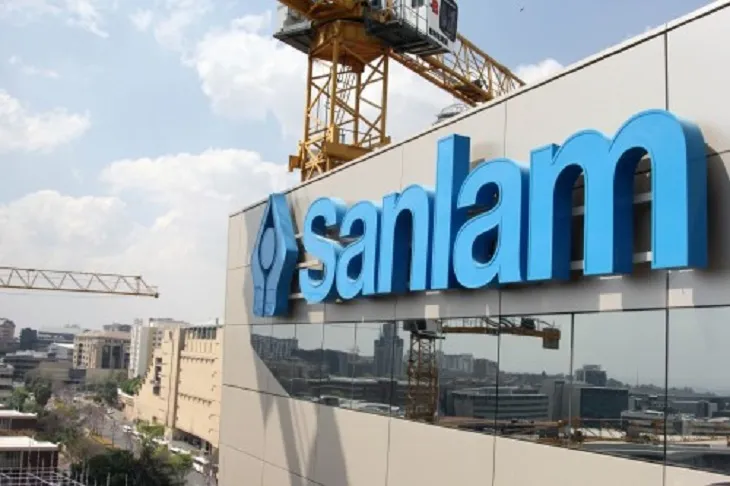
On a day when Kenya’s banking sector was celebrating record profits and historic dividend declarations, shares in Sanlam Kenya Plc quietly moved in the opposite direction. The insurer’s stock declined 3.27 percent on March 11 on the Nairobi Securities Exchange, a drop that analysts and market watchers read not as a company-specific crisis, but as a textbook case of sector rotation — investors pulling money out of insurance counters to capture the far more compelling income story being written by Kenya’s tier-one banks.
The timing was impossible to separate from context. That same day, KCB Group PLC unveiled a full-year profit of KSh 68.4 billion for the year ended December 2025, alongside a total dividend of KSh 7 per share — the largest distribution in the bank’s 130-year history. For income-focused investors scanning the NSE for yield, the contrast between what banking stocks were offering and what the insurance sector could match was stark, direct, and immediately actionable.
Markets move fast; don’t get left behind. We’ve paired the Serrari Group Market Index with a curated Marketplace and a comprehensive Financial Literacy Course to ensure you have the data—and the skills—to act on it.
The Arithmetic of Rotation
To understand why Sanlam Kenya was caught in the slipstream of KCB’s results day, it helps to look at the yield landscape across the NSE. The KCB total dividend of KSh 7 per share, against a share price of KES 78.25 at close on March 11, represents a dividend yield that far exceeds what insurance counters can currently offer. Standard Chartered Kenya leads NSE dividend yields at approximately 15.1%, followed by British American Tobacco Kenya at 12.0% and Stanbic Holdings at 11.5%. Co-operative Bank offers around 10.4%. KCB, at its new payout level, is moving firmly into that bracket.
Absa Bank Kenya — the other banking counter cited by investors repositioning on March 11 — has also been on a significant run. Absa’s share price gained 25.3% year-to-date by late February 2026, climbing from KES 24.70 at the start of the year to close at KES 30.95. Absa has an annual dividend of KES 1.75 per share, with a semi-annual payment cycle — a cadence that appeals to investors seeking regular income rather than a single annual payout. For an investor holding Sanlam Kenya, which carries a market capitalisation of just KES 1.48 billion and trades with thin liquidity, the opportunity cost of remaining in that position when banking counters are offering scale, liquidity, and growing dividends simultaneously is difficult to justify.
The NSE Banking Sector Index had already closed January 2026 up 5.59%, outperforming both the NSE 20 (up 5.10%) and the broader NASI (up 4.71%) — the opening salvo in what has become a sustained re-rating of Kenyan bank stocks relative to the rest of the bourse. Insurance stocks, by contrast, have not enjoyed the same tailwinds, and Sanlam’s March 11 session crystallised that divergence in a single trading day’s price action.
Sanlam Kenya: A Company Mid-Transformation
The sell-off on March 11 was not a verdict on Sanlam Kenya’s long-term story — it was, rather, a consequence of the company being in the middle of one of the most consequential strategic transformations in its history, at a moment when patient capital is in short supply.
Sanlam Kenya, formerly Pan Africa Insurance Holdings Limited, is a Kenya-based holding company whose principal operating subsidiary, Pan Africa Life Assurance Limited, underwrites long-term insurance business across life risk, life savings, pensions, and investment segments. It has been one of Kenya’s leading life insurers for decades. But the past two years have seen the company’s structure, ownership, and strategic direction shift substantially, as it became embedded within a far larger continental architecture.
The catalyst was the formation of SanlamAllianz — a pan-African joint venture between Sanlam Limited (one of the largest non-banking financial services companies in Africa) and Allianz SE, which entered the East African market in 2020 by acquiring 51–66% stakes in Jubilee’s general insurance units for KSh 10.8 billion. The partnership officially launched as SanlamAllianz in September 2023 with a combined equity value of R35 billion, split 60 percent to Sanlam and 40 percent to Allianz, creating what the companies described as the continent’s largest pan-African non-banking financial services group — operating across 26 countries.
As part of this consolidation, Sanlam Kenya had already transferred its general insurance portfolio — assets valued at KSh 2.78 billion — to Jubilee Allianz Kenya, carving out that business and leaving the Kenyan entity focused exclusively on life insurance, pensions, and investments. In October 2025, shareholders approved a resolution to rebrand the company as Sanlam Allianz Holdings (Kenya) Plc — a name change that will formally align it with its parent’s continental identity.
The Rights Issue: Capital Raised, Confidence Tested
The most defining corporate event of Sanlam Kenya’s recent history was its KSh 2.5 billion rights issue, which opened on April 25, 2025 and closed on May 12, 2025. The mechanics of the deal tell a nuanced story. The issue recorded an 82 percent uptake from shareholders, with the remaining 18 percent covered by underwriter Sanlam Allianz Africa, ensuring the full amount was raised. The outcome was technically a fully subscribed issue, but the reliance on underwriting to fill the gap pointed to limited retail investor enthusiasm.
The purpose of the capital raise was unambiguous. CEO Dr Patrick Tumbo stated explicitly that proceeds would be used to repay a Stanbic Bank loan, bringing the group’s indebtedness to more sustainable levels and freeing up operational and financial flexibility. The company had spent years weighed down by high-cost debt, and the rights issue represented both a practical financial restructuring and a signal of the parent group’s commitment to the Kenyan entity’s long-term viability.
The dilution implications, however, were significant. To raise KSh 2.5 billion at KSh 5.00 per share, Sanlam Kenya issued 500 million new shares, increasing total outstanding shares substantially and raising SanlamAllianz and Hubris Holdings’ combined stake to 71.5%, with the Capital Markets Authority granting an exemption from takeover rules to facilitate the restructuring. The dilution this created for minority shareholders contributed to the sharp price volatility that followed — the stock had rallied to a post-announcement high of KSh 10.35 in early April 2025 before falling 43 percent to KSh 5.88 by May 9 as the market recalibrated around the dilution reality.
By early 2026, the stock had largely recovered from that trough. It opened the year at KES 8.48 and had gained over 21.5% year-to-date by late February, touching KES 10.30. But this recovery had placed the stock at a level where it was vulnerable to the kind of profit-taking and reallocation that KCB’s results day triggered on March 11.
Context is everything. While you follow today’s updates, use the Serrari Market Index and Marketplace to spot emerging shifts. Need to sharpen your edge? Our Financial Literacy Course turns these insights into a professional-grade strategy.
Fundamental Recovery, Structural Repositioning
Beneath the volatility of corporate events and shareholder repositioning, the fundamental picture for Sanlam Kenya has been improving. The company posted a profit before tax of KSh 1.66 billion for the year ended December 2024, a dramatic recovery from KSh 242.8 million in 2023. Profit after tax reached KSh 1.05 billion — a 922 percent rise in profit after tax that reversed a KSh 125.9 million loss the year before. This turnaround was driven by better underwriting performance, stronger investment income, and the company’s deliberate exit from non-core operations.
Sanlam Life Insurance Limited generated an after-tax profit of KSh 1.38 billion in FY2024, while Sanlam General Insurance returned to profitability with an after-tax profit of KSh 337 million. These numbers represent real underlying improvement in the operating businesses, not merely financial engineering.
The H1 2025 results, however, showed a more complex picture. The company reported a profit after tax of just KSh 30.9 million for the first half of 2025 — an 89 percent decline from KSh 282.2 million in the same period of 2024. This sharp drop reflected the costs and disruptions associated with the rights issue, the general insurance portfolio transfer, and the broader restructuring. Insurance revenue nonetheless rose to KSh 3.73 billion from KSh 3.52 billion, and total assets grew to KSh 41.3 billion from KSh 39.2 billion in December 2024, suggesting the underlying business continues to grow even as transformation costs weigh on near-term earnings. Solvency ratios for both Sanlam Life Insurance (220 percent) and Sanlam General Insurance (194 percent) remained well above regulatory minimums, reflecting a balance sheet that is structurally sound even if the income statement is temporarily compressed.
The Structural Gap: Why Banks Win the Dividend Race
The March 11 selloff crystallised a fundamental challenge that confronts the insurance sector across the NSE, not just Sanlam Kenya: in a market increasingly oriented toward dividend income and near-term yield, insurance companies cannot currently match what banks are offering.
Kenya’s banking sector delivered double-digit index gains throughout 2025, and the NASI hit record highs above 202 points in early February 2026, driven primarily by bank stock performance. The catalyst is clear: the Central Bank of Kenya has been in an aggressive easing cycle, cutting the Central Bank Rate from 11.25% in January 2025 to 9.00% by December, reducing returns on Treasury bills and money market instruments and pushing yield-seeking investors further out on the risk curve — directly into equities, and specifically into dividend-paying bank stocks.
Banks are uniquely positioned to benefit from this environment. Lower rates reduce their funding costs while sustaining lending margins on existing books. They are reporting improved asset quality, growing loan books, and expanding digital revenue. They have the scale to pay large dividends while retaining enough capital to sustain growth. KCB’s total dividend payout of KSh 22 billion — 133 percent higher than the prior year — is not an outlier; it is the culmination of a multi-year earnings recovery story that the market has been tracking and pricing in progressively.
Insurance companies face a structurally different dynamic. They are capital-intensive, subject to different regulatory capital requirements, and their profitability is more closely tied to investment portfolio returns and claims experience than to the interest rate tailwinds that are lifting banks. Low insurance penetration in Kenya — a structural market development challenge — also means growth requires long-term investment in distribution, education, and product development before it converts to bottom-line returns. For a company like Sanlam Kenya that is simultaneously managing a corporate rebrand, a balance sheet restructuring, and a portfolio rationalisation, paying competitive dividends is simply not the immediate priority.
What the Rotation Means for Investors
The March 11 session for Sanlam Kenya was not catastrophic — a 3.27 percent decline in a single session is within the normal range for a small-cap, low-liquidity counter on a day when peer stocks are attracting significant buying interest. Sanlam Kenya is the 37th most traded stock on the NSE, averaging only around 26,000 shares per session valued at approximately KES 229,000 — meaning even modest institutional selling pressure can move the price meaningfully.
What the day’s trading does reflect, however, is the opportunity cost calculus that institutional and sophisticated retail investors are currently applying. For a portfolio manager managing a KES-denominated income fund, holding Sanlam Kenya — a stock in mid-restructuring with compressed near-term earnings and a history of sharp price swings around corporate events — is increasingly difficult to justify when banks like KCB are generating 22.5% returns on equity, paying record dividends, and trading with deep liquidity.
The longer-term question for Sanlam Kenya is whether the transformation it is undertaking — clearing debt, refocusing on core life insurance and pensions, embedding within the SanlamAllianz continental platform, and eventually rebranding — can position the company as a compelling income story in its own right once the heavy lifting is complete. The fundamental recovery seen in FY2024 suggests the operational trajectory is heading in the right direction. The rights issue has materially improved the balance sheet. And the backing of a parent group with a combined equity value exceeding R35 billion ($2 billion) and operations across 26 African markets provides a strategic depth that few other NSE-listed companies can claim.
But transformation takes time, and time costs capital. On March 11, 2026, the market’s verdict was clear: when banks are handing out record cheques, insurance stocks — however promising their medium-term story — will have to wait.
Don’t just read the news—navigate it. Track trends with the Serrari Group Market Index, discover your next move in the Serrari Marketplace, and master the “how” with our Financial Literacy Course.
Photo Source: Google
By: Montel Kamau
Serrari Financial Analyst
12th March, 2026
Article, Financial and News Disclaimer
The Value of a Financial Advisor
While this article offers valuable insights, it is essential to recognize that personal finance can be highly complex and unique to each individual. A financial advisor provides professional expertise and personalized guidance to help you make well-informed decisions tailored to your specific circumstances and goals.
Beyond offering knowledge, a financial advisor serves as a trusted partner to help you stay disciplined, avoid common pitfalls, and remain focused on your long-term objectives. Their perspective and experience can complement your own efforts, enhancing your financial well-being and ensuring a more confident approach to managing your finances.
Disclaimer: This article is for informational purposes only and does not constitute financial advice. Readers are encouraged to consult a licensed financial advisor to obtain guidance specific to their financial situation.
Article and News Disclaimer
The information provided on www.serrarigroup.com is for general informational purposes only. While we strive to keep the information up to date and accurate, we make no representations or warranties of any kind, express or implied, about the completeness, accuracy, reliability, suitability, or availability with respect to the website or the information, products, services, or related graphics contained on the website for any purpose. Any reliance you place on such information is therefore strictly at your own risk.
www.serrarigroup.com is not responsible for any errors or omissions, or for the results obtained from the use of this information. All information on the website is provided on an as-is basis, with no guarantee of completeness, accuracy, timeliness, or of the results obtained from the use of this information, and without warranty of any kind, express or implied, including but not limited to warranties of performance, merchantability, and fitness for a particular purpose.
In no event will www.serrarigroup.com be liable to you or anyone else for any decision made or action taken in reliance on the information provided on the website or for any consequential, special, or similar damages, even if advised of the possibility of such damages.
The articles, news, and information presented on www.serrarigroup.com reflect the opinions of the respective authors and contributors and do not necessarily represent the views of the website or its management. Any views or opinions expressed are solely those of the individual authors and do not represent the website's views or opinions as a whole.
The content on www.serrarigroup.com may include links to external websites, which are provided for convenience and informational purposes only. We have no control over the nature, content, and availability of those sites. The inclusion of any links does not necessarily imply a recommendation or endorsement of the views expressed within them.
Every effort is made to keep the website up and running smoothly. However, www.serrarigroup.com takes no responsibility for, and will not be liable for, the website being temporarily unavailable due to technical issues beyond our control.
Please note that laws, regulations, and information can change rapidly, and we advise you to conduct further research and seek professional advice when necessary.
By using www.serrarigroup.com, you agree to this disclaimer and its terms. If you do not agree with this disclaimer, please do not use the website.
www.serrarigroup.com, reserves the right to update, modify, or remove any part of this disclaimer without prior notice. It is your responsibility to review this disclaimer periodically for changes.
Serrari Group 2025