











In a resounding demonstration of investor confidence in Kenya’s corporate debt market, telecommunications giant Safaricom PLC has announced that its inaugural green bond attracted applications totaling Ksh 41.4 billion—nearly three times the initial target of Ksh 15 billion. The exceptional demand, representing a 175.7 percent oversubscription, forced the company to exercise its full Ksh 5 billion greenshoe option, ultimately raising Ksh 20 billion for the first tranche of its ambitious Medium-Term Note Programme.
The overwhelming response to Safaricom’s bond issuance, which closed on December 5, 2025, represents a watershed moment for Kenya’s capital markets. With bids exceeding even the Ksh 40 billion ceiling set by the Capital Markets Authority for the entire Medium-Term Note Programme, the historic oversubscription underscores robust investor appetite for fixed-income instruments linked to sustainability and corporate governance.
Build the future you deserve. Get started with our top-tier Online courses: ACCA, HESI A2, ATI TEAS 7, HESI EXIT, NCLEX-RN, NCLEX-PN, and Financial Literacy. Let Serrari Ed guide your path to success. Enroll today.
Strategic Capital Mobilization Through Kenya’s Largest Green Bond
Safaricom’s Ksh 40 billion Domestic Medium-Term Note Programme received approval from the Capital Markets Authority on November 7, 2025, establishing a flexible framework for the telecommunications leader to issue various types of debt securities including green, social, and sustainability bonds across multiple tranches. The programme represents a strategic shift in Safaricom’s financing approach, diversifying funding sources beyond traditional bank loans and foreign currency borrowing that had previously exposed the company to exchange rate volatility.
The five-year fixed-rate green bond carries an annual coupon of 10.4 percent, with interest payments made semi-annually in June and December. A major attraction for investors is that the interest income is fully tax-exempt under Kenyan law, allowing them to receive the complete return without withholding tax deductions that typically apply to corporate debt instruments. This tax advantage effectively translates to a pre-tax equivalent yield exceeding 12 percent for taxable investors, positioning Safaricom’s offering as highly competitive within Kenya’s fixed-income landscape.
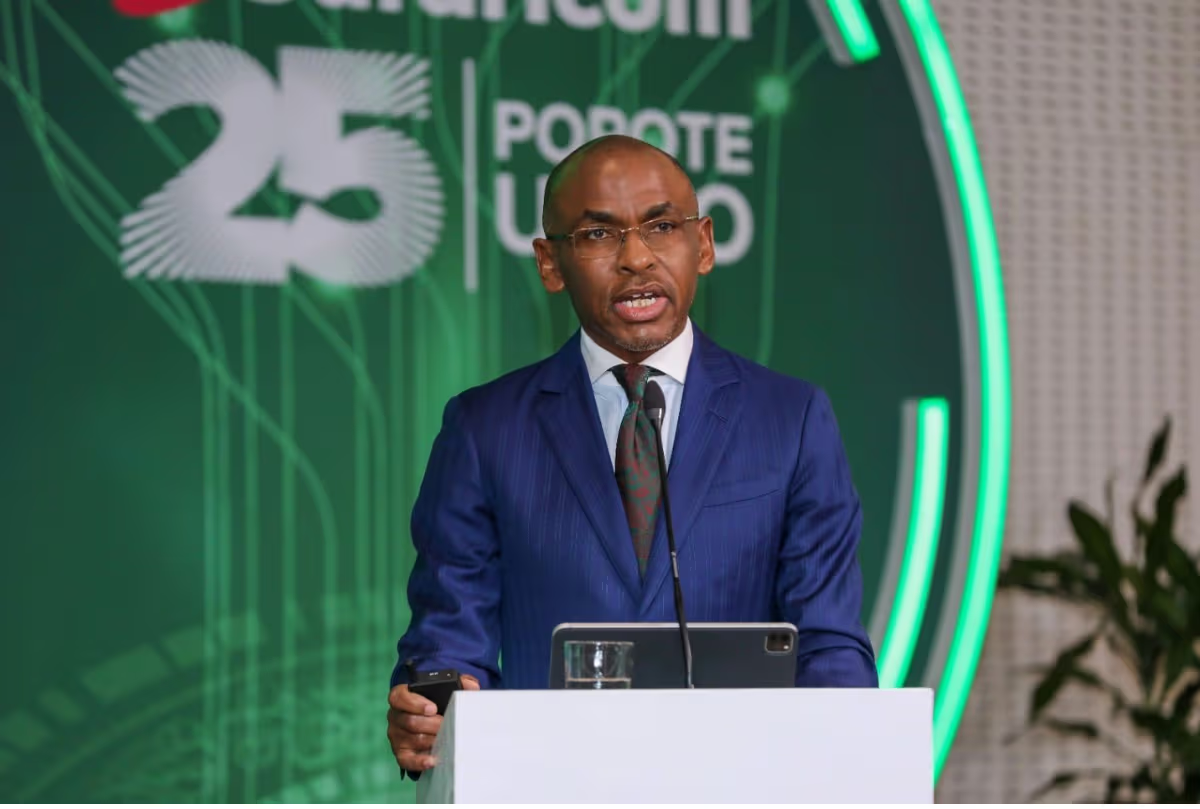
CEO Peter Ndegwa emphasized the significance of the market response, stating: “We are pleased with the market’s response. It signals confidence not only in our balance sheet, but also in the vision and strategy we are executing. Taking up the greenshoe option allows more investors to participate in Safaricom’s growth, rather than locking them out.” The company will refund Ksh 21.4 billion to investors whose applications could not be accommodated even after exercising the greenshoe option.
Pioneering Mobile-Based Bond Subscriptions in East Africa
One of the most innovative aspects of Safaricom’s bond issuance was its groundbreaking accessibility through mobile platforms. The offering represented Kenya’s first corporate bond to allow subscriptions via USSD code (483810#), dramatically lowering barriers to participation for retail investors who might otherwise find capital markets intimidating or inaccessible. This digital-first approach aligns with Safaricom’s core business model and demonstrates how financial technology can democratize access to investment opportunities traditionally dominated by institutional players.
Investors could participate through three distinct channels: the mobile USSD platform for maximum convenience, an online web portal at safaricombond.e-offer.app for those preferring comprehensive digital interfaces, or through licensed stockbrokers and placing agents including SBG Securities, Stanbic Bank Kenya, Standard Chartered Bank Kenya, and Dyer & Blair Investment Bank for investors seeking professional guidance.
The minimum subscription threshold of Ksh 50,000 with increments of Ksh 10,000 struck a balance between accessibility for individual investors and maintaining the bond’s appeal to institutional participants. This structured approach enabled the issuance to attract a diverse investor base spanning retail participants, pension funds, insurance companies, asset managers, and high-net-worth individuals—a breadth of participation that contributed to the exceptional oversubscription rate.
Green Bond Framework and Sustainability Commitments
Proceeds from the green bond will be exclusively earmarked for eligible green projects that advance Safaricom’s environmental sustainability agenda and support Kenya’s climate objectives. The company has established a comprehensive Green Bond Framework, independently reviewed by Sustainalytics to ensure alignment with international standards including the International Capital Market Association’s Green Bond Principles. This independent verification provides investors with transparency and assurance regarding the environmental impact and proper allocation of their investment.
Eligible green projects encompass several strategic categories. First, renewable energy investments including expansion of solar power installations across base transmission stations and network infrastructure, reducing reliance on grid electricity and lowering the company’s carbon footprint. Second, energy efficiency improvements through advanced power management systems, modern cooling technologies for data centers, and network equipment upgrades that reduce overall energy consumption while maintaining or enhancing service quality.
Third, low-carbon network expansion focused on deploying energy-efficient 4G and 5G infrastructure that delivers higher data capacity with lower energy intensity compared to legacy technologies. Fourth, green buildings incorporating sustainable design principles, energy-efficient systems, and environmentally responsible construction practices for Safaricom facilities. These categories directly support Kenya’s climate commitments while enabling Safaricom to reduce operating costs and enhance long-term competitiveness.
Group Chief Finance Officer Dilip Pal stated: “This transaction marks a major milestone in our strategic financing plans, enabling Safaricom to diversify funding sources and tap into the local debt capital market. As Kenya’s largest green bond issuance, and the first to allow mobile-based subscriptions, it reinforces our commitment to innovation, accessibility, and sustainable growth. The new bond creates a flexible funding framework to support long-term investments in connectivity, fixed broadband, and financial services.”
Addressing Strategic Capital Needs Across Two Markets
Safaricom’s capital mobilization through the Medium-Term Note Programme addresses critical funding requirements across its operations in both Kenya and Ethiopia. In Kenya, the proceeds will support continued network densification and technology upgrades as the company responds to exponential growth in data consumption. Mobile data has become Safaricom’s fastest-growing revenue segment, with customers increasingly relying on smartphones for communication, entertainment, financial services, and business activities. Meeting this demand requires substantial investment in network capacity, fiber infrastructure, and next-generation technologies including 5G deployment.
The company’s Ethiopian operations represent a particularly capital-intensive growth area. Safaricom Ethiopia, launched in October 2022 as the first private competitor to state-owned Ethio Telecom, has pursued an aggressive expansion strategy aimed at capturing market share in Africa’s second-most populous nation. The Ethiopian subsidiary reached 11.2 million three-month active customers by September 2025, with network coverage expanding to 55 percent of Ethiopia’s population through deployment of over 3,300 cell sites.
However, this rapid expansion has required enormous capital investment. Safaricom Ethiopia posted an operating loss of 47 billion Ethiopian birr for the fiscal year ending March 2025, despite achieving 270 percent revenue growth. These losses, while anticipated during the heavy investment phase, underscore the capital demands of building telecommunications infrastructure in a market with over 120 million people. The consortium backing Safaricom Ethiopia has committed to investing $8.5 billion over ten years, with the green bond proceeds helping support this ambitious expansion while maintaining financial flexibility for the Kenyan parent company.
M-PESA Platform Driving Financial Services Growth
M-PESA, Safaricom’s mobile money platform, continues to be a cornerstone of the company’s growth strategy and value proposition. The platform has evolved far beyond its original person-to-person money transfer functionality to become a comprehensive financial services ecosystem encompassing merchant payments, bill payments, savings products, credit offerings, insurance services, and international remittances. M-PESA contributed 45.4 percent of Safaricom’s service revenue, reaching Ksh 88.06 billion with 14 percent year-on-year growth.
The recent launch of Fintech 2.0, an AI-powered upgrade of the M-PESA platform, doubled transaction processing capacity from 6,000 to 12,000 transactions per second, ensuring the infrastructure can accommodate continued growth without compromising user experience. This technological advancement is crucial as M-PESA processes billions of shillings in transactions daily, serving as critical financial infrastructure for millions of Kenyans who lack access to traditional banking services.
In Ethiopia, M-PESA is gradually gaining traction in a historically cash-dominated economy. The platform reached 2.4 million 90-day active customers and processed transactions worth 15.8 billion Ethiopian birr during the fiscal year ending March 2025. New use cases including fuel payments, international remittances, and strategic integrations with banks for utility bill payments and airtime purchases have broadened the platform’s value proposition and accelerated adoption.
Context Within Kenya’s Evolving Corporate Bond Market
Safaricom’s successful bond issuance occurs within a broader renaissance of Kenya’s corporate debt market, which had experienced a prolonged slowdown following several high-profile defaults and restructurings that undermined investor confidence. By late September 2025, only Ksh 25.9 billion in corporate bonds remained outstanding, a fraction of the market’s historical peak and significantly below the scale of government securities trading.
However, recent months have witnessed renewed activity. East African Breweries recently issued an Ksh 11 billion, five-year fixed-rate note that was oversubscribed by 52.4 percent, raising Ksh 16.76 billion after exercising its greenshoe option. Family Bank raised Ksh 4.42 billion through a public bond and an additional Ksh 6.2 billion via private placement. Kenya Mortgage Refinance Company’s Ksh 1.4 billion debut bond was oversubscribed nearly five times, attracting over Ksh 8 billion from investors.
This resurgence in corporate bond activity reflects several converging factors. First, declining interest rates have made fixed-income investments more attractive as bond prices rise when yields fall. Second, improved economic stability and manageable inflation have reduced macroeconomic risks that previously deterred investors. Third, regulatory improvements by the Capital Markets Authority have strengthened investor protections and market transparency. Fourth, strong corporate fundamentals among blue-chip issuers like Safaricom provide comfort to risk-averse investors seeking alternatives to government securities.
Market analysts note that debt financing offers compelling advantages over equity capital for established companies. Corporate bonds typically carry lower cost of capital than equity, avoid shareholder dilution that rights issues entail, provide predictable repayment schedules that facilitate financial planning, and can be structured with covenants protecting both issuer and investor interests. For investors, corporate bonds from creditworthy issuers offer yields substantially higher than government securities while maintaining investment-grade risk profiles.
Listing and Trading on Nairobi Securities Exchange
The green notes will be listed and commence trading on the Nairobi Securities Exchange on December 16, 2025, providing investors with secondary market liquidity should they wish to exit their positions before maturity. The notes will be issued in electronic form only, with ownership maintained through book-entry records in investors’ Central Depository and Settlement Corporation (CDSC) accounts. This dematerialized approach eliminates risks associated with physical certificates while facilitating efficient trading and settlement.
Interest payments will be credited to investors’ accounts semi-annually on June 11 and December 11 each year, with the principal amount due at maturity on December 11, 2030. The company stated that refund processing for unsuccessful or excess applications began on the issue date, with funds returned to applicants through the same channels used for subscription payments.
Secondary market trading will enable investors to adjust their portfolios based on changing circumstances, though corporate bonds typically experience less liquidity than equities or government securities. Market makers and institutional investors are expected to provide bid-ask quotes, though spreads may widen during periods of market stress. Investors considering secondary market purchases should evaluate prevailing yields relative to alternative fixed-income opportunities and assess whether changes in Safaricom’s credit profile or operating performance warrant adjustments to their required risk premium.
Financial Performance Underpinning Investor Confidence
Safaricom’s ability to attract such overwhelming demand for its bond issuance rests on a foundation of strong financial performance and market leadership. The company reported 52.1 percent growth in net income to Ksh 42.7 billion for the half-year period ending September 2025, driven by robust M-PESA growth and improving performance in Ethiopia where losses narrowed significantly despite continued heavy investment.
Service revenue reached Ksh 199.9 billion for the six-month period, up 11.1 percent year-on-year, with earnings before interest and tax surging 54.5 percent to Ksh 65.2 billion. This strong operational performance demonstrates Safaricom’s ability to generate substantial cash flows to service debt obligations while continuing to invest in network infrastructure and business expansion. The company maintained its 80 percent dividend policy, returning substantial capital to shareholders while retaining adequate resources for growth initiatives.
However, Safaricom’s balance sheet also reflects the capital intensity of its expansion strategy. The company closed the September 2025 half-year period with total debt of Ksh 117 billion, including Ksh 61.2 billion in long-term borrowings and Ksh 55 billion in short-term obligations. The green bond proceeds will partially refinance existing debt while extending average maturity and reducing reliance on shorter-term facilities that expose the company to rollover risk.
Credit rating agencies and fixed-income analysts generally view Safaricom as one of East Africa’s strongest corporate credits, supported by its dominant market position in Kenya’s telecommunications sector, recurring revenue model with high customer retention, diversified business lines spanning voice, data, and financial services, substantial cash generation capacity, and sophisticated management team with demonstrated execution capability. These factors contributed to investor willingness to accept the 10.4 percent tax-exempt yield, which implies confidence in Safaricom’s creditworthiness and business prospects.
One decision can change your entire career. Take that step with our Online courses in ACCA, HESI A2, ATI TEAS 7, HESI EXIT, NCLEX-RN, NCLEX-PN, and Financial Literacy. Join Serrari Ed and start building your brighter future today.
Broader Implications for Kenya’s Capital Markets Development
Safaricom’s successful bond issuance carries significance extending well beyond the company’s individual financing needs. The transaction demonstrates that Kenya’s capital markets possess the depth and sophistication to absorb large-scale corporate debt offerings when structured appropriately and backed by strong fundamentals. The Ksh 41.4 billion in applications—exceeding even the total programme size—indicates that domestic institutional and retail investors have substantial capital seeking attractive fixed-income opportunities.
The green bond structure aligns with global trends toward sustainable finance and environmental, social, and governance (ESG) investing. International institutional investors increasingly screen investments based on ESG criteria, and the availability of credible green bonds in emerging markets enables these investors to deploy capital toward sustainable development objectives while earning competitive returns. Safaricom’s framework, with independent verification by Sustainalytics, meets international standards that facilitate participation by ESG-focused funds.
The mobile-based subscription mechanism pioneered by Safaricom could transform retail participation in capital markets. Kenya boasts one of the world’s highest mobile money penetration rates, with over 90 percent of adults accessing financial services through their mobile phones. Leveraging this infrastructure for securities transactions removes traditional barriers including physical branch visits, paper-intensive application processes, and lengthy settlement cycles. If successful, this model could be replicated for other securities offerings, potentially democratizing access to investment opportunities previously dominated by wealthy individuals and institutional investors.
The Capital Markets Authority has signaled support for innovation in market access, recognizing that expanding the investor base strengthens market resilience and provides issuers with deeper pools of capital. Mobile platforms also generate valuable data on retail investor behavior and preferences, enabling more targeted investor education and product development. However, regulators must balance innovation with appropriate investor protection, ensuring retail participants understand investment risks and can make informed decisions.
Strategic Context of Government Stake Transaction
Safaricom’s capital markets activity occurs against the backdrop of a pending transaction that will reshape the company’s shareholder structure. The government of Kenya is preparing to transfer a 15 percent stake in Safaricom to Vodacom Group, the South African telecommunications company that is already a significant shareholder. This transaction is expected to raise Ksh 244.5 billion for the National Treasury, reducing government dependence on debt financing for budget deficits.
Under the transaction terms, the government will receive Ksh 40.1 billion in upfront dividends, representing a discounted value of expected future payouts from its remaining 20 percent stake. This financial engineering enables the government to monetize future dividend streams immediately rather than receiving payments over many years, though at a cost in terms of total value surrendered. The transaction reflects the government’s fiscal pressures and willingness to divest stakes in profitable state-owned or partially-owned enterprises to raise revenue.
For Safaricom, the transaction will increase Vodacom’s influence while reducing government shareholding. This shift could enhance commercial decision-making and reduce political interference in company operations, though it may also raise sensitivities around national interests given Safaricom’s strategic importance to Kenya’s economy and digital infrastructure. The company’s ability to successfully execute the green bond issuance demonstrates strong market confidence despite uncertainty surrounding the ownership transition.
Competitive Positioning in Regional Telecommunications
Safaricom’s dominant market position in Kenya provides a substantial competitive moat that underpins investor confidence. The company serves over 40 million customers across voice, data, and financial services, commanding approximately 65 percent market share in mobile telecommunications and even higher shares in mobile money. This scale creates powerful network effects and economies of scale that smaller competitors struggle to match.
However, Safaricom faces intensifying competition on multiple fronts. In the telecommunications space, Airtel Kenya has invested heavily in network improvements and pricing strategies aimed at capturing share, particularly in the data segment where switching costs are relatively low. In mobile money, banks and fintech startups are launching digital wallet services leveraging smartphone proliferation and seeking to disintermediate M-PESA’s dominant position.
Regulatory evolution also creates both opportunities and challenges. The Communications Authority of Kenya continues refining interconnection rules, spectrum allocation policies, and competitive safeguards. While Safaricom benefits from regulatory stability and mature relationships with policymakers, it must remain vigilant against policies that could disadvantage the market leader in favor of competitors under the guise of promoting competition.
The Ethiopian market presents different competitive dynamics. As a new entrant challenging the established monopoly of state-owned Ethio Telecom, Safaricom Ethiopia occupies the challenger role rather than the defensive posture it maintains in Kenya. This positioning enables more aggressive pricing and marketing strategies, though it also means competing against an incumbent with deep government relationships and extensive existing infrastructure. The regulatory environment in Ethiopia, while liberalizing, remains less mature and predictable than Kenya’s, adding execution risk to the expansion strategy.
Technology Evolution and Capital Investment Requirements
Telecommunications remains one of the most capital-intensive industries, requiring continuous investment to maintain competitive network quality and expand capacity in line with traffic growth. Data consumption has surged globally, driven by video streaming, social media, cloud services, and increasingly bandwidth-intensive applications. Safaricom reports that average data usage per customer continues climbing at double-digit annual rates, necessitating network capacity expansions that stay ahead of demand curves.
The transition from 4G to 5G technology represents the next major investment cycle. While 4G LTE networks remain adequate for most current applications, 5G offers substantially lower latency, higher data speeds, and capacity to support emerging use cases including Internet of Things devices, autonomous vehicles, and immersive augmented reality experiences. Early deployment of 5G positions Safaricom to capture premium enterprise customers requiring cutting-edge connectivity and establish technology leadership that reinforces brand perception.
However, 5G deployment requires new spectrum licenses, upgraded core network infrastructure, densified cell site networks to overcome millimeter-wave signal propagation challenges, and substantial spending on base stations and transmission equipment. The green bond proceeds will partially finance these investments, though the full 5G buildout will require multiple tranches of the Medium-Term Note Programme and possibly additional funding sources.
Beyond radio access networks, Safaricom is investing heavily in fiber infrastructure to backhaul traffic from cell sites and provide fixed broadband services to homes and businesses. Fiber-to-the-home connections generate higher average revenue per user than mobile-only customers while exhibiting lower churn rates. However, fiber deployment involves digging trenches, laying cables, and connecting individual premises—laborious activities requiring patient capital given the extended payback periods.
Environmental Sustainability and Corporate Social Responsibility
Safaricom’s sustainability commitments extend beyond the green bond framework to encompass broader environmental, social, and governance objectives. The company has pledged to achieve carbon neutrality across its operations by 2050, with interim targets including significant reductions in emissions intensity as the network expands. Meeting these commitments requires transitioning away from diesel generators at off-grid cell sites toward solar power systems, improving energy efficiency across data centers and network infrastructure, and optimizing logistics and fleet operations to minimize fuel consumption.
The company’s corporate social responsibility initiatives, conducted primarily through the Safaricom Foundation and M-PESA Foundation, focus on education, healthcare, environmental conservation, and economic empowerment. These programs have invested billions of shillings in community development projects across Kenya and, more recently, Ethiopia. Beyond philanthropic motivations, these investments strengthen Safaricom’s social license to operate and build goodwill among stakeholders including regulators, communities, and customers.
In Ethiopia specifically, Safaricom has allocated over 100 million Ethiopian birr to community initiatives including donating laptops, routers, and free internet access to schools nationwide, providing assistance to fire-affected businesses and natural disaster victims, supporting humanitarian organizations, and developing the Kefeta youth program which has reached 2 million young people with digital skills training and livelihood development. These investments recognize that telecommunications infrastructure delivers maximum social value when accompanied by programs building digital literacy and enabling productive technology use.
Regulatory Framework and Policy Environment
Kenya’s telecommunications sector operates under a generally favorable regulatory framework that balances promoting competition with enabling infrastructure investment. The Communications Authority of Kenya serves as the primary regulator, administering spectrum licenses, enforcing interconnection rules, protecting consumer rights, and mediating disputes between operators. While regulatory decisions don’t always favor Safaricom—particularly on issues like mobile termination rates where the company’s dominant position creates tensions—the overall environment supports private sector investment and innovation.
The Capital Markets Authority’s approval of Safaricom’s Ksh 40 billion Medium-Term Note Programme reflects sophisticated capital markets regulation that enables complex financing structures while protecting investor interests. The authority’s oversight encompasses disclosure requirements, governance standards, market conduct rules, and investor education initiatives. Recent regulatory enhancements have strengthened confidence in Kenya’s capital markets, contributing to the revival in corporate bond issuances.
Tax policy significantly influences investment returns and capital allocation decisions. The tax exemption for interest income on green bonds, modeled after infrastructure bond tax treatment, creates powerful incentives for both issuers and investors. For issuers, the tax exemption enables offering lower coupon rates than would otherwise be necessary to attract capital, reducing debt service costs. For investors, particularly those in higher tax brackets, the exemption substantially enhances after-tax returns compared to taxable alternatives.
However, tax incentives entail fiscal costs as foregone revenue. Critics argue that blanket exemptions may subsidize investments that would occur anyway, representing inefficient use of limited fiscal resources. Policymakers must continually evaluate whether specific tax incentives achieve intended objectives—in this case, mobilizing capital for green investments—or whether alternative policy instruments might deliver superior results. The Safaricom green bond’s success suggests the incentive is working as designed, at least for high-profile issuances by creditworthy borrowers.
Risk Factors and Investment Considerations
Despite the strong investor response, Safaricom’s bonds carry risks that potential investors should carefully evaluate. Credit risk—the possibility that Safaricom might default on interest or principal payments—represents the primary concern for bondholders. While Safaricom’s dominant market position and strong cash generation provide substantial comfort, various scenarios could impair the company’s ability to service debt obligations.
Regulatory risk could materialize if authorities impose adverse changes to interconnection rates, spectrum fees, taxation, or operational requirements. As the market leader, Safaricom faces heightened regulatory scrutiny and potential disadvantageous treatment under policies aimed at promoting competition. Significant adverse regulatory decisions could compress profit margins or require uneconomic investments, straining debt servicing capacity.
Competitive dynamics could shift more dramatically than anticipated. Technological disruption, aggressive competitor strategies, or new entrants could erode Safaricom’s market shares and pricing power. The telecommunications sector has historically experienced rapid technological change and competitive intensity, requiring continuous adaptation and investment. Failure to maintain technology leadership or adequately respond to competitive threats could undermine financial performance.
Ethiopian operations present elevated execution and political risks. The country’s recent economic challenges, including high inflation and currency volatility, create difficult operating conditions. Political instability or policy reversals could jeopardize investments in a market where Safaricom has committed billions of shillings. While the consortium structure diversifies risk among multiple shareholders, Ethiopian losses could still drain group resources and management attention.
Market liquidity risk affects secondary trading. While the notes will list on the Nairobi Securities Exchange, corporate bond trading volumes remain modest compared to equities or government securities. Investors needing to liquidate positions before maturity may face wide bid-ask spreads or difficulty finding counterparties, particularly during periods of market stress. This liquidity premium should be reflected in yield requirements.
Interest rate risk emerges if macroeconomic conditions shift. If inflation accelerates and the Central Bank of Kenya raises policy rates substantially, newly issued bonds will carry higher coupons, causing existing fixed-rate bonds to decline in market value. While holding to maturity eliminates market price risk, investors who might need early exit should understand this dynamic.
Future Tranches and Programme Outlook
The Ksh 20 billion first tranche represents half of Safaricom’s approved Ksh 40 billion Medium-Term Note Programme, leaving substantial capacity for additional issuances. The company has flexibility regarding timing, structure, and type of notes for future tranches. Management may opt to issue conventional notes without green designation if financing needs exceed eligible green project requirements, or pursue social bonds focused on advancing social objectives like financial inclusion and digital literacy.
Potential second tranche structures could include floating-rate notes providing partial inflation protection for investors concerned about rising price levels, longer-maturity notes for investors seeking duration extension and higher yields, shorter-term notes appealing to conservative investors prioritizing capital preservation over yield, or structured notes with embedded options or features tailored to specific investor preferences.
Market conditions will heavily influence timing decisions. If interest rates trend lower, Safaricom may accelerate subsequent tranches to lock in favorable pricing. Conversely, if rates rise substantially or credit spreads widen due to economic deterioration, management might delay issuances or adjust terms to maintain attractive pricing. The overwhelming first tranche success provides Safaricom with strategic flexibility to opportunistically access markets when conditions prove favorable.
The company’s capital allocation priorities will also shape future issuance decisions. If Ethiopian expansion proceeds faster than projected or unexpected investment opportunities emerge, Safaricom might tap remaining programme capacity sooner. Alternatively, if operating cash flow generation exceeds expectations or management pursues asset sales to raise capital, debt issuance needs might diminish. The Medium-Term Note Programme provides optionality rather than obligation, enabling responsive capital management.
Conclusion: Implications for Kenya’s Economic Development
Safaricom’s record-breaking green bond issuance represents more than successful corporate financing—it signals important evolution in Kenya’s capital markets and sustainable finance ecosystem. The overwhelming investor response demonstrates that domestic capital exists to fund development priorities when investment opportunities offer competitive risk-adjusted returns backed by credible issuers and robust governance frameworks.
The green bond structure channels capital specifically toward environmental sustainability objectives including renewable energy, energy efficiency, and low-carbon infrastructure. As climate change pressures mount and Kenya pursues ambitious emissions reduction targets, mobilizing private capital for green investments becomes increasingly critical. Public resources alone cannot finance the trillions of shillings required for climate adaptation and mitigation, making vehicles like green bonds essential components of comprehensive climate financing strategies.
The mobile-based subscription mechanism pioneered in this offering could democratize capital markets participation, enabling millions of Kenyans to directly invest in corporate securities rather than relying exclusively on indirect exposure through pension funds or unit trusts. Broadening the investor base strengthens market resilience, provides companies with diverse funding sources, and potentially reduces cost of capital by tapping previously excluded pools of savings.
For Safaricom specifically, the successful bond issuance validates its strategic direction and provides crucial long-term capital to fund network expansion, technology upgrades, and regional growth ambitions. The five-year tenor aligns financing duration with investment payback periods, while the fixed rate provides certainty against interest rate volatility. Most importantly, the shilling denomination eliminates foreign exchange risk that had previously complicated financial planning and exposed earnings to currency fluctuations.
As the notes list on December 16 and begin trading, attention shifts from primary issuance to secondary market performance and whether Safaricom successfully deploys proceeds toward intended green projects. The company will publish annual allocation and impact reports detailing fund usage and environmental outcomes, providing transparency and accountability to bondholders. Successfully executing the green project portfolio while delivering strong operational results will be crucial for maintaining investor confidence and ensuring future tranches receive similarly enthusiastic reception.
Kenya’s capital markets stand at an inflection point. After years of subdued activity following high-profile corporate defaults, renewed confidence is emerging as blue-chip issuers like Safaricom, East African Breweries, and others successfully tap debt markets. Building on this momentum requires continued regulatory enhancement, improved market infrastructure, better investor education, and consistent track records of issuer performance. Safaricom’s landmark green bond issuance provides an encouraging blueprint for how Kenyan companies can effectively access capital markets to fund growth while advancing sustainability objectives that benefit society broadly.
Ready to take your career to the next level? Join our Online courses: ACCA, HESI A2, ATI TEAS 7 , HESI EXIT , NCLEX – RN and NCLEX – PN, Financial Literacy!🌟 Dive into a world of opportunities and empower yourself for success. Explore more at Serrari Ed and start your exciting journey today! ✨
Track GDP, Inflation and Central Bank rates for top African markets with Serrari’s comparator tool.
See today’s Treasury bonds and Money market funds movement across financial service providers in Kenya, using Serrari’s comparator tools.
photo source: Google
By: Montel Kamau
Serrari Financial Analyst
10th December, 2025
Article, Financial and News Disclaimer
The Value of a Financial Advisor
While this article offers valuable insights, it is essential to recognize that personal finance can be highly complex and unique to each individual. A financial advisor provides professional expertise and personalized guidance to help you make well-informed decisions tailored to your specific circumstances and goals.
Beyond offering knowledge, a financial advisor serves as a trusted partner to help you stay disciplined, avoid common pitfalls, and remain focused on your long-term objectives. Their perspective and experience can complement your own efforts, enhancing your financial well-being and ensuring a more confident approach to managing your finances.
Disclaimer: This article is for informational purposes only and does not constitute financial advice. Readers are encouraged to consult a licensed financial advisor to obtain guidance specific to their financial situation.
Article and News Disclaimer
The information provided on www.serrarigroup.com is for general informational purposes only. While we strive to keep the information up to date and accurate, we make no representations or warranties of any kind, express or implied, about the completeness, accuracy, reliability, suitability, or availability with respect to the website or the information, products, services, or related graphics contained on the website for any purpose. Any reliance you place on such information is therefore strictly at your own risk.
www.serrarigroup.com is not responsible for any errors or omissions, or for the results obtained from the use of this information. All information on the website is provided on an as-is basis, with no guarantee of completeness, accuracy, timeliness, or of the results obtained from the use of this information, and without warranty of any kind, express or implied, including but not limited to warranties of performance, merchantability, and fitness for a particular purpose.
In no event will www.serrarigroup.com be liable to you or anyone else for any decision made or action taken in reliance on the information provided on the website or for any consequential, special, or similar damages, even if advised of the possibility of such damages.
The articles, news, and information presented on www.serrarigroup.com reflect the opinions of the respective authors and contributors and do not necessarily represent the views of the website or its management. Any views or opinions expressed are solely those of the individual authors and do not represent the website's views or opinions as a whole.
The content on www.serrarigroup.com may include links to external websites, which are provided for convenience and informational purposes only. We have no control over the nature, content, and availability of those sites. The inclusion of any links does not necessarily imply a recommendation or endorsement of the views expressed within them.
Every effort is made to keep the website up and running smoothly. However, www.serrarigroup.com takes no responsibility for, and will not be liable for, the website being temporarily unavailable due to technical issues beyond our control.
Please note that laws, regulations, and information can change rapidly, and we advise you to conduct further research and seek professional advice when necessary.
By using www.serrarigroup.com, you agree to this disclaimer and its terms. If you do not agree with this disclaimer, please do not use the website.
www.serrarigroup.com, reserves the right to update, modify, or remove any part of this disclaimer without prior notice. It is your responsibility to review this disclaimer periodically for changes.
Serrari Group 2025