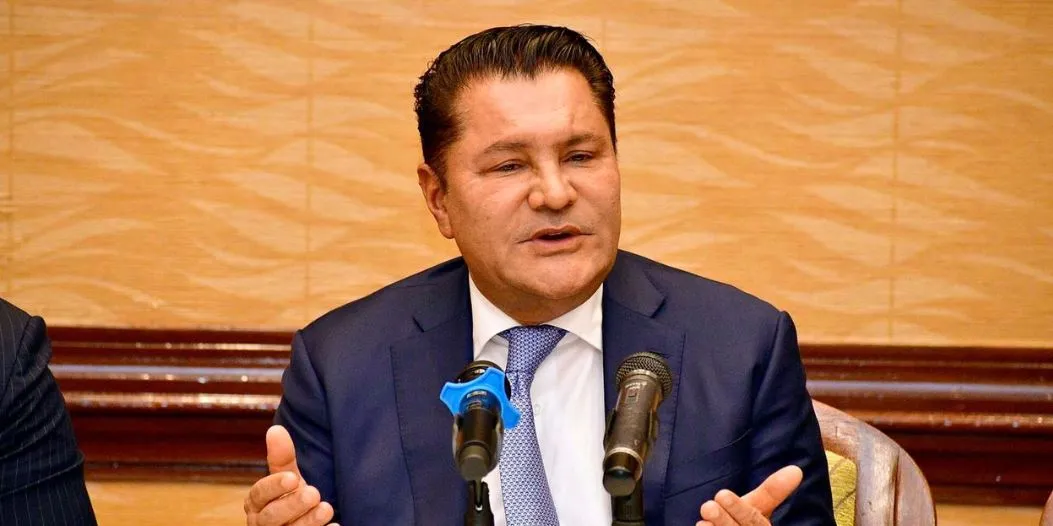











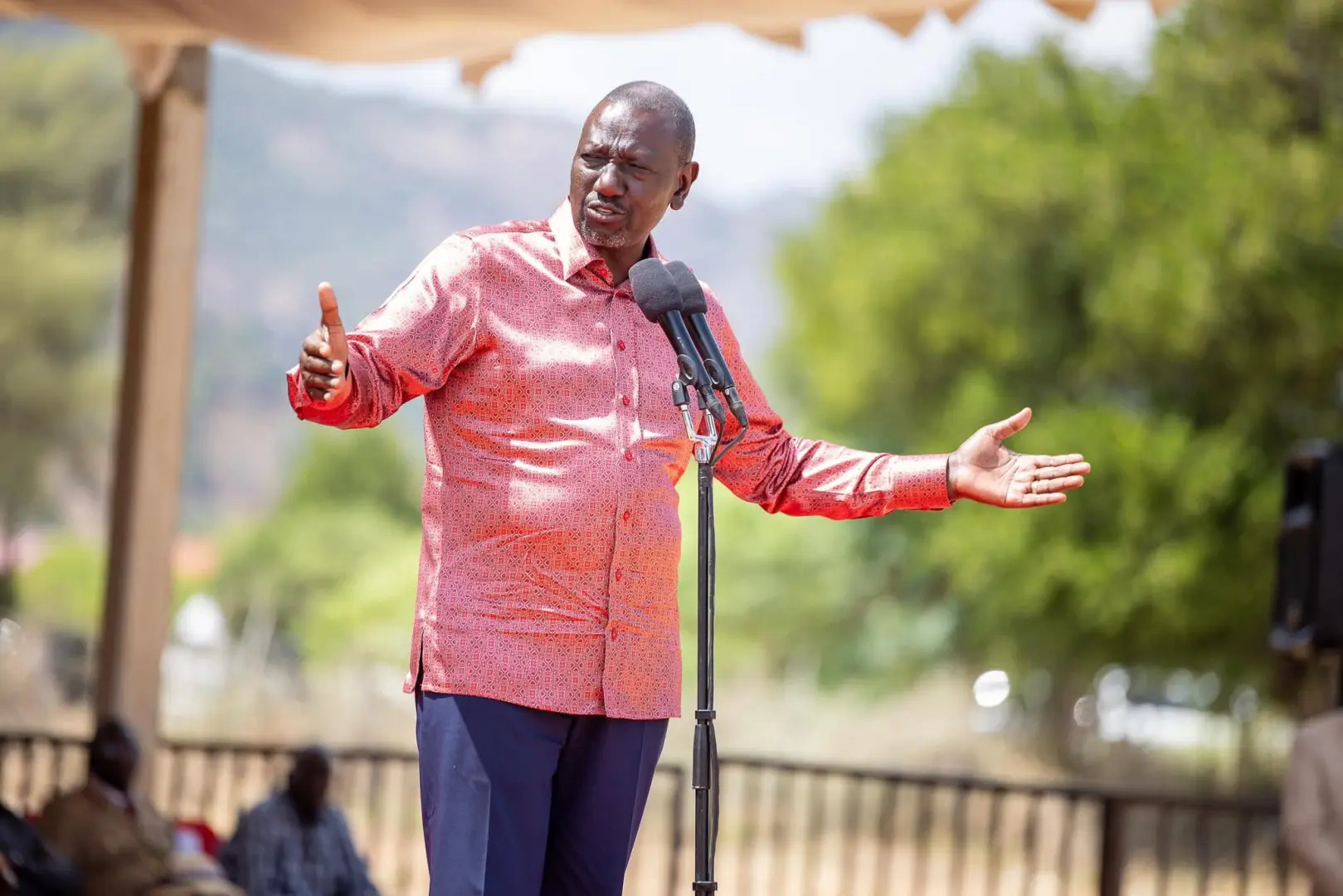
President William Ruto on Sunday utilized a high-profile thanksgiving service in Kerio Valley to showcase his administration’s security achievements while positioning the region’s newfound peace as a launchpad for economic development and political realignment. The carefully orchestrated event at Chesombur grounds in Sigor, West Pokot County, brought together political and religious leaders from six counties, demonstrating the administration’s determination to translate security gains into tangible development outcomes.
The interdenominational service, which drew leaders from West Pokot, Elgeyo-Marakwet, Baringo, Samburu, Turkana and Laikipia counties, represented more than a spiritual gathering—it signified a strategic attempt by the government to cement its narrative of competence in addressing one of Kenya’s most intractable security challenges. The Kerio Valley region has been plagued by banditry, cattle rustling, and inter-communal violence for more than three decades, creating a humanitarian crisis that displaced thousands and stalled development across multiple counties.
“I am happy that in the Kerio Valley today, we are listening to testimonies of peace,” President Ruto declared, crediting security officers, religious leaders, and community members for working together to end the conflict. The President’s remarks reflected confidence in the administration’s security strategy, even as questions linger about the sustainability of the peace and the underlying socio-economic drivers of the region’s violence.
Build the future you deserve. Get started with our top-tier Online courses: ACCA, HESI A2, ATI TEAS 7, HESI EXIT, NCLEX-RN, NCLEX-PN, and Financial Literacy. Let Serrari Ed guide your path to success. Enroll today.
The Security Transformation and Operation Maliza Uhalifu
The current peace in Kerio Valley represents a dramatic turnaround from the situation that existed just two years ago. The region, which straddles Baringo, Elgeyo-Marakwet, West Pokot, Samburu, and Turkana counties, had become synonymous with deadly attacks, population displacement, and economic stagnation. Residents lived in constant fear of armed bandits who rustled cattle, attacked villages, and disrupted any semblance of normal life.
The government’s response, dubbed “Operation Maliza Uhalifu” (End Crime), has successfully contained banditry and restored calm in the once-restive region, according to Interior Cabinet Secretary Kipchumba Murkomen. The operation combined increased deployment of security forces with community engagement initiatives designed to address the root causes of conflict.
A critical component of the strategy has been disarmament. Murkomen revealed that the latest disarmament exercise saw the recovery of 1,000 illegal firearms, which significantly reduced banditry activities. The Interior CS emphasized that the government’s “Rudisha Bunduki kwa Serikali” (Return Guns to Government) program would continue until all illegal weapons are recovered from civilian hands.
At the Chesombur service, President Ruto issued a stern warning to those still holding illegal firearms. He directed them to surrender weapons to police or church leaders, stating that the government would forcibly recover guns if they were not returned voluntarily. “Only security officers are entitled to have guns,” the President declared, reinforcing the administration’s hard line on law and order.
The warning carried particular weight given the government’s recent actions. “The firearms are there to keep peace and protect life and property by police. We have those who pretend they are herding animals with that. Look for a rod for that,” Ruto said, lamenting the impact of cattle rustling on the region’s development.
Permanent Security Infrastructure to Sustain Peace
Beyond immediate security operations, the government has announced plans to establish permanent infrastructure designed to maintain long-term stability. In December 2025, Interior Cabinet Secretary Murkomen revealed that the government would embark on the establishment of training grounds for the Kenya Defence Forces and National Police Service within the Kerio Valley region, with construction set to begin in January 2026.
These facilities, which have been approved by President Ruto, will serve both the Kenya Defence Forces and the National Police Service, working hand-in-hand to ensure security in the region. According to Murkomen, the training grounds will be similar to existing national institutions such as the Kiganjo Police Training College, but tailored to the specific security conditions in Kerio Valley.
“As part of the efforts to make this peace, we shall be establishing permanent security installations of different nature, either an operational base for some of the formed up units,” Murkomen stated, emphasizing that the move is intended to replace temporary deployments with a permanent security presence.
This represents a significant escalation in the government’s commitment to the region. For years, leaders from the area had called for military intervention, with Marakwest West Member of Parliament Timothy Toroitich previously urging President Ruto to “move military barracks to Kerio Valley” to deal with rampant insecurity.
From Security to Development: The Economic Agenda
With security gains established, President Ruto moved quickly to pivot the conversation toward economic transformation. The President argued that peace had removed the main barrier to economic inclusion and urged residents to shift from what he termed a “culture of stock theft” to formal economic participation.
In a particularly pointed comment that drew laughter from attendees, Ruto contrasted cattle rustling with stock market investment: “While people are trading on the stock exchange, we are here on stock theft, which is stupid. This is bringing death, poverty and loss,” the President said.
This rhetorical flourish served as a segue into a specific economic proposal. The President urged residents—and all Kenyans—to prepare to buy Kenya Pipeline Company shares when they are listed at the Nairobi Securities Exchange. “Now, you must change from the culture of stock theft to trading at the stock exchange,” Ruto declared, referencing the upcoming privatization of the state-owned petroleum transporter.
The Kenya Pipeline Company privatization has been officially approved, with shares set to be listed on the NSE by March 31, 2026. The government plans to sell 65 percent of its shareholding in KPC, a move expected to raise over Sh100 billion. The privatization follows Cabinet and National Assembly approval under the Privatization Act, 2005, paving the way for ordinary Kenyans to own stakes in one of the country’s most profitable state corporations.
The President’s mention of the KPC listing at a Kerio Valley peace event was strategic, connecting the region’s newfound stability to broader national economic opportunities. It signaled that formerly marginalized areas could now participate fully in Kenya’s economic mainstream—but only if peace is maintained.
Infrastructure Development: Roads, Dams, and Irrigation
Beyond stock market participation, President Ruto outlined concrete government-funded development projects aimed at addressing the region’s historic marginalization. The initiatives span infrastructure, water supply, irrigation, and electricity connectivity—all sectors where decades of insecurity had prevented investment.
The President highlighted plans to use water from the Turkwel River to irrigate 50,000 acres in West Pokot and Turkana counties, part of a national target to add 2.5 million acres under irrigation. This ambitious irrigation plan builds on existing work by the Kerio Valley Development Authority (KVDA), which was established in 1979 under the Kerio Valley Development Authority Act with a mandate to oversee planning, coordination, and implementation of projects in natural resource management, irrigation, and water supply.
The KVDA has been central to the region’s agricultural transformation. So far, KVDA has developed and operationalized the 1,500-acre WeiWei phase III and the 150-acre Napuu II irrigation schemes. The WeiWei scheme alone produced 4,000 tons of seed maize valued at Sh180 million, demonstrating the economic potential once security constraints are removed.
Water infrastructure features prominently in the government’s plans. The President announced that the government is spending KSh700 million to complete the Muruny Water Dam to address water shortages in Kapenguria town and its environs. This project is part of a broader KVDA strategy that includes plans to develop 200 solar-powered boreholes and construct 100 water pans as well as 20 small dams to provide water to residents.
To date, KVDA has developed 65 solar-powered boreholes that have been drilled and equipped, along with water pans and small dams that support two million people and over five million livestock, providing water for irrigation that has boosted food production and enhanced economic income for residents.
Road infrastructure received particular attention during the President’s visit. After the thanksgiving service, Ruto inspected the Barpelo–Tot–Marich Pass road project, for which KSh15 billion has been allocated. The President noted that two contractors are working on separate sections—one on the Barpelo-Tot section and another on the Tot-Chesegon-Kibasi River sections—to accelerate completion.
The road project is critical for opening up the region to commerce and reducing isolation that has historically limited economic opportunities. Combined with irrigation and water projects, the infrastructure investments signal a comprehensive development approach designed to provide alternatives to pastoralism and cattle rustling.
Education and Social Services Restoration
President Ruto also committed to reopening schools that were closed during periods of severe insecurity. “In the next three months, all the schools must be reopened and all children must be back to school,” the President promised, acknowledging that insecurity had devastated the region’s education sector.
The educational crisis in Kerio Valley has been profound. Years of banditry forced numerous schools to close, depriving an entire generation of children of educational opportunities. Teachers fled the region, infrastructure fell into disrepair, and attendance plummeted even at schools that remained nominally open. The commitment to reopen schools within three months represents an ambitious timeline that will test the administration’s ability to deliver on promises.
Beyond education, the government pledged to restore health facilities and other social amenities across the region. These services are essential not just for human welfare but for demonstrating that the state can provide basic public goods—a critical element in building legitimacy and reducing the grievances that fuel conflict.
One decision can change your entire career. Take that step with our Online courses in ACCA, HESI A2, ATI TEAS 7, HESI EXIT, NCLEX-RN, NCLEX-PN, and Financial Literacy. Join Serrari Ed and start building your brighter future today.
Political Messaging and Leadership Competition
Embedded within the development announcements was a clear political message. President Ruto used the platform to deliver pointed advice to political leaders about the nature of competition and governance. He urged issue-based competition and cooperation, stating that effective leadership should be grounded in a track record, a clear plan, and a credible path to implementation.
“Competition is about ideas and agenda,” the President emphasized, warning against what he described as siloed politics that undermine collective progress. This messaging comes as Kenya approaches the 2027 general elections, with political positioning already underway among various factions within the governing coalition and the opposition.
The President’s emphasis on track record and delivery appeared aimed at establishing his administration’s credentials while critiquing opponents who focus on rhetoric over results. By showcasing security success and linking it to development plans, Ruto sought to demonstrate the kind of “effective leadership” he advocates—one that delivers tangible improvements in citizens’ lives.
Regional Leaders’ Endorsement and Calls for Sustained Cooperation
The thanksgiving service provided a platform for regional leaders to align themselves with the President’s narrative and emphasize the need to protect fragile peace gains. Governors Simon Kachapin (West Pokot), Jeremiah Lomorukai (Turkana), Wisely Rotich (Elgeyo-Marakwet), and Stephen Sang (Nandi) called for sustained cooperation to protect the peace dividend.
“Now that we have peace in the Kerio Valley, we should jealously guard it for the sake of the prosperity of the region,” Governor Sang stated, capturing the sentiment that security gains remain tenuous and require continued vigilance.
Governor Rotich emphasized the economic dimension, noting that “this region has never contributed to the country’s economy for the past 40 years because of insecurity,” and arguing that newfound peace and stability are unlocking the region’s economic potential.
Lawmakers present praised the security operations, saying they had ended years of suffering caused by banditry and cattle rustling. Senate Majority Leader Aaron Cheruiyot acknowledged progress while tempering expectations: “We are not where we want to be. However, we are not where we were two years ago,” he stated, recognizing both achievements and ongoing challenges.
The Historical Context of Kerio Valley Insecurity
To fully appreciate the significance of the current peace, it’s essential to understand the depth and duration of the crisis. The Kerio Valley has been synonymous with banditry and cattle rustling for more than 30 years, with the conflict claiming hundreds of lives, displacing thousands, and creating a humanitarian emergency that successive governments struggled to address.
Historically, Elgeyo Marakwet, Samburu, West Pokot, Turkana, and Baringo counties have been accepted as banditry-prone areas, with the form of banditry tied to inter-community conflict, cultural norms around cattle ownership, and the practice of restocking herds through raids. However, recent years have seen the nature of banditry evolve, becoming more sophisticated and lethal.
The violence has spilled over into neighboring counties including Meru, Laikipia, Isiolo, and Narok. What is particularly worrisome is that banditry has gained additional gravitas, with incidents like the killing of clergy members and the adoption of more sophisticated weapons including grenades and advanced communication equipment.
In past years, leaders from the region had made desperate pleas for intervention. Some had even called for banditry to be classified as terrorism to enable harsher penalties and broader security responses. “What is happening in Kerio Valley is nothing but robbery with violence. Let all convicted criminals face a firing squad or a hangman’s noose because they are terrorists,” Elgeyo Marakwet Woman Rep Caroline Ngelechei had argued.
The human cost has been staggering. Beyond direct fatalities, the insecurity forced people to abandon fertile lowlands and move to precarious settlements on escarpments, where they face additional risks from landslides and environmental degradation. Insecurity in the lowlands drove many upwards, and poverty and lack of land have conspired to keep them there, creating a tragic cycle where people flee one danger only to face another.
Challenges to Sustainability
While President Ruto’s declaration of peace represents genuine progress, significant challenges remain. The sustainability of security gains depends on addressing underlying drivers of conflict, maintaining security presence, providing economic alternatives to cattle rustling, and building trust between communities and security forces.
The disarmament process, while successful in recovering 1,000 weapons, likely represents only a fraction of illegal firearms in circulation. Criminal networks adapt quickly, and there’s risk of weapons being restocked from porous borders or underground markets. The government’s commitment to permanent security installations is promising, but implementation timelines and resource allocation will determine effectiveness.
Economic transformation also faces hurdles. While irrigation projects and infrastructure development create opportunities, the transition from pastoralism to agriculture requires cultural shifts, technical training, market access, and sustained investment. The three-month timeline for reopening schools is ambitious and may prove unrealistic given infrastructure damage and the need to recruit and deploy teachers.
Political dynamics also pose risks. The President’s emphasis on issue-based politics and cooperation may be tested as election season approaches and political competition intensifies. There’s potential for politicians to exploit local grievances or ethnic tensions for political advantage, which could undermine peace efforts.
The Broader Security Landscape
The Kerio Valley peace initiative is occurring within a broader national security context. Kenya faces multiple security challenges including Al-Shabaab attacks in northeastern counties, militia activities near the Ethiopian border, and the challenge of maintaining domestic stability amid political transitions and economic pressures.
The government’s approach in Kerio Valley—combining security operations with community engagement and development initiatives—represents a template that could be applied elsewhere. However, each region has unique dynamics that may not respond to the same interventions.
Interior Cabinet Secretary Murkomen’s assertion that “lasting peace cannot be attained if we still have guns in the hands of civilians” reflects the administration’s philosophy that disarmament must precede development. This approach has critics who argue that addressing root causes—poverty, marginalization, resource competition—is more important than weapons recovery alone.
Looking Forward: Can Peace Be Sustained?
The Kerio Valley thanksgiving service represented a carefully orchestrated political event designed to accomplish multiple objectives simultaneously: showcase security success, announce development commitments, provide political messaging, and build momentum for the administration’s broader agenda.
President Ruto successfully linked security gains to economic opportunities, framed peace as a precondition for development, and positioned his administration as delivering where previous governments failed. The symbolic power of bringing together leaders from six counties in a region long synonymous with conflict cannot be understated.
However, declarations of victory must be tempered by recognition of how fragile peace remains. The region’s challenges—poverty, limited economic opportunities, environmental degradation, historical grievances, and cultural practices around livestock—will not disappear simply because weapons have been recovered or politicians have made speeches.
The true test will come in the months and years ahead. Will promised infrastructure projects be completed on schedule? Will irrigation schemes deliver economic benefits broadly enough to provide real alternatives to cattle rustling? Will security forces maintain discipline and avoid the excesses that have sometimes undermined community trust? Will political leaders resist the temptation to exploit ethnic divisions for electoral advantage?
For residents of Kerio Valley, the peace they are experiencing represents something they have not known for a generation. Whether this peace becomes permanent or proves to be merely a temporary lull depends on sustained commitment, adequate resources, genuine community engagement, and political will that extends beyond photo opportunities and thanksgiving services.
President Ruto has staked significant political capital on demonstrating that his administration can resolve long-standing security challenges and translate peace into prosperity. The Kerio Valley will serve as a critical test case of whether this promise can be fulfilled—and whether marginalized regions can genuinely be brought into Kenya’s economic mainstream.
Ready to take your career to the next level? Join our Online courses: ACCA, HESI A2, ATI TEAS 7 , HESI EXIT , NCLEX – RN and NCLEX – PN, Financial Literacy!🌟 Dive into a world of opportunities and empower yourself for success. Explore more at Serrari Ed and start your exciting journey today! ✨
Track GDP, Inflation and Central Bank rates for top African markets with Serrari’s comparator tool.
See today’s Treasury bonds and Money market funds movement across financial service providers in Kenya, using Serrari’s comparator tools.
photo source: Google
By: Montel Kamau
Serrari Financial Analyst
5th January, 2026
Article, Financial and News Disclaimer
The Value of a Financial Advisor
While this article offers valuable insights, it is essential to recognize that personal finance can be highly complex and unique to each individual. A financial advisor provides professional expertise and personalized guidance to help you make well-informed decisions tailored to your specific circumstances and goals.
Beyond offering knowledge, a financial advisor serves as a trusted partner to help you stay disciplined, avoid common pitfalls, and remain focused on your long-term objectives. Their perspective and experience can complement your own efforts, enhancing your financial well-being and ensuring a more confident approach to managing your finances.
Disclaimer: This article is for informational purposes only and does not constitute financial advice. Readers are encouraged to consult a licensed financial advisor to obtain guidance specific to their financial situation.
Article and News Disclaimer
The information provided on www.serrarigroup.com is for general informational purposes only. While we strive to keep the information up to date and accurate, we make no representations or warranties of any kind, express or implied, about the completeness, accuracy, reliability, suitability, or availability with respect to the website or the information, products, services, or related graphics contained on the website for any purpose. Any reliance you place on such information is therefore strictly at your own risk.
www.serrarigroup.com is not responsible for any errors or omissions, or for the results obtained from the use of this information. All information on the website is provided on an as-is basis, with no guarantee of completeness, accuracy, timeliness, or of the results obtained from the use of this information, and without warranty of any kind, express or implied, including but not limited to warranties of performance, merchantability, and fitness for a particular purpose.
In no event will www.serrarigroup.com be liable to you or anyone else for any decision made or action taken in reliance on the information provided on the website or for any consequential, special, or similar damages, even if advised of the possibility of such damages.
The articles, news, and information presented on www.serrarigroup.com reflect the opinions of the respective authors and contributors and do not necessarily represent the views of the website or its management. Any views or opinions expressed are solely those of the individual authors and do not represent the website's views or opinions as a whole.
The content on www.serrarigroup.com may include links to external websites, which are provided for convenience and informational purposes only. We have no control over the nature, content, and availability of those sites. The inclusion of any links does not necessarily imply a recommendation or endorsement of the views expressed within them.
Every effort is made to keep the website up and running smoothly. However, www.serrarigroup.com takes no responsibility for, and will not be liable for, the website being temporarily unavailable due to technical issues beyond our control.
Please note that laws, regulations, and information can change rapidly, and we advise you to conduct further research and seek professional advice when necessary.
By using www.serrarigroup.com, you agree to this disclaimer and its terms. If you do not agree with this disclaimer, please do not use the website.
www.serrarigroup.com, reserves the right to update, modify, or remove any part of this disclaimer without prior notice. It is your responsibility to review this disclaimer periodically for changes.
Serrari Group 2025