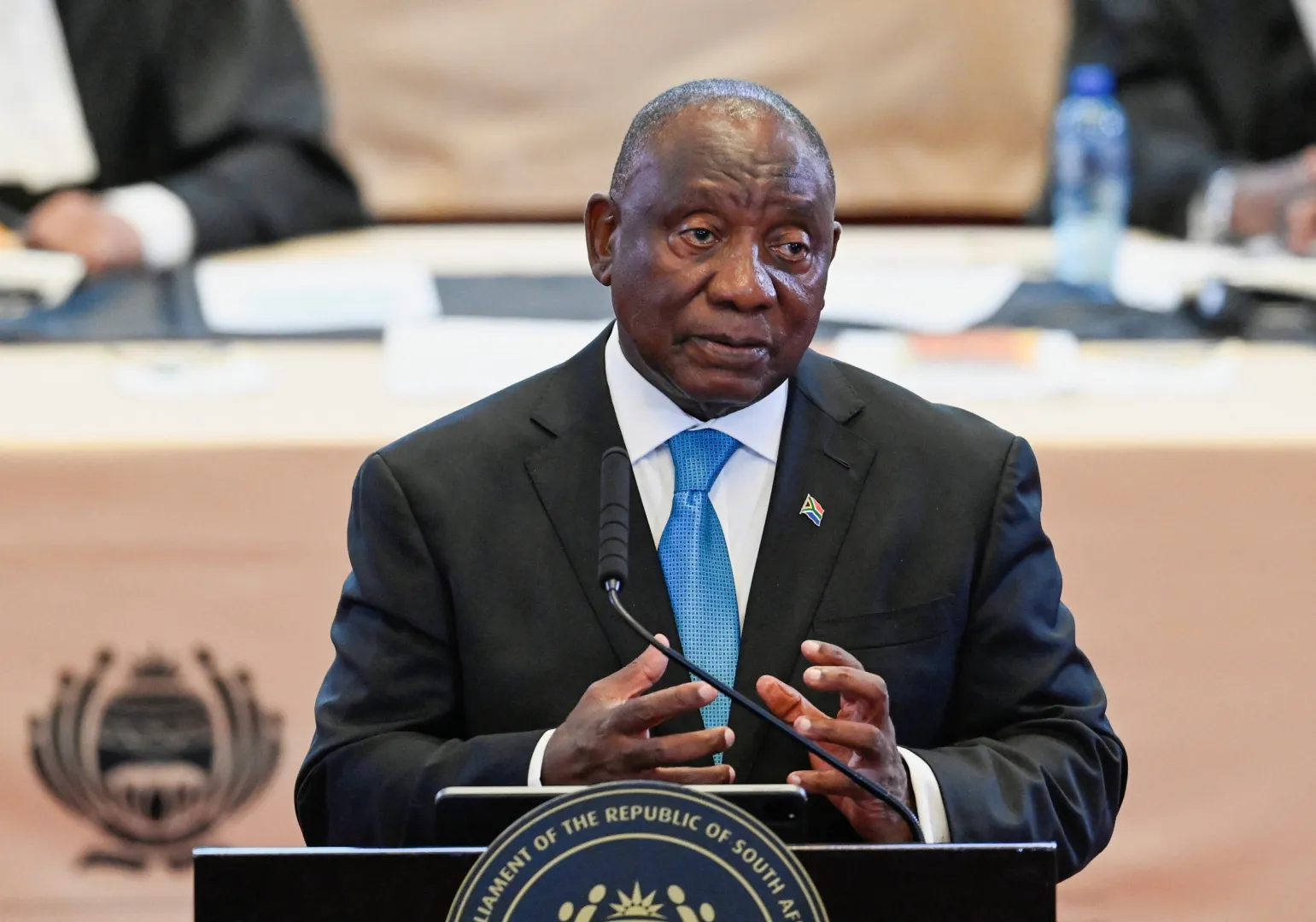
President Cyril Ramaphosa has directly intervened in South Africa’s electricity sector reform, announcing that the country will proceed with creating a fully independent state-owned transmission entity separate from power utility Eskom. The announcement, delivered during his State of the Nation Address on February 12, 2026, effectively overrides a December 2025 proposal by Electricity and Energy Minister Kgosientsho Ramokgopa that would have kept transmission assets within Eskom’s corporate structure.
The decision marks a critical juncture for Africa’s most industrialized economy, which has been hobbled for years by rolling power outages as state-owned Eskom struggles with aging plants and deteriorating finances. Power transmission has emerged as one of the most significant constraints to new electricity supply and economic growth, with over 130 gigawatts of generation projects currently stalled due to limited network access.
Build the future you deserve. Get started with our top-tier Online courses: ACCA, HESI A2, ATI TEAS 7, HESI EXIT, NCLEX-RN, NCLEX-PN, and Financial Literacy. Let Serrari Ed guide your path to success. Enroll today.
December Proposal Sparks Investor Concern
The president’s intervention follows mounting pressure from business leaders who warned that the revised unbundling strategy announced in December threatened billions of rand in potential grid investment. Minister Ramokgopa had approved a plan under which the National Transmission Company South Africa (NTCSA) would remain an Eskom subsidiary, with transmission assets staying on Eskom’s balance sheet. Only a new Transmission System Operator (TSO) would be established outside Eskom to handle system and market operations.
This arrangement alarmed international investors and domestic business organizations for several reasons. The South African Wholesale Electricity Market is scheduled to commence operations in April 2026. Eskom, as the dominant generator controlling both generation and transmission assets, would face an inherent conflict of interest in a competitive market structure. The proposal also appeared to reverse commitments made in the Electricity Regulation Amendment Act, which came into effect in January 2025 and created expectations that NTCSA would become fully independent within five years.
“This issue has caused major concern, with international investors and local business leaders starting to question the government’s commitment to the reform programme,” said Busisiwe Mavuso, CEO of Business Leadership South Africa, in response to the December announcement.
Business Unity South Africa and Business Leadership South Africa subsequently wrote to Ramaphosa warning that the revised plan put grid investment at risk and urging him to use his State of the Nation address to place the key electricity reform back on track.
Presidential Intervention and Three-Month Deadline
In his February 12 address to a joint sitting of Parliament, Ramaphosa confirmed plans to establish “a fully independent state-owned transmission entity” that will own and control transmission assets and be responsible for operating the electricity market. He emphasized the importance of creating a level playing field for competition in the electricity sector “so that we are never again exposed to the risk of relying on a single supplier to meet our energy needs.”
The president established a dedicated task team under the National Energy Crisis Committee to address various issues relating to the restructuring process, including clear timeframes for phased implementation. The committee has been given three months to deliver a comprehensive report.
The announcement prompted what may be Eskom’s shortest-ever press release, in which the utility pledged full support for the task team. The brevity of Eskom’s response stands in marked contrast to its previous detailed arguments for keeping transmission assets on its balance sheet.
Former Eskom Group CEO Andre De Ruyter praised Ramaphosa for “laying down the law” and providing clarity on the unbundling process. “It enables more private generation capacity brought onto the grid earlier, and it removes any possible suspicion that there could be a conflict of interest between the various parts of this competition, generation, transmission and distribution,” De Ruyter said.
R390 Billion Transmission Investment Challenge
The urgency of the unbundling decision is underscored by massive infrastructure requirements. A presentation from the Department of Electricity and Energy indicates that South Africa needs approximately R390 billion over the next decade for transmission infrastructure—funding that Eskom cannot provide alone due to its financial constraints.
According to Nedbank’s Corporate and Investment Banking division, this investment would be used to build 14,218 kilometers of additional high-voltage lines and 170 transformers, bringing approximately 106,000 MVA of transformer capacity online over the next ten years. The bank estimates that the transmission grid build rate must increase from 300 kilometers to 2,300 kilometers per year to connect the energy generation required for energy security by 2030.
Eskom’s Transmission Development Plan targets 14,500 kilometers of new transmission lines and 133,000 MVA of additional transformers by 2034 at an estimated cost of $27.5 billion (approximately R400 billion). With delivery of transmission infrastructure taking on average between seven and 10 years, the delivery rate needs to scale up by eight times to meet projected demand.
The government launched its Independent Transmission Projects programme in July 2025, targeting the construction of around 10,000 kilometers of new high-voltage lines and 59 new substations over three years. Seven Phase 1 projects are being prepared to reach implementation readiness in 2026, collectively delivering 1,164 kilometers of new transmission lines across the Northern Cape, North West province, and Gauteng.
Ramaphosa announced in his address that the first round of independent transmission projects will launch in 2026 to enable private investment in expanding the national grid. He said there has already been “tremendous interest” from investors in transmission infrastructure.
Private Sector Investment and Renewable Energy Progress
The scale of required investment highlights why asset ownership structure matters critically. Olga Constantatos, credit head at Futuregrowth Asset Management, explained that unbundling Eskom was intended to spur competition and private investment in power generation after decades of monopoly control.
Private-sector investment in renewables has already mobilized more than R200 billion and added 6,000 megawatts of capacity without weighing on Eskom’s balance sheet. This demonstrates significant investor appetite when regulatory frameworks provide certainty and competitive market access.
However, both Eskom and the state are effectively constrained financially. The government cannot afford to continue the massive bailouts Eskom has required over the last decade. Consequently, South Africa must turn to private sector participation through public-private partnerships to expand the grid. If Eskom’s transmission assets remain inside the utility, prospective investors—both in transmission infrastructure and new generation capacity—would have legitimate concerns about discrimination in the emerging competitive market.
Business Leadership South Africa CEO Busisiwe Mavuso directly challenged Eskom’s financial arguments for retaining transmission assets. “Eskom argues that its obligations to bondholders imply that it must continue to own these assets. But this is simply not true. Bondholders are used to restructurings across the world that ensure state-owned entities adapt to the market realities they face,” Mavuso wrote in her weekly newsletter. “There are many ways to achieve the necessary outcomes without prejudicing bondholders. The same bondholders stand ready to back new grid infrastructure if the planned restructuring is delivered.”
International Pressure and IMF Recommendations
The restructuring also responds to explicit pressure from international financial institutions. In its Article IV report, the International Monetary Fund urged South Africa to accelerate electricity sector reforms, including separating Eskom’s generation and transmission units, establishing a functional wholesale market, and supporting private transmission projects through risk-sharing tools.
The IMF specifically highlighted the forthcoming credit-guarantee vehicle backed by the International Finance Corporation as a mechanism to support private-sector transmission investments. This $500 million facility is designed to strengthen off-taker confidence, improve bankability, and enable private participation in projects that would otherwise struggle to reach financial close. Guarantees under the program are scheduled to come online by March 2026.
The Fund also flagged Eskom’s weak debt-servicing capacity and sharply rising public debt levels as ongoing concerns. This fiscal context makes private capital mobilization essential rather than optional for grid expansion.
One decision can change your entire career. Take that step with our Online courses in ACCA, HESI A2, ATI TEAS 7, HESI EXIT, NCLEX-RN, NCLEX-PN, and Financial Literacy. Join Serrari Ed and start building your brighter future today.
Loadshedding Progress and Future Risks
The transmission debate occurs against a backdrop of improved but fragile electricity supply. South Africa experienced over 260 consecutive days without loadshedding from April through December 2024, achieved through Eskom’s Generation Operational Recovery Plan. This accomplishment resulted in year-on-year diesel savings of R16.46 billion and enhanced reliability of the coal-fired fleet.
However, severe electricity shortages returned in late January 2025 following multiple failures at the Majuba and Camden power stations. Eskom implemented Stage 6 loadshedding without prior warning, demonstrating the system’s continued vulnerability. President Ramaphosa cautioned in July 2024 that while progress had been made, the electricity system remains vulnerable, and further loadshedding cannot be ruled out.
Analysts predict a potential return to power cuts around 2030 unless more renewable power stations are built in time. While there is no shortage of willing investors in generation capacity, the transmission grid remains congested, especially in western regions where wind and solar resources are strongest. The bulk of electricity demand concentrates in eastern industrial centers, requiring substantial grid strengthening to transport power from west to east.
Grid Congestion and Renewable Energy Integration
The transmission bottleneck has become acutely problematic. Electricity and Energy Minister Ramokgopa stated in July 2025: “We are not short of megawatts—we are short of grid capacity,” citing over 130 gigawatts of generation projects stalled due to limited network access.
The Independent Transmission Projects programme prioritizes areas such as the Northern Cape, Eastern Cape, and Limpopo where renewable energy potential is high but grid capacity is severely limited. These regions possess South Africa’s best wind and solar resources but lack adequate high-voltage infrastructure to evacuate power to demand centers.
Ramaphosa projected in his State of the Nation address that “by 2030, more than 40% of our energy supply will come from cheap, clean, renewable energy sources.” This ambitious target requires not only renewable generation capacity but also massive transmission expansion to integrate variable renewable energy into the grid while maintaining system stability.
The South African Wholesale Electricity Market is projected to start in April 2026 with a limited number of participants, following a phased implementation approach. A five-year transitional period is planned to make NTCSA fully independent from Eskom and establish the Transmission System Operator. This measured approach allows time to develop essential institutional frameworks, including the market code, vesting contracts, and tariff regulations.
Political and Institutional Dynamics
The December unbundling proposal and subsequent presidential intervention highlight ongoing tensions within government about electricity sector reform. Ramaphosa’s announcement represents a public rebuke of Minister Ramokgopa, who appears to have fallen under Eskom’s influence as the utility seeks to prolong its near-monopoly position in the electricity market.
Energy Council of South Africa chief executive James Mackay describes the unbundling framework as a “hot potato,” noting that “timing, risk and ensuring Eskom Generation doesn’t collapse (are) equally important.” Eskom CEO Dan Marokane had argued in January that the revised unbundling strategy was necessary to account for municipal debt challenges delaying distribution separation and the establishment of Eskom Green, a new subsidiary to house renewable energy business.
Marokane contended that “a separation scenario involving the immediate and full legal separation of transmission assets would require major financial intervention from the ultimate shareholder, the government of the Republic of South Africa, for a likely scenario of cross default to honour existing lender commitments.”
However, Democratic Alliance MP Kevin Mileham characterized Eskom’s position more harshly, arguing that what Marokane proposed was not genuine unbundling but “a shell game” designed to keep the referee wearing the same jersey as the star player. “Let’s be blunt: What Mr Marokane is proposing is not the unbundling South Africa was promised. It is a ‘fake unbundling’ designed to keep the referee in the same jersey and on the same payroll, as the star player,” Mileham said.
Expert Analysis and Reform Imperatives
Energy economist Anton Eberhard of the University of Cape Town has been particularly critical of Eskom’s revised proposal. “Eskom needs to explain why it is proposing a sub-optimal unbundling outcome which may be in its own narrow interests but not that of the sector or country as a whole,” Eberhard told Engineering News.
For Eberhard, the most pressing issue facing the electricity supply industry in 2026 is having a transmission grid “fully liberated” from Eskom. Failure to complete this fundamentally important structural reform, he argues, will compromise future investment and competition in the power sector and greatly increase the risk of loadshedding from 2030.
“Eskom, as the dominant generator in South Africa, clearly faces a conflict of interest in also owning the grid and we have seen this in practice—independent power producers face a myriad of obstacles to timely and adequate connection to the grid,” Eberhard stated.
South African Independent Power Producer Association chairperson Leoné Human similarly underlined the importance of unbundling, arguing it is needed to reduce mistrust and discrimination concerns. An independent transmission entity owning grid assets provides the credibility necessary to attract billions in private investment.
The OECD’s Economic Survey of South Africa, published in early 2026, emphasized that timely and effective implementation of recent reforms, including establishing the full independence of the transmission company, will be critical. The survey noted that while a careful approach is essential to safeguard market integrity, phased implementation can facilitate the process without compromising reform objectives.
Broader Economic Context and Investment Climate
The transmission unbundling decision intersects with broader economic reform efforts. South Africa’s economy grew only 0.5% in 2024, constrained by electricity supply issues, logistics challenges, crime, and corruption. Growth projections for 2025 and 2026 remain modest at 1.3% and 1.6% respectively, well below the 3% target needed to meaningfully reduce unemployment.
The government has set an ambitious target of raising R2 trillion in new investment over five years, building on R1.5 trillion pledged at previous investment conferences—of which R600 billion has already flowed into projects. Electricity sector reform represents a critical component of improving investor confidence and unlocking private capital.
International Just Energy Transition pledges now stand at R250 billion, financing large-scale investment in manufacturing, infrastructure, and skills development to support South Africa’s shift from coal-dependent electricity generation to renewable energy sources. However, these pledges depend substantially on credible implementation of sector reforms, including transmission independence.
The National Treasury has reaffirmed commitment to macroeconomic stability, with priorities including strengthening the credibility of the fiscal framework, reducing debt to sustainable levels, safeguarding financial stability, and accelerating reforms to boost productivity. The IMF noted in 2025 that South Africa’s economy has shown resilience despite heightened global policy uncertainty, stemming from the country’s natural resource base, independent institutions, and strong monetary policy framework.
Implementation Challenges Ahead
While Ramaphosa’s intervention provides clarity on the direction of reform, substantial implementation challenges remain. The task team must navigate complex financial, legal, and operational issues within the three-month deadline. Key considerations include:
Financial restructuring: Determining how to separate transmission assets from Eskom’s balance sheet without triggering cross-default provisions in existing debt instruments. This requires negotiation with lenders and potentially restructuring debt obligations across Eskom’s subsidiaries.
Asset valuation and transfer: Establishing fair market value for transmission infrastructure and mechanisms for transferring ownership to the new independent entity while ensuring Eskom’s remaining businesses remain viable.
Operational continuity: Maintaining grid reliability and operational performance during the transition period, avoiding any service disruptions that could undermine reform momentum.
Market framework development: Finalizing the institutional architecture for the wholesale electricity market, including market rules, settlement mechanisms, tariff methodologies, and regulatory oversight structures.
Coordination with other reforms: Integrating transmission unbundling with ongoing efforts to establish Eskom Green (renewable energy subsidiary), address municipal debt challenges affecting distribution, and support the rollout of independent transmission projects.
Stakeholder alignment: Building consensus among diverse stakeholders including Eskom management, labor unions, lenders, private investors, independent power producers, and government departments with different institutional interests.
Energy Council of South Africa chief executive James Mackay has proposed a sector roadmap beyond the Integrated Resource Plan to provide a comprehensive pathway forward. He argues for strengthened ministerial and regulatory oversight, which will require significant capacity enhancement at both the Department of Electricity and Energy and the National Energy Regulator of South Africa (Nersa).
“There will be many uncomfortable reform elements that Eskom will naturally push back on and it can’t be the custodian of reform implementation—that is the role of the Ministry,” Mackay noted, highlighting the governance challenges inherent in reforming a powerful state-owned enterprise resistant to losing market dominance.
Conclusion: Reform Imperatives and Investor Confidence
President Ramaphosa’s State of the Nation intervention on Eskom unbundling represents a critical reassertion of South Africa’s electricity sector reform agenda. By confirming that transmission assets will move outside Eskom into a fully independent state-owned entity, the president has addressed immediate concerns about market structure, competitive neutrality, and investment confidence.
The decision validates sustained advocacy by business organizations, independent power producers, and energy economists who have consistently argued that genuine transmission independence is essential for attracting the private capital needed to expand grid infrastructure. With R390 billion in transmission investment required over the next decade—far beyond Eskom’s financial capacity—creating credible mechanisms for private participation is not merely desirable but imperative.
However, the announcement marks the beginning rather than the end of a complex reform process. The three-month deadline for the task team to deliver implementation frameworks is ambitious given the financial, legal, and operational complexities involved. Success will require not only technical competence but also political will to overcome institutional resistance and vested interests seeking to preserve the status quo.
For international and domestic investors watching South Africa’s energy transition, the president’s intervention provides important reassurance about government commitment to market-oriented reforms. Yet investors will ultimately judge implementation results rather than policy pronouncements. The coming months will reveal whether South Africa can translate presidential vision into operational reality—establishing the independent, credible transmission company needed to unlock billions in grid investment and support the country’s renewable energy ambitions.
With loadshedding risks persisting beyond 2030 without adequate transmission expansion, and economic growth constrained by electricity supply limitations, the stakes could not be higher. South Africa’s ability to attract private capital, integrate renewable energy at scale, and build a modern, competitive electricity market hinges substantially on getting transmission reform right. President Ramaphosa has set the direction; delivery will define success.
Ready to take your career to the next level? Join our Online courses: ACCA, HESI A2, ATI TEAS 7 , HESI EXIT , NCLEX – RN and NCLEX – PN, Financial Literacy!🌟 Dive into a world of opportunities and empower yourself for success. Explore more at Serrari Ed and start your exciting journey today! ✨
Track GDP, Inflation and Central Bank rates for top African markets with Serrari’s comparator tool.
See today’s Treasury bonds and Money market funds movement across financial service providers in Kenya, using Serrari’s comparator tools.
photo source: Google
By: Montel Kamau
Serrari Financial Analyst
17th February, 2026