










The announcement of Traxtion’s R3.4 billion investment in rolling stock represents a critical inflection point for South Africa’s logistics landscape and the country’s ambitious rail reform agenda. This massive private capital injection is seen by industry analysts and government officials alike as the most tangible and decisive vote of confidence in the long-awaited structural changes designed to open the national rail network to competition. The move directly targets the severe capacity bottlenecks that have hampered major economic sectors, particularly mining and bulk exports, for more than a decade.
Launched at the company’s comprehensive Rail Services Hub in Rosslyn, Pretoria, the programme has been formally hailed by Traxtion as the biggest known private rail investment in the country’s history. This commitment, valued at R3.4 billion (approximately US$199 million), is strategically divided: R1.8 billion is dedicated to the acquisition and modernization of locomotives, and R1.6 billion is allocated for the purchase of new wagons. This proportional split emphasizes the dual necessity of both reliable motive power and sufficient haulage capacity to make a meaningful impact on the overburdened network.
Build the future you deserve. Get started with our top-tier Online courses: ACCA, HESI A2, ATI TEAS 7, HESI EXIT, NCLEX-RN, NCLEX-PN, and Financial Literacy. Let Serrari Ed guide your path to success. Enroll today.
Traxtion, which operates a full-service rail freight operation across 10 African countries and maintains one of the largest privately-owned mainline locomotive fleets on the continent, is not new to complex rail environments. However, this investment marks its historic first venture into South Africa’s core rail network, a market that has long been dominated by the state-owned enterprise Transnet.
A Vote of Confidence in Policy Certainty
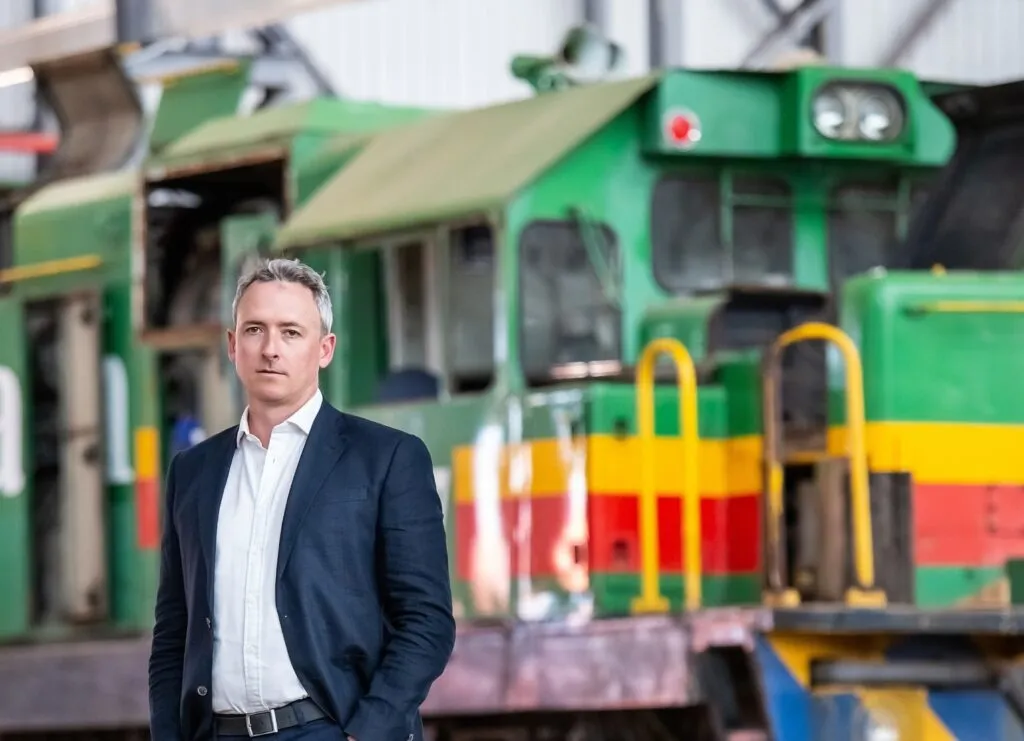
The significance of the investment, as emphasized by CEO James Holley, lies less in the capital amount and more in what it signals about the South African government’s commitment to reform. Speaking in conversation with Motheo Khoaripe on The Money Show, Holley stated unequivocally that the investment is a big vote of confidence in South Africa and its rail reform process.
“With this, we’re saying that we are happy with the direction of reform, with the policies that have been implemented and the enabling legislation, and we’re ready to make an investment off the back of that,” Holley confirmed. This confidence is a direct result of progress made under the Economic Reconstruction and Recovery Plan and the subsequent National Rail Policy, which committed to enabling third-party access to the core rail network. Key legislative and policy steps include the functional separation of Transnet’s infrastructure and operations divisions, and the ongoing process to establish the Single Transport Economic Regulator (STER) through the Economic Regulation of Transport Bill. The establishment of STER is a crucial prerequisite for implementing regulated third-party access, providing private operators with price regulation and oversight.
In August 2025, Transport Minister Barbara Creecy announced a concrete step forward, confirming that 11 private train operating companies (TOCs), including Traxtion, had successfully applied to operate on 41 routes across six strategic corridors. The immediate challenge for these newly approved operators is securing rolling stock, as acquiring new locomotives typically takes up to 24 months. Traxtion’s rapid deployment plan is therefore highly advantageous.
Addressing the National Capacity Shortfall
The urgent need for this private intervention stems from the dramatic shortfall in South Africa’s rail freight capacity. Transnet’s operational inefficiencies, coupled with aging infrastructure, equipment shortages, and debilitating levels of cable theft and vandalism, have caused annual freight volumes to plummet to below 160 million tonnes. Against this current reality, the government has set an ambitious target of lifting total rail freight volumes to 250 million tonnes annually by 2030. The vast 90-million-ton gap between current volumes and future demand is what the rail reform and private sector participation are designed to bridge.
Traxtion’s investment in its new fleet of 46 locomotives and 920 wagons is expected to increase South Africa’s annual rail haulage capacity by 4.5 million tonnes a year. While this accounts for approximately 5% of the national freight rail capacity shortfall, its symbolic value is enormous. The investment provides immediate, high-quality capacity dedicated to high-demand bulk and container flows, easing immense pressure on ports and key corridors. This relief is particularly vital for commodity exporters, such as Kumba Iron Ore and Thungela Resources, which have been forced to scale back production due to constrained logistics.
The added capacity not only lowers logistics costs for these industries but also achieves a crucial environmental and infrastructure benefit: shifting freight from road to rail. Rail transport is significantly more fuel-efficient and environmentally friendly, producing approximately 75% less carbon emissions per tonne-kilometer compared to road transport.
One decision can change your entire career. Take that step with our Online courses in ACCA, HESI A2, ATI TEAS 7, HESI EXIT, NCLEX-RN, NCLEX-PN, and Financial Literacy. Join Serrari Ed and start building your brighter future today.
The Technical Deep Dive: KiwiRail, Wabtec, and Local Modernisation
The core of Traxtion’s R1.8 billion locomotive investment is the acquisition of 46 Wabtec diesel-electric locomotives from KiwiRail in New Zealand. This particular sourcing decision was strategic. The locomotives are well-maintained and are designed for the same 1067mm Cape Gauge environment used across much of Southern Africa. KiwiRail is retiring these units as it replaces them with a new generation of low-emission trains, offering Traxtion a large, high-quality fleet that can be rapidly repurposed.
The fleet includes 42 partially modernised U26C units and four fully modernised C30-8MMI models. Rather than deploying them immediately, Traxtion is partnering with manufacturer Wabtec on a ‘significant’ upgrade programme. The upgrade will be carried out at Traxtion’s Rail Services Hub in Rosslyn, Pretoria, a 50,000 sqm facility that includes 11,000 sqm under roof, designed to handle major overhauls.
The 42 U26C locomotives will be upgraded to the C30MEI specification. This complex modernization process includes two critical component replacements:
- New, Fuel-Efficient 7FDL-EFI Engines: Replacing the older engines with modern Electronic Fuel Injection (EFI) systems ensures better fuel management and higher reliability.
- Advanced Brightstar Control Systems: These state-of-the-art control systems improve tractive performance and diagnostics.
This combination of engine and control system upgrades is expected to boost the continuous tractive effort of the locomotives and, significantly, to improve fuel efficiency by around 15%. The modernization cycle is aggressive: each batch of 10 to 12 locomotives will undergo a four-month modernisation cycle, including the engine and control system upgrades, major six-yearly services, and a full repainting.
This refurbishment-and-upgrade approach is critical to the project’s rapid timeline. While procuring new, equivalent locomotives could take 24 months or more from deposit payment, the first upgraded units from this KiwiRail acquisition are expected to enter South African mainline operations in Q3 2026, marking a much faster route to service delivery. The full fleet is expected to be fully deployed by early 2028.
The Economic Multiplier Effect and Local Content
A key tenet of South Africa’s reform agenda is that private investment must be inextricably linked to local economic development. Traxtion has structured its R3.4 billion programme to maximize this local industrial value-add.
The company has set a rigorous minimum 60% local content target across the entire rolling stock programme. This is achieved through the domestic manufacturing of the wagons and the local content component of the locomotive modernization process. Specifically, the R1.6 billion dedicated to the acquisition of roughly 920 wagons is expected to be sourced entirely from South African manufacturers, leveraging the country’s globally competitive wagon manufacturing ecosystem.
The overall investment is projected to create a minimum of 662 direct permanent jobs during the build and deployment phases, spanning manufacturing, assembly, commissioning, and operation. This job creation includes highly skilled roles, such as train crew and technical staff, supported by Traxtion’s Government-accredited Rail Training Centre at the Rosslyn Hub. This centre provides intensive training programmes for diesel-electric fitters, train drivers, shunter, and shedman, ensuring long-term skills development that is essential for the expanded rail sector. Beyond the direct employment, the project is expected to create a multiplier effect on upstream job creation across the supporting supplier ecosystem, which stands to benefit from around R200 million in procurement for components, maintenance, and technical services.
By anchoring local manufacturing and supplier participation, Traxtion’s investment sets a new benchmark for how private capital can align with policy certainty to deliver transformative outcomes that extend far beyond simply running trains.
Funding, Risk, and the Future of Private Rail
The sheer size of the R3.4 billion investment required a robust and well-structured financial backing. Traxtion confirmed the programme is fully funded through a mix of equity and debt. The equity backing comes primarily from Harith Partners, which owns a majority stake of 50.39% in Traxtion, along with debt funding provided by Absa. The financial structure initially split the capital mix with a 65% equity and 35% debt component, highlighting the long-term confidence Harith and its partners place in the rail’s potential to unlock immense economic value.
While this investment is a powerful statement of confidence in the rail reform process, Traxtion CEO James Holley indicated that the company is not solely reliant on the new auction system introduced to allow third-party operators onto Transnet’s rail network. The company is actively in advanced discussions with customers, many of whom are bulk mineral producers considering operating their own freight rail services. Furthermore, Traxtion’s services could be utilized by other approved third-party providers who may have secured slots but lack the necessary rolling stock.
However, the future scaling of private rail hinges on continued regulatory progress. Holley noted that to unlock significantly more in further investment, the next iteration of the Rail Access Agreement under the Network Statement must be fully bankable with service-level guarantees for awarded slots, balanced legal protections, and clear recognition of lender rights.
Beyond the domestic corridors, Traxtion’s investment also anticipates a future of growing regional integration. Similar rail reforms across neighbouring countries are creating opportunities for private trains to operate across borders, potentially connecting South African freight flows seamlessly with the broader Southern African region. While the new 46 locomotives and 920 wagons are initially earmarked for domestic South African customers, the capacity to operate regionally will be a critical asset for future growth, cementing Traxtion’s role as a major player in transforming South Africa’s logistics competitiveness and the continent’s rail sector. The project is a concrete demonstration that private investment, when coupled with a clear and firm regulatory direction, is ready to deliver the scale and reliability required to underpin national economic growth objectives.
Ready to take your career to the next level? Join our Online courses: ACCA, HESI A2, ATI TEAS 7 , HESI EXIT , NCLEX – RN and NCLEX – PN, Financial Literacy!🌟 Dive into a world of opportunities and empower yourself for success. Explore more at Serrari Ed and start your exciting journey today! ✨
Track GDP, Inflation and Central Bank rates for top African markets with Serrari’s comparator tool.
See today’s Treasury bonds and Money market funds movement across financial service providers in Kenya, using Serrari’s comparator tools.
Photo source: Google
By: Montel Kamau
Serrari Financial Analyst
8th December, 2025
Article, Financial and News Disclaimer
The Value of a Financial Advisor
While this article offers valuable insights, it is essential to recognize that personal finance can be highly complex and unique to each individual. A financial advisor provides professional expertise and personalized guidance to help you make well-informed decisions tailored to your specific circumstances and goals.
Beyond offering knowledge, a financial advisor serves as a trusted partner to help you stay disciplined, avoid common pitfalls, and remain focused on your long-term objectives. Their perspective and experience can complement your own efforts, enhancing your financial well-being and ensuring a more confident approach to managing your finances.
Disclaimer: This article is for informational purposes only and does not constitute financial advice. Readers are encouraged to consult a licensed financial advisor to obtain guidance specific to their financial situation.
Article and News Disclaimer
The information provided on www.serrarigroup.com is for general informational purposes only. While we strive to keep the information up to date and accurate, we make no representations or warranties of any kind, express or implied, about the completeness, accuracy, reliability, suitability, or availability with respect to the website or the information, products, services, or related graphics contained on the website for any purpose. Any reliance you place on such information is therefore strictly at your own risk.
www.serrarigroup.com is not responsible for any errors or omissions, or for the results obtained from the use of this information. All information on the website is provided on an as-is basis, with no guarantee of completeness, accuracy, timeliness, or of the results obtained from the use of this information, and without warranty of any kind, express or implied, including but not limited to warranties of performance, merchantability, and fitness for a particular purpose.
In no event will www.serrarigroup.com be liable to you or anyone else for any decision made or action taken in reliance on the information provided on the website or for any consequential, special, or similar damages, even if advised of the possibility of such damages.
The articles, news, and information presented on www.serrarigroup.com reflect the opinions of the respective authors and contributors and do not necessarily represent the views of the website or its management. Any views or opinions expressed are solely those of the individual authors and do not represent the website's views or opinions as a whole.
The content on www.serrarigroup.com may include links to external websites, which are provided for convenience and informational purposes only. We have no control over the nature, content, and availability of those sites. The inclusion of any links does not necessarily imply a recommendation or endorsement of the views expressed within them.
Every effort is made to keep the website up and running smoothly. However, www.serrarigroup.com takes no responsibility for, and will not be liable for, the website being temporarily unavailable due to technical issues beyond our control.
Please note that laws, regulations, and information can change rapidly, and we advise you to conduct further research and seek professional advice when necessary.
By using www.serrarigroup.com, you agree to this disclaimer and its terms. If you do not agree with this disclaimer, please do not use the website.
www.serrarigroup.com, reserves the right to update, modify, or remove any part of this disclaimer without prior notice. It is your responsibility to review this disclaimer periodically for changes.
Serrari Group 2025