President William Ruto has unveiled one of the most ambitious economic transformation agendas in Kenya’s history, outlining a comprehensive Sh4 trillion infrastructure and productivity plan designed to propel the East African nation from its current developing country status to a first-world economy within the next three decades. The bold initiative, which will soon be presented to Parliament for approval, promises to fundamentally reshape Kenya’s economic landscape without imposing additional tax burdens on citizens.
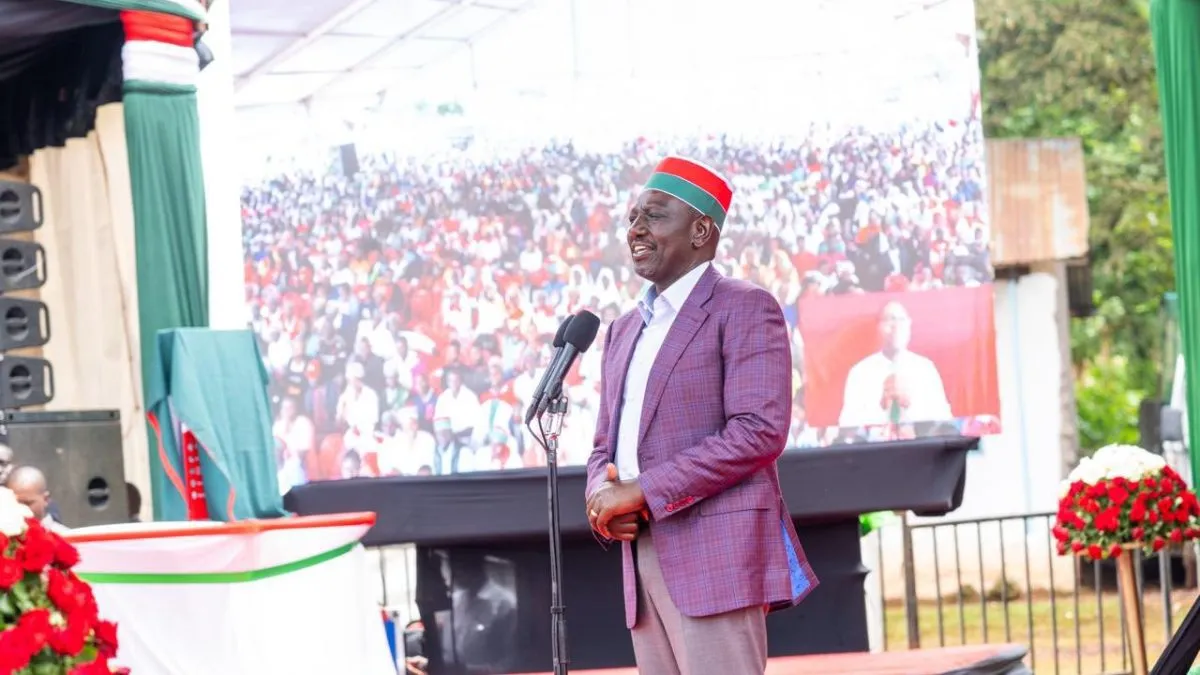
Speaking on Sunday, November 2, 2025, during a church service at the African Divine Church headquarters in Boyani, Vihiga County, the President articulated a vision that combines massive capital investment in critical infrastructure with strategic policy reforms aimed at unlocking Kenya’s latent economic potential. Accompanied by Prime Cabinet Secretary Musalia Mudavadi and other leaders from the Western region during his four-day tour, Ruto emphasized that the transformation he envisions is not merely aspirational but achievable through focused investment, disciplined execution, and visionary leadership.
Build the future you deserve. Get started with our top-tier Online courses: ACCA, HESI A2, ATI TEAS 7, HESI EXIT, NCLEX-RN, NCLEX-PN, and Financial Literacy. Let Serrari Ed guide your path to success. Enroll today.
The Sh4 Trillion Breakdown: Infrastructure, Energy, and Agriculture
The President’s comprehensive proposal allocates the Sh4 trillion investment across three critical pillars that he identified as fundamental to Kenya’s economic transformation. According to Ruto, approximately Sh1.5 trillion will be dedicated to infrastructure development, specifically targeting roads, railways, and airports—the arteries of economic activity that facilitate commerce, connect markets, and integrate rural populations into the national economy.
“We will be presenting proposals to Parliament in the next few weeks on how to move Kenya from a third-world country to a first-world nation. We need to deal with the challenge of infrastructure, at least Sh1.5 trillion to deal with roads, rails, and airports,” the President stated emphatically, underlining his administration’s recognition that inadequate infrastructure represents one of the most significant constraints on Kenya’s economic growth.
An additional Sh1.5 trillion will be channeled into the energy sector, a move that addresses what Ruto has repeatedly identified as a critical bottleneck preventing Kenya from achieving its industrialization ambitions. Currently, Kenya generates approximately 2,300 megawatts of electricity, insufficient to meet the demands of a rapidly industrializing economy. The President has previously stated that Kenya urgently needs an additional 10,000 megawatts within the next five to seven years to power manufacturing facilities, support the establishment of Special Economic Zones at Vipingo, Dongo Kundu, Konza Technopolis, and Naivasha, and provide reliable power to businesses and households across the country.
The third pillar of the plan directs another Sh1.5 trillion toward agricultural transformation, with a particular emphasis on bringing 2.5 million acres of currently unproductive land under irrigation. This agricultural investment strategy reflects the government’s determination to address food security challenges that have plagued Kenya for decades, reducing the nation’s dependence on food imports while simultaneously creating export opportunities in regional and international markets.
“This is the money needed to move our nation from importing food to exporting products. To make all regions accessible and productive, we don’t need to increase taxes—only to increase our minds. Innovation and sound planning will get us there,” Ruto declared, emphasizing that the transformation he envisions requires not merely financial resources but also a fundamental shift in mindset and approach to development.
The National Infrastructure Fund: Innovative Financing Mechanism
To mobilize the substantial capital required for these transformative investments, the government is preparing legislation to establish the National Infrastructure Fund (NIF), an innovative financing vehicle that will pool resources from multiple sources including budgetary allocations, private sector contributions, and proceeds from state asset privatization.
During the launch of Phase One infrastructure at Konza Technopolis City in Makueni County in October 2025, President Ruto explained the fund’s structure and rationale. “Putting together resources from our budget, building resources from the private sector, and resources from privatisation, we will create a big pool of resources that we can use in an innovative manner just as other countries have done,” he stated, drawing parallels to similar mechanisms employed successfully by developed nations to finance large-scale infrastructure projects.
The National Infrastructure Fund represents a significant departure from Kenya’s traditional approach to infrastructure financing, which has relied heavily on bilateral and multilateral loans that have contributed to the country’s mounting debt burden. Bloomberg reported that the $31 billion (approximately Sh4 trillion) infrastructure investment plan marks a notable shift in strategy, though questions remain about how the government will balance this ambitious spending program with previous commitments to fiscal discipline and debt reduction.
The fund’s design aims to leverage private sector capital and expertise while maintaining government oversight and ensuring that investments align with national development priorities. By blending public and private financing, the government hopes to accelerate project implementation, introduce private sector efficiency and innovation, and reduce the fiscal burden on government coffers.
Comparative Development: Learning from Asian Success Stories
Throughout his articulation of this transformation agenda, President Ruto has consistently drawn comparisons to Asian countries that successfully transitioned from developing to developed status within a generation or two. He specifically cited China, Malaysia, Singapore, India, and South Korea as examples of nations that achieved rapid economic transformation through strategic investment, focused development policies, and visionary leadership.
“The way other countries have developed, Kenya can also move forward in the next 20 to 30 years. We cannot continue with poverty, joblessness, and poor roads. China, Malaysia, Singapore, and India made it and we can do it too,” Ruto stated, expressing confidence that Kenya possesses the essential ingredients for similar success.
The South Korea comparison is particularly resonant. As Ruto has noted in previous speeches, Kenya and South Korea had similar GDP levels when Kenya gained independence in 1963. However, today South Korea’s economy is approximately 20 times larger than Kenya’s, a divergence that the President attributes not to differences in natural resource endowment or human capability but rather to distinct choices about development strategy, institutional governance, and long-term planning.
Singapore’s transformation from a resource-poor port city to one of the world’s wealthiest nations per capita provides another instructive example that Ruto frequently references. Similarly, China’s remarkable economic ascent over the past four decades—lifting hundreds of millions from poverty while becoming the world’s second-largest economy—demonstrates what determined, strategically focused development can achieve.
These international examples serve both as inspiration and as proof-of-concept for Ruto’s argument that Kenya’s current status as a developing nation is not immutable destiny but rather a circumstance that can be changed through appropriate policies, sustained investment, and disciplined execution.
Addressing Critics and Building Political Consensus
President Ruto did not shy away from addressing political opposition and criticism of his development agenda. Speaking frankly during the Vihiga church service, he criticized political leaders who, in his view, undermine development efforts rather than offering constructive alternatives.
“We should not allow those people who are talking ill of our nation and predicting doom every day,” Ruto stated. “They have no plans for progress but to drag us behind. When you hear some people talk, you wonder why they are leaders. If they don’t believe anything good can come from Kenya, why do they want to lead this country? Give us a break.”
These comments reflect ongoing political tensions in Kenya, where opposition leaders and critics have questioned the feasibility and funding mechanisms for the President’s ambitious plans, particularly given Kenya’s existing debt obligations. According to financial analyses cited by The Standard newspaper, approximately Sh76 out of every Sh100 collected in tax revenue currently goes toward servicing interest on existing loans, leaving limited fiscal space for new investments in education, healthcare, and other essential services.
Despite these constraints and criticisms, Ruto called for unity among national and county leaders around a shared vision for Kenya’s future. “We can go places if we work together. I ask all of us to work together for the coming generation. Unity is strength. When we have unity, God commands blessings. This country can grow fast because we have great potential as a nation,” he emphasized, framing the transformation agenda as requiring collective effort that transcends political divisions.
The President specifically called on members of Parliament to support the forthcoming legislative proposals, stating: “I am asking members of Parliament and all leaders to support this plan. In our lifetime, Kenya will move from a third world to a first world country.”
One decision can change your entire career. Take that step with our Online courses in ACCA, HESI A2, ATI TEAS 7, HESI EXIT, NCLEX-RN, NCLEX-PN, and Financial Literacy. Join Serrari Ed and start building your brighter future today.
The Agricultural Transformation Component
The agricultural component of Ruto’s plan deserves particular attention given Kenya’s economic structure and the sector’s importance for rural livelihoods. Kenya currently spends approximately Sh500 billion annually on food imports—a substantial drain on foreign exchange reserves that the President argues could be reversed through strategic investment in irrigation infrastructure and modern farming techniques.
The proposed construction of 50 mega dams similar to the Thwake Dam would bring more than two million acres under irrigation, dramatically expanding Kenya’s productive agricultural land. This expansion addresses a critical constraint: Kenya has largely exhausted its rain-fed agricultural potential, and future food production increases must come primarily from irrigated agriculture that can support multiple cropping seasons annually and reduce vulnerability to climatic variability.
The agricultural transformation strategy also aligns with trade agreements that Kenya has negotiated with various countries and regional blocs, opening potential export markets for Kenyan agricultural products. By transitioning from a net food importer to a net food exporter, Kenya would not only improve food security and rural incomes but also strengthen its trade balance and foreign exchange position.
During his Vihiga visit, President Ruto announced complementary initiatives including the construction of 3,000 affordable housing units across the county—1,000 each in Luanda, Mbale, and Chavakali—designed to create employment opportunities while reducing pressure on agricultural land. He explained that as families grow, continuous subdivision of family land for inheritance purposes diminishes plot sizes to economically unviable levels, undermining food production capacity.
“We must preserve land for food production. If we lose land for farming, we will face hunger,” Ruto warned, articulating the rationale for providing alternative livelihood opportunities that allow productive agricultural land to remain consolidated and economically viable.
The Infrastructure Modernization Vision
The infrastructure component of Ruto’s plan encompasses a comprehensive modernization of Kenya’s transportation networks. Specific initiatives include constructing 1,000 kilometers of dual carriageways, developing 10,000 kilometers of tarmac roads, extending the Standard Gauge Railway (SGR) from its current terminus at Naivasha to Malaba on the Uganda border and potentially to neighboring countries, and modernizing Jomo Kenyatta International Airport (JKIA), which Ruto has described as outdated and inadequate for Kenya’s ambitions as an East African hub.
These infrastructure investments would address longstanding connectivity challenges that limit market access for agricultural producers, increase transportation costs for businesses, and constrain regional integration efforts. Improved roads, railways, and air connectivity would also support tourism development, facilitate cross-border trade within the East African Community, and enhance Kenya’s competitiveness as a location for manufacturing and services investments.
The government is already taking concrete steps toward implementation. Transport Cabinet Secretary Davis Chirchir has revealed plans to raise Sh516.8 billion for SGR extension through securitization of the 2% Railway Development Levy charged on imports, demonstrating the innovative financing approaches being employed to advance infrastructure projects.
Social Programs and Inclusive Development
Beyond infrastructure and productive sector investments, President Ruto also highlighted social programs designed to ensure that economic transformation delivers tangible benefits to ordinary Kenyans. He specifically referenced the Social Health Authority (SHA), a universal healthcare program aimed at ensuring every Kenyan can access medical treatment without out-of-pocket payments.
“Health is a right for every Kenyan not just the rich or those with jobs. We want equity and equality. Every citizen should go to hospital, get treated, and return home without paying anyone,” Ruto stated, framing healthcare access as both a moral imperative and an economic development priority.
In Vihiga County specifically, approximately 266,000 residents—representing about 40 percent of the county’s population—have already enrolled in the SHA program, demonstrating significant uptake of the government’s flagship health initiative. The President revealed that the national government would henceforth supply medical equipment directly to hospitals and dispensaries, eliminating the need for county governments to purchase equipment independently and potentially improving standardization and cost-effectiveness.
Additionally, the government announced a Sh300 million investment in new market facilities across Vihiga County, including a Sh70 million market in Luanda and another in Banja, complete with storage units, cold rooms, and business stalls to support small-scale traders and farmers. These investments in market infrastructure complement agricultural productivity initiatives by reducing post-harvest losses and improving farmers’ ability to access buyers and obtain fair prices for their produce.
The Vision: Kenya as a First-World Nation by 2055
President Ruto has repeatedly articulated a specific timeline for Kenya’s transformation, setting 2055 as the target year for achieving first-world status. This 30-year horizon—encompassing slightly more than a generation—reflects both ambition and recognition that fundamental economic transformation requires sustained effort over an extended period.
“We have what it takes, we have the ideas, the plan, the people, and the resources to take this country to a first world by 2055. I am persuaded beyond any reasonable doubt that we are going to move this country to a first world by 2055,” Ruto stated during the October launch at Konza Technopolis, conveying confidence that transcends political rhetoric to reflect genuine belief in Kenya’s potential.
The President’s vision emphasizes that Kenya’s current classification as a developing nation represents a correctable anomaly rather than an inevitable condition. “Our being a third-world country is a mistake. We have what it takes, men and women, plans and vision to change this country from third to first,” he declared, framing the transformation as requiring determination and strategic action rather than fundamental changes to Kenya’s resource endowment or human capabilities.
This framing serves important psychological and political purposes. By characterizing Kenya’s developing status as a “mistake” rather than a structural condition, Ruto encourages Kenyans to believe that rapid transformation is possible. By pointing to examples of Asian countries that achieved similar transitions within comparable timeframes, he provides proof that such transformations are realistic rather than fantastical.
Challenges and Skepticism
Despite the President’s optimism and the comprehensiveness of his plan, significant questions and challenges remain. Kenya’s existing debt burden, which consumes a substantial majority of tax revenues for interest payments alone, raises questions about fiscal sustainability and the government’s capacity to mobilize the additional resources required for the ambitious infrastructure program.
Opposition politicians and some economic analysts have expressed skepticism about both the feasibility of raising Sh4 trillion without increasing taxes and the capacity of government institutions to efficiently deploy such massive investments even if the resources can be mobilized. Past experiences with mega-projects in Kenya have sometimes involved cost overruns, implementation delays, and questions about value for money, contributing to public skepticism about new grand proposals.
Environmental and social considerations also require careful management. Large infrastructure projects, particularly dams and transportation corridors, can have significant environmental impacts and may require displacement of communities or affect traditional livelihoods. Ensuring that such projects proceed with appropriate environmental assessments, stakeholder consultation, and benefit-sharing arrangements will be essential for their success and sustainability.
Conclusion: Ambition Meets Reality
President William Ruto’s Sh4 trillion economic transformation plan represents the most ambitious development agenda articulated by a Kenyan leader in recent memory. Its comprehensive scope—encompassing infrastructure, energy, agriculture, healthcare, and housing—reflects recognition that economic transformation requires coordinated investment across multiple sectors rather than piecemeal interventions in isolated areas.
Whether this vision can be translated into reality depends on numerous factors: the government’s ability to mobilize the required financial resources through the National Infrastructure Fund and other mechanisms; the capacity of public institutions to plan and implement complex, large-scale projects efficiently; the maintenance of political consensus and social cohesion necessary to sustain long-term development efforts; and the navigation of external factors including global economic conditions, climate change impacts, and regional security dynamics.
For ordinary Kenyans—particularly the youth facing high unemployment, farmers struggling with low productivity and market access challenges, and entrepreneurs constrained by poor infrastructure and unreliable utilities—the President’s plan offers hope for a more prosperous future. The promise of transformation from a third-world to a first-world economy within their lifetimes is compelling and inspirational.
The coming months will prove critical as the government tables specific legislative proposals in Parliament and begins translating broad vision into detailed implementation plans. The Sh4 trillion question is whether Kenya can indeed replicate the rapid development trajectories of Asian success stories, or whether the nation’s structural challenges, governance constraints, and resource limitations will prove more formidable than the President’s optimism acknowledges. The answer will shape Kenya’s economic trajectory for decades to come.
Ready to take your career to the next level? Join our Online courses: ACCA, HESI A2, ATI TEAS 7 , HESI EXIT , NCLEX – RN and NCLEX – PN, Financial Literacy!🌟 Dive into a world of opportunities and empower yourself for success. Explore more at Serrari Ed and start your exciting journey today! ✨
Track GDP, Inflation and Central Bank rates for top African markets with Serrari’s comparator tool.
See today’s Treasury bonds and Money market funds movement across financial service providers in Kenya, using Serrari’s comparator tools.
photo source: Google
By: Montel Kamau
Serrari Financial Analyst
3rd November, 2025