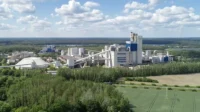
The Private Infrastructure Development Group (PIDG) has announced a $3.3 million equity investment to support the expansion of a waste-to-energy facility operated by Sanivation in Naivasha, Kenya, marking a significant milestone in the development of circular economy solutions for sanitation and sustainable energy across East Africa. The investment, channeled through InfraCo—PIDG’s specialized project development arm—is complemented by a $500,000 technical assistance grant designed to strengthen operational capacity and environmental standards at the facility.
The capital injection will finance the expansion of the Naivasha Treatment Plant, developed in partnership with Nakuru County government, to dramatically increase waste processing capacity and the production of solid fuel briquettes that serve as substitutes for firewood in industrial applications. The expanded facility is expected to commence operations in 2027, representing a critical scaling phase for what has been described as one of Africa’s most innovative approaches to addressing interlinked challenges of urban sanitation, environmental degradation, and sustainable energy access.
Build the future you deserve. Get started with our top-tier Online courses: ACCA, HESI A2, ATI TEAS 7, HESI EXIT, NCLEX-RN, NCLEX-PN, and Financial Literacy. Let Serrari Ed guide your path to success. Enroll today.
Converting Waste into Value: Sanivation’s Innovative Model
Sanivation’s business model centers on transforming a significant environmental liability—improperly treated fecal sludge—into a commercially viable energy product. The company processes fecal sludge collected from container-based sanitation systems and pit latrines, blending it with residues from local sawmills and agricultural value chains to produce solid fuel briquettes through a carefully controlled thermal treatment process that destroys pathogens and converts organic matter into stable, energy-dense fuel.
These briquettes are marketed to industrial clients as a cost-effective and environmentally superior alternative to firewood and charcoal. According to Sanivation, the briquettes enable industrial customers to reduce energy costs by between 10% and 30% compared to conventional biomass fuels, while delivering more consistent heat output and producing less smoke and particulate emissions. Each ton of briquettes produced saves approximately 88 trees from being cut for firewood, directly addressing deforestation pressures in regions where wood fuel remains the dominant energy source for both households and industries.
The Naivasha Treatment Plant currently serves approximately 15,000 people, collecting and processing fecal sludge that would otherwise be dumped untreated into the environment—a practice that affects an estimated 60% of Africa’s urban population living in informal settlements with inadequate sanitation infrastructure. In Africa, over 90% of waste is not treated before being dumped into the environment, creating severe public health risks and environmental degradation.
Once the expansion is completed, the facility will have capacity to treat waste volumes equivalent to those generated by 100,000 to 130,000 households, representing a more than six-fold increase from current operations. This scaling aligns with the growing sanitation needs of Naivasha, whose population is projected to exceed 360,000 currently and continues expanding rapidly due to agricultural development, geothermal energy operations, and infrastructure projects transforming the town into a major inland logistics hub.
Addressing Lake Naivasha’s Environmental Crisis
The investment carries particular significance given the severe environmental pressures facing Lake Naivasha, a freshwater Ramsar wetland of international importance that has experienced dramatic ecological degradation over recent decades. The lake faces multiple interconnected threats including increased pollution, declining water levels, spread of invasive species and general threat to biodiversity, driven by rapid agricultural intensification, urbanization, and industrial development in the catchment area.
Research published in Scientific Reports reveals that agricultural intensification in the Lake Naivasha Catchment has driven significant changes in land use between 1989 and 2019, with reduced forest cover, increased croplands, and escalating use of fertilizers and pesticides. These changes have worsened the lake’s trophic status, pushing it toward hypereutrophic conditions characterized by excessive nutrient loading, algal blooms, and oxygen depletion that threatens aquatic life and water quality.
The lake basin supports a vibrant commercial horticulture and floriculture industry that contributes approximately 70% of Kenya’s flower exports, alongside geothermal power production and tourism activities. However, this economic activity has come at considerable environmental cost. Nutrient pollution loading, caused largely by overuse of fertilizers on farms, livestock runoff, and untreated human wastewater release, has been identified as a critical issue requiring urgent intervention.
By 2005, water quality had deteriorated to the point that cyanobacterial blooms occurred, followed by fish kills from low oxygen levels caused by sediment input and re-suspension during storms. Water levels fell to their lowest point since 1948 by 2009, exacerbating water quality issues and creating problems for commercial fisheries. The situation has been described by environmental advocates as a “ticking environmental time bomb”, with warnings that without intervention, the lake’s ecosystem services—including fisheries, water supply, and biodiversity—face irreversible damage.
Sanivation’s waste treatment operations directly address one component of this crisis by preventing fecal sludge from entering the lake and surrounding soils. The expanded facility will significantly reduce soil pollution and decrease pressure on Lake Naivasha’s already stressed ecosystem, while simultaneously creating economic value from waste streams that currently represent pure environmental liabilities.
Development Finance Catalyzing Circular Economy Innovation
PIDG’s investment represents a strategic deployment of development finance capital to demonstrate and scale innovative circular economy approaches in contexts where commercial investors may still perceive excessive risk. Omar Jabri, PIDG InfraCo’s Africa business development lead, emphasized this catalytic role: “Sanivation presents an exciting investment for PIDG in the waste-to-value space. By demonstrating the importance of adopting a circular economy approach to waste treatment across Kenya and the wider region, we anticipate that the Naivasha Treatment Plant expansion will attract future private sector finance into this emerging sector.”
The investment structure combines equity participation—allowing PIDG to share in the facility’s commercial success and governance—with technical assistance funding designed to strengthen environmental and social risk management systems, operational efficiency, and compliance with international standards. This blended approach reflects PIDG’s methodology of de-risking sustainable infrastructure projects in emerging and frontier markets through patient capital and capacity-building support.
PIDG, established in 2002, operates as a multi-donor organization supported by the governments of the United Kingdom, Netherlands, Switzerland, Australia, and Sweden. The organization focuses on mobilizing private sector investment in infrastructure projects across Africa, South Asia, and Southeast Asia, with particular emphasis on projects that deliver climate resilience, sustainable development, and improved access to essential services for underserved populations.
Through InfraCo, PIDG originates, develops, structures, invests in, and manages infrastructure projects from early stages through to operation, creating a pipeline of bankable projects designed to attract subsequent private capital. The organization’s investment in Sanivation exemplifies this approach—supporting an innovative but unproven business model through its demonstration and initial scaling phases, with the expectation that successful operations will generate investor confidence and enable access to commercial financing for further expansion.
Continental Trends in Waste-to-Energy Development
The PIDG-backed project in Kenya positions itself within a broader continental trend toward waste-to-energy solutions as African nations grapple with mounting waste management challenges and persistent energy access gaps. Across the continent, waste-to-energy initiatives are gaining traction through diverse technological approaches including biogas produced from agro-industrial waste, electricity generation from municipal solid waste, and anaerobic digestion of organic materials.
In South Africa, anaerobic digestion plants are converting agro-industrial effluents and organic waste into biogas, electricity, heat, reusable water, and fertilizers. Companies like Green Create operate multiple facilities that provide decarbonized industrial energy while reducing the burden on public waste and wastewater treatment infrastructure. For a country heavily reliant on coal-fired power generation, biogas offers a local, renewable alternative that can contribute to energy security and climate objectives simultaneously.
In West Africa, waste-to-energy development is exemplified by a 30 MW facility planned for Freetown, Sierra Leone, developed through partnership between Climate Fund Managers and Infinitum Energy Group. The project, supported by initial funding of $3.1 million through the Climate Investor Two fund, is designed to process 365,000 tons of municipal waste annually, generating 236.5 GWh of renewable electricity while addressing the capital’s growing waste management crisis.
Kenya itself hosts a 2.8 MW installed capacity anaerobic digestion power plant working on agricultural wastes, while Burkina Faso operates a 0.275 MW anaerobic digestion facility processing brewery and slaughterhouse wastes. These installations, alongside larger biogas plants in South Africa reaching up to 4.6 MW capacity, demonstrate the technical feasibility and operational viability of converting organic waste streams into useful energy products across diverse African contexts.
The variety of feedstocks and technologies being deployed reflects the heterogeneity of waste generation patterns, energy needs, and local conditions across the continent. Urban centers generate substantial municipal solid waste streams suitable for large-scale incineration or gasification, while agricultural regions produce crop residues and processing by-products amenable to anaerobic digestion. Industrial facilities generate specific waste streams—from palm oil kernels and bagasse to brewery effluents and slaughterhouse waste—that can be converted into on-site energy through tailored biogas or biomass combustion systems.
One decision can change your entire career. Take that step with our Online courses in ACCA, HESI A2, ATI TEAS 7, HESI EXIT, NCLEX-RN, NCLEX-PN, and Financial Literacy. Join Serrari Ed and start building your brighter future today.
Technical and Economic Dimensions of Waste-to-Energy
The technical foundation of anaerobic digestion—the process underlying many African waste-to-energy initiatives—involves the breakdown of biodegradable material by microorganisms in oxygen-free environments. This biological process produces biogas typically consisting of 50-75% methane, with the remainder primarily carbon dioxide and trace amounts of other gases. The methane component makes biogas combustible and suitable for various applications including cooking, heating, electricity generation, and even vehicle fuel after appropriate upgrading.
For industrial applications like those served by Sanivation’s briquettes, the key performance metrics include energy density, combustion characteristics, ash content, moisture levels, and consistency of fuel quality. Industrial boilers and furnaces require fuel that delivers predictable heat output with minimal operational disruptions, making the standardization and quality control of waste-derived fuels critical to commercial viability.
The economic case for waste-to-energy rests on multiple value propositions. First, avoided costs of waste disposal—landfill tipping fees, transport costs, or environmental penalties—can be substantial in jurisdictions with enforced waste management regulations. Second, revenue from energy sales provides positive cash flow, though profitability depends heavily on local energy prices and the cost structure of fuel production. Third, carbon finance mechanisms may provide additional revenue streams for projects that demonstrably reduce greenhouse gas emissions compared to baseline scenarios.
For Sanivation specifically, the business model captures value at multiple points. Collection fees from households and institutions for sanitation services provide one revenue stream. Sale of fuel briquettes to industrial customers generates a second revenue source. Potential future carbon credit sales could provide a third stream, as the project prevents methane emissions from untreated waste decomposition while displacing biomass harvesting that contributes to deforestation.
Barriers and Enablers for Sector Development
Despite growing interest and demonstrated potential, waste-to-energy development across Africa faces significant barriers that limit the pace of sector growth. High upfront capital costs remain prohibitive for many prospective projects, particularly at scales large enough to achieve operational efficiency. A comprehensive Springer analysis identifies elevated initial capital costs, absence of support structures, and lack of awareness as primary factors constraining biogas technology adoption across the continent.
Technical capacity constraints affect both project development and ongoing operations. Specialized expertise in anaerobic digestion, feedstock management, biogas upgrading, and waste treatment systems remains scarce in many African markets, necessitating reliance on expatriate consultants or extensive training programs. Operating waste-to-energy facilities requires careful attention to numerous parameters—feedstock composition and preparation, digester temperature and pH management, hydraulic retention time, microbial community health, and gas collection efficiency—that can overwhelm operators without adequate training and support.
Regulatory and policy frameworks present additional challenges. Many African countries lack clear regulations governing waste-to-energy operations, creating uncertainty around permitting requirements, environmental standards, and grid connection protocols for electricity-generating projects. Tariff structures and power purchase arrangements may not adequately compensate waste-to-energy generators for the multiple value streams they create, while waste management regulations may fail to recognize or incentivize waste diversion to beneficial use rather than landfilling.
Market development challenges include securing reliable feedstock supply, negotiating off-take agreements for energy products, and competing with subsidized conventional fuels. In many contexts, fossil fuels or grid electricity benefit from explicit or implicit subsidies that distort price signals and disadvantage renewable alternatives. Biogas and biofuels must overcome incumbent advantages in distribution infrastructure, customer familiarity, and regulatory treatment.
Yet despite these obstacles, enablers are emerging that may accelerate sector development. Growing urbanization creates concentrated waste streams that improve the economics of collection and processing. Escalating environmental awareness and regulatory enforcement—driven partly by visible pollution crises in urban areas and ecologically sensitive zones like Lake Naivasha—increase willingness to pay for proper waste management. Advances in small-scale and modular technology platforms reduce minimum efficient scale and enable distributed deployment suited to African contexts.
Development finance institutions like PIDG play crucial catalytic roles by providing patient capital willing to accept below-market returns during demonstration and early commercial phases, offering technical assistance to build operational capacity and strengthen governance, and creating track records that reduce perceived risk for subsequent commercial investors. National biogas programs implemented in Kenya, Uganda, Ethiopia, Tanzania, Rwanda, Cameroon, Burkina Faso, and Benin have built technical capacity, demonstrated feasibility, and created policy frameworks that facilitate further development.
Job Creation and Local Economic Impact
Beyond environmental and energy outcomes, Sanivation’s operations generate significant local economic benefits that merit emphasis in development impact assessment. Ken Mungai, Chief Officer for Environment, Energy and Climate Change in Nakuru County, has highlighted the employment effects: “The project, as it is now—even before completing the expansion—has generated both direct and indirect employment. Every time I visit the plants, I find a significant number of people engaged across the Sanivation site and offices. There’s also an economic ripple effect with many others involved in the sale of briquettes from the production line.”
Direct employment encompasses waste collection crews, facility operators, quality control technicians, sales and distribution personnel, and administrative staff. Indirect employment includes sawmill workers producing wood residues used in briquette formulation, agricultural laborers generating organic waste feedstocks, transport providers moving materials and finished products, and downstream businesses involved in briquette distribution and retail.
The expansion anticipated for 2027 will substantially increase these employment effects as collection networks extend across a larger service area, processing operations scale up, and briquette production volumes rise. For a region experiencing rapid population growth and high youth unemployment, these job creation benefits carry particular significance for social stability and poverty reduction.
Local procurement of inputs—from sawdust and agricultural residues to construction materials and spare parts—generates demand that supports other small and medium enterprises in the regional economy. The project’s demonstration of circular economy principles may inspire entrepreneurship in related waste valorization activities, from composting operations to plastic recycling initiatives, creating ecosystem effects beyond Sanivation’s direct footprint.
Scaling Pathways and Replication Potential
Sanivation’s expansion trajectory and PIDG’s strategic objectives converge on a shared vision of demonstrating replicable models that can be adapted across multiple African cities facing similar sanitation and energy challenges. The Naivasha facility functions as both an operational enterprise and a proof-of-concept for the broader waste-to-value paradigm, with lessons learned and performance data informing subsequent deployments.
Several factors enhance the replication potential of Sanivation’s model. Container-based sanitation systems offer viable alternatives to conventional piped sewerage in densely populated informal settlements where infrastructure installation costs prove prohibitive. Fecal sludge management represents a universal challenge across African urban areas, creating consistent demand for treatment solutions. Industrial demand for cost-effective biomass fuels exists in most countries with manufacturing, food processing, or hospitality sectors.
Standardization of technology platforms—from collection containers to treatment systems to briquette production equipment—enables learning curve effects and economies of scale in equipment manufacturing. As more facilities deploy similar systems, local technical capacity develops, spare parts availability improves, and operational best practices propagate through professional networks and knowledge-sharing initiatives.
Policy advocacy informed by operational experience can accelerate enabling environment development. Sanivation and partners can engage with regulators and policymakers armed with concrete data on costs, performance, environmental outcomes, and economic benefits, making evidence-based cases for supportive policies around sanitation standards, waste management frameworks, and renewable energy incentives.
The involvement of development finance institutions creates opportunities for coordinated sector development across multiple geographies. PIDG’s network and convening power enable connection of promising enterprises with additional capital sources, technical partners, and market opportunities that individual companies struggle to access independently. Success in Kenya may attract attention from municipal authorities, utilities, and investors in Tanzania, Uganda, Ethiopia, and beyond, creating regional momentum.
Conclusion
PIDG’s $3.3 million investment in Sanivation’s Naivasha Treatment Plant expansion represents more than financing for a single facility—it exemplifies a strategic approach to development finance that seeks to catalyze broader market transformation through targeted support for innovative business models addressing critical development challenges. By channeling equity and technical assistance into a waste-to-energy enterprise that converts sanitation liabilities into productive energy assets, the investment demonstrates pathways toward circular economy transitions that can simultaneously advance environmental sustainability, energy access, public health, and local economic development.
For Lake Naivasha specifically, the project offers tangible environmental benefits through reduced pollution loading and ecosystem pressure, contributing to broader conservation and restoration efforts in a critically threatened freshwater ecosystem. For Nakuru County and Kenya more broadly, it provides proof points for innovative approaches to urban sanitation that may inform national policies and programs. For the African continent, it adds to a growing portfolio of waste-to-energy initiatives demonstrating technical feasibility, economic viability, and development impact across diverse contexts and scales.
As the facility moves toward its anticipated 2027 operational expansion, its performance will be closely watched by potential investors, government authorities, development partners, and peer enterprises throughout East Africa and beyond. Success in meeting operational targets, achieving financial sustainability, delivering environmental outcomes, and generating local economic benefits could unlock substantial follow-on investment into this emerging sector, advancing PIDG’s vision of attracting future private finance into circular economy solutions for waste treatment across Kenya and the wider region.
Ready to take your career to the next level? Join our Online courses: ACCA, HESI A2, ATI TEAS 7 , HESI EXIT , NCLEX – RN and NCLEX – PN, Financial Literacy!🌟 Dive into a world of opportunities and empower yourself for success. Explore more at Serrari Ed and start your exciting journey today! ✨
Track GDP, Inflation and Central Bank rates for top African markets with Serrari’s comparator tool.
See today’s Treasury bonds and Money market funds movement across financial service providers in Kenya, using Serrari’s comparator tools.
Photo source: Google
By: Montel Kamau
Serrari Financial Analyst
15th January, 2026