











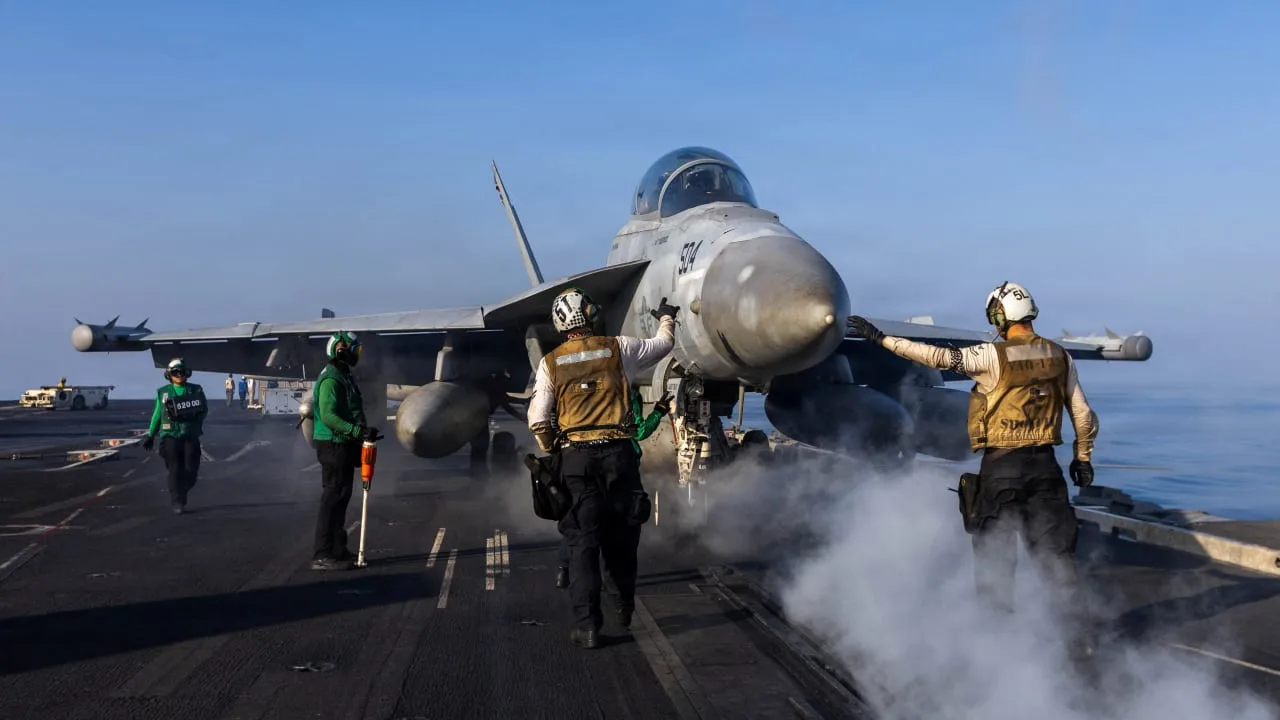
The price of war is never fully known until it is over — and in the case of the United States’ military campaign against Iran, officials are already warning that the staggering costs disclosed so far represent only a fraction of the true bill. Pentagon officials told senators during a classified briefing on Capitol Hill on Tuesday that the first six days of fighting cost the United States at least $11.3 billion — a figure that has sent shockwaves through Congress and set off an urgent debate over war funding, military readiness, and constitutional authority.
The briefing, delivered to the Senate Appropriations subcommittee on defense, was first reported by The New York Times and has since been confirmed by multiple sources familiar with the closed-door session. It marks the first thorough cost estimate lawmakers have received since the United States and Israel launched coordinated airstrikes against Iran on February 28, 2026 — the opening salvo of what the Pentagon has formally named Operation Epic Fury.
Build the future you deserve. Get started with our top-tier Online courses: ACCA, HESI A2, ATI TEAS 7, HESI EXIT, NCLEX-RN, NCLEX-PN, and Financial Literacy. Let Serrari Ed guide your path to success. Enroll today.
What the $11.3 Billion Figure Actually Covers
The $11.3 billion estimate is significant, but it is also deliberately incomplete. According to a source familiar with the briefing cited by Reuters, the figure does not account for pre-conflict military buildup, personnel deployments, or hardware that was repositioned to the region before the first strike. In other words, the true cost of the conflict — when those pre-war investments are factored in — is almost certainly far higher.
Senator Chris Coons, Democrat of Delaware and the top Democrat on the Senate Defense Appropriations subcommittee, was blunt after the briefing. He told reporters that he believes the actual total is “significantly above” the publicly reported figure. “If all you’re looking at is the replacement cost for the munitions used, it’s already well beyond $10 billion,” Coons said — suggesting even the munitions line item alone eclipses the disclosed amount once full replenishment costs are tallied.
The Pentagon, for its part, has declined to confirm or deny the specifics of the closed-door briefing. A Pentagon spokesperson said the department will not know the complete cost of Operation Epic Fury “until the mission is complete.”
The First Two Days Alone: $5.6 Billion in Munitions
One of the most jarring data points to emerge from the congressional briefings is the rate at which the United States burned through weapons in the opening hours of the campaign. Administration officials disclosed to lawmakers that approximately $5.6 billion worth of munitions were expended in just the first two days of strikes. That rate of expenditure — roughly $2.8 billion per day in munitions alone — reflects the unprecedented intensity of the initial bombardment and the cost of the high-end precision weapons the US military favoured in the opening phase.
That intensity was by design. According to a detailed analysis from the Center for Strategic and International Studies (CSIS), the campaign likely opened with “multiple waves of cruise missiles” targeting Iranian command and control networks, air defence systems, nuclear infrastructure, and ballistic missile facilities. Admiral Brad Cooper, commander of US Central Command, confirmed that the US military has struck over 5,500 targets inside Iran since the war began, and has struck or sunk more than 60 Iranian naval vessels.
CSIS: The First 100 Hours Cost $3.7 Billion
Even before Tuesday’s briefing, independent analysts had begun piecing together the financial scale of the operation. The Center for Strategic and International Studies, a Washington-based national security think tank, published an analysis concluding that the first 100 hours of Operation Epic Fury cost approximately $3.7 billion — or about $891.4 million per day. The CSIS analysis broke costs into three main categories: operational expenses, munitions replenishment, and attrition from lost equipment.
The CSIS methodology drew on Congressional Budget Office estimates for the operations and support costs of specific military assets — destroyers, F-35 aircraft, bombers — adjusted for inflation and the elevated tempo of wartime operations. To account for the surge in activity, CSIS added a 10 percent premium to baseline costs, reflecting higher sortie rates, extended naval deployments, hazard pay, and family separation allowances for deployed troops.
Of the $3.7 billion estimate for the first 100 hours, CSIS calculated that roughly $3.5 billion was not previously budgeted — meaning Congress will need to appropriate new funds simply to cover what has already been spent. The think tank noted that while daily costs are expected to decline as operations shift from expensive long-range standoff weapons to cheaper precision-guided munitions, future expenses will hinge heavily on the scale of Iranian retaliation and how long the conflict continues.
The Weapons Driving the Cost
The extraordinary financial outlay reflects the premium price of modern precision warfare. The campaign’s opening phase relied heavily on Tomahawk Land Attack Missiles, each costing roughly $3.6 million, fired from surface combatants and submarines positioned in the Arabian Sea, the Gulf of Oman, and the Red Sea. CSIS estimated that more than 160 Tomahawks may have been used in the initial strike phase alone — targeting Iranian air defences to create “permissive conditions” for follow-on air operations.
Alongside Tomahawks, the air component relied extensively on the AGM-158B JASSM-ER, an air-launched standoff missile carried by B-52H and B-1B bombers operating from Diego Garcia and Gulf-region bases. These long-range weapons allowed aircraft to strike deeply buried or heavily defended targets while remaining outside the effective range of surviving Iranian air defences.
A notable weapon in the arsenal is the AGM-154 Joint Standoff Weapon (JSOW), a precision glide bomb that can cost up to $836,000 per unit. The US Navy purchased approximately 3,000 such weapons two decades ago, and the wartime drawdown of these stockpiles is raising serious questions about replenishment timelines and industrial capacity.
A major additional cost driver has been air defence. Iran responded to the strikes with thousands of drones and hundreds of ballistic missiles targeting Israel, US regional bases, and Gulf partner nations, forcing the US and its allies to deploy Patriot and THAAD interceptor batteries at enormous cost. CSIS estimated that air defence interceptors alone account for roughly $1.7 billion of the initial expenditure — a figure that underscores the profound asymmetry of modern missile warfare, where a $100,000 Iranian drone can require a $2 million interceptor to neutralise.
One decision can change your entire career. Take that step with our Online courses in ACCA, HESI A2, ATI TEAS 7, HESI EXIT, NCLEX-RN, NCLEX-PN, and Financial Literacy. Join Serrari Ed and start building your brighter future today.
Congress Demands Answers — and More Money Is Coming
The financial disclosures have accelerated a brewing constitutional confrontation between the White House and Congress over the conduct and funding of the war. Several congressional aides told Reuters that the White House is expected to submit a supplemental funding request to Congress soon — and that some officials believe the request could reach $50 billion, with others suggesting that estimate may actually be too conservative.
The prospect of such a request has alarmed lawmakers who are already concerned about the depletion of US military stockpiles at a moment when the domestic defence industrial base is struggling to keep pace with demand. The wars in Ukraine and the Middle East have strained global munitions production, and some officials have warned that the rapid drawdown of sophisticated weapons systems — Tomahawks, Patriot interceptors, JDAMs — could leave the United States in a precarious position if a second crisis were to erupt simultaneously.
In recognition of this supply crunch, President Trump met with executives from seven major defence contractors last week as the Pentagon worked to establish emergency replenishment contracts. The meeting signalled the administration’s awareness that sustaining Operation Epic Fury at its current tempo will require a rapid industrial mobilisation not seen since the Gulf War.
Schumer and Democrats Press for Public Accountability
Senate Democratic Leader Chuck Schumer of New York has emerged as the most prominent congressional voice demanding transparency over the war’s costs and objectives. Speaking from the Senate floor, Schumer called on senior administration officials — including Secretary of Defence Pete Hegseth and Secretary of State Marco Rubio — to appear before Congress in public hearings and testify under oath.
“When it comes to sending our servicemembers into harm’s way, the American people need to understand why,” Schumer said. “But right now, they don’t even have a ‘why.’ That needs to change.”
Schumer has been joined by Senate Armed Services Committee Ranking Member Jack Reed of Rhode Island and Senate Foreign Relations Committee Ranking Member Jeanne Shaheen of New Hampshire, who together wrote to the Trump administration demanding immediate public testimony. The senators argued that the administration’s “ever-shifting goals and explanations suggest there is no clear plan” and warned that absent congressional oversight, the risk of mission creep — and its associated costs in blood and treasure — would only grow.
The administration has not provided a comprehensive public assessment of either the total cost of the conflict or its expected timeline. President Trump offered contradictory signals on Tuesday, at one point suggesting the war would end “very soon” while simultaneously allowing that Defence Secretary Hegseth’s assessment that it was only “the beginning” could also be correct.
The Human and Economic Toll
The financial ledger, stark as it is, represents only one dimension of the cost. The campaign that began on February 28 has killed approximately 2,000 people so far, the majority of them Iranian and Lebanese civilians and combatants. According to the Iranian Red Crescent Society, more than 1,200 people have died in Iran alone from US and Israeli strikes. Thirteen people have been killed in Israel, six in the United Arab Emirates, and 570 in Lebanon according to the Lebanese prime minister’s office. On the American side, seven US service members have been killed and 140 wounded in operations across the region.
The conflict has also sent shockwaves through global energy markets. At least three commercial ships have been attacked in the Strait of Hormuz since the war began, a strategic chokepoint through which roughly 20 percent of the world’s daily oil supply passes. Oil prices briefly surged above $100 per barrel — levels not seen since 2022 — and US petrol prices have jumped nearly 27 cents in a single week, the fastest weekly increase since Russia’s invasion of Ukraine.
To counter rising fuel costs, President Trump authorised the release of 172 million barrels from the US Strategic Petroleum Reserve, a move coordinated with the International Energy Agency’s announcement of a record 400 million barrel release from allied stockpiles. Energy Secretary Chris Wright said the drawdown would take approximately 120 days to deliver, offering limited near-term relief.
What Comes Next
With the war entering its thirteenth day and no clear end in sight, the financial and strategic pressures on Washington are intensifying from multiple directions simultaneously. The Pentagon must replenish depleted weapons stocks, fund ongoing operations, and manage a congressional oversight battle — all while keeping allied coalitions cohesive and managing the risk of further escalation in the Strait of Hormuz.
The CSIS analysts cautioned that future costs will depend mostly on the intensity of operations and the effectiveness of Iranian retaliation. If Iran continues to launch large-scale drone and missile salvos, the interceptor costs alone could drive daily expenditures well above the $891 million baseline established in the first four days. Conversely, if the campaign shifts to cheaper precision munitions and Iranian retaliation diminishes, per-day costs could decline materially.
For now, the $11.3 billion disclosed in Tuesday’s classified briefing stands as the most authoritative public estimate of what the United States has spent in the opening week of a conflict that — whatever its ultimate outcome — is already reshaping the country’s fiscal and strategic landscape for years to come.
Ready to take your career to the next level? Join our Online courses: ACCA, HESI A2, ATI TEAS 7 , HESI EXIT , NCLEX – RN and NCLEX – PN, Financial Literacy!🌟 Dive into a world of opportunities and empower yourself for success. Explore more at Serrari Ed and start your exciting journey today! ✨
Track GDP, Inflation and Central Bank rates for top African markets with Serrari’s comparator tool.
See today’s Treasury bonds and Money market funds movement across financial service providers in Kenya, using Serrari’s comparator tools.
Photo Source: Google
By: Montel Kamau
Serrari Financial Analyst
12th March, 2026
Article, Financial and News Disclaimer
The Value of a Financial Advisor
While this article offers valuable insights, it is essential to recognize that personal finance can be highly complex and unique to each individual. A financial advisor provides professional expertise and personalized guidance to help you make well-informed decisions tailored to your specific circumstances and goals.
Beyond offering knowledge, a financial advisor serves as a trusted partner to help you stay disciplined, avoid common pitfalls, and remain focused on your long-term objectives. Their perspective and experience can complement your own efforts, enhancing your financial well-being and ensuring a more confident approach to managing your finances.
Disclaimer: This article is for informational purposes only and does not constitute financial advice. Readers are encouraged to consult a licensed financial advisor to obtain guidance specific to their financial situation.
Article and News Disclaimer
The information provided on www.serrarigroup.com is for general informational purposes only. While we strive to keep the information up to date and accurate, we make no representations or warranties of any kind, express or implied, about the completeness, accuracy, reliability, suitability, or availability with respect to the website or the information, products, services, or related graphics contained on the website for any purpose. Any reliance you place on such information is therefore strictly at your own risk.
www.serrarigroup.com is not responsible for any errors or omissions, or for the results obtained from the use of this information. All information on the website is provided on an as-is basis, with no guarantee of completeness, accuracy, timeliness, or of the results obtained from the use of this information, and without warranty of any kind, express or implied, including but not limited to warranties of performance, merchantability, and fitness for a particular purpose.
In no event will www.serrarigroup.com be liable to you or anyone else for any decision made or action taken in reliance on the information provided on the website or for any consequential, special, or similar damages, even if advised of the possibility of such damages.
The articles, news, and information presented on www.serrarigroup.com reflect the opinions of the respective authors and contributors and do not necessarily represent the views of the website or its management. Any views or opinions expressed are solely those of the individual authors and do not represent the website's views or opinions as a whole.
The content on www.serrarigroup.com may include links to external websites, which are provided for convenience and informational purposes only. We have no control over the nature, content, and availability of those sites. The inclusion of any links does not necessarily imply a recommendation or endorsement of the views expressed within them.
Every effort is made to keep the website up and running smoothly. However, www.serrarigroup.com takes no responsibility for, and will not be liable for, the website being temporarily unavailable due to technical issues beyond our control.
Please note that laws, regulations, and information can change rapidly, and we advise you to conduct further research and seek professional advice when necessary.
By using www.serrarigroup.com, you agree to this disclaimer and its terms. If you do not agree with this disclaimer, please do not use the website.
www.serrarigroup.com, reserves the right to update, modify, or remove any part of this disclaimer without prior notice. It is your responsibility to review this disclaimer periodically for changes.
Serrari Group 2025