










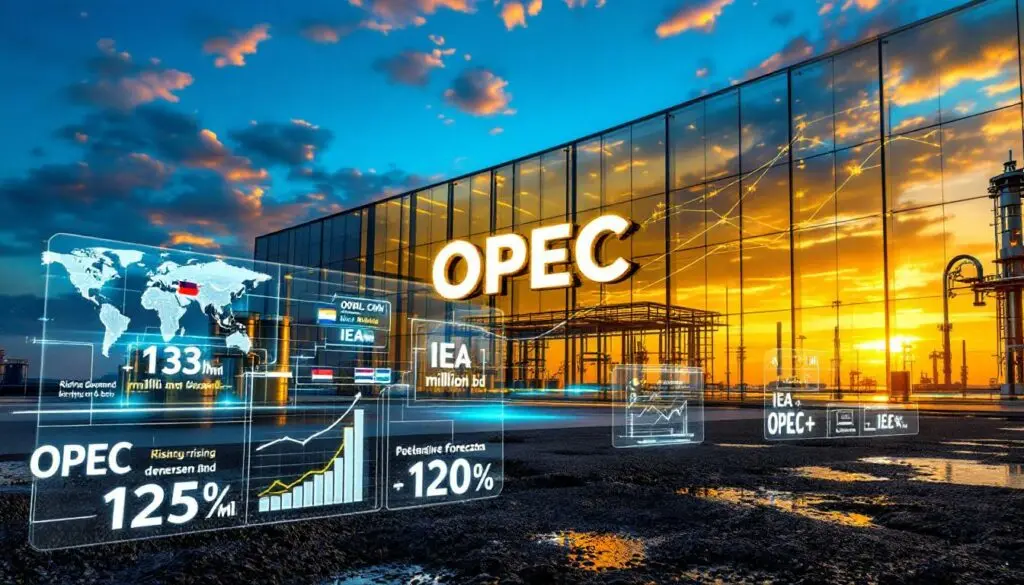
The global oil industry stands at a critical juncture that could define energy security for decades to come. Without substantial and sustained investment totaling $18.2 trillion between 2025 and 2050, the world faces mounting risks of supply disruptions, volatile energy prices, and compromised economic stability, according to a comprehensive assessment presented by the Organization of the Petroleum Exporting Countries (OPEC) at India Energy Week 2026.
Abderrezak Benyoucef, Head of the Energy Studies Department at OPEC, delivered a sobering message during his presentation of the OPEC World Oil Outlook at the flagship energy conference in Goa on Wednesday. The outlook reveals that sustained and timely investment across upstream, midstream, and downstream sectors is not merely advisable but essential for maintaining global energy security and preventing increased market volatility.
Build the future you deserve. Get started with our top-tier Online courses: ACCA, HESI A2, ATI TEAS 7, HESI EXIT, NCLEX-RN, NCLEX-PN, and Financial Literacy. Let Serrari Ed guide your path to success. Enroll today.
Breaking Down the Investment Requirements
The magnitude of investment required across the oil value chain underscores the scale of the challenge facing the global energy industry. The upstream sector alone will require average annual investments of approximately $574 billion, translating to nearly $15 trillion over the 25-year outlook period. This represents the lion’s share of the total investment needs and reflects the critical importance of exploration, development, and production activities in maintaining adequate oil supplies.
The downstream segment, encompassing refining and processing operations, will need approximately $2 trillion through 2050, while the midstream infrastructure for transportation and storage requires an additional $1.3 trillion. This detailed breakdown highlights the comprehensive nature of investment needs throughout the entire oil supply chain.
“Any shortfall in these investments would risk undermining energy security and could lead to increased market volatility,” Benyoucef emphasized, pointing to the interconnected nature of these investment requirements. The warning echoes concerns raised by energy analysts who have documented how underinvestment in oil and gas threatens energy security and drives price volatility across global markets.
Natural Decline Rates Compound Investment Pressures
A critical factor driving these massive investment needs is the natural decline rate of existing oil fields. According to research by the International Energy Agency, nearly 90% of annual upstream oil and gas investment since 2019 has been dedicated to offsetting production declines rather than meeting demand growth. Without sustained investment, global oil production would fall by approximately 5.5 million barrels per day each year – equivalent to losing the combined annual output of Brazil and Norway.
This reality creates an inherent challenge for the industry: companies must invest heavily just to maintain current production levels, even before considering the need to meet growing global demand. The decline rates vary significantly across different field types and geographies, with onshore supergiant oil fields in the Middle East declining at less than 2% per year while smaller offshore fields in Europe average more than 15% annually.
The Shifting Supply Landscape
OPEC’s outlook projects significant shifts in the global oil supply landscape over the coming decades. On the supply side, non-OPEC liquids production is expected to grow steadily in the medium term, supported by output increases from the United States, Brazil, Canada, and other producers. However, this growth trajectory is not expected to continue indefinitely.
“After 2030, non-OPEC liquids supply is projected to plateau at just under 60 million barrels per day,” Benyoucef noted, citing resource depletion and an eventual peak in US production as key limiting factors. This plateau represents a critical inflection point that will fundamentally reshape global oil market dynamics.
As non-OPEC production levels off, countries participating in the Declaration of Cooperation (DoC) – which includes OPEC members and allied producers such as Russia, Kazakhstan, and other key oil-producing nations – are expected to play an increasingly central role in balancing global markets. The DoC, established in December 2016, represents an unprecedented collaborative framework of 23 oil-producing countries based on trust, mutual respect, and dialogue.
According to OPEC estimates, DoC liquids supply is projected to rise from 40.1 million barrels per day in 2024 to 64.1 million barrels per day by 2050. This growth will increase their combined market share from 48% to 52% over the same period, marking a significant shift in the global energy balance.
“With demand continuing to grow, DoC producers will need to provide a larger share of global supply to ensure market stability,” Benyoucef stated, highlighting the increasing responsibility that will fall on these coordinated producers.
Global Trade Patterns and Regional Dynamics
The expansion of global oil demand will have profound implications for international trade patterns. Global crude and condensate trade is expected to expand significantly, increasing by more than 10 million barrels per day to reach around 47 million barrels per day by 2050, according to OPEC projections.
The Middle East will maintain its position as the world’s dominant export hub, leveraging its substantial reserves and relatively low production costs. Meanwhile, the Asia-Pacific region, including India, will further consolidate its position as the largest import destination. This shift reflects the fundamental rebalancing of global energy consumption, with rising demand in emerging economies, particularly across Asia, alongside declining consumption in parts of the Organization for Economic Co-operation and Development (OECD).
India’s role in this evolving landscape is particularly significant. According to official projections presented at India Energy Week, India alone is expected to add 8.2 million barrels per day of oil demand by 2050, driven primarily by transportation, petrochemicals, and industrial activity. This growth is underpinned by India’s expected emergence as the world’s fastest-growing major economy, with average annual GDP growth of around 5.8% between 2024 and 2050.
Scenarios Highlighting Uncertainty
OPEC’s World Oil Outlook presents multiple scenarios that illustrate the range of uncertainty surrounding future oil demand trajectories. These scenarios demonstrate how different policy choices, technological developments, and economic priorities could shape global energy consumption patterns through mid-century.
In a technology-driven scenario, faster deployment of advanced technologies and higher energy efficiency measures lead to oil demand peaking around 2035 before declining to 106 million barrels per day by 2050. This scenario assumes aggressive climate policies, rapid electrification of transportation, and significant improvements in energy efficiency across all sectors.
In contrast, an equitable growth scenario – which prioritizes energy access and development needs in emerging and developing economies – sees oil demand continuing to rise to 129 million barrels per day by mid-century. This scenario recognizes that billions of people in developing countries still lack access to modern energy services and that economic development will drive substantial increases in energy consumption.
The reference case scenario projects oil demand reaching 122.9 million barrels per day by 2050, representing the middle ground between these two extremes.
“These scenarios illustrate the range of uncertainty, but across all cases, the need for adequate investment remains unchanged,” Benyoucef emphasized. This underscores a crucial point: regardless of which demand trajectory materializes, significant investment will be required to maintain market stability and energy security.
The Investment Crisis and Its Consequences
The oil and gas industry has experienced a persistent underinvestment crisis since the price collapse of 2014. After reaching a peak of nearly $900 billion in 2014, annual upstream investment has contracted significantly, with 2021 levels at $341 billion – nearly 25% below 2019 levels and substantially below what industry experts believe is necessary to ensure market stability.
According to a comprehensive analysis by the International Energy Forum and S&P Global Commodity Insights, the industry faces a significant challenge of increasing annual upstream investment to approximately $640 billion by 2030 to ensure adequate global supplies and avoid supply shortfalls. Current investment trajectories suggest the industry may only reach $570-580 billion by 2025, creating a potential funding gap of $60-80 billion annually.
The consequences of sustained underinvestment would be severe and far-reaching. Industry analyses indicate that inadequate investment would set off a new wave of boom-and-bust pricing, with higher prices and increased market volatility becoming the new standard. This volatility would have disastrous effects on households worldwide, hitting the poorest people the hardest while threatening energy security and potentially stalling progress on climate goals by increasing reliance on more carbon-intensive energy options.
Research suggests that a 15% reduction in investment below baseline scenarios could result in a $20 per barrel increment to oil prices, substantially impacting the global economy. Consumers’ purchasing power would be eroded through higher costs for energy, heating, transportation, food, goods, and services, with low-income households and emerging economies bearing the brunt of these increases.
One decision can change your entire career. Take that step with our Online courses in ACCA, HESI A2, ATI TEAS 7, HESI EXIT, NCLEX-RN, NCLEX-PN, and Financial Literacy. Join Serrari Ed and start building your brighter future today.
The Current State of Upstream Investment
Despite recovery from pandemic lows, global upstream oil and gas investment remains substantially below historical peaks when adjusted for inflation. Investment in 2023 reached approximately $586 billion, representing progress from the depths of the COVID-19 downturn but still well short of the levels needed to ensure long-term market stability.
The drilling activity that underpins upstream investment has shown mixed signals. While the number of drilling rigs rose by 22% in 2022, this remained 10% below 2019 levels, and inflation has significantly eroded the real value of capital expenditures. These factors suggest that even as nominal investment figures have recovered, the actual physical investment in new production capacity remains constrained.
Several structural factors are contributing to this persistent underinvestment challenge. First, there is growing pressure from investors on oil and gas companies to reduce their carbon footprints, while regulatory requirements for new upstream infrastructure investment are becoming more stringent. Second, the recognition that the energy business is changing has caused companies to alter their capital allocation strategies, resulting in greater internal competition for investment dollars and reduced willingness to increase upstream investments during periods of price volatility.
Third, investors – particularly in the shale space – are increasingly demanding real returns rather than production growth, which reduces the amount of capital available for future investment and raises the hurdle rates needed for project approvals. These dynamics have fundamentally shifted the investment landscape for the oil and gas industry, creating what some analysts describe as an environment of “pre-emptive underinvestment.”
Regional Consumption Trends
The geographic distribution of future oil demand growth reveals stark contrasts between developed and developing economies. OPEC projects that oil growth going forward will be exclusively in developing countries, with OECD nations facing stagnation or even contraction in consumption.
This divergence reflects fundamentally different economic and demographic trajectories. Developing countries are experiencing rapid urbanization, expanding middle classes, and industrialization – all factors that drive energy consumption higher. In contrast, developed economies are seeing slower population growth, mature infrastructure, and more aggressive policies promoting energy efficiency and electrification.
China, the Middle East, South Asia, and Latin America are all expected to experience strong growth in oil consumption, though the pace and pattern will vary significantly across these regions. India’s projected addition of 8.2 million barrels per day represents the single largest source of demand growth, reflecting the country’s enormous population, rapid economic development, and expanding transportation and industrial sectors.
The Downstream Capacity Challenge
While much attention focuses on upstream investment needs, OPEC’s outlook also highlights growing challenges in the downstream refining sector. The downstream market is expected to increasingly tighten in the period from 2027 to 2030, with the deficit between required and potential refining capacity set to rise steadily.
Starting from almost 0.5 million barrels per day in 2027, this capacity deficit is projected to expand to around 1.6 million barrels per day by 2030. This tightening is driven by strong oil demand growth that significantly exceeds projected refining capacity additions over the period, leading to higher global refinery utilization rates.
The geographic distribution of new refining capacity also matters for global trade flows and regional energy security. Planned capacity additions show significant regional variation, with substantial new refining capacity expected in Asia, the Middle East, and parts of Africa, while many OECD regions face refinery closures as older, less efficient facilities become economically unviable.
The Energy Security Imperative
At its core, OPEC’s message emphasizes the fundamental importance of energy security in an uncertain world. The organization stresses the need for realistic and balanced energy pathways that ensure emissions reduction while safeguarding energy security, affordability, and access.
“The world does not face a choice between energy transition and energy security,” Benyoucef stated emphatically. “It needs both, and that requires continued investment in the oil sector alongside the expansion of low-carbon solutions.”
This perspective challenges narratives that present fossil fuels and renewable energy as mutually exclusive options. Instead, OPEC argues for an “all-encompassing” approach that recognizes the continued importance of oil and gas even as the world pursues climate goals and develops alternative energy sources.
The organization points out that the combined percentage of oil, gas, and coal in the global energy mix stood at around 80% in 2024 – only slightly less than when OPEC was founded in 1960, despite energy consumption increasing more than fivefold over that period. This historical pattern, OPEC argues, demonstrates that the energy transition will be additive rather than substitutive, with new energy sources complementing rather than entirely replacing existing ones.
Policy Implications and Industry Response
The scale of investment needs outlined in OPEC’s outlook carries significant implications for policymakers and industry stakeholders worldwide. Governments must create stable regulatory environments that provide sufficient assurance for companies to commit capital to long-cycle, capital-intensive projects. This requires clarity on carbon pricing, environmental regulations, and long-term energy policies.
For producing countries, particularly those in OPEC and the Declaration of Cooperation, the investment requirements underscore the need to maintain attractive fiscal terms while also investing in their own production capacity. The projected increase in DoC market share from 48% to 52% by 2050 implies that these countries will need to substantially expand their production capabilities, requiring both domestic and international investment.
For consuming nations, the outlook highlights the importance of maintaining diverse energy supply sources and avoiding over-reliance on any single supplier or region. The projected concentration of production growth among DoC countries raises questions about supply security and the potential for geopolitical leverage over energy markets.
The Role of Technology and Efficiency
While OPEC’s outlook emphasizes the continued central role of oil in the global energy system, it also acknowledges the importance of technology and efficiency improvements. The technology-driven scenario demonstrates that rapid advancement in electric vehicles, energy storage, artificial intelligence-optimized systems, and other innovations could significantly reduce oil demand growth.
However, OPEC maintains that even in scenarios with aggressive technology deployment and efficiency improvements, substantial oil consumption will continue through 2050 and beyond. This reflects the reality that many applications of oil – particularly in aviation, shipping, petrochemicals, and heavy industry – currently have limited alternatives, and the infrastructure and capital stock built around oil-based systems represents a massive sunk investment that will turn over slowly.
Climate Change and Emissions Reduction
The oil industry’s role in addressing climate change features prominently in OPEC’s outlook. The organization emphasizes that OPEC member countries and the oil industry more broadly are playing an increasingly proactive role in emissions reduction through investments in carbon capture, utilization and storage (CCUS), direct air capture, and the circular carbon economy.
This approach reflects a growing recognition within the industry that maintaining its social license to operate will require demonstrable progress on emissions reduction, even as oil production continues to meet global demand. The challenge lies in balancing the need for emissions reductions with the fundamental requirement to supply energy to billions of people, many of whom still lack access to modern energy services.
The Path Forward
OPEC’s World Oil Outlook 2025 paints a picture of an industry at a crossroads. The projected need for $18.2 trillion in cumulative investments represents both a challenge and an opportunity. Failure to make these investments would likely result in supply shortfalls, price volatility, and compromised energy security. Success in mobilizing this capital, however, would help ensure stable energy markets capable of supporting global economic growth and development.
The outlook’s multiple scenarios demonstrate that the future of oil demand remains highly uncertain, influenced by policy choices, technological developments, and economic priorities that will unfold over the coming decades. What remains certain, according to OPEC, is that substantial investment will be required regardless of which trajectory materializes.
As the global energy system evolves, the dialogue between producers, consumers, and policymakers becomes increasingly critical. The India Energy Week 2026 conference, where OPEC presented these findings, represents one such forum for this essential dialogue. Events like these provide opportunities for stakeholders to align on the challenges ahead and work toward solutions that balance the competing demands of energy security, economic development, and environmental sustainability.
The message from OPEC is clear: the world cannot afford to neglect investment in the oil sector, even as it pursues the energy transition. The consequences of underinvestment – higher prices, increased volatility, and compromised energy security – would fall most heavily on the world’s poorest and most vulnerable populations. Ensuring adequate investment in all forms of energy, including oil, remains essential for building a sustainable energy future that works for everyone.
The coming years will test whether the global community can rise to this challenge, mobilizing the massive capital required while navigating the complex interplay of market forces, policy imperatives, and technological change. The stakes could not be higher, as energy security, economic prosperity, and social stability all hang in the balance.
Ready to take your career to the next level? Join our Online courses: ACCA, HESI A2, ATI TEAS 7 , HESI EXIT , NCLEX – RN and NCLEX – PN, Financial Literacy!🌟 Dive into a world of opportunities and empower yourself for success. Explore more at Serrari Ed and start your exciting journey today! ✨
Track GDP, Inflation and Central Bank rates for top African markets with Serrari’s comparator tool.
See today’s Treasury bonds and Money market funds movement across financial service providers in Kenya, using Serrari’s comparator tools.
photo source: Google
By: Montel Kamau
Serrari Financial Analyst
29th January, 2026
Article, Financial and News Disclaimer
The Value of a Financial Advisor
While this article offers valuable insights, it is essential to recognize that personal finance can be highly complex and unique to each individual. A financial advisor provides professional expertise and personalized guidance to help you make well-informed decisions tailored to your specific circumstances and goals.
Beyond offering knowledge, a financial advisor serves as a trusted partner to help you stay disciplined, avoid common pitfalls, and remain focused on your long-term objectives. Their perspective and experience can complement your own efforts, enhancing your financial well-being and ensuring a more confident approach to managing your finances.
Disclaimer: This article is for informational purposes only and does not constitute financial advice. Readers are encouraged to consult a licensed financial advisor to obtain guidance specific to their financial situation.
Article and News Disclaimer
The information provided on www.serrarigroup.com is for general informational purposes only. While we strive to keep the information up to date and accurate, we make no representations or warranties of any kind, express or implied, about the completeness, accuracy, reliability, suitability, or availability with respect to the website or the information, products, services, or related graphics contained on the website for any purpose. Any reliance you place on such information is therefore strictly at your own risk.
www.serrarigroup.com is not responsible for any errors or omissions, or for the results obtained from the use of this information. All information on the website is provided on an as-is basis, with no guarantee of completeness, accuracy, timeliness, or of the results obtained from the use of this information, and without warranty of any kind, express or implied, including but not limited to warranties of performance, merchantability, and fitness for a particular purpose.
In no event will www.serrarigroup.com be liable to you or anyone else for any decision made or action taken in reliance on the information provided on the website or for any consequential, special, or similar damages, even if advised of the possibility of such damages.
The articles, news, and information presented on www.serrarigroup.com reflect the opinions of the respective authors and contributors and do not necessarily represent the views of the website or its management. Any views or opinions expressed are solely those of the individual authors and do not represent the website's views or opinions as a whole.
The content on www.serrarigroup.com may include links to external websites, which are provided for convenience and informational purposes only. We have no control over the nature, content, and availability of those sites. The inclusion of any links does not necessarily imply a recommendation or endorsement of the views expressed within them.
Every effort is made to keep the website up and running smoothly. However, www.serrarigroup.com takes no responsibility for, and will not be liable for, the website being temporarily unavailable due to technical issues beyond our control.
Please note that laws, regulations, and information can change rapidly, and we advise you to conduct further research and seek professional advice when necessary.
By using www.serrarigroup.com, you agree to this disclaimer and its terms. If you do not agree with this disclaimer, please do not use the website.
www.serrarigroup.com, reserves the right to update, modify, or remove any part of this disclaimer without prior notice. It is your responsibility to review this disclaimer periodically for changes.
Serrari Group 2025