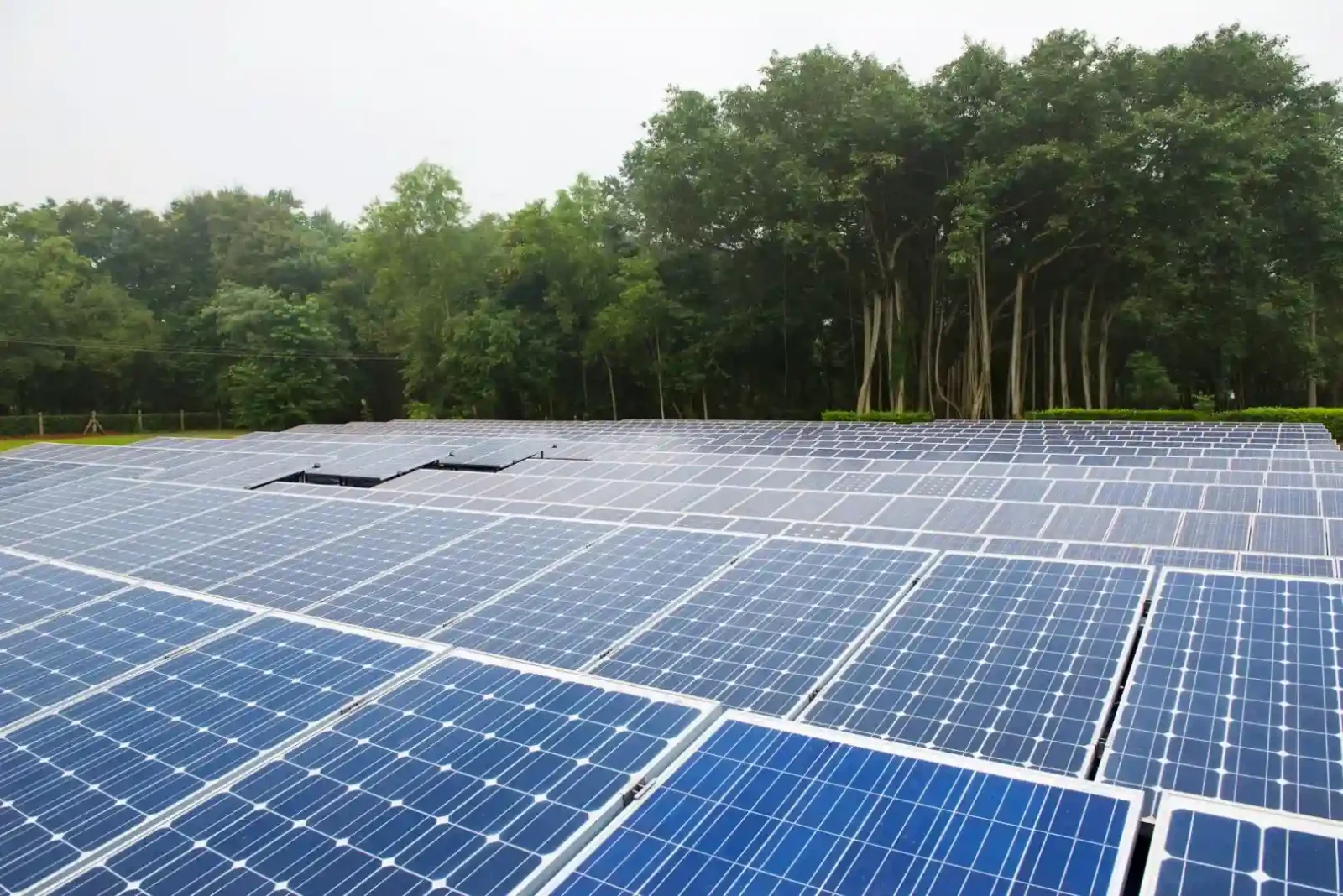
The OPEC Fund for International Development is providing a $37 million loan to support Egypt’s accelerating renewable energy transition through the Abydos II solar photovoltaic project, representing one of the country’s most ambitious clean energy initiatives to date and marking a significant milestone in the nation’s commitment to diversifying its power generation mix away from fossil fuel dependence toward sustainable electricity infrastructure.
Located in the strategically important Aswan Governorate in Upper Egypt, the Abydos II project features a 1,000 MW solar PV plant integrated with a sophisticated 600 MWh battery energy storage system, creating what developers describe as Africa’s largest single-site combined renewable energy and battery storage facility designed to substantially enhance Egypt’s grid reliability while advancing the country’s ambitious decarbonization objectives under its National Climate Change Strategy 2050.
Once operational in June 2026, the facility is expected to supply over 3 million MWh of clean electricity annually to Egypt’s national grid, providing reliable power to more than 500,000 households across the country and reducing annual carbon dioxide emissions by approximately 1.6 million tonnes, representing a substantial contribution toward Egypt’s legally binding commitment to reduce power sector emissions by 37 percent while working toward its national target of achieving 42 percent renewable energy in the electricity mix by 2030.
Build the future you deserve. Get started with our top-tier Online courses: ACCA, HESI A2, ATI TEAS 7, HESI EXIT, NCLEX-RN, NCLEX-PN, and Financial Literacy. Let Serrari Ed guide your path to success. Enroll today.
Comprehensive Financing Package Led by International Development Institutions
The ambitious $571.8 million financing package for the Abydos II project was strategically arranged by the International Finance Corporation, the private sector arm of the World Bank Group, with the OPEC Fund acting as a parallel lender alongside a distinguished consortium of international development finance institutions and impact investors committed to advancing climate-aligned infrastructure across emerging markets.
The comprehensive financing structure brings together IFC’s $83.5 million senior loan combined with $465.2 million mobilized from strategic international partners including Italy’s Cassa Depositi e Prestiti implementing the Mattei Plan for Africa, Dutch Entrepreneurial Development Bank FMO, Deutsche Investitions- und Entwicklungsgesellschaft DEG from Germany, British International Investment which committed $37 million to the project, the OPEC Fund for International Development, and Europe Arab Bank, demonstrating the strong international confidence in Egypt’s renewable energy sector and regulatory framework.
The financing structure is further strengthened through concessional blended finance mechanisms including a loan from the Clean Technology Fund and support from the MENA Private Sector Development Program backed by the Government of the Netherlands, with IFC serving as the implementing entity for both specialized climate finance facilities designed to reduce project costs and improve economic viability for large-scale renewable energy deployments in developing economies.
OPEC Fund’s Strategic Commitment to Climate-Aligned Development
OPEC Fund President Abdulhamid Alkhalifa stated: “By supporting this landmark project, the OPEC Fund is advancing Egypt’s renewable energy transition while facilitating private sector investment from our member country, the United Arab Emirates, into a key partner economy. The scale of the investment and the integration of battery storage will help strengthen grid resilience, support a more diversified energy mix, and contribute to sustainable growth across the broader Egyptian economy.”
The Abydos II initiative aligns strategically with the OPEC Fund’s Climate Action Plan, which commits the multilateral development institution to raising the share of climate finance to 40 percent of all new financing by 2030 while mainstreaming climate action throughout its project cycle to increase climate adaptation, mitigation, and resilience investments across its partner countries in Africa, Asia, Latin America and the Caribbean.
The OPEC Fund has set ambitious yet realistic targets to channel at least $4 billion into Africa to support climate-aligned infrastructure development and private sector-led sustainable development initiatives that strengthen economic resilience while reducing greenhouse gas emissions and building adaptive capacity to withstand climate change impacts including droughts, floods, and temperature extremes affecting vulnerable populations.
Egypt has maintained its status as a longstanding strategic partner of the OPEC Fund, which has previously supported major transformative renewable energy projects across the country including the 200 MW Kom Ombo Solar PV Project developed to serve 130,000 households and increase renewable energy penetration in Egypt’s generation mix, as well as the ambitious 1.1 GW Suez Energy Wind Project that significantly expanded the country’s wind power capacity along the Gulf of Suez corridor.
UAE-Based AMEA Power Leading Project Development and Operations
The Abydos II project is being developed by UAE-based AMEA Power under a Build-Own-Operate structure, with the company maintaining full responsibility for project development, construction execution, and long-term operational management of the integrated solar and battery storage facility over the entire concession period, ensuring consistent performance standards and reliability throughout the project lifecycle.
AMEA Power holds a 60 percent ownership stake in the project company Abydos for Renewable Energy, with Japan’s Kyuden International Corporation holding the remaining 40 percent equity interest, marking Kyuden International’s inaugural investment in Egypt’s renewable energy sector and demonstrating growing Japanese institutional investor interest in African clean energy infrastructure opportunities.
The facility is specifically designed to support the seamless integration of variable renewable energy into Egypt’s power system while substantially improving the country’s capacity to reliably meet electricity demand during critical peak periods when consumption surges due to air conditioning loads during hot summer months and industrial operations requiring stable baseload power supply.
Hussain Al Nowais, Chairman of AMEA Power, emphasized that the project represents the largest solar and battery storage development in Africa and marks a pivotal milestone in Egypt’s strategic shift toward cleaner energy sources while simultaneously strengthening energy security, supporting local employment creation during construction and operations, and establishing foundational infrastructure for long-term national economic development resilient to fossil fuel price volatility.
AMEA Power’s Expanding Egyptian Renewable Energy Portfolio
AMEA Power has established a formidable track record across Egypt through its strategic partnership with the International Finance Corporation, successfully delivering multiple landmark renewable energy projects that have materially enhanced the country’s power infrastructure capacity and accelerated the clean energy transition across both solar and wind technologies.
The company’s Egyptian portfolio includes the 500 MW Abydos Solar PV Plant in Aswan’s Kom Ombo area, which was commissioned in December 2024 and supplies clean electricity to approximately 300,000 households annually while demonstrating the commercial viability of large-scale solar deployment in Egypt’s high-irradiation southern regions.
In a remarkable achievement highlighting the company’s execution capabilities, AMEA Power completed the 500 MW Amunet Wind Power Plant in Ras Ghareb approximately 2.5 months ahead of the original schedule in June 2025, establishing Africa’s largest operational wind farm with annual generation exceeding 2,500 GWh sufficient to meet electricity needs of around one million Egyptian households while offsetting substantial carbon emissions from fossil fuel generation.
Additionally, AMEA Power pioneered Egypt’s first utility-scale 300 MWh battery energy storage system in July 2025 as a strategic extension of the initial Abydos solar project, significantly enhancing grid resilience by enabling operators to store excess solar generation during midday peak production hours and dispatch emission-free electricity during evening peak demand periods when solar output declines but consumption remains elevated.
This new Abydos II solar-plus-storage initiative builds directly upon these demonstrated successes, further reinforcing AMEA Power’s central role in driving Egypt’s clean energy expansion while establishing the company as one of the fastest-growing renewable energy developers operating across Africa, the Middle East, and Central Asia with a robust project pipeline spanning multiple technologies and markets.
Advanced Battery Storage Technology Enhancing Grid Reliability
The integration of the sophisticated 600 MWh battery energy storage system represents a transformative technological advancement for Egypt’s electricity infrastructure, enabling grid operators at the Egyptian Electricity Transmission Company to better manage the inherent variability of solar generation while optimizing dispatch of renewable energy to match consumption patterns throughout the daily load cycle.
The battery system will store surplus electricity generated during peak solar production hours when photovoltaic output exceeds immediate grid demand, then strategically dispatch this stored clean energy during evening hours when solar generation declines but household and commercial electricity consumption typically peaks due to lighting, cooking, entertainment systems, and continued industrial operations requiring reliable baseload power.
This capability substantially eases pressure on Egypt’s transmission and distribution infrastructure during critical peak demand periods, supporting greater overall power system reliability while helping optimize utilization of the country’s abundant solar resources in high-irradiation regions including Aswan Governorate where annual solar potential significantly exceeds most other global locations.
The advanced transmission design incorporated into the Abydos II project will prove mission-critical for efficiently evacuating generated power to large-scale commercial and industrial consumers, directly supporting Egypt’s ambitious green industrialization plan to inject stable, sustainable, and affordable electricity into manufacturing facilities, logistics operations, and export-oriented sectors seeking to reduce energy costs while meeting increasingly stringent sustainability requirements from international customers and regulatory frameworks.
Alignment with Egypt’s National Climate and Development Strategies
The Abydos II project aligns comprehensively with Egypt’s National Climate Change Strategy 2050, which establishes binding targets to systematically decarbonize key economic sectors including energy, transport, and heavy industry while supporting carefully structured country-led investment platforms designed to attract substantial private and institutional capital flows toward climate-aligned projects and infrastructure development.
Egypt’s Minister of Planning, Economic Development and International Cooperation, Rania A. Al-Mashat, stated: “This project reflects Egypt’s unwavering commitment to scaling private investment in renewable energy as a cornerstone of energy security, broad-based economic development, and decisive climate action. Through our country-led NWFE platform and the commitment to the green transition, we are mobilizing high-impact partnerships that deliver clean power at scale, create quality employment opportunities, and strengthen the competitiveness and resilience of Egypt’s energy system for decades to come.”
The project falls strategically under the Government of Egypt’s fast-track 4GW Emergency Renewable Energy Program, a comprehensive initiative designed to rapidly meet growing electricity demand through clean and competitive power sources while simultaneously reducing dangerous reliance on imported natural gas that strains foreign exchange reserves and exposes the economy to volatile international commodity price fluctuations.
These country-led investment platforms are rapidly becoming cornerstone mechanisms of regional cooperation and cross-border energy trade across growing markets throughout North Africa and the Middle East, systematically reinforcing Egypt’s strategic position as a leading continental hub for climate innovation, renewable energy-led economic growth, and sustainable infrastructure development attracting billions in international capital deployment.
One decision can change your entire career. Take that step with our Online courses in ACCA, HESI A2, ATI TEAS 7, HESI EXIT, NCLEX-RN, NCLEX-PN, and Financial Literacy. Join Serrari Ed and start building your brighter future today.
Construction Employment and Economic Development Impact
Construction of the ambitious Abydos II project is expected to create more than 4,000 direct jobs during the intensive building phase, with project developers committing that more than 95 percent of these employment opportunities will be reserved for Egyptian workers, ensuring that economic benefits flow directly to local communities in Aswan Governorate and surrounding regions while building domestic technical capacity and skills in modern renewable energy construction techniques.
The project site spans approximately 20 square kilometers of government-owned land strategically located adjacent to the Luxor-Aswan Highway in an area that has been formally assigned to the New Renewable Energy Agency for dedicated renewable energy project development since 2017, facilitating streamlined permitting processes and coordinated infrastructure planning across multiple solar and wind facilities in the high-potential Aswan region.
The engineering, procurement, and construction contract for Abydos II was awarded to a specialized consortium led by China Energy Engineering Corporation, comprising China Energy International Group, Southwest Electric Power Design Institute, and Zhejiang Thermal Power Construction, which will collectively handle detailed engineering design, comprehensive material supply procurement, full construction execution, and will operate the facility for the initial two-year commissioning period to ensure optimal performance.
Long-Term Power Purchase Agreement Ensuring Revenue Stability
The Abydos II project is supported by a comprehensive 25-year Power Purchase Agreement with the Egyptian Electricity Transmission Company, providing robust long-term revenue certainty that underpins the project’s financial viability while ensuring the facility will deliver stable, competitively priced electricity to Egyptian households, businesses, and industries throughout the extended concession period.
This long-duration offtake contract represents a critical risk mitigation mechanism that enables developers and lenders to secure favorable financing terms by guaranteeing predictable cash flows over the project lifecycle, while simultaneously providing Egyptian grid operators with assured access to substantial volumes of clean, price-stable electricity that protects consumers from fossil fuel price volatility and reduces exposure to geopolitical supply disruptions affecting natural gas imports.
The PPA framework reflects Egypt’s maturation as a renewable energy investment destination with increasingly sophisticated regulatory structures, transparent procurement processes, and creditworthy offtake counterparties that meet international standards for bankability and enable mobilization of competitive international private capital into the country’s energy sector transformation.
Strategic Role in Egypt’s 2030 Renewable Energy Targets
The Abydos II project represents a substantial contribution toward Egypt’s legally binding commitment to achieve 42 percent renewable energy penetration in the national electricity generation mix by 2030, a target that requires deployment of thousands of megawatts of additional solar, wind, and hydroelectric capacity over the remainder of this decade to displace fossil fuel generation while meeting rapidly growing electricity demand driven by population growth, economic development, and rising living standards.
Since 2017, the World Bank Group and development partners have collectively supported 3.1 GW of solar photovoltaic capacity and 2.8 GW of wind power projects across Egypt, demonstrating strong international confidence in the country’s renewable energy regulatory framework and creating a robust foundation for continued large-scale clean energy investment that positions Egypt as a regional leader in the energy transition.
IFC has specifically supported Egypt’s landmark 1.4 GW feed-in-tariff program at the Benban solar park in Aswan Governorate, which became one of the world’s largest solar installations, along with several major projects under the large-scale Build-Own-Operate framework including the 252 MW West Bakr Wind project and the parallel 500 MW Abydos Solar and 500 MW Amunet Wind initiatives that collectively represent over 1 GW of new renewable capacity commissioned in rapid succession.
Broader Context of Global Climate Finance Mobilization
The Abydos II financing package exemplifies the critical role that multilateral development banks and development finance institutions play in mobilizing substantial private capital toward climate-aligned infrastructure in emerging markets, where perceived investment risks and financing gaps often constrain deployment of commercially viable renewable energy projects despite strong underlying economics and development impacts.
According to the latest joint reporting by international financial institutions, multilateral development banks provided approximately $51 billion in climate finance to low- and middle-income economies in recent years while mobilizing an additional $40 billion in complementary private sector funding globally, exceeding previous climate finance goals but still representing merely a fraction of the estimated capital requirements necessary to achieve Paris Agreement temperature stabilization objectives.
The International Energy Agency estimates that approximately $4.2 trillion in global investment will be required by 2030 to achieve the 1.5 degrees Celsius warming limit established under the Paris Agreement, with emerging markets and developing economies excluding China requiring approximately $2.4 trillion annually by 2030 for essential climate and nature-related investments spanning renewable energy, energy efficiency, sustainable transport, climate-resilient agriculture, and nature-based solutions.
Africa accounts for the smallest share of global greenhouse gas emissions at just 3.8 percent according to environmental disclosure systems, yet the continent faces disproportionate exposure to accelerating climate change impacts including rising temperatures, changing precipitation patterns, more frequent extreme weather events, and sea level rise that threatens coastal populations and infrastructure while undermining food security, water availability, human health, and broad socio-economic development across vulnerable communities.
OPEC Fund’s Expanding Climate Finance Commitments
The OPEC Fund has demonstrated steadily expanding engagement with climate finance, with the multilateral institution committing more than $30 billion to development projects in over 125 countries since its establishment in 1976, generating estimated total project costs exceeding $200 billion through strategic co-financing partnerships with other development banks, bilateral agencies, and private sector investors.
The institution adopted its first dedicated Climate Action Plan in 2022, establishing ambitious targets to increase climate finance to 25 percent of all new financing by 2025 and 40 percent by 2030 while seeking systematic alignment with the goals of the Paris Agreement across its entire lending portfolio spanning public sector operations, private sector investments, trade finance facilities, and grant-funded technical assistance programs.
In 2024, the OPEC Fund launched major new initiatives aimed at building climate resilience including the Island Resilience Facility specifically designed to support Small Island Developing States facing existential threats from sea level rise, as well as a $1 billion pledge under the Global Drought Resilience Partnership to address escalating threats posed by droughts through enhanced water management infrastructure, climate-resilient agriculture, and research on drought-tolerant crop varieties particularly benefiting arid and semi-arid regions.
Starting in 2025, all new OPEC Fund projects excluding trade finance undergo systematic climate screening to maximize development impact, with tailored approaches ensuring that climate considerations are comprehensively integrated into project design, implementation frameworks, and monitoring systems that track greenhouse gas emission reductions, adaptation outcomes, and resilience building across diverse vulnerable regions.
Egypt’s Broader Clean Energy Investment Landscape
Beyond the Abydos II project, Egypt continues attracting substantial international investment into renewable energy infrastructure as the country positions itself to become a regional clean energy hub capable of exporting surplus renewable electricity to neighboring markets through expanding interconnection infrastructure linking North African and Mediterranean power systems.
British International Investment’s $37 million commitment to Abydos II reinforces the UK development finance institution’s expanding investment in Egypt’s renewable energy sector, particularly in integrated battery storage technologies that enhance grid flexibility while demonstrating how large-scale solar and battery storage projects can simultaneously drive climate action and create tangible economic opportunities across developing economies.
Sherine Shohdy, North Africa Regional Director at BII, stated: “Abydos II is a clear example of BII’s leadership in climate finance and our long-term commitment to Egypt’s clean energy transition, supporting projects that deliver not only environmental benefits but also strengthen energy access, create quality jobs, and boost productive capacity across key economic sectors driving national development.”
The comprehensive financing mobilized for Abydos II demonstrates the power of coordinated public policy frameworks, concessional finance mechanisms, and private sector leadership to accelerate Egypt’s transition toward a low-carbon, inclusive, and sustainable growth model that balances climate imperatives with development priorities including poverty reduction, employment creation, and improved living standards for growing populations across North Africa.
Future Outlook for Egyptian Renewable Energy Sector
As Egypt continues implementing its National Climate Change Strategy 2050 and advancing toward the 2030 renewable energy target of 42 percent penetration, the successful development of landmark projects like Abydos II establishes important precedents for future large-scale investments while demonstrating the commercial viability and bankability of integrated solar-plus-storage facilities operating under long-term offtake contracts with creditworthy counterparties.
The project’s scheduled June 2026 commercial operation date positions it to begin delivering substantial clean energy volumes and emissions reductions well ahead of the critical 2030 milestone, providing Egyptian authorities with confidence that ambitious renewable energy targets remain achievable through continued mobilization of international development finance and private sector capital under supportive regulatory frameworks and transparent procurement processes.
The demonstrated ability of development institutions like the OPEC Fund, IFC, and European development banks to structure comprehensive financing packages combining concessional resources with commercial debt represents a replicable model for accelerating renewable energy deployment across other African markets facing similar challenges around perceived investment risks, local currency constraints, and limited domestic capital availability for long-tenor infrastructure investments.
Looking forward, Egypt’s renewable energy sector is positioned for continued robust growth driven by strong solar and wind resources, improving regulatory frameworks, growing international investor confidence, expanding technical capacity among local developers and contractors, and urgent national imperatives to enhance energy security while meeting climate commitments under the Paris Agreement and supporting sustainable economic development that creates employment opportunities and raises living standards across all segments of Egyptian society.
Ready to take your career to the next level? Join our Online courses: ACCA, HESI A2, ATI TEAS 7 , HESI EXIT , NCLEX – RN and NCLEX – PN, Financial Literacy!🌟 Dive into a world of opportunities and empower yourself for success. Explore more at Serrari Ed and start your exciting journey today! ✨
Track GDP, Inflation and Central Bank rates for top African markets with Serrari’s comparator tool.
See today’s Treasury bonds and Money market funds movement across financial service providers in Kenya, using Serrari’s comparator tools.
photo source: Google
By: Montel Kamau
Serrari Financial Analyst
20th January, 2026