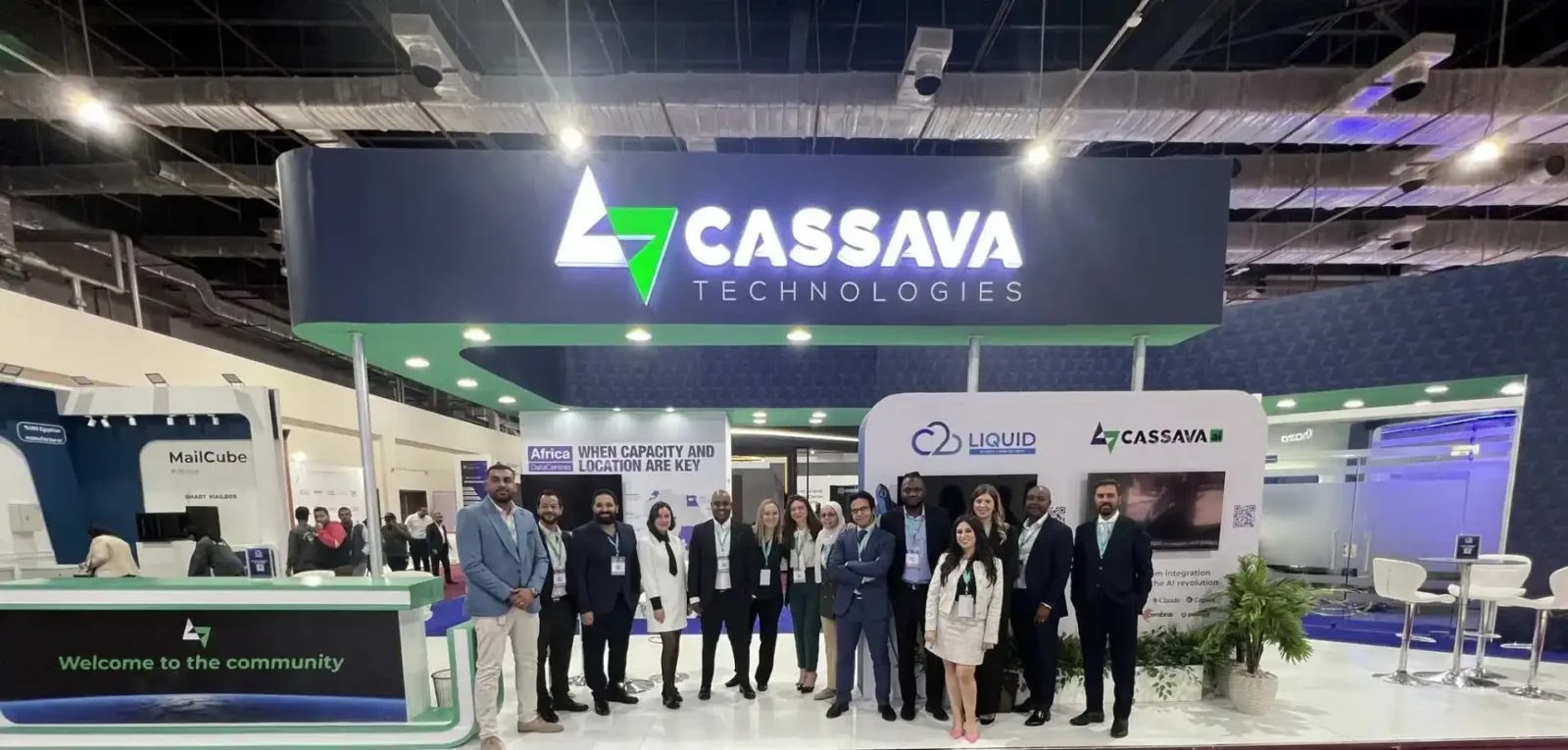
In a landmark move that signals growing confidence in Africa’s digital economy, Nvidia Corporation, the world’s leading artificial intelligence chip manufacturer, has acquired an equity stake in Cassava Technologies, a pan-African technology infrastructure company. This strategic investment marks a significant escalation of Nvidia’s commitment to the continent and positions the chipmaker at the heart of Africa’s rapidly evolving AI ecosystem.
The undisclosed investment gives Nvidia direct ownership in Cassava, a U.K.-headquartered firm with extensive operations spanning Africa, the Middle East, and Latin America. Through its subsidiaries—Liquid Intelligent Technologies, Africa Data Centres, and Cassava.ai—the company has emerged as one of the continent’s most ambitious digital infrastructure developers, bridging the technological gap that has historically limited Africa’s participation in the global digital economy.
Build the future you deserve. Get started with our top-tier Online courses: ACCA, HESI A2, ATI TEAS 7, HESI EXIT, NCLEX-RN, NCLEX-PN, and Financial Literacy. Let Serrari Ed guide your path to success. Enroll today.
A $700 Million Vision for AI-Ready Infrastructure
Cassava Technologies has been at the forefront of efforts to deploy AI-capable data centers across strategic African markets, operating under a bold US$700 million expansion plan announced earlier this year. This initiative represents one of the largest private-sector investments in African technology infrastructure and reflects growing recognition that the continent cannot remain on the sidelines of the global AI revolution.
The ambitious rollout includes state-of-the-art facilities in five critical markets: Kenya, South Africa, Nigeria, Egypt, and Morocco. These nations represent Africa’s most economically significant and technologically advanced economies, collectively accounting for a substantial portion of the continent’s GDP and digital services consumption. Each facility is being specifically designed to host tens of thousands of Nvidia GPUs, the specialized processors that have become essential for training large language models, running complex AI applications, and powering enterprise computing workloads.
The data centers will enable African businesses, researchers, and governments to access high-performance computing capabilities that have previously been accessible only by shipping data to facilities in Europe, North America, or Asia—a process that introduces latency, raises data sovereignty concerns, and increases costs.
Strategic Significance of Nvidia’s Investment
Hardy Pemhiwa, President and Group CEO of Cassava Technologies, characterized the Nvidia investment as a transformative development for the company and the broader African technology sector. “Securing this investment is an important milestone that we expect to unlock additional value from and catalyze the further expansion of our digital infrastructure and services to bridge the digital divide on the continent,” Pemhiwa stated.
The investment carries implications far beyond simple capital injection. Nvidia’s decision to take an equity position—rather than simply acting as a hardware supplier—demonstrates the company’s long-term confidence in Africa’s digital trajectory and its willingness to share both risks and rewards with the continent’s technology pioneers.
For Nvidia, the move represents a logical extension of its global strategy to ensure that its GPU technology reaches every corner of the emerging AI economy. As competition intensifies in established markets like North America, Europe, and parts of Asia, Africa represents one of the last major regions where GPU-powered infrastructure remains dramatically underserved relative to population and economic potential.
A Distinguished Roster of Global Investors
Nvidia now joins an impressive lineup of institutional and corporate investors that have placed their confidence in Cassava’s vision. The company’s cap table includes Google, one of the world’s leading cloud computing and AI companies, which has its own strategic interests in ensuring global access to computing infrastructure.
Development finance institutions have played a crucial role in de-risking African technology investments. The International Finance Corporation (IFC), the private-sector arm of the World Bank Group, has backed Cassava as part of its broader mandate to catalyze private investment in emerging markets. Similarly, British International Investment (formerly CDC Group), the UK’s development finance institution, has committed capital to support the expansion of digital infrastructure across the continent.
Regional development banks have also recognized the strategic importance of the initiative. The African Export-Import Bank’s Fund for Export Development in Africa (FEDA) has provided financing, reflecting the understanding that digital infrastructure has become as critical to economic development as traditional physical infrastructure like roads and ports.
South Africa’s Public Investment Corporation, one of the largest asset managers on the continent with over $130 billion in assets under management, has also invested in Cassava, providing both capital and validation from one of Africa’s most sophisticated institutional investors.
This diverse investor base—spanning technology giants, development finance institutions, and African institutional investors—provides Cassava with not just capital but also strategic guidance, political support, and market access across multiple jurisdictions.
Addressing Africa’s Digital Infrastructure Gap
The significance of Cassava’s data center initiative can only be understood against the backdrop of Africa’s current technological reality. Despite being home to over 1.4 billion people and some of the world’s fastest-growing economies, the continent has historically been underserved by global technology infrastructure.
According to various industry assessments, Africa accounts for less than 1% of global data center capacity despite representing approximately 18% of the world’s population. This disparity has forced African businesses, governments, and researchers to rely on infrastructure located in other regions, creating challenges around data sovereignty, latency, costs, and regulatory compliance.
The situation has become particularly acute as artificial intelligence applications proliferate. Training large AI models requires massive computational resources concentrated in specialized facilities. AI model training often involves processing datasets containing millions or billions of data points through neural networks with billions of parameters—tasks that require thousands of GPUs working in parallel for weeks or months.
Without local infrastructure, African organizations face a stark choice: forgo AI capabilities entirely or send potentially sensitive data to foreign facilities, raising concerns about privacy, security, and regulatory compliance under frameworks like data localization laws that many African nations are implementing.
Sector-Specific Applications Driving Demand
The demand for high-performance computing in Africa is being driven by diverse sectors that are increasingly recognizing AI as a competitive necessity rather than a luxury. The fintech sector, one of Africa’s most dynamic industries, requires AI for fraud detection, credit scoring for populations without traditional credit histories, and personalized financial services delivery.
Agricultural technology companies are leveraging AI for precision farming, crop disease detection, yield prediction, and supply chain optimization—applications that could transform food security across a continent where agriculture employs over 60% of the workforce.
Healthcare providers are exploring AI applications for medical diagnostics, patient management, and drug discovery—particularly relevant given Africa’s burden of infectious diseases and limited healthcare infrastructure in many regions.
Telecommunications companies, which have driven much of Africa’s digital revolution through mobile connectivity, are deploying AI for network optimization, customer service automation, and new product development as they seek to extract more value from existing infrastructure investments.
One decision can change your entire career. Take that step with our Online courses in ACCA, HESI A2, ATI TEAS 7, HESI EXIT, NCLEX-RN, NCLEX-PN, and Financial Literacy. Join Serrari Ed and start building your brighter future today.
Nvidia’s Global Expansion Strategy
For Nvidia, the Cassava investment represents the latest chapter in a deliberate strategy to expand GPU-powered infrastructure into regions that have historically lacked adequate computing capacity. The company has pursued similar partnerships and investments in Southeast Asia, Latin America, and other emerging markets, recognizing that the future growth of AI adoption will increasingly come from regions beyond the traditional technology hubs of Silicon Valley, Seattle, and Shenzhen.
This geographic diversification serves multiple strategic objectives. First, it expands Nvidia’s total addressable market by creating demand in regions where AI adoption has been constrained by infrastructure limitations. Second, it helps the company maintain its dominant position in AI chips by ensuring that alternative processor architectures don’t gain footholds in emerging markets. Third, it aligns with the broader geopolitical interests of the United States, Nvidia’s home country, which seeks to maintain technological leadership and influence in developing regions.
The approach also hedges against regulatory and market risks in Nvidia’s core markets. The company has faced export restrictions limiting its ability to sell advanced chips to China, previously a major market. By cultivating opportunities in Africa, Southeast Asia, and Latin America, Nvidia reduces its dependence on any single geographic market.
Geopolitical Dimensions of Technology Investment
The Nvidia-Cassava partnership carries significant geopolitical implications that extend well beyond commercial considerations. For over a decade, Chinese state-owned enterprises and private companies backed by Beijing have been aggressively investing in African telecommunications infrastructure, data centers, and related technologies as part of China’s broader Belt and Road Initiative.
Companies like Huawei, ZTE, and China Telecom have built substantial market positions across the continent, often offering financing terms and prices that Western competitors struggled to match. This has raised concerns in Washington and European capitals about the potential for Chinese technological influence to translate into political leverage, particularly given the dual civilian-military nature of many advanced technologies.
The Biden administration has emphasized the importance of private-sector engagement in Africa as part of its strategy to offer alternatives to Chinese investment. Unlike state-directed Chinese infrastructure projects, the U.S. approach emphasizes commercially viable partnerships between African entrepreneurs and Western investors, development finance institutions, and technology companies.
Nvidia’s investment in Cassava exemplifies this model: a market-driven initiative that nevertheless aligns with broader U.S. foreign policy objectives of maintaining technological influence and demonstrating that Western companies can be reliable partners in Africa’s development.
Technical Requirements for AI Data Centers
The data centers that Cassava is deploying represent a significant technical leap beyond traditional facilities. AI-optimized data centers require substantially more power density, cooling capacity, and network bandwidth than facilities designed for conventional enterprise computing or web hosting.
Training large AI models can require megawatts of power concentrated in relatively small physical footprints, creating extraordinary thermal management challenges. The latest generation of Nvidia H100 and H200 GPUs can consume 700 watts per chip, and a single training cluster might contain thousands of these processors operating simultaneously.
Cooling such facilities requires sophisticated liquid cooling systems, often using direct-to-chip cooling rather than traditional air conditioning, to remove heat efficiently enough to prevent thermal throttling that would reduce performance. The electrical infrastructure must provide clean, reliable power with minimal interruption, as training runs that might take weeks can be disrupted by even brief power fluctuations.
Networking infrastructure must support extremely high-bandwidth, low-latency connections between GPUs, as parallel processing architectures require constant data exchange between processors. This typically involves specialized high-speed interconnects like Nvidia’s InfiniBand rather than conventional Ethernet networking.
Economic Impact and Job Creation
Beyond its immediate technical objectives, the Cassava data center initiative carries significant economic development implications. The construction phase will create thousands of jobs in civil engineering, electrical work, mechanical systems, and related trades. The operational phase will require permanent employment of data center technicians, network engineers, security personnel, and support staff.
More importantly, the availability of local AI infrastructure is expected to catalyze the growth of African AI companies, which have historically struggled to compete due to infrastructure limitations. African AI startups have emerged in various sectors but often must rely on expensive cloud computing credits from overseas providers, putting them at a cost disadvantage relative to competitors with access to subsidized or locally-available infrastructure.
Local data centers could enable African universities and research institutions to participate more fully in AI research, potentially discovering applications and approaches particularly suited to African contexts and challenges. Healthcare AI trained on African patient populations, agricultural AI optimized for African crops and climate patterns, and language models trained on African languages could emerge from research enabled by accessible computing infrastructure.
Regulatory and Data Sovereignty Considerations
The deployment of data centers within African jurisdictions addresses growing concerns about data sovereignty and regulatory compliance. Many African nations have enacted or are considering legislation requiring that certain categories of data—particularly personal information, financial records, and government data—be stored within national borders or at least within the African continent.
Nigeria’s Nigeria Data Protection Regulation, South Africa’s Protection of Personal Information Act, and Kenya’s Data Protection Act all contain provisions that favor or require local data storage under certain circumstances. The European Union’s General Data Protection Regulation (GDPR), which applies to data of EU citizens processed anywhere in the world, also influences African companies doing business with European partners.
By providing high-quality data center infrastructure within African jurisdictions, Cassava enables companies to comply with these regulatory requirements without sacrificing performance or security. This is particularly important for multinational corporations operating in Africa, which must balance global operational efficiency with local regulatory compliance.
Challenges and Risks Ahead
Despite the strategic importance and commercial promise of the initiative, significant challenges remain. Reliable electrical power remains problematic in many African markets, with frequent outages and voltage fluctuations that can damage sensitive equipment. Cassava will need to invest heavily in backup power systems, voltage regulation, and potentially even dedicated power generation to ensure uptime standards that enterprise customers demand.
Security—both physical and cyber—presents another complex challenge. Data centers contain equipment worth tens or hundreds of millions of dollars and store or process sensitive information for customers across multiple sectors. Protecting these facilities requires sophisticated physical security systems, trained personnel, and robust cybersecurity measures to prevent both physical theft and digital intrusion.
The business model depends on attracting sufficient customers willing to pay premium prices for local, high-performance computing. While demand is growing, it remains uncertain whether African enterprises will adopt AI technologies quickly enough to fill the capacity being created. If the facilities remain underutilized, investors may face disappointing returns, potentially dampening enthusiasm for future infrastructure investments.
Competition from hyperscale cloud providers like Amazon Web Services, Microsoft Azure, and Google Cloud, which are also expanding their African presence, could limit Cassava’s ability to attract customers, particularly large multinational corporations with existing relationships with these providers.
The Road Ahead
As construction progresses on Cassava’s network of AI data centers, the eyes of the global technology industry will be watching to see whether Africa can successfully leapfrog to cutting-edge AI infrastructure without first building out the traditional data center capacity that developed economies accumulated over decades.
Nvidia’s willingness to invest equity capital rather than simply sell hardware suggests confidence that this leapfrogging is not only possible but likely. The convergence of falling costs for renewable energy, improving telecommunications infrastructure, growing pools of African technical talent, and increasing demand for digital services creates conditions that may allow Africa to develop world-class AI capabilities more rapidly than many observers expect.
For the continent’s 1.4 billion people, the stakes could hardly be higher. Access to AI infrastructure and capabilities may determine whether African economies can compete in an increasingly knowledge-intensive global economy or remain primarily exporters of raw materials and importers of finished goods and advanced services. The Nvidia-Cassava partnership represents a significant step toward ensuring that Africa participates as a creator and innovator in the AI economy rather than merely a consumer of technologies developed elsewhere.
Ready to take your career to the next level? Join our Online courses: ACCA, HESI A2, ATI TEAS 7 , HESI EXIT , NCLEX – RN and NCLEX – PN, Financial Literacy!🌟 Dive into a world of opportunities and empower yourself for success. Explore more at Serrari Ed and start your exciting journey today! ✨
Track GDP, Inflation and Central Bank rates for top African markets with Serrari’s comparator tool.
See today’s Treasury bonds and Money market funds movement across financial service providers in Kenya, using Serrari’s comparator tools.
photo source: Google
By: Montel Kamau
Serrari Financial Analyst
24th October, 2025