










Nigeria’s Finance Minister has set out a bold economic agenda — one that hinges on more than doubling the country’s current growth rate, digitising government revenue, and deploying the country’s newest tax reform champion into the front lines of fiscal policy. But against a backdrop of projections showing up to 141 million Nigerians living in poverty this year, the stakes of getting the strategy right have never been higher.
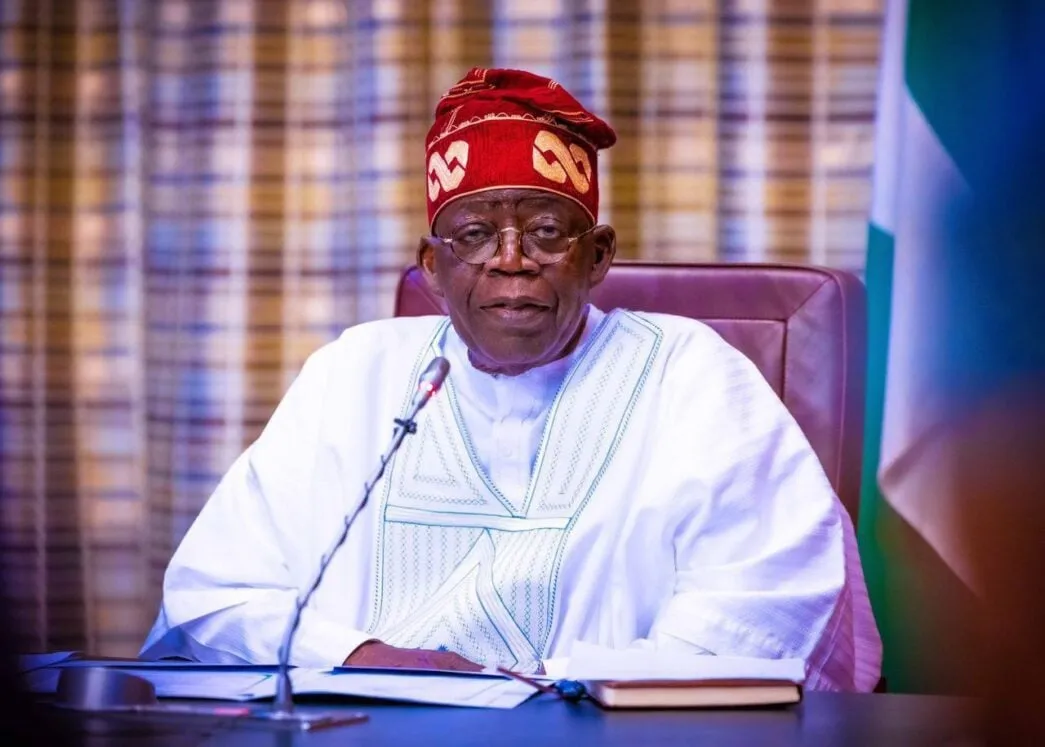
Speaking during a live interview on Politics Today on Channels Television on Wednesday, Wale Edun, Nigeria’s Minister of Finance and Coordinating Minister of the Economy, said the Federal Government was targeting annual GDP growth of 7 per cent — a rate he described as the minimum threshold needed to meaningfully lift Nigerians out of poverty. He also welcomed the confirmation of tax reform expert Taiwo Oyedele as the new Minister of State for Finance, describing the addition as timely reinforcement for an economic team with a great deal of work still ahead.
Build the future you deserve. Get started with our top-tier Online courses: ACCA, HESI A2, ATI TEAS 7, HESI EXIT, NCLEX-RN, NCLEX-PN, and Financial Literacy. Let Serrari Ed guide your path to success. Enroll today.
The Gap Between Now and 7 Per Cent
Nigeria is not yet at 7 per cent growth. Edun acknowledged this directly. “We are now approaching about four per cent growth,” he said, adding that the government’s immediate target of seven per cent represented roughly double Nigeria’s current population growth rate — the point at which gains in output begin to actually translate into improvements in living standards per capita.
The current trajectory has been improving. According to Edun’s address at the NESG Macroeconomic Outlook Report launch in Lagos in January, Nigeria’s economy is projected to grow at 4.68 per cent in 2026, consistent with the government’s medium-term path to 7 per cent annual growth and a one-trillion-dollar economy by 2030. The 2026 budget, officially titled “Budget of Consolidation, Renewed Resilience and Shared Prosperity,” reflects President Bola Tinubu’s stated commitment to ensuring that macroeconomic improvements filter down into the daily lives of ordinary Nigerians.
The 7 per cent target has also been reiterated at the highest international levels. At the IMF headquarters investor presentation, Edun declared that Nigeria was laying a robust foundation to attract substantial foreign investment while pursuing a growth trajectory sufficient to reduce poverty at scale. Yet the road from 4.68 per cent to 7 per cent is not merely a matter of macroeconomic arithmetic — it requires a structural transformation of how Nigeria generates revenue, where it invests, and how effectively its reforms reach the most vulnerable.
Why 7 Per Cent Matters: The Poverty Emergency
The urgency of the growth target becomes clear when set against the country’s poverty statistics. Both the World Bank and PwC have issued stark projections for 2026. According to the PwC Nigeria Economic Outlook 2026, titled “Turning Macroeconomic Stability into Sustainable Growth,” approximately 62 per cent of Nigeria’s population — about 141 million people — are expected to be living in poverty this year. The World Bank has published closely aligned projections, forecasting that Nigeria’s poverty rate will peak at 62% in 2026 before a marginal dip to 61 per cent in 2027 — the first predicted decline in nearly a decade.
Both institutions trace the persistent poverty to the same cluster of causes: weak real income growth, elevated food inflation, naira depreciation, and the short-term pain of reforms that removed fuel subsidies and liberalised the foreign exchange market — measures that Edun has characterised as painful but necessary. Low-income households, for whom food accounts for as much as 70 per cent of total consumption, are the most exposed to these price pressures.
Edun acknowledged the public perception gap directly. “When people say the gains are not yet being felt, I understand the concern,” he said. “But lower inflation means a cheaper cost of living, and lower fuel prices mean a cheaper cost of living.” He framed the government’s economic agenda as a sequence: stabilise first, then invest at scale. “The whole point of the President’s Renewed Hope agenda is to reduce poverty in the land, nothing short of that.”
The Reforms That Cleared the Ground
Before growth-led poverty reduction can happen, Edun argues, the structural distortions that held back Nigeria’s economy for decades had to be removed. Under President Tinubu, the government undertook two high-profile reforms that reshaped the macroeconomic landscape almost immediately upon taking office in 2023: the removal of the longstanding fuel subsidy, and the liberalisation of the naira’s exchange rate to allow market-based pricing.
“We have removed the major distortions which President Tinubu has bravely and courageously done — market pricing of foreign exchange, market pricing of petroleum products,” Edun said. “These steps are stabilising the economy, bringing down inflation, building reserves and setting the stage for the next step.”
The GDP data reflects a gradual recovery: Nigeria recorded growth of 3.1 per cent in the first quarter of 2025, rising to 4.23 per cent in the second quarter, and 3.98 per cent in the third. The fourth quarter is projected to close between 4.2 and 4.5 per cent. Oil and gas, once the overwhelmingly dominant engine of the Nigerian economy, now accounts for just under four per cent of GDP — down from 5.65 per cent in 2019 — a shift that underscores the growing role of non-oil sectors in driving expansion.
The government has also absorbed substantial fiscal pressures inherited from the previous administration, including the regularisation of approximately N30 trillion in “ways and means” financing — essentially central bank loans to the federal government — and additional naira-denominated debt burdens created by exchange rate adjustments. Edun acknowledged the weight of these obligations: “We are coping with a huge debt service burden which we inherited. But we are on our way out of the woods.”
One decision can change your entire career. Take that step with our Online courses in ACCA, HESI A2, ATI TEAS 7, HESI EXIT, NCLEX-RN, NCLEX-PN, and Financial Literacy. Join Serrari Ed and start building your brighter future today.
Taiwo Oyedele: The Tax Reformer Joins the Cabinet
A central element of the next phase of economic management is the arrival of Taiwo Oyedele as Minister of State for Finance. On Wednesday — the same day as Edun’s television interview — the Nigerian Senate confirmed Oyedele’s appointment following a rigorous screening session that lasted over two hours, during which senators questioned him extensively on fiscal policy, revenue generation, and strategies to deepen Nigeria’s tax reform programme.
Oyedele, 50, brings an exceptional pedigree to the role. Before his nomination, he served as Chairman of the Presidential Committee on Fiscal Policy and Tax Reforms, a body he led for over two years in developing and implementing a sweeping overhaul of Nigeria’s tax architecture. Before that, he spent 22 years at PricewaterhouseCoopers, rising to become Africa Tax Leader and Fiscal Policy Partner with responsibility spanning more than 20 countries. During the Senate session, he described his work as spanning fiscal governance across national governments, multilateral institutions, and global corporations in more than 180 countries.
Edun said the administration was delighted to welcome Oyedele to the team. “We are very well aware of his capacity, of his energy, and of his commitment to this government,” he said. “There is a lot of work to be done.” The minister specifically cited Oyedele’s expertise in taxation — “that is his training, that is his background” — as the skill most urgently needed to drive the next stage of Nigeria’s fiscal transformation.
The practical stakes of that expertise are significant. Nigeria’s new presumptive tax regulations for the informal sector, signed earlier this month, represent the first attempt to bring Nigeria’s vast informal economy — which employs more than 80 per cent of the workforce — into a structured revenue framework. With the government’s medium-term goal of raising annual growth to 7 per cent intrinsically linked to its ability to finance infrastructure, the speed and fairness of tax collection will be critical.
Technology, Digitisation, and Revenue Mobilisation
Edun has repeatedly framed Nigeria’s revenue problem as partly a technology problem — one that can be solved with the right tools deployed at scale. “We really need to use automation, digitisation, even AI and other technology, to increase government revenue,” he said, describing these as essential levers for closing the gap between what the government is owed and what it actually collects.
This is not merely rhetorical. At the NESG launch in January, Edun highlighted that the government is investing in the rollout of over 90,000 kilometres of fibre optic cables across the country in collaboration with the World Bank — an infrastructure investment designed to underpin digital financial inclusion, improve government services, and support technology-driven economic activity.
The government has also implemented a central billing and receipt system designed to improve transparency by tracking tax assessments and payments in real time across government agencies — a measure intended to block the revenue leakages that have historically plagued Nigeria’s public finances. Edun said the new presumptive tax framework for the informal sector signals a transition “from legal provisions to operational reality,” expanding the tax base without raising rates on those already complying.
The revenue imperative is acute. Nigeria’s budget deficit for 2026 is estimated at roughly four per cent of GDP, reflecting the scale of the country’s infrastructure deficit and the cost of financing the reforms themselves. At the same time, Edun has acknowledged that global concessional financing is increasingly constrained, meaning Nigeria must rely more heavily on domestic resource mobilisation and private sector investment than in previous decades.
Social Protection: 50 Million Nigerians Reached
While the macroeconomic reforms play out over years, the government has also implemented targeted short-term interventions to cushion the poorest households. Edun said the government’s social protection programme had served approximately 10 million households — about 50 million Nigerians — through direct payments. He described digital payments and biometric identification as the key delivery mechanisms, allowing the government to bypass leakages and reach vulnerable citizens directly.
“At any given time, when you can biometrically and uniquely identify an individual and make funding available to them through digital payment, you have the beginnings of being able to help citizens in the way modern societies do,” Edun said.
The government is also implementing the Renewed Hope Ward Development Programme, which aims to push financing and economic know-how down to the grassroots level across all of Nigeria’s 8,809 wards. Edun said the programme was particularly focused on micro, small and medium-scale enterprises, which account for about 85 per cent of the private sector economy and are the primary source of employment for most Nigerians.
The CNG (Compressed Natural Gas) initiative has also been cited as a practical cost-of-living measure, reducing the cost of fuelling vehicles and relieving pressure on households whose transportation budgets had ballooned following the removal of petrol subsidies. “With the CNG initiative, the cost of fuelling people’s cars is down,” Edun noted.
Refining Capacity as Strategic Resilience
Edun also addressed the geopolitical dimension of Nigeria’s economic outlook, expressing concern about the ongoing conflict in the Middle East and its implications for global oil markets. He noted that several of the world’s largest oil producers — including Iran, Iraq, Saudi Arabia, the UAE, Kuwait and Qatar — are located in the affected region.
“When that region sneezes, it affects the rest of the world,” he said. For Nigeria, an oil-dependent economy with a long history of exposure to global commodity volatility, disruptions in the region carry both upside and downside risks: higher oil prices can boost government revenues, but supply chain disruptions and elevated shipping costs can increase the price of imports, including food.
In this context, Edun specifically highlighted Nigeria’s growing domestic refining capacity — anchored by the Dangote Refinery, which is capable of meeting Nigeria’s full domestic fuel demand — as a strategic buffer against external shocks. “It is important that at this time we have the capacity to refine crude into petroleum products,” he said. “We should be thankful for the investment by the private sector in refining because it helps keep petroleum products flowing and keeps the wheels of the economy turning.”
The refinery, located in the Lekki Free Trade Zone in Lagos, has the potential not only to eliminate Nigeria’s costly dependence on imported refined products but also to generate foreign exchange through exports — a double advantage at a moment when Nigeria is actively seeking to diversify its revenue base beyond crude oil.
The Verdict: Credible Progress, Stubborn Challenges
There is a credible narrative inside Nigeria’s economic data. Inflation is declining, foreign reserves are stabilising, and GDP growth is on a modest upward trend. The arrival of Taiwo Oyedele — confirmed by the Senate on Wednesday — signals that the Tinubu administration is deepening its bench on the economic management team at a critical juncture.
But the gap between macroeconomic stabilisation and household-level relief remains wide, and the projections from the World Bank and PwC are a sobering reminder that good macroeconomic numbers can coexist with deepening poverty if structural transformation lags. Nigeria’s 7 per cent target is achievable in theory — but only if investment flows at scale, if tax reform broadens the revenue base fairly, and if the social protection infrastructure expands fast enough to reach the most vulnerable before the benefits of growth percolate through.
As Edun himself acknowledged, the work is not yet done. “It is not enough yet, but we are on the right track.”
Ready to take your career to the next level? Join our Online courses: ACCA, HESI A2, ATI TEAS 7 , HESI EXIT , NCLEX – RN and NCLEX – PN, Financial Literacy!🌟 Dive into a world of opportunities and empower yourself for success. Explore more at Serrari Ed and start your exciting journey today! ✨
Track GDP, Inflation and Central Bank rates for top African markets with Serrari’s comparator tool.
See today’s Treasury bonds and Money market funds movement across financial service providers in Kenya, using Serrari’s comparator tools.
Photo Source: Google
By: Montel Kamau
Serrari Financial Analyst
12th March, 2026
Article, Financial and News Disclaimer
The Value of a Financial Advisor
While this article offers valuable insights, it is essential to recognize that personal finance can be highly complex and unique to each individual. A financial advisor provides professional expertise and personalized guidance to help you make well-informed decisions tailored to your specific circumstances and goals.
Beyond offering knowledge, a financial advisor serves as a trusted partner to help you stay disciplined, avoid common pitfalls, and remain focused on your long-term objectives. Their perspective and experience can complement your own efforts, enhancing your financial well-being and ensuring a more confident approach to managing your finances.
Disclaimer: This article is for informational purposes only and does not constitute financial advice. Readers are encouraged to consult a licensed financial advisor to obtain guidance specific to their financial situation.
Article and News Disclaimer
The information provided on www.serrarigroup.com is for general informational purposes only. While we strive to keep the information up to date and accurate, we make no representations or warranties of any kind, express or implied, about the completeness, accuracy, reliability, suitability, or availability with respect to the website or the information, products, services, or related graphics contained on the website for any purpose. Any reliance you place on such information is therefore strictly at your own risk.
www.serrarigroup.com is not responsible for any errors or omissions, or for the results obtained from the use of this information. All information on the website is provided on an as-is basis, with no guarantee of completeness, accuracy, timeliness, or of the results obtained from the use of this information, and without warranty of any kind, express or implied, including but not limited to warranties of performance, merchantability, and fitness for a particular purpose.
In no event will www.serrarigroup.com be liable to you or anyone else for any decision made or action taken in reliance on the information provided on the website or for any consequential, special, or similar damages, even if advised of the possibility of such damages.
The articles, news, and information presented on www.serrarigroup.com reflect the opinions of the respective authors and contributors and do not necessarily represent the views of the website or its management. Any views or opinions expressed are solely those of the individual authors and do not represent the website's views or opinions as a whole.
The content on www.serrarigroup.com may include links to external websites, which are provided for convenience and informational purposes only. We have no control over the nature, content, and availability of those sites. The inclusion of any links does not necessarily imply a recommendation or endorsement of the views expressed within them.
Every effort is made to keep the website up and running smoothly. However, www.serrarigroup.com takes no responsibility for, and will not be liable for, the website being temporarily unavailable due to technical issues beyond our control.
Please note that laws, regulations, and information can change rapidly, and we advise you to conduct further research and seek professional advice when necessary.
By using www.serrarigroup.com, you agree to this disclaimer and its terms. If you do not agree with this disclaimer, please do not use the website.
www.serrarigroup.com, reserves the right to update, modify, or remove any part of this disclaimer without prior notice. It is your responsibility to review this disclaimer periodically for changes.
Serrari Group 2025