











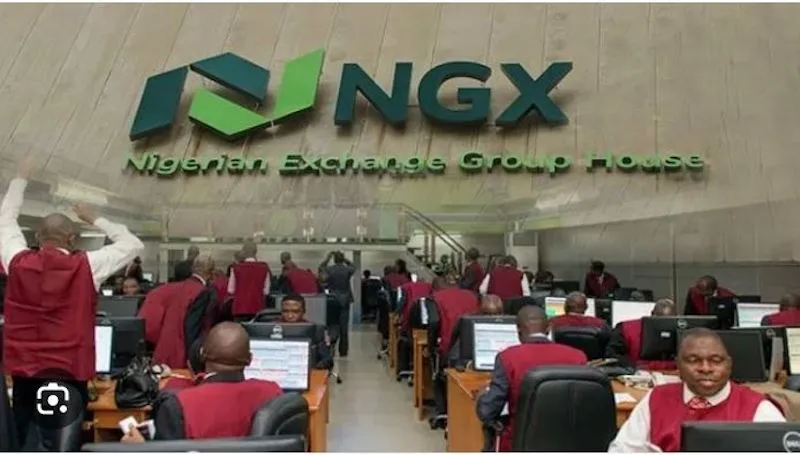
The Nigerian stock market, officially known as the Nigerian Exchange Limited (NGX), has emerged as one of Africa’s most closely watched equity markets in early 2026. By 19 February 2026, the NGX All-Share Index (ASI) crossed the 193,000-point threshold, setting a new record high and signaling an extraordinary surge in investor confidence.
Market capitalisation climbed to approximately ₦123.9 trillion — a figure that underscores not only the scale of liquidity circulating within the system but also the renewed appetite for Nigerian equities among both domestic and foreign participants.
What makes this rally particularly notable is that it did not arise from a single catalyst. Instead, it reflects a confluence of structural reforms, sectoral momentum, capital rotation, retail participation growth, and regional comparative strength.
The critical question now is whether this surge represents:
- A short-term liquidity-driven rally,
- A sustained re-rating of Nigerian risk,
- Or the beginning of a deeper structural shift in Africa’s largest economy.
To understand the durability of the move, one must examine the underlying drivers.
Build the future you deserve. Get started with our top-tier Online courses: ACCA, HESI A2, ATI TEAS 7, HESI EXIT, NCLEX-RN, NCLEX-PN, and Financial Literacy. Let Serrari Ed guide your path to success. Enroll today.
A Psychological Breakthrough: Crossing 193,000 Points
When the All-Share Index crossed 193,000 points, it marked more than a numerical milestone. In financial markets, record highs often carry psychological significance that amplifies momentum.
Investors interpret new highs as confirmation of:
- Market resilience,
- Earnings confidence,
- Liquidity stability,
- And broader macro alignment.
Historically, Nigeria’s equity market has experienced powerful bull cycles — notably during the 2005–2007 banking expansion era — followed by sharp corrections, particularly during the 2008 global financial crisis and subsequent domestic reforms.
The current rally differs from past episodes in one crucial respect: it has unfolded alongside monetary tightening discipline and structural FX adjustments rather than speculative credit expansion.
That distinction matters.
Market Capitalisation at ₦123.9 Trillion: What It Reflects
A ₦123.9 trillion market capitalization represents significant expansion compared to levels seen just a few years earlier.
To contextualize:
- During the 2020 pandemic shock, market cap compressed sharply.
- Between 2021 and 2023, volatility dominated due to inflation, currency adjustments, and FX reforms.
- By late 2025, stabilization in key macro variables restored investor confidence.
The 2026 surge reflects:
- Strong banking sector profitability,
- Telecommunications dominance,
- Consumer sector resilience,
- Renewed foreign portfolio interest.
It also reflects domestic institutional strength. Nigeria’s pension fund industry now manages over ₦17 trillion in assets under management. Pension funds provide a stabilizing liquidity anchor that was far less developed during prior bull cycles.
This institutional base has transformed the structural liquidity dynamics of the NGX.
Early February Momentum: The Rally’s Launchpad
The first week of February 2026 set the tone.
Although the ₦9 billion increase in market capitalization during the first business days may appear modest relative to total size, its psychological impact was significant. Early gains signaled:
- Continuation of late-2025 bullish sentiment,
- Absence of profit-taking panic,
- Strong absorption capacity for sell-side pressure.
Momentum matters in equity markets. When investors perceive sustained buying strength, sidelined capital often re-enters the market.
In Nigeria’s case, strong early-February trading reinforced confidence that the rally was not a temporary spike but part of a broader upward trajectory.
Sectoral Leadership: Telecoms and Financials Drive Gains
While overall sentiment has been positive, performance concentration has been pronounced.
Telecommunications: MTN Nigeria’s Dominance
MTN Nigeria Plc has played a central role in driving market capitalization expansion. By mid-February 2026, MTN Nigeria’s market capitalization stood at approximately ₦14.9 trillion, making it the most valuable stock on the NGX.
Telecommunications firms in emerging markets often function as:
- Defensive plays due to stable cash flows,
- Growth plays due to digital expansion,
- Infrastructure plays due to data penetration growth.
MTN’s scale reflects:
- Nigeria’s demographic strength,
- Rapid smartphone adoption,
- Expanding fintech and mobile money ecosystems.
Its valuation strength has contributed disproportionately to the ASI’s upward momentum.
Banking Sector Strength
Nigeria’s tier-one banks have also delivered strong earnings amid:
- High interest rate spreads,
- Improved FX liquidity management,
- Digital banking expansion,
- Strong capital adequacy buffers.
Banking stocks historically drive NGX bull cycles, as seen in the 2005–2007 era.
However, the current cycle differs in that regulatory oversight is stronger, capital buffers are deeper, and systemic risk controls are more robust.
Retail Participation and Digital Platforms
Retail participation has increased meaningfully in recent years.
Digital brokerage platforms and mobile trading access have lowered entry barriers. The democratization of equity access has:
- Increased transaction frequency,
- Expanded investor base,
- Reduced reliance on purely institutional flows.
Retail activity often intensifies during rally phases, contributing to liquidity acceleration.
However, retail-driven rallies can also amplify volatility if sentiment shifts abruptly.
Macroeconomic Backdrop: Stability After Adjustment
The rally has unfolded against a macro backdrop characterized by:
- FX regime adjustments,
- Inflation management efforts,
- Monetary tightening,
- Fiscal recalibration.
Nigeria’s foreign exchange reforms — while initially disruptive — helped reduce parallel market distortions.
Currency stabilization is particularly important for foreign investors. In previous cycles, strong local-currency returns were diluted by naira depreciation.
The current environment, marked by relative FX alignment, has improved the foreign currency return profile of Nigerian equities.
This dual return dynamic strengthens Nigeria’s attractiveness regionally.
Regional Comparison: NGX vs Africa’s Major Markets
Across Africa, capital markets vary significantly in structure and depth.
South Africa (JSE)
- Largest and most liquid market.
- Deep derivatives ecosystem.
- Strong multinational exposure.
- Returns often tied to global cycles.
Kenya (NSE)
- Strong banking and telecom representation.
- Growing retail participation.
- Smaller liquidity pool.
Egypt (EGX)
- Reform-driven rallies.
- Currency volatility impacts foreign returns.
Against this backdrop, Nigeria’s NGX has posted some of the highest returns in both local and foreign currency terms during this cycle.
This matters because sustained foreign currency returns reduce currency-risk-adjusted skepticism.
Nigeria’s scale, liquidity, and earnings growth differentiate it from smaller African exchanges.
Why This Rally Matters for Africa
Nigeria’s equity surge is not merely a domestic financial milestone — it has continental implications.
Africa’s capital markets remain fragmented, with varying degrees of liquidity, institutional participation, and global integration. Among them, Nigeria occupies a uniquely strategic position for several reasons:
- It is Africa’s most populous country.
- It has one of the continent’s largest economies.
- It hosts one of the deepest domestic pension fund industries in sub-Saharan Africa outside South Africa.
- It is a core component of most frontier and emerging Africa investment indices.
When Nigeria rallies decisively, it influences the broader perception of African equity risk.
1. Nigeria as a Signal to Global Frontier Investors
Global frontier-market funds often treat Nigeria as a “gateway allocation” within Africa. If portfolio managers see:
- Strong earnings,
- Stable currency trends,
- Deepening liquidity,
- Improving reforms,
They become more comfortable allocating capital not only to Nigeria but to other African markets.
In other words, Nigeria’s performance can serve as a confidence barometer for the continent.
A sustained NGX rally:
- Improves Africa’s overall risk narrative,
- Strengthens regional asset allocation arguments,
- Enhances benchmark visibility.
Conversely, sharp corrections in Nigeria historically spill over into broader frontier sentiment.
Thus, Nigeria’s trajectory influences more than its own borders.
2. Regional Capital Competition
African equity markets compete for a limited pool of:
- Domestic pension capital,
- Sovereign wealth flows,
- Foreign portfolio investment (FPI).
When Nigeria outperforms:
- Regional investors may rotate capital toward NGX-listed equities.
- West African cross-border allocations may increasingly favor Lagos over smaller exchanges.
- Pan-African funds may overweight Nigeria relative to Kenya, Egypt, or Morocco during strong cycles.
This competitive dynamic strengthens Nigeria’s role as a capital concentration hub in West Africa.
If sustained, it could gradually increase Nigeria’s share of Africa-focused global equity funds.
3. Currency-Adjusted Returns and Investor Psychology
Historically, African equity markets have struggled to deliver consistent foreign-currency-adjusted returns due to currency depreciation.
Nigeria’s ability — even temporarily — to deliver strong local returns alongside relative currency stabilization alters investor psychology.
Currency-adjusted returns matter because:
- Foreign funds benchmark in USD or EUR.
- FX volatility often dominates equity gains.
- Risk premiums incorporate currency uncertainty.
If Nigeria can maintain improved FX management while delivering earnings growth, it changes its structural investment narrative.
This could reduce Nigeria’s long-term equity risk premium.
4. Deepening of Domestic Financial Systems
Nigeria’s rally also reinforces the importance of domestic institutional capital.
Over ₦17 trillion in pension assets provides:
- Structural liquidity support,
- Market depth,
- Reduced dependence on volatile foreign flows.
Across Africa, pension reform has been gradual. South Africa leads in institutional depth, but Nigeria is emerging as a secondary pillar.
If Nigeria’s domestic capital continues expanding:
- Volatility could moderate over time.
- Market corrections may become less extreme.
- Long-term equity financing capacity could increase.
This maturation process strengthens Africa’s broader capital formation ecosystem.
One decision can change your entire career. Take that step with our Online courses in ACCA, HESI A2, ATI TEAS 7, HESI EXIT, NCLEX-RN, NCLEX-PN, and Financial Literacy. Join Serrari Ed and start building your brighter future today.
Risks to Monitor
While optimism is warranted, the durability of the rally depends on several critical variables.
1. Valuation Compression Risk
As indices climb, price-to-earnings multiples often expand ahead of earnings growth.
If earnings fail to justify current valuations:
- Profit-taking could intensify.
- Index corrections could accelerate.
- Retail investors may amplify volatility.
High valuations are sustainable only when supported by credible growth trajectories.
2. Liquidity Concentration
MTN Nigeria and major banks account for a significant share of market capitalization.
Concentration risk means:
- Index performance may hinge on a few counters.
- Corporate-specific shocks could disproportionately affect the ASI.
- Broader market breadth may not fully reflect index gains.
Diversification within the exchange remains a structural challenge.
3. FX Stability Sustainability
Currency stability remains the single most important variable for foreign participation.
Even modest FX disruptions could:
- Trigger capital flight,
- Reverse foreign portfolio flows,
- Widen spreads in sovereign debt markets.
Nigeria’s macro reforms have improved transparency, but sustainability will be tested during external shocks.
4. Global Monetary Policy Risk
Frontier markets remain sensitive to:
- U.S. Federal Reserve rate adjustments,
- Global liquidity tightening,
- Risk-off episodes.
A sharp rise in the U.S. Treasury yields could:
- Redirect capital away from emerging and frontier equities,
- Increase Nigeria’s funding costs,
- Trigger valuation compression.
The global cycle remains an external constraint.
5. Oil Price Volatility
Nigeria’s fiscal health remains linked to energy prices.
Oil price declines could:
- Widen fiscal deficits,
- Pressure FX reserves,
- Increase sovereign borrowing needs.
Commodity volatility therefore remains a structural risk factor.
Long-Term Outlook: Structural Re-Rating or Cyclical Spike?
The most important question is whether the current rally represents:
- A liquidity-driven surge,
- A cyclical rebound,
- Or the beginning of a structural re-rating.
Several structural factors favor cautious optimism.
1. Institutionalization of Capital Markets
Nigeria’s pension reforms have created:
- Long-term capital pools,
- More disciplined equity participation,
- Reduced dependence on speculative leverage.
This institutional backbone did not exist at scale during the 2007 bubble.
It increases the probability that future corrections will be less catastrophic.
2. Corporate Earnings Resilience
Nigeria’s banking sector has demonstrated strong profitability even amid macro stress.
Telecommunications and digital services continue expanding.
If earnings momentum persists, valuations may remain justified.
Sustainable earnings growth is the ultimate anchor of long-term equity appreciation.
3. Market Modernization
The NGX has undergone modernization initiatives including:
- Technology upgrades,
- Improved regulatory oversight,
- Demutualization,
- Enhanced disclosure standards.
Structural improvements increase foreign confidence.
4. Regional Integration Potential
If West African capital markets deepen integration, Nigeria could emerge as the dominant regional listing venue.
Cross-border listings and investor access reforms could amplify liquidity concentration in Lagos.
5. Demographic Dividend
Nigeria’s demographic profile remains one of its strongest long-term tailwinds.
A young, growing population supports:
- Consumer demand expansion,
- Digital economy growth,
- Telecom penetration,
- Financial inclusion.
Demographics provide structural growth potential that few African markets can match.
Looking Ahead: Catalysts and Inflection Points
The sustainability of this cycle will depend on several forward indicators.
1. Earnings Season Confirmation
Corporate earnings releases must justify expanded valuations.
2. FX Liquidity Stability
Sustained transparency in FX allocation will anchor foreign flows.
3. Policy Continuity
Reform consistency is essential for long-term credibility.
4. Banking Sector Capital Strength
Capital adequacy must remain robust to support credit expansion.
5. Retail Participation Discipline
Sustainable retail growth requires investor education and risk management.
If these variables align positively, Nigeria’s rally could extend beyond early 2026.
Broader Implications for Africa’s Equity Story
Nigeria’s performance may influence Africa’s broader capital markets narrative in three ways:
1. Renewed Frontier Market Allocation
Strong NGX performance may attract renewed frontier ETF and fund allocations.
2. Comparative Reform Benchmarking
Other African economies may accelerate reforms to compete for capital.
3. Enhanced African Equity Visibility
Global investors may increasingly differentiate African markets rather than viewing them monolithically.
Nigeria’s leadership cycle, if sustained, could reshape capital allocation within the continent.
Conclusion: Momentum Meets Structural Transition
The NGX’s ascent past 193,000 points and ₦123.9 trillion in market capitalization represents a defining moment for Nigeria’s capital markets.
This rally reflects:
- Improved macro alignment,
- Institutional liquidity strength,
- Sectoral leadership,
- Renewed investor confidence.
But markets do not rise indefinitely.
The true test lies ahead:
- Can earnings growth sustain valuations?
- Can currency stability persist?
- Can reforms deepen rather than stall?
If Nigeria navigates these inflection points successfully, the 2026 rally may be remembered not as a speculative spike — but as the beginning of a structural re-rating of Nigerian equities within Africa and the global frontier market universe.
For now, Nigeria stands at the forefront of Africa’s equity narrative — a market that has shifted from recovery mode to leadership position.
Whether that leadership endures will depend on discipline, fundamentals, and the interplay between domestic resilience and global liquidity cycles.
Ready to take your career to the next level? Join our Online courses: ACCA, HESI A2, ATI TEAS 7 , HESI EXIT , NCLEX – RN and NCLEX – PN, Financial Literacy!🌟 Dive into a world of opportunities and empower yourself for success. Explore more at Serrari Ed and start your exciting journey today! ✨
Track GDP, Inflation and Central Bank rates for top African markets with Serrari’s comparator tool.
See today’s Treasury bonds and Money market funds movement across financial service providers in Kenya, using Serrari’s comparator tools.
photo source : Google
By: Elsie Njenga
24th February,2026
Article, Financial and News Disclaimer
The Value of a Financial Advisor
While this article offers valuable insights, it is essential to recognize that personal finance can be highly complex and unique to each individual. A financial advisor provides professional expertise and personalized guidance to help you make well-informed decisions tailored to your specific circumstances and goals.
Beyond offering knowledge, a financial advisor serves as a trusted partner to help you stay disciplined, avoid common pitfalls, and remain focused on your long-term objectives. Their perspective and experience can complement your own efforts, enhancing your financial well-being and ensuring a more confident approach to managing your finances.
Disclaimer: This article is for informational purposes only and does not constitute financial advice. Readers are encouraged to consult a licensed financial advisor to obtain guidance specific to their financial situation.
Article and News Disclaimer
The information provided on www.serrarigroup.com is for general informational purposes only. While we strive to keep the information up to date and accurate, we make no representations or warranties of any kind, express or implied, about the completeness, accuracy, reliability, suitability, or availability with respect to the website or the information, products, services, or related graphics contained on the website for any purpose. Any reliance you place on such information is therefore strictly at your own risk.
www.serrarigroup.com is not responsible for any errors or omissions, or for the results obtained from the use of this information. All information on the website is provided on an as-is basis, with no guarantee of completeness, accuracy, timeliness, or of the results obtained from the use of this information, and without warranty of any kind, express or implied, including but not limited to warranties of performance, merchantability, and fitness for a particular purpose.
In no event will www.serrarigroup.com be liable to you or anyone else for any decision made or action taken in reliance on the information provided on the website or for any consequential, special, or similar damages, even if advised of the possibility of such damages.
The articles, news, and information presented on www.serrarigroup.com reflect the opinions of the respective authors and contributors and do not necessarily represent the views of the website or its management. Any views or opinions expressed are solely those of the individual authors and do not represent the website's views or opinions as a whole.
The content on www.serrarigroup.com may include links to external websites, which are provided for convenience and informational purposes only. We have no control over the nature, content, and availability of those sites. The inclusion of any links does not necessarily imply a recommendation or endorsement of the views expressed within them.
Every effort is made to keep the website up and running smoothly. However, www.serrarigroup.com takes no responsibility for, and will not be liable for, the website being temporarily unavailable due to technical issues beyond our control.
Please note that laws, regulations, and information can change rapidly, and we advise you to conduct further research and seek professional advice when necessary.
By using www.serrarigroup.com, you agree to this disclaimer and its terms. If you do not agree with this disclaimer, please do not use the website.
www.serrarigroup.com, reserves the right to update, modify, or remove any part of this disclaimer without prior notice. It is your responsibility to review this disclaimer periodically for changes.
Serrari Group 2025