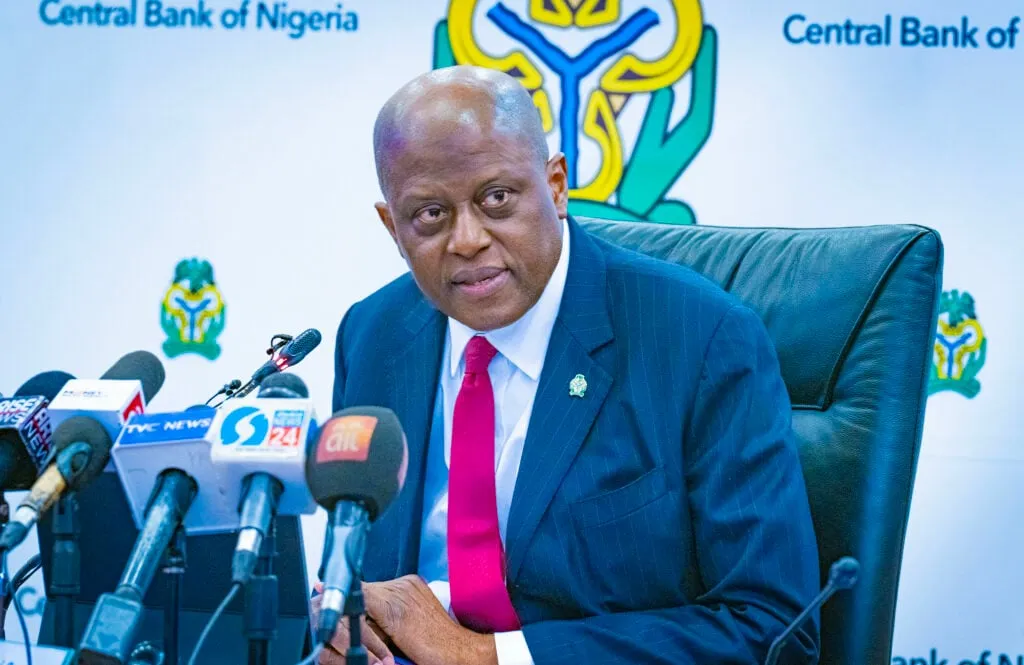
Nigeria’s foreign exchange reserves have surged to approximately $49 billion as of February 5, 2026, according to Central Bank of Nigeria (CBN) Governor Olayemi Cardoso, marking a dramatic turnaround in the nation’s external position and signaling renewed investor confidence in Africa’s largest economy. The announcement, made at the second edition of the National Economic Council Conference in Abuja on Monday, represents a 4.93% increase from the previously reported figure of $46.7 billion, underscoring the effectiveness of sweeping monetary reforms undertaken by the current CBN leadership.
The remarkable growth in reserves stands in stark contrast to the precarious position inherited by Cardoso’s administration. When the current CBN leadership assumed office in mid-2023, Nigeria’s net foreign reserve position stood at approximately $3 billion, a critically low level that threatened the country’s ability to defend its currency and meet external obligations. The transformation from this low point to the current $49 billion represents one of the most dramatic turnarounds in the nation’s monetary history and validates the bold policy shifts implemented by the apex bank.
“This is obviously a very important statistic,” Cardoso said during his address to the NEC conference. “When we took over, the net reserve figure was about $3 billion. As at the end of last year, the net reserve figure had gone up strongly into the 30s. And as I said, as of February 5, 2026, it is $49 billion. We are now net buyers,” the CBN governor declared, drawing applause from the gathered stakeholders.
Build the future you deserve. Get started with our top-tier Online courses: ACCA, HESI A2, ATI TEAS 7, HESI EXIT, NCLEX-RN, NCLEX-PN, and Financial Literacy. Let Serrari Ed guide your path to success. Enroll today.
Foreign Exchange Market Transformation
The growth in external reserves has been accompanied by a fundamental transformation in Nigeria’s foreign exchange market operations. Under the new policy framework, the CBN has transitioned from being the primary supplier of foreign currency to serving primarily as a market stabilizer, allowing supply and demand dynamics to largely determine exchange rates. This shift represents a departure from decades of heavy-handed intervention that had created arbitrage opportunities and undermined market efficiency.
“By that, I mean that while we allow the market to generally find its own level, many times the central bank itself goes in to buy foreign exchange,” Cardoso explained. The policy adjustment has yielded remarkable results in narrowing the gap between official and parallel market rates, with the premium collapsing to under 2% from levels exceeding 60% when the reforms were initiated in 2023.
This convergence between official and parallel market rates has effectively eliminated the arbitrage opportunities that previously fueled currency speculation and capital flight. The near-parity pricing has restored confidence in the naira and reduced the incentive for Nigerians to hoard foreign currency, a behavior that had previously constrained supply in the official market and perpetuated exchange rate distortions.
Diaspora Remittances Drive Reserve Growth
A critical component of the reserves accumulation has been the dramatic increase in diaspora remittances flowing through official channels. The CBN has engaged extensively with Nigerians living abroad and introduced measures that have made it significantly easier to remit funds into the country through formal banking channels. These reforms, particularly the revised guidelines for International Money Transfer Operators, have helped channel billions of dollars that previously flowed through informal channels into the regulated financial system.
“Remittances have made a big difference to how we have grown our reserves,” Cardoso emphasized. “The diaspora comes from every single state represented here. We have engaged with them and made it easier for them to remit money back to Nigeria.” According to the CBN’s macroeconomic outlook, diaspora remittances are projected to reach $26.13 billion in 2026, marking a significant jump from $23.82 billion in 2025.
The surge in formal remittance channels reflects both improved incentives for using official systems and enhanced confidence in the stability of Nigeria’s foreign exchange market. With the elimination of the parallel market premium, diaspora Nigerians no longer face the loss of value that previously came from converting their remittances at unfavorable official rates. This has made formal channels more attractive and has contributed significantly to the CBN’s ability to accumulate foreign reserves.
The central bank’s success in boosting remittances through formal channels also addresses a long-standing challenge in Nigeria’s balance of payments. For years, substantial portions of diaspora transfers flowed through informal networks, denying the country access to valuable foreign exchange that could support reserves and strengthen the naira. The policy reforms have effectively captured these flows, providing a more sustainable foundation for reserve accumulation than reliance on volatile oil revenues.
Naira Regains Regional Acceptance
The improvements in monetary stability have had tangible effects on the naira’s regional standing and acceptance. Cardoso noted that the Nigerian currency, which was previously rejected in parts of the West African sub-region, has regained credibility and acceptance among regional trading partners. This shift reflects not just improved exchange rate stability but also enhanced predictability in monetary policy that allows businesses and individuals to plan with greater confidence.
“In those days, if you went around West Africa and gave them naira, nobody wanted to touch it,” Cardoso recalled. “That has all gone now. There is predictability, and you can plan.” The restoration of confidence in the naira extends beyond symbolic acceptance to practical applications in cross-border trade and tourism, reducing transaction costs for Nigerian businesses and travelers operating within the Economic Community of West African States.
The governor also cautioned Nigerians holding excess foreign currency reserves without genuine economic need, warning that such behavior now results in financial losses rather than protection against currency depreciation. “Those holding unnecessary foreign exchange reserves are losing money every day,” Cardoso stated, a reference to the naira’s relative stability and the opportunity cost of holding idle foreign currency in an environment where the domestic currency has stabilized.
Banking Sector Recapitalization Progresses
Concurrent with the improvements in external reserves, Nigeria’s banking sector is advancing through a comprehensive recapitalization program that Cardoso described as fundamental to positioning financial institutions to support the country’s long-term growth ambitions. The program, which commenced on April 1, 2024, with a deadline of March 31, 2026, requires banks to significantly increase their capital bases to levels commensurate with financing a $1 trillion economy.
Under the new requirements, commercial banks with international authorization must raise a minimum of N500 billion ($340 million), national banks require N200 billion, and regional banks need N50 billion. As of the latest update, 16 banks had met the recapitalization requirements, demonstrating strong progress toward the March 2026 deadline. The recapitalization exercise has mobilized approximately N4.14 trillion in new capital across the banking sector, strengthening financial institutions’ capacity to support economic growth.
“The banking sector is in a strong position to support Nigeria’s economic recovery by enabling access to credit for MSMEs and supporting investment in critical sectors of our economy,” Cardoso stated. The stronger capital bases enable banks to take on larger risks, particularly in underserved markets and emerging sectors such as fintech, green energy, and infrastructure development that are critical to Nigeria’s economic transformation.
The recapitalization program represents more than regulatory compliance; it constitutes a strategic repositioning of Nigeria’s financial sector to compete globally and support domestic economic ambitions. By requiring banks to hold capital levels appropriate for a trillion-dollar economy, the CBN is ensuring that financial institutions will have the capacity to fund the large-scale projects and sectoral transformations necessary to achieve Nigeria’s economic goals.
New Framework Tackles Failed Telecom Transactions
In a parallel development addressing long-standing consumer protection concerns, the CBN and the Nigerian Communications Commission have released an exposure draft of a joint framework aimed at curbing failed airtime and data transactions. The framework, dated February 5, 2026, and published on Monday, represents a coordinated regulatory response to one of the most persistent complaints in Nigeria’s digital financial ecosystem.
The proposed regulations define failed transactions as instances where a subscriber’s account is debited without successful delivery of airtime or data services. Under the draft framework, which applies to all stakeholders in the transaction ecosystem including banks, mobile network operators, aggregators, merchants, and NCC-authorized licensees, automatic reversals must occur within 30 seconds where service delivery fails at any point in the value chain.
“Failed transactions would trigger automatic, real-time refunds,” according to the framework document. “Where service delivery fails, stakeholders must refund the purchaser within 30 seconds, regardless of whether the fault occurs at the bank, an NCC-authorised licensee, or a mobile network operator.” This represents a significant tightening of accountability compared to current practices, where customers often wait days or weeks for resolution of failed transactions.
The framework introduces several innovative measures to improve transaction success rates and customer protection. Banks will be required to limit transaction retry attempts to twice only, preventing the multiple debits that have frustrated consumers. Additionally, mobile network operators must validate phone numbers against the ported number database before processing recharges, proactively preventing failures related to number portability issues.
For transactions with ambiguous outcomes, the framework mandates introduction of a “pending” error code, with such transactions to be classified as failed and reversed within 24 hours. This addresses situations where technical failures leave transaction status uncertain, forcing customers to wait extended periods for resolution while funds remain in limbo.
Mandatory Service Suspension During Outages
In a particularly significant provision, the framework proposes mandatory suspension of airtime and data sales during network downtimes or service degradations. “Where services degrade or outages occur, operators must reverse any funds collected during the period,” the framework stipulates. This requirement acknowledges that attempting to process transactions during network instability inevitably leads to failures and customer frustration.
The suspension requirement aims to prevent the scenario where customers repeatedly attempt purchases during network problems, resulting in multiple debits without service delivery. By halting sales during outages, operators can avoid creating the very failures that the framework seeks to address, while also reducing the volume of reversals and customer complaints that must be processed.
One decision can change your entire career. Take that step with our Online courses in ACCA, HESI A2, ATI TEAS 7, HESI EXIT, NCLEX-RN, NCLEX-PN, and Financial Literacy. Join Serrari Ed and start building your brighter future today.
Central Monitoring Dashboard for Accountability
To enhance oversight and accountability, the regulators propose establishing a Central Monitoring Dashboard to be jointly hosted by the CBN and NCC. The dashboard will provide real-time tracking of transaction reversals, service level agreement breaches, and customer complaints across the entire value chain, creating end-to-end visibility into the airtime and data purchase ecosystem.
“There shall be a Central Monitoring Dashboard hosted by CBN/NCC for tracking reversals, SLA breaches, and customer complaints,” the framework states. “This will facilitate the establishment of a real-time national ‘Failed Transactions Dashboard’ with uniform error codes, with end-to-end visibility across the value chain.” The standardization of error codes will eliminate confusion about the source of transaction failures and clarify accountability when problems occur.
Banks, mobile network operators, and aggregators will be required to maintain daily reports of successful and failed transactions, which must be shared with relevant stakeholders as defined in standard operating procedures. This reporting requirement ensures that patterns of failure can be identified quickly and remedial actions taken before problems become systemic.
The framework also addresses erroneous transactions, such as airtime sent to wrong phone numbers. For amounts below N20,000, mobile network operators will request the recipient’s consent before processing a reversal. For larger amounts exceeding N20,000, an affidavit of indemnity or notarized letter will be required before recovery can be processed. These provisions balance the need to protect purchasers with safeguards against fraudulent reversal requests.
Enforcement and Compliance Timelines
The CBN and NCC have signaled a firm commitment to enforcement of the new framework. Both agencies will conduct joint quarterly audits of all stakeholders, including banks, payment service providers, and mobile network operators, to verify compliance with the new rules. The regulators have warned they will impose penalties for any breaches of the framework’s provisions, though specific penalty amounts have not yet been detailed in the exposure draft.
Banks and other financial institutions have until February 20, 2026, to submit comments on the draft framework before it is finalized. Following stakeholder input and any resulting modifications, full implementation is expected to commence on March 1, 2026, subject to completion of technical integration by all mobile network operators, value-added service providers, and deposit money banks.
Director of Consumer Affairs at the NCC, Freda Bruce-Bennett, disclosed that pending final approval of the framework, mobile network operators and banks have already refunded over N10 billion to customers affected by failed airtime and data transactions. This voluntary compliance ahead of regulatory enforcement suggests industry recognition of the severity of the problem and willingness to address consumer grievances.
Economic Outlook and Projections
The improvements in external reserves position Nigeria favorably for continued economic stabilization and growth. The CBN projects that external reserves will reach $51.04 billion in 2026, up from an estimated $45.01 billion in 2025 and $40.19 billion in 2024. The expected improvement will be driven by better crude oil output, improved local refining capacity at the Dangote Refinery, higher diaspora remittances, and increased foreign portfolio investment.
Supporting this outlook, Nigeria recorded a balance of payments surplus of $4.60 billion in the third quarter of 2025, marking a significant turnaround from the deficit recorded in the preceding quarter. This performance reflects strengthening external sector fundamentals, firmer investor confidence, and the continued impact of reforms in the foreign exchange market and monetary policy.
The CBN expects the current account surplus to rise to $18.81 billion (11.16% of GDP) in 2026, supported by stronger exports, steady remittances, and better petroleum sector performance. Portfolio inflows and external borrowings are projected to leave the financial account in a net borrowing position of $10.15 billion, while the International Investment Position is projected at $69.58 billion in net borrowing terms.
On inflation, which remains a key concern for monetary authorities, the CBN projects that headline inflation will continue to slow, falling to 12.94% in 2026 and further to 10.75% in 2027. The National Bureau of Statistics reported that headline inflation had already fallen to 15.15% in December 2025, down from 17.33% in November, demonstrating the effectiveness of tighter monetary policy and improved macroeconomic coordination.
Risks to Macroeconomic Stability
Despite the significant progress achieved, Governor Cardoso cautioned that risks remain, particularly excess liquidity within the financial system and the potential impact of election-related spending ahead of the 2027 general elections. “There is still a lot of liquidity within the system, and we’re going to manage this very carefully. We are not out of the woods yet,” Cardoso warned.
The election cycle poses particular challenges for monetary management, as political campaign spending typically involves significant liquidity injections that can undermine price stability if not carefully monitored. The CBN will need to balance the need to support economic growth through appropriate liquidity provision against the imperative to prevent inflationary pressures from resurging.
Global trade tensions also pose risks to Nigeria’s economic outlook, particularly given the country’s dependence on oil exports and imported manufactured goods. Protectionist measures or disruptions to global supply chains could affect both the revenue side through reduced oil demand and the expenditure side through higher import costs.
Minister Hails Presidential Economic Reforms
Minister of Budget and Economic Planning, Senator Abubakar Bagudu, used the NEC conference to commend President Bola Tinubu for implementing reforms that have aided economic transformation and improved the fiscal condition of states and local governments. “Today, a more united federation is gathered here because of the choices you made,” Bagudu stated, referring to the president’s policy decisions.
The minister highlighted that Nigeria’s reforms are gaining international recognition, citing a recent World Bank report that described Nigeria’s economic restructuring as “world reference material.” This external validation of Nigeria’s reform trajectory provides important credibility for continued policy implementation, even as some measures impose short-term costs on citizens and businesses.
Minister of State for Finance, Dr. Doris Uzoka-Anite, noted that Nigeria requires a 10% annual growth rate over the next decade to actualize its aspiration for a $1 trillion economy. This ambitious target underscores the scale of transformation required and the critical role that financial sector strengthening, exchange rate stability, and improved macroeconomic management must play in Nigeria’s development trajectory.
Implications for Economic Transformation
The convergence of improved external reserves, foreign exchange market stability, banking sector recapitalization, and enhanced consumer protection represents a comprehensive approach to economic transformation. The CBN’s reforms have created a more stable macroeconomic environment that can attract foreign investment, support domestic production, and provide Nigerian businesses with the predictability needed for long-term planning.
For ordinary Nigerians, the implications are potentially far-reaching. The stability in the foreign exchange market reduces the cost of imported goods and services, while the banking sector recapitalization should improve access to credit for small and medium enterprises that have struggled to obtain financing. The consumer protection framework for telecom transactions addresses a persistent source of frustration and financial loss, particularly for lower-income Nigerians who cannot afford to lose even small amounts to failed transactions.
The success of the diaspora remittance reforms demonstrates the potential for policy changes to unlock resources that were previously constrained by dysfunctional market structures. By creating incentives for Nigerians abroad to use formal channels, the CBN has tapped into a sustainable source of foreign exchange that reduces dependence on volatile oil revenues.
Conclusion
Nigeria’s achievement of $49 billion in foreign reserves represents more than just a numerical milestone; it symbolizes the potential for sound economic policy to reverse even deeply entrenched problems. The transformation from the precarious $3 billion position in 2023 to the current robust level validates the controversial reforms implemented by the Cardoso-led CBN, including the unification of exchange rates and the adoption of market-determined pricing.
As the March 2026 deadlines approach for both the banking recapitalization and the telecom transaction framework, Nigeria’s financial sector is experiencing a comprehensive overhaul aimed at supporting the country’s economic ambitions. The convergence of monetary stability, stronger financial institutions, and enhanced consumer protection creates a foundation for sustainable economic growth and development.
The challenges ahead remain significant, from managing election-related liquidity to navigating global economic uncertainties. However, the progress achieved over the past two years demonstrates that with political will, technical competence, and stakeholder cooperation, Nigeria can address long-standing structural weaknesses and position itself for a more prosperous future. The $1 trillion economy goal, once dismissed as unrealistic, now appears achievable if current reform momentum can be sustained and deepened across all sectors of the economy.
Ready to take your career to the next level? Join our Online courses: ACCA, HESI A2, ATI TEAS 7 , HESI EXIT , NCLEX – RN and NCLEX – PN, Financial Literacy!🌟 Dive into a world of opportunities and empower yourself for success. Explore more at Serrari Ed and start your exciting journey today! ✨
Track GDP, Inflation and Central Bank rates for top African markets with Serrari’s comparator tool.
See today’s Treasury bonds and Money market funds movement across financial service providers in Kenya, using Serrari’s comparator tools.
photo source: Google
By: Montel Kamau
Serrari Financial Analyst
11th February, 2026