Microsoft has secured a major new supply of durable carbon removal, signing a 10-year agreement with biochar company Liferaft to purchase one million carbon removal units (CRUs). The agreement ranks among the largest biochar-based carbon removal deals globally and signals growing confidence among corporations in nature-based solutions capable of delivering long-term climate impact.
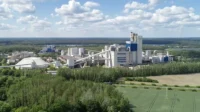
The carbon removal credits will be generated through Liferaft’s production facilities in Iowa and Illinois, where agricultural and municipal biomass will be converted into biochar and applied to soil. The process enables carbon to be stored in a stable form for hundreds of years while simultaneously improving soil health and agricultural productivity.
The deal represents another step in Microsoft’s expanding carbon removal strategy, which is central to the company’s ambition to become carbon negative by 2030 and remove all of its historical emissions by 2050. As part of that effort, Microsoft has emerged as the largest corporate purchaser of carbon removal credits globally, signing a growing number of long-term agreements designed to scale emerging climate technologies.
Beyond climate benefits, the agreement also highlights how carbon removal projects can generate economic opportunities in rural communities, linking climate action with job creation, agricultural resilience, and regional supply chains.
Markets move fast; don’t get left behind. We’ve paired the Serrari Group Market Index with a curated Marketplace and a comprehensive Wealth Builder Course to ensure you have the data—and the skills—to act on it.
Biochar Gains Momentum as a Carbon Removal Solution
Biochar is increasingly gaining attention as one of the most promising nature-based carbon removal solutions currently available at scale.
The material is produced through pyrolysis, a process in which organic biomass such as crop residues, forestry waste, or municipal organic waste is heated in the absence of oxygen. Instead of decomposing and releasing carbon dioxide into the atmosphere, the biomass is transformed into a stable, carbon-rich substance known as biochar.
When applied to soils, biochar effectively locks carbon away for centuries, preventing it from re-entering the atmosphere while improving soil properties. Farmers often benefit from improved soil structure, better water retention, and enhanced nutrient availability, which can contribute to increased crop yields and greater resilience to drought.
These agricultural benefits are one of the reasons biochar projects are gaining traction with corporate buyers seeking carbon removal solutions that deliver both environmental and economic co-benefits.
Under the new agreement, Liferaft’s facilities will source feedstock locally from agricultural residues and municipal biomass waste. By using materials that might otherwise decompose or be burned, the process reduces emissions while creating a circular system that transforms waste into climate value.
The resulting biochar will be blended with compost to create a biochar-compost mixture suitable for approved agricultural uses. Once applied to farmland, the material can improve soil fertility and crop productivity while durably sequestering carbon dioxide.
Ensuring Credible Carbon Removal
A critical challenge in the carbon removal market is ensuring that carbon credits represent real, measurable, and permanent climate benefits.
To address these concerns, all carbon removal units generated under the Microsoft–Liferaft agreement will be tracked using robust monitoring, reporting, and verification (MRV) systems. These systems document the entire lifecycle of the carbon removal process—from biomass sourcing to pyrolysis and soil application—to confirm that carbon remains stored long-term.
The project will also undergo independent third-party verification before credits are issued. This step is designed to ensure that the carbon removal claims meet rigorous environmental standards and can be trusted by buyers and regulators.
In addition, the project will be registered on a registry endorsed by the International Carbon Reduction and Offset Alliance (ICROA), providing an additional layer of transparency and credibility.
As scrutiny of carbon markets increases, many corporate buyers are placing greater emphasis on durable carbon removal solutions with strong verification frameworks, rather than relying solely on traditional carbon offsets that focus on emissions avoidance.
The Microsoft–Liferaft agreement reflects this shift toward high-integrity climate solutions that deliver measurable long-term impact.
Strengthening Rural Economies
While the agreement is primarily aimed at addressing climate change, it also has significant implications for rural economic development in the U.S. Midwest.
Liferaft has worked closely with local stakeholders in Iowa and Illinois to design projects that support job creation, workforce training, and community engagement alongside carbon removal goals.
Building and operating large-scale biochar facilities requires skilled labor, from engineers and technicians to logistics specialists responsible for sourcing biomass feedstock and distributing biochar products to agricultural users.
William Cowell de Gruchy, Chief Executive Officer of Liferaft, said the partnership will help create new economic opportunities in rural communities.
“We are excited to announce this transformative deal with Microsoft, which enables Liferaft to create—and provide training for—many high-quality jobs in rural American communities,” he said.
He also highlighted the strong support the project has received from local leaders.
“We are particularly grateful to the people and leaders of West Liberty, Iowa, and Muscatine County for their incredible support over the past year of planning.”
Cowell de Gruchy added that the partnership reflects a shared commitment among project partners to deliver both climate and community benefits.
“We are likewise grateful to Microsoft for executing this offtake with us in support of their carbon negative commitment, and to Supercritical for facilitating the agreement. All partners are aligned in our mission to create a project that benefits both the planet and local communities.”
By sourcing biomass locally and supporting agricultural users, the project aims to build regional supply chains that strengthen rural economies while advancing climate solutions.
Context is everything. While you follow today’s updates, use the Serrari Group Market Index and Marketplace to spot emerging shifts. Need to sharpen your edge? Our Wealth Builder Course turns these insights into a professional-grade strategy.
Microsoft’s Expanding Carbon Removal Portfolio
The Liferaft agreement is only one part of Microsoft’s rapidly growing portfolio of carbon removal projects.
The company revealed that in 2025 alone it signed agreements covering roughly 45 million tonnes of carbon removal, representing a dramatic increase from previous years.
This volume was more than double the amount secured in 2024 and significantly higher than the approximately 5 million tonnes contracted in 2023.
Microsoft also plays a dominant role in the broader market for durable carbon removal. In 2024, the company accounted for approximately 63 percent of global purchases, securing more than 5.1 million tonnes of verified removals.
Recent agreements demonstrate the diversity of the company’s carbon removal strategy. These include:
- 2.85 million tonnes of soil carbon removal credits through a 12-year agreement with Indigo Ag
- 2 million tonnes of carbon removal from afforestation projects in Africa
- 1.24 million tonnes of biochar credits, among the largest agreements of its kind
- 3.6 million tonnes from a bioenergy carbon capture project in the United States
Together, these agreements illustrate how Microsoft is building supply across multiple carbon removal pathways, reducing reliance on any single technology while supporting innovation across the sector.
Phillip Goodman, Director of Carbon Removal at Microsoft, said the Liferaft project demonstrates how carbon removal can support agricultural communities while delivering climate benefits.
“Liferaft has strong plans for putting locally available biomass waste to productive use, generating local jobs, and supporting farmers and land managers,” Goodman said.
“This demonstrates how carbon removal can strengthen agricultural communities, improve land outcomes, and deliver durable climate impact.”
The Role of Long-Term Offtake Agreements
The Microsoft–Liferaft deal follows a financing model that is becoming increasingly common in carbon removal markets: long-term offtake agreements.
Under these arrangements, buyers commit to purchasing carbon removal credits over many years, providing developers with predictable revenue streams that help secure financing for large projects.
These contracts serve several important functions in scaling emerging climate technologies.
First, they provide price certainty for project developers, allowing them to plan investments and build infrastructure with confidence.
Second, they reduce investment risk, making it easier for developers to attract capital from banks and investors.
Third, they enable projects to scale from pilot phases to commercial deployment, accelerating the growth of the carbon removal sector.
This approach closely mirrors the development of renewable energy markets. Long-term power purchase agreements (PPAs) played a crucial role in scaling solar and wind energy by guaranteeing revenue for developers and encouraging investment in new capacity.
Microsoft and other early buyers are now using a similar strategy to help scale carbon removal technologies that are still in their early stages of development.
By signaling strong future demand, these agreements help build the financial foundations of an emerging climate industry.
From Carbon Offsets to Durable Carbon Removal
The broader carbon removal market is still relatively small, but it is expanding rapidly as companies pursue ambitious net-zero and carbon-negative targets.
Global purchases of carbon removal credits reached approximately 8 million tonnes in 2024, representing growth of nearly 78 percent compared with 2023.
By 2025, demand had surged even further, with tens of millions of tonnes already under long-term contracts.
Forecasts suggest the market could grow dramatically in the coming decades.
Analysts estimate that carbon removal could become a $40 billion to $80 billion market by 2030. By 2050, annual market value could reach anywhere between $300 billion and $1.2 trillion, depending on the pace of climate policy implementation and corporate climate commitments.
Despite the rapid growth in demand, supply remains extremely limited. Less than one million tonnes of durable carbon removal credits have been issued globally, highlighting the significant gap between climate targets and available solutions.
This imbalance is encouraging companies to secure long-term supply early, particularly for high-quality removal credits that offer long-term carbon storage and robust verification standards.
Biochar projects such as those developed by Liferaft are therefore attracting growing attention as one of the few scalable carbon removal pathways currently available.
Outlook
The Microsoft–Liferaft agreement illustrates how corporate demand is helping accelerate the development of the global carbon removal industry.
As companies strengthen their climate commitments and governments tighten net-zero standards, demand for durable carbon removal solutions is expected to continue rising rapidly.
Biochar, along with other technologies such as direct air capture, soil carbon sequestration, and bioenergy with carbon capture, is likely to play an increasingly important role in global climate strategies.
However, scaling these solutions will require substantial investment, continued technological innovation, and supportive policy frameworks. Strong verification systems will also be essential to ensure that carbon removal credits deliver genuine climate benefits.
For now, deals like the Microsoft–Liferaft partnership demonstrate how corporate climate leadership can catalyze new industries, connecting emissions reduction with agricultural resilience, rural development, and long-term environmental stewardship.
If current trends continue, the coming decade could see carbon removal evolve from a niche climate solution into a central pillar of the global net-zero economy.
Your financial future isn’t something you wait for—it’s something you build.
The real question is: when do you begin?
Move beyond simply staying informed.
Navigate the markets with clarity—track trends through the Serrari Group Market Index, uncover opportunities in the Serrari Marketplace, and build practical knowledge with our Curated Wealth Builder Course.
Stay connected to what truly matters.
Get daily insights on macro trends and financial movements across Kenya, Africa, and global markets—delivered through the Serrari Newsletter.
Growth opens doors.
Advance your career through professional programs including ACCA, HESI A2, ATI TEAS 7 , HESI EXIT , NCLEX – RN and NCLEX – PN, Financial Literacy!🌟—designed to move you forward with confidence.
See where money is flowing—clearly and in real time.
Track Money Market Funds, Treasury Bills, Treasury Bonds, Green Bonds, and Fixed Deposits, alongside global and African indexes, key economic indicators, and the evolving Crypto and stablecoin landscape—all within Serrari’s Market Index.