










When Microsoft Vice Chair and President Brad Smith took the stage at the India AI Impact Summit in New Delhi this week, he delivered a message that reverberated far beyond South Asia. The technology giant announced it is on pace to invest $50 billion across the Global South by the end of the decade — a commitment framed not merely as corporate expansion, but as an urgent response to what the company calls a deepening “AI divide.” At the core of the plan is a recognition that the technological revolution powering economic growth in wealthy nations is, for now, largely bypassing the developing world. And Latin America — with Brazil, Mexico, and Chile as anchor markets — is positioned as both a key beneficiary and a test case for whether that divide can realistically be closed.
Build the future you deserve. Get started with our top-tier Online courses: ACCA, HESI A2, ATI TEAS 7, HESI EXIT, NCLEX-RN, NCLEX-PN, and Financial Literacy. Let Serrari Ed guide your path to success. Enroll today.
The Data Behind the Divide
Microsoft’s own AI Diffusion Report paints a stark picture. In the second half of 2025, AI usage reached 24.7% of the population in the Global North — roughly defined as high-income nations across North America, Europe, and parts of East Asia — compared with just 14.1% in the Global South. That gap, the company warns, is not narrowing on its own. It is widening. The consequences extend well beyond technology adoption rates. “This disparity impacts not only national and regional economic growth, but whether AI can deliver on its broader promise of expanding opportunity and prosperity around the world,” Smith wrote in a co-authored piece published on Microsoft’s policy blog.
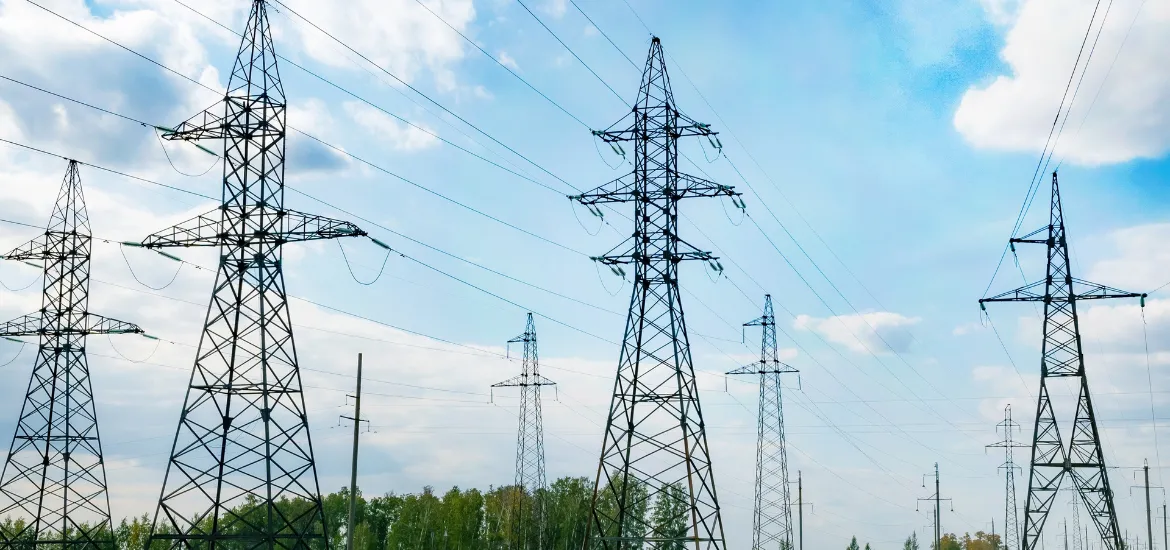
To put those figures in context: for more than a century, unequal access to electricity drove a growing economic chasm between wealthy and developing nations. Microsoft argues that without deliberate, scaled intervention, artificial intelligence risks creating an equivalent — and potentially more severe — 21st-century divide. The $50 billion commitment is the company’s formal response to that risk.
Five Pillars, One Overarching Mission
The investment is organized around a five-part strategic program. The first and most capital-intensive pillar is infrastructure. In its last fiscal year alone, Microsoft invested more than $8 billion in data center infrastructure serving the Global South — covering India, Mexico, and countries across Africa, South America, Southeast Asia, and the Middle East. The second pillar focuses on empowering people through technology: in that same fiscal year, the company channeled more than $2 billion into cloud, AI, and digital technology programs for schools and nonprofits across the Global South through grants, technology donations, skilling programs, and below-market product discounts.
The third pillar targets multilingual and multicultural AI capabilities — ensuring that AI tools actually work for non-English speakers, who make up the vast majority of the Global South’s population. The fourth pillar supports locally driven innovation, with initiatives such as a food security programme in Sub-Saharan Africa starting in Kenya. In partnership with NASA Harvest, the Government of Kenya, and the East Africa Grain Council, Microsoft’s AI for Good Lab will combine AI with satellite data to deliver timely food security insights. The fifth and final pillar is measurement — contributing to a forthcoming Global AI Adoption Index being developed by the World Bank to guide future policy and investment decisions.
Brazil: The Flagship Market
Of all the Global South markets in Microsoft’s expansion playbook, Brazil carries the most weight. In September 2024, the company announced an investment of 14.7 billion reais (approximately US$2.6 billion) over three years — the largest single-country commitment in its Latin America strategy at the time. That capital is flowing into a cluster of new data centers spread across the greater Campinas area of São Paulo state, with construction sites in Hortolândia and Sumaré.
Construction on multiple sites began in January 2024. According to Microsoft’s own local datacenter community updates, these facilities are engineered to serve Microsoft’s global cloud and AI network, with the general contractor Racional leading construction at several campuses. In January 2026, Microsoft Brasil country president Priscyla Laham announced at the Microsoft AI Tour in São Paulo that the first two data halls are now operational — a significant milestone in a project that, when fully complete, is expected to rank among the largest data center campuses in Latin America.
Brazil has also recently enacted a special fiscal regime for data centers — known informally as REDATA — initially introduced through a provisional measure and then formalized through Bill 278/2026 in the national congress. The regime is designed to attract hyperscale investment by reducing the tax burden on data center operators, and analysts expect it to accelerate Microsoft’s buildout timeline. Brazil already runs two Azure regions — Brazil South (São Paulo/Campinas) and Brazil Southeast (Rio de Janeiro) — and the new campuses will dramatically expand that capacity.
Complementing the infrastructure push is ConectaAI, a skilling initiative Microsoft has pledged will train five million Brazilians in AI and technology skills over the next three years. The program is designed to ensure that Brazil’s growing digital infrastructure investment translates into tangible workforce development — addressing one of the persistent criticisms leveled at hyperscale data center projects, namely that they generate relatively few local jobs once operational. By combining infrastructure with skills, Microsoft is attempting to build a more durable economic legacy in the country.
One decision can change your entire career. Take that step with our Online courses in ACCA, HESI A2, ATI TEAS 7, HESI EXIT, NCLEX-RN, NCLEX-PN, and Financial Literacy. Join Serrari Ed and start building your brighter future today.
Mexico: First Mover Advantage in Spanish-Speaking Latin America
Mexico holds a distinct place in Microsoft’s Latin America strategy: it became home to the first hyperscale cloud data center region in Spanish-speaking Latin America when the Mexico Central region in Querétaro went live in May 2024. The Querétaro site was originally announced in February 2020 and, after a four-year development process, is now commercially available to organizations across Mexico and the broader region.
Four months after that launch, Microsoft doubled down with a $1.3 billion investment commitment over three years, announced by CEO Satya Nadella during his keynote at the Microsoft AI Tour 2024 in Mexico City. The investment is designed to increase computing capacity at the Mexico Central region, improve connectivity for underserved communities — including working with Viasat to bring internet access to more than 150,000 Mexicans previously without cellular coverage — and drive AI adoption among small and medium-sized enterprises.
Underpinning the enterprise adoption play is the Artificial Intelligence National Skills Initiative, which aims to democratize access to AI skills and train 5 million Mexicans and reach 30,000 SMBs over three years. Mexico Economy Minister Marcelo Ebrard greeted the news with immediate enthusiasm, saying it would “help Mexico quickly boost its AI capabilities.” Already, major Mexican corporations including Grupo Bimbo, Cemex, and Tec de Monterrey have deployed Microsoft AI tools across supply chain, operations, and education platforms — providing a visible proof-of-concept for what the broader push is targeting.
Chile: The Southern Cone Hub
Chile is the newest entry in Microsoft’s Latin America data center portfolio and, in many respects, the most strategically significant for the Southern Cone. In June 2025, Microsoft officially launched Chile Central — its first cloud region in the country and its third in Latin America — located in the Santiago Metropolitan Region. The infrastructure comprises three physically independent sites in the Quilicura area of Santiago, each housing one or more data centers. The multi-site architecture is designed for high availability and disaster resilience, making it suitable for regulated industries including finance, healthcare, and government.
The $3.3 billion capital commitment behind Chile Central is described by Microsoft as its largest investment in Chile since 1992. According to IDC projections, Microsoft and its ecosystem of partners and customers are expected to generate $35.3 billion in new revenue across South America over the next four years — with the Chile region serving not just Chilean organizations but also neighboring countries including Argentina, Uruguay, Bolivia, and Peru. The region is powered by 100% renewable energy through AES Andes, making it, Microsoft claims, the most sustainably powered hyperscale deployment in Latin America to date. It also employs non-evaporative cooling technologies, a significant consideration in a country with chronic water scarcity in certain regions.
The launch is tied to Microsoft’s “Transforma Chile” initiative, which includes a commitment to train 180,000 Chileans in digital skills and an estimated creation of 81,000 jobs between 2025 and 2029. Like the Brazil and Mexico programs, Chile Central integrates infrastructure investment with human capital development — a model Microsoft is clearly codifying as its standard template for emerging market expansion.
The Broader Geopolitical Context
Microsoft’s $50 billion pledge did not emerge in a vacuum. The announcement at the India AI Impact Summit reflects a broader competitive dynamic among global technology companies — including Google, Amazon Web Services, and Huawei — that are all racing to secure long-term footholds in emerging markets. As Reuters reported, top executives from global AI giants met several world leaders in New Delhi this week, underscoring the degree to which AI infrastructure has become an instrument of technology diplomacy.
India itself offers a preview of what Microsoft is attempting to replicate across the Global South. After announcing $17.5 billion in AI investments in India in 2025 — one of the largest single-country technology investment commitments in history — the company trained 5.6 million Indians in AI skills in 2025 alone and set a new target to equip 20 million Indians by 2030. The Elevate for Educators programme, launched to strengthen capacity among two million teachers across more than 200,000 schools and institutions, is part of the same ecosystem-building logic being applied in Latin America.
For Latin American governments, the geopolitical dimension is not lost. Brazil, Mexico, and Chile are all navigating complex relationships with both American and Chinese technology providers. Microsoft’s scaled commitments — backed by data center infrastructure that ensures local data residency, regulatory compliance, and sovereignty — offer an alternative to Chinese hyperscale providers that some governments in the region view with caution. The interplay between commercial investment, digital sovereignty, and great-power competition is increasingly shaping which technology partners emerging economies choose for their long-term digital infrastructure.
Skills, Equity, and the Long-Term Bet
Beyond the infrastructure numbers, Microsoft’s clearest differentiation in its Global South strategy is its emphasis on skills and institutional capacity. Through Microsoft Elevate, launched in July 2025, the company committed to helping 20 million people in and beyond the Global South earn in-demand AI credentials by 2028. Combined with ConectaAI in Brazil, the AI National Skills Initiative in Mexico, and Transforma Chile, the aggregate skilling targets across Latin America alone run into the tens of millions of beneficiaries over the next three to five years.
The company is also positioning its measurement framework as a contribution to global policy. By helping build the World Bank’s forthcoming Global AI Adoption Index — drawing on its own AI Diffusion Reports and GitHub data — Microsoft is embedding itself in the global governance architecture around AI equity. The three benchmarks it has defined — Frontier (where AI is developed), Infrastructure (where AI is supported), and Diffusion (where AI is actively used) — are designed to give policymakers a common language for measuring progress and targeting resources.
The ambition is substantial. But so is the challenge. Infrastructure is a prerequisite for AI diffusion, and reliable electricity and connectivity remain patchy across significant parts of the Global South. Microsoft acknowledges this directly, noting that it has been aggressively pursuing a global goal to extend internet access to 250 million people in unserved and underserved communities across the Global South — including 100 million people in Africa. Without that foundational layer, even the most sophisticated data center investments risk serving only the already-connected.
What This Means for Latin America
For Latin America, Microsoft’s $50 billion Global South commitment represents a concrete acceleration of trends already underway. The region’s three anchor markets — Brazil, Mexico, and Chile — now each have operational Microsoft cloud regions, multi-billion-dollar infrastructure pipelines, and national skills programs running in parallel. Collectively, those investments are reshaping the digital infrastructure landscape of the continent.
The stakes for the region extend beyond cloud services adoption. AI is increasingly foundational to economic competitiveness across sectors: agriculture, manufacturing, financial services, healthcare, and public administration. Countries that build robust AI infrastructure and workforce capabilities in the next five years will be significantly better positioned in the decades ahead. Microsoft’s bet is that if it can be the infrastructure and skills partner of choice for the Global South during this critical window, it will not only close the AI divide — it will also build the most durable technology franchise in the developing world’s fastest-growing economies.
Whether a commitment of $50 billion — large as it sounds — is sufficient to move the needle on a divide this structural remains an open question. But for the first time in the AI era, the world’s largest software company has put a number and a deadline on the problem. For Latin America, that shift in urgency could not have come at a better time.
Ready to take your career to the next level? Join our Online courses: ACCA, HESI A2, ATI TEAS 7 , HESI EXIT , NCLEX – RN and NCLEX – PN, Financial Literacy!🌟 Dive into a world of opportunities and empower yourself for success. Explore more at Serrari Ed and start your exciting journey today! ✨
Track GDP, Inflation and Central Bank rates for top African markets with Serrari’s comparator tool.
See today’s Treasury bonds and Money market funds movement across financial service providers in Kenya, using Serrari’s comparator tools.
photo source: Google
By: Montel Kamau
Serrari Financial Analyst
20th February, 2026
Article, Financial and News Disclaimer
The Value of a Financial Advisor
While this article offers valuable insights, it is essential to recognize that personal finance can be highly complex and unique to each individual. A financial advisor provides professional expertise and personalized guidance to help you make well-informed decisions tailored to your specific circumstances and goals.
Beyond offering knowledge, a financial advisor serves as a trusted partner to help you stay disciplined, avoid common pitfalls, and remain focused on your long-term objectives. Their perspective and experience can complement your own efforts, enhancing your financial well-being and ensuring a more confident approach to managing your finances.
Disclaimer: This article is for informational purposes only and does not constitute financial advice. Readers are encouraged to consult a licensed financial advisor to obtain guidance specific to their financial situation.
Article and News Disclaimer
The information provided on www.serrarigroup.com is for general informational purposes only. While we strive to keep the information up to date and accurate, we make no representations or warranties of any kind, express or implied, about the completeness, accuracy, reliability, suitability, or availability with respect to the website or the information, products, services, or related graphics contained on the website for any purpose. Any reliance you place on such information is therefore strictly at your own risk.
www.serrarigroup.com is not responsible for any errors or omissions, or for the results obtained from the use of this information. All information on the website is provided on an as-is basis, with no guarantee of completeness, accuracy, timeliness, or of the results obtained from the use of this information, and without warranty of any kind, express or implied, including but not limited to warranties of performance, merchantability, and fitness for a particular purpose.
In no event will www.serrarigroup.com be liable to you or anyone else for any decision made or action taken in reliance on the information provided on the website or for any consequential, special, or similar damages, even if advised of the possibility of such damages.
The articles, news, and information presented on www.serrarigroup.com reflect the opinions of the respective authors and contributors and do not necessarily represent the views of the website or its management. Any views or opinions expressed are solely those of the individual authors and do not represent the website's views or opinions as a whole.
The content on www.serrarigroup.com may include links to external websites, which are provided for convenience and informational purposes only. We have no control over the nature, content, and availability of those sites. The inclusion of any links does not necessarily imply a recommendation or endorsement of the views expressed within them.
Every effort is made to keep the website up and running smoothly. However, www.serrarigroup.com takes no responsibility for, and will not be liable for, the website being temporarily unavailable due to technical issues beyond our control.
Please note that laws, regulations, and information can change rapidly, and we advise you to conduct further research and seek professional advice when necessary.
By using www.serrarigroup.com, you agree to this disclaimer and its terms. If you do not agree with this disclaimer, please do not use the website.
www.serrarigroup.com, reserves the right to update, modify, or remove any part of this disclaimer without prior notice. It is your responsibility to review this disclaimer periodically for changes.
Serrari Group 2025