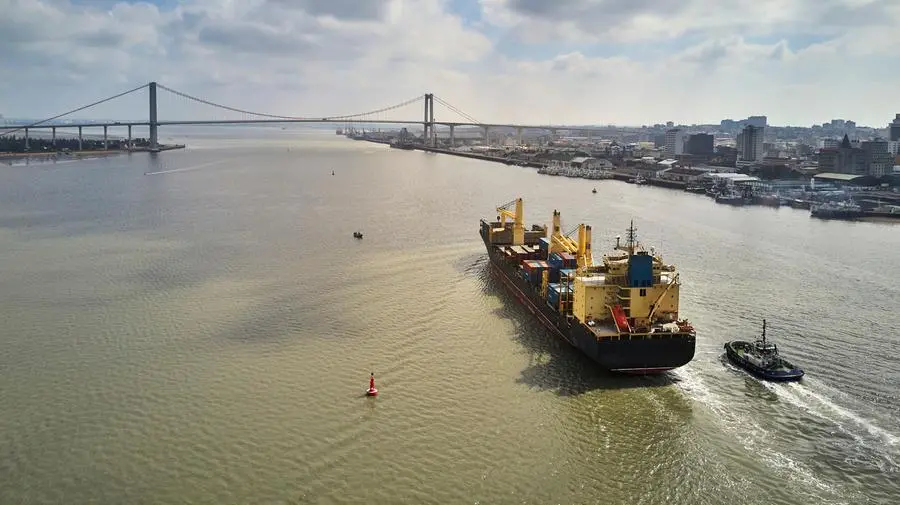
Mozambique’s Port of Maputo, the country’s largest maritime gateway, achieved a historic milestone in 2025 by handling a record 32 million metric tons of cargo, marking a 3.4% increase from the previous year’s 30.9 million metric tons and cementing its position as a critical regional logistics hub for Southern Africa. The achievement comes despite significant challenges faced in the final quarter of 2024, including post-election unrest that temporarily disrupted operations.
The Maputo Port Development Company (MPDC), which holds the main concession to operate the facility, announced the results on Tuesday, highlighting sustained investments in infrastructure, improved rail connectivity, and operational efficiency gains that enabled the port to overcome substantial headwinds and reach new performance levels.
“This performance reinforces the port’s position as a key regional logistics hub and reflects the resilience and efficiency of the integrated port and corridor system,” MPDC stated in its announcement, noting that the achievement demonstrates the maturity of Mozambique’s port infrastructure and its capacity to serve as a reliable alternative to increasingly congested South African facilities.
Build the future you deserve. Get started with our top-tier Online courses: ACCA, HESI A2, ATI TEAS 7, HESI EXIT, NCLEX-RN, NCLEX-PN, and Financial Literacy. Let Serrari Ed guide your path to success. Enroll today.
Remarkable Growth Trajectory Since 2019
The 2025 volume represents a remarkable 52% increase from 21 million metric tons handled in 2019, underscoring Maputo’s rapidly expanding role as a regional logistics hub serving landlocked countries including Zimbabwe, Zambia, Malawi, and South Africa’s interior provinces. This growth trajectory has been sustained despite periodic disruptions from weather events, regional political instability, and the lingering effects of the COVID-19 pandemic on global supply chains.
The port, strategically positioned as the closest deep-water facility to South Africa’s Gauteng industrial heartland and the mineral-rich provinces of Limpopo and Mpumalanga, has increasingly attracted cargo diverted from South Africa’s struggling state-owned port and rail network operated by Transnet. Miners of coal, chrome, and magnetite—a type of iron ore—have been sending increased volumes by truck to Maputo as operational challenges at Transnet’s facilities have cost South African exporters billions of dollars in lost revenue.
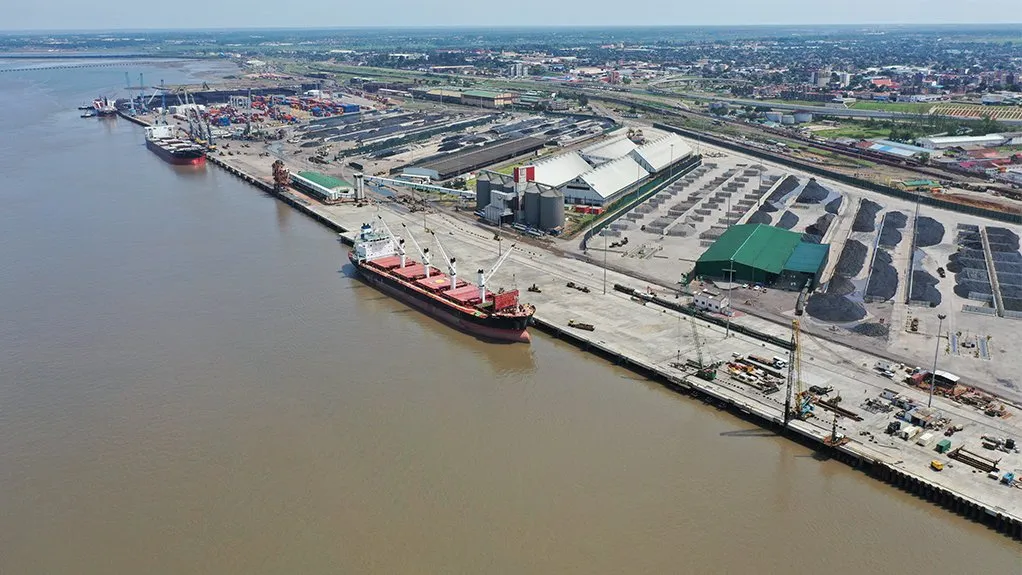
The dramatic growth reflects not only Maputo’s own capacity improvements but also structural weaknesses in competing infrastructure that have made the Mozambican port increasingly attractive to regional shippers seeking reliability and efficiency.
Rail Volumes Surge as Sustainability Strategy Advances
A particularly notable achievement in 2025 was the substantial increase in rail volumes, which rose to 11.7 million metric tons from 9.7 million in the previous year—representing a 17% year-on-year increase. Rail transport forms a central pillar of MPDC’s sustainability strategy, offering environmental benefits and greater cost efficiency compared to road freight while reducing congestion on regional highways.
“The results reflect the collective effort of our teams and partners across the entire logistics chain. Achieving record volumes while continuing to invest in capacity, efficiency and social impact demonstrates the maturity and resilience of the port of Maputo,” said Osório Lucas, MPDC’s Chief Executive Officer, emphasizing the importance of integrated logistics solutions that combine port, rail, and road infrastructure.
The improved rail performance represents years of investment in track maintenance, rolling stock, and operational coordination with Caminhos de Ferro de Moçambique (CFM), the state-owned railway company that serves as both a shareholder in MPDC and a crucial logistics partner. The railway connections link Maputo not only to inland Mozambique but also across borders to South Africa’s industrial centers and Zimbabwe’s mining regions.
MPDC’s direct operations also reached record levels in 2025, with 15.2 million tonnes handled—a 6.4% year-on-year increase that the company attributed to sustained investments in infrastructure, systems upgrades, and human capital development alongside continuous improvements in operational efficiency.
Overcoming Post-Election Disruption

The achievement is particularly impressive given the significant challenges faced in the final quarter of 2024, when post-election protests and civil unrest in Mozambique dealt a substantial blow to port operations. The protests erupted following a disputed election in October 2024 which was won by Daniel Chapo and his Frelimo party, which has governed Mozambique since 1975.
Operations were put on hold in late 2024 as the protests turned increasingly violent, with more than 300 people killed following a crackdown by security forces. South Africa’s border authority temporarily closed the Lebombo border crossing after receiving reports of vehicles being torched on the Mozambican side, forcing logistics company Grindrod to suspend port and terminal operations in Maputo and Matola.
The rail corridor from South Africa to Mozambique was also affected by the protests and blockages, paired with a derailment in October and November which shut the line for a month. Road blockages in the Maputo corridor, including border closures for several days and conditioned border and road operations for more than a month, created significant logistical challenges that MPDC had to navigate.
Despite these substantial disruptions, the port managed to finish 2025 with record volumes, demonstrating operational resilience and the effectiveness of diversification strategies that spread cargo handling across multiple transport modes and commodity types.
Diverse Cargo Portfolio Provides Stability
The Port of Maputo handles a diverse range of commodities, with bulk shipments of minerals dominating the cargo mix. The facility processes chrome, iron ore, coal, and a variety of other mineral products alongside agricultural commodities, providing diversification that helps insulate operations from volatility in any single sector.
According to port operational data, of the total volumes handled, approximately 25 million tons consist of various ores, including chromium, ferrochrome, magnetite, coal, phosphate ore, vanadium, titanium, copper, and vermiculite, among others. This mineral-heavy cargo profile reflects both Mozambique’s own mining sector and the port’s role as an export gateway for landlocked Zimbabwe’s substantial chrome and ferrochrome production.
Rising mineral output in Zimbabwe has contributed significantly to Maputo’s volume gains, as Zimbabwean miners increasingly route their exports through Mozambican ports rather than facing uncertainty at South African facilities. The country relies heavily on both Maputo and the Port of Beira further north, though Maputo’s superior infrastructure and deeper berths give it advantages for handling larger vessels and bulk commodities.
The port also handles containers through a terminal operated by DP World, vehicles through Grindrod’s Maputo Car Terminal, sugar through the STAM terminal, vegetable oils through the Maputo Liquids Storage Company, and coal through the Matola Coal Terminal. This diversification across both cargo types and terminal operators has created a robust ecosystem less vulnerable to disruptions in any single commodity or operator.
Capacity Upgrades Drive Competitive Advantage
The volume achievements reflect significant capacity upgrades and infrastructure improvements that have transformed Maputo’s capabilities over recent years. During 2025, MPDC made progress with several infrastructure projects, including the completion of the Kanyaka Island pier bridge scheduled for March, which will further enhance port operations and connectivity.
The group increased port capacity with the expansion of the bulk terminal to 16 million tonnes annually, while undertaking capacity expansion works at Grindrod’s magnetite and coal terminal to increase throughput from 8 million tonnes to 12 million tonnes per annum. These infrastructure investments position the port to handle even larger volumes in coming years as demand continues to grow.
Looking ahead, 2025 marked the commencement of major expansion projects at the Port of Maputo, including the much-anticipated expansion of both the container terminal and the coal terminal—projects that form key pillars of the concession extension granted in early 2024.
The first phase of the container terminal expansion involves a two-year, $165 million project to increase annual container capacity from 255,000 to 530,000 twenty-foot equivalent units (TEUs). Key measures include deepening the berth from 12 meters to 16 meters and extending the quay length to accommodate post-Panamax vessels—larger ships that cannot transit the original Panama Canal locks.
These infrastructure improvements will enable Maputo to compete more effectively with larger regional ports and attract business from major international shipping lines seeking efficient gateways to Southern African markets.
One decision can change your entire career. Take that step with our Online courses in ACCA, HESI A2, ATI TEAS 7, HESI EXIT, NCLEX-RN, NCLEX-PN, and Financial Literacy. Join Serrari Ed and start building your brighter future today.
Extended Concession Provides Long-Term Certainty
The port operates under a concession granted to MPDC, a public-private partnership between state-owned Caminhos de Ferro de Moçambique and Portus Indico, a consortium formed by South Africa’s Grindrod, Dubai-based DP World, and local firm Gestores. This arrangement, first granted in 2003, represents one of Africa’s pioneering public-private partnerships in port operations.
The concession was extended last year to 2058, providing long-term certainty for continued investment and development. The extension includes plans to expand capacity further through a comprehensive development program valued at approximately $2 billion, with nearly $1.1 billion in investments committed by 2033.
Under the extended agreement, capacity at the port is set to increase to 54 million tons per year by 2058, from 37 million tons currently, according to the concession terms. This includes expanding the Matola coal terminal to 18 million tons yearly from 7.5 million tons, and nearly quadrupling annual shipping-container capacity to one million units over the same period.
The long-term nature of the concession enables MPDC and its partners to make substantial capital investments with confidence in future returns, creating a virtuous cycle of improvement that benefits both the operators and the Mozambican economy.
South Africa’s Logistics Struggles Create Opportunity
A significant factor driving Maputo’s growth has been the logistical bottlenecks in neighboring South Africa that have diverted substantial cargo volumes to Mozambican ports. South Africa’s state-owned Transnet has struggled for years with underinvestment, poor maintenance, corruption, and operational inefficiency that have severely constrained the capacity and reliability of the country’s rail and port network.
These challenges became so severe that port and rail reform emerged as one of the key pillars of Operation Vulindlela, the joint Presidency–National Treasury initiative focused on clearing structural blockages in South Africa’s economy. The country’s logistics crisis has cost the economy billions in lost productivity and has driven exporters to seek alternative routes for their cargo.
While South African ports showed cautious improvement during 2025, with vessel waiting times dropping from 18 days in January to 2-3 days by year-end at Durban, structural challenges remain. Equipment shortages, congestion, and weather disruptions continue to constrain port capacity, creating ongoing uncertainty for shippers who increasingly view Maputo as a more reliable alternative.
In Durban, South Africa’s largest container port, performance has become more predictable with better crane deployment and fewer breakdowns compared with a year earlier. However, equipment shortages, congestion, and weather disruptions remain the main constraints on capacity, and delays and unpredictability still pose real risks to supply chain reliability.
Transnet has entered partnerships with private operators and secured equipment financing to address these challenges, including a landmark 25-year partnership with ICTSI for Durban Container Terminal Pier 2, signed in December 2025. However, the benefits of these reforms are gradual and sometimes offset by external factors like weather and shipping schedules.
For Maputo, South Africa’s logistics struggles represent both an opportunity and a strategic imperative—the port must continue improving to capture and retain cargo that might otherwise return to South African facilities once their performance stabilizes.
Economic Contribution to Mozambique Increases
Beyond operational performance, MPDC’s increased contribution to the Mozambican economy represents a significant benefit from the port’s success. The company’s concession fees to the Government of Mozambique rose by 12% in 2024, reaching $46.8 million compared to $41.7 million in 2023, reflecting the port’s growing economic importance.
This contribution excludes additional payments to the state through taxes on profits and dividends to CFM, one of MPDC’s major stakeholders, meaning the total economic benefit to Mozambique from port operations substantially exceeds the concession fees alone.
The substantial increase in cargo volumes has had a direct impact on the value of fixed and variable fees paid to the government. According to historical data, the Port of Maputo contributed more than $41 million dollars (excluding taxes and dividends to shareholders) in 2023, marking a growth of 29% over the previous year.
These financial contributions help fund public services and infrastructure development in Mozambique, creating a tangible link between the port’s commercial success and broader economic development outcomes for the country. The port also generates substantial employment both directly and through supporting industries including trucking, warehousing, customs brokerage, and maritime services.
Regional Integration and Trade Corridor Development
Maputo’s success reflects broader regional integration efforts aimed at improving trade corridors connecting coastal ports with landlocked interior countries. The port serves as the Atlantic terminus of development corridors extending into South Africa, Zimbabwe, and beyond, with road and rail infrastructure facilitating the movement of both exports and imports.
Over 95% of Maputo’s cargo throughput consists of transit goods to or from South Africa, highlighting the port’s role as a vital link in regional supply chains. Bulk mineral exports, especially coal, chrome, citrus, and agricultural goods, have driven the rise in overall volumes—from 22.2 million tonnes in 2021 to 31.2 million in 2023, before reaching 32 million in 2025.
Improving rail capacity is central to further growth and sustainability. South Africa’s transport utility, Transnet, recently awarded rail slots to 11 private companies in a bid to address years of underinvestment and operational challenges, potentially improving connectivity to Maputo. However, significant challenges remain, with MPDC CEO Osório Lucas noting that “both road and rail have an important role to play, but the reality today is that rail is underperforming. At present, we are managing only about one train a week from the border, and there is no active service from Johannesburg, Pretoria, and other inland hubs.”
“This transition from road to rail is essential” for both environmental sustainability and cost competitiveness, Lucas emphasized, highlighting the ongoing work required to optimize the integrated logistics corridor.
DP World’s Regional Strategy and Dry Port Development
DP World, the Dubai-based global port operator that forms part of the MPDC consortium, has been instrumental in driving infrastructure improvements and operational excellence at Maputo. The company’s involvement reflects a broader strategy of establishing integrated logistics platforms across key African markets, leveraging expertise developed at flagship facilities like Dubai’s Jebel Ali Port.
Sumeet Bhardwaj, CEO and managing director of DP World in Mozambique, has emphasized that infrastructure upgrades enabling larger vessels to dock will catalyze regional trade by unlocking more competitive freight rates and increasing throughput. This aligns with the Mozambique government’s development vision to boost competitiveness by increasing the efficiency and value addition of its trade corridors with landlocked countries.
DP World has bolstered Maputo’s appeal with a “dry port” facility at Komatipoort just inside South Africa, opened in 2019. This off-dock facility provides logistics and customs services, enabling cargo to be processed inland rather than at the port itself, reducing congestion and improving efficiency.
The company’s experience with dry ports, such as the Kigali Logistics Platform in Rwanda connecting to Mombasa, Kenya, and Dar es Salaam, Tanzania, demonstrates the effectiveness of integrated logistics solutions for regional trade. The Komatipoort facility allows South African shippers to benefit from Maputo’s efficiency while minimizing border crossing complexities.
DP World is also engaging with the Mozambican government to establish special economic zones around the port, leveraging the company’s experience with similar facilities in Dubai, such as the Jebel Ali Free Zone, which has become a major hub for manufacturing, distribution, and trade.
Grindrod’s Terminal Operations and Expansion
South African logistics company Grindrod operates several specialized terminals within the Port of Maputo under sub-concessions, including the TCM dry bulk terminal and the Maputo Car Terminal. The company has been instrumental in developing capacity for handling specific commodity types and has committed to significant expansion investments.
Grindrod’s car terminal spans an area of 85,109 square meters and acts as a transshipment hub for the East and West coast of Africa as well as a distribution hub locally and internationally. The terminal has 4,126 parking bays with a throughput capacity of 115,000 cars per annum, serving major automotive manufacturers and importers across the region.
The Matola Coal Terminal, owned by Grindrod, currently has an annual capacity of 7.5 million tonnes, handling magnetite and coal. In 2022, Grindrod announced plans to increase capacity from 7.3 million tonnes a year to 12 million tonnes, reflecting growing demand for coal export capacity as producers seek alternatives to congested South African facilities.
While earlier plans for a more ambitious Phase 4 expansion to more than 20 million tons appeared to be shelved or cancelled, the more modest expansion to 12 million tonnes represents a substantial increase that will help accommodate growing export volumes from South African and Zimbabwean coal producers.
Future Outlook and Challenges
As Maputo looks ahead to 2026 and beyond, the port faces both significant opportunities and important challenges. The commencement of major expansion projects, including the container and coal terminal upgrades, positions the facility for continued volume growth and enhanced competitiveness within the regional port network.
However, sustaining growth will require ongoing investment in infrastructure, equipment, and human capital alongside continued focus on operational excellence and customer service. The port must also navigate regional political dynamics, including the potential for renewed civil unrest in Mozambique and ongoing economic challenges in neighboring countries that could affect cargo volumes.
Competition from other regional ports, including Durban once its performance fully stabilizes, Richards Bay, and potentially new facilities being developed along the coast, will require Maputo to maintain its competitive advantages in efficiency, reliability, and cost-effectiveness.
Climate change poses longer-term challenges, with rising sea levels and more frequent extreme weather events potentially affecting port operations and requiring additional resilience investments. The port’s emphasis on rail transport as part of its sustainability strategy helps address environmental concerns while also improving efficiency.
The ongoing liberalization of South Africa’s rail network, with private operators now accessing routes previously monopolized by Transnet, could significantly improve connectivity to Maputo and enable more efficient cargo flows. However, realizing this potential will require coordination among multiple stakeholders across borders, regulatory harmonization, and continued infrastructure investment.
Conclusion
The Port of Maputo’s achievement of 32 million metric tons in cargo throughput for 2025 represents more than just a numerical milestone—it reflects the successful implementation of a long-term strategy focused on capacity expansion, operational efficiency, diversification, and regional integration. The port has demonstrated remarkable resilience in overcoming political instability, infrastructure constraints, and competitive pressures to establish itself as an indispensable component of Southern Africa’s logistics network.
With the extended concession providing certainty through 2058, substantial expansion projects underway, and growing recognition as a reliable alternative to congested South African facilities, Maputo is well-positioned for continued growth. The port’s success creates a template for how public-private partnerships, strategic investment, and operational excellence can transform infrastructure assets into engines of economic development.
For Mozambique, the port’s contributions to government revenue, employment, and economic activity make it a vital national asset. For the broader region, Maputo’s expanding capacity and improving efficiency provide essential alternatives that enhance supply chain resilience and competitiveness. As Southern Africa’s economies continue to grow and trade volumes expand, the Port of Maputo’s role as a key regional logistics hub seems destined only to increase in importance.
Ready to take your career to the next level? Join our Online courses: ACCA, HESI A2, ATI TEAS 7 , HESI EXIT , NCLEX – RN and NCLEX – PN, Financial Literacy!🌟 Dive into a world of opportunities and empower yourself for success. Explore more at Serrari Ed and start your exciting journey today! ✨
Track GDP, Inflation and Central Bank rates for top African markets with Serrari’s comparator tool.
See today’s Treasury bonds and Money market funds movement across financial service providers in Kenya, using Serrari’s comparator tools.
photo source: Google
By: Montel Kamau
Serrari Financial Analyst
14th January, 2026