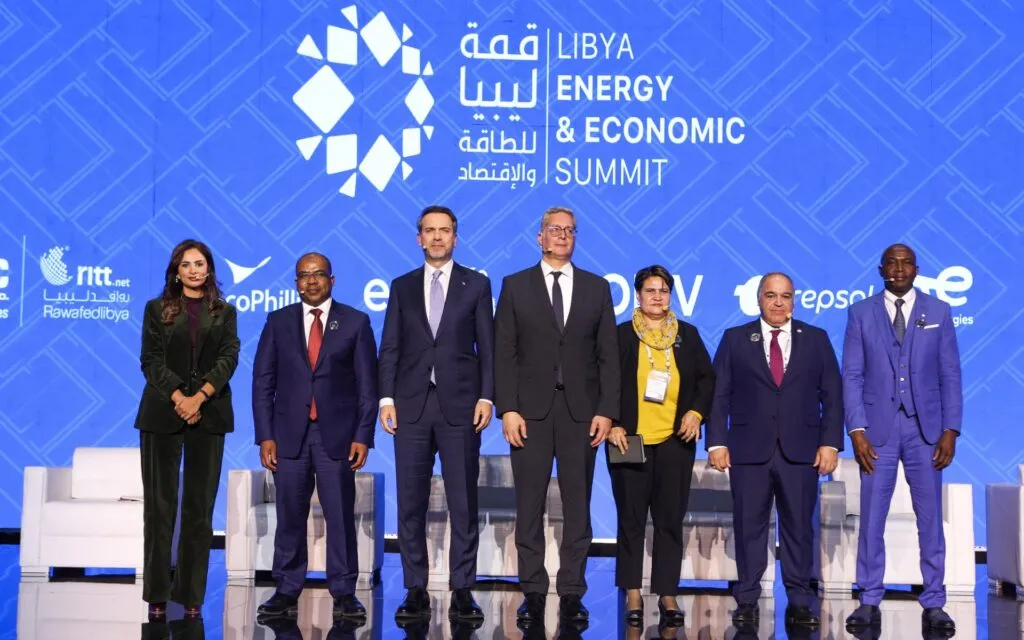
Libya’s energy sector is experiencing a remarkable transformation, attracting unprecedented international investment and signaling the North African nation’s return to global energy prominence after years of political instability and infrastructure challenges. At the Libya Energy and Economic Summit in Tripoli, government officials and international energy executives gathered to outline an ambitious roadmap that positions Libya as a critical supplier for European markets and a cornerstone of Africa’s energy development strategy.
The centerpiece of this revival is a massive $20 billion investment program announced at the summit, which includes a landmark 25-year development agreement with France’s TotalEnergies and America’s ConocoPhillips. This deal alone, signed through the state-owned Waha Oil Company, aims to add 850,000 barrels per day of new production capacity and is expected to generate net revenues exceeding $376 billion over the contract period. The agreements represent the most significant foreign investment commitments to Libya’s energy sector in more than a decade and underscore growing international confidence in the country’s stability and future prospects.
Build the future you deserve. Get started with our top-tier Online courses: ACCA, HESI A2, ATI TEAS 7, HESI EXIT, NCLEX-RN, NCLEX-PN, and Financial Literacy. Let Serrari Ed guide your path to success. Enroll today.
Production Recovery Reaches Decade-High Levels
Libya’s oil production recovery has exceeded even optimistic projections. The country averaged 1.375 million barrels per day in 2025—the highest annual output in over ten years—marking a dramatic turnaround from the disruptions that plagued the sector throughout much of the 2010s. Minister of Oil and Gas Dr. Khalifa Abdulsadek emphasized the significance of this achievement, stating that the production milestone represents “strong testimony to our recovery and stability.”
The National Oil Corporation reported that oil revenues reached approximately $21-22 billion in 2025, reflecting a 15 percent year-on-year increase and underscoring the fiscal importance of sustained output for a country where hydrocarbons account for roughly 90 percent of government revenue. This performance has been achieved through coordinated field rehabilitation efforts, infrastructure repairs, improved operational continuity, and strengthened oversight across the NOC’s subsidiary operators.
By early January 2026, production levels had climbed even higher, with current output reaching 1.38-1.4 million bpd. The upward trajectory reflects successful brownfield redevelopment programs across major assets including Sarir, Messla, and Al-Atshan fields, as well as expansion initiatives at Waha’s North Gialo and NC-98 projects involving international partners TotalEnergies and ConocoPhillips.
Ambitious Production Targets Backed by Strategic Investments
Libya’s energy authorities have set aggressive production targets that would restore the country to its pre-crisis status as one of Africa’s leading oil producers. The immediate goal is to reach 1.6 million bpd by the end of 2026, up from current levels, followed by 1.8 million bpd by 2027 and ultimately 2 million bpd by 2030. Achieving these targets will require an estimated $3-4 billion in near-term annual investment focused on rehabilitating aging facilities, optimizing mature fields, and unlocking marginal production from smaller discoveries.
The investment program involves 15 international companies working across Libya’s key producing basins. Contract terms have been extended to 25 years, offering the kind of predictable, long-term investment conditions that align with global industry practices for multi-decade upstream development. This regulatory stability represents a significant departure from the uncertainty that characterized Libya’s energy sector during years of political fragmentation.
The strategy emphasizes both brownfield optimization and new field development. Waha Oil Company, which typically produces between 340,000 and 400,000 bpd under normal operations, has already achieved multi-year highs of 365,000 bpd and is being expanded through projects targeting an additional 100,000 bpd from North Gialo and 80,000 bpd from NC-98. Meanwhile, the NOC is preparing auctions for over 40 marginal fields expected to yield between 5,000 and 20,000 bpd each, supported by discoveries made during the country’s first licensing round in 17 years.
Gas Development Emerges as Critical Growth Engine
Beyond oil, Libya is prioritizing natural gas development as both a domestic energy security measure and an export opportunity to European markets seeking to diversify away from Russian supplies. Gas production is projected to reach 700-750 million standard cubic feet per day in 2026, representing a substantial increase from current levels.
Dr. Philip Mshelbila, Secretary General of the Gas Exporting Countries Forum, highlighted Libya’s strategic advantages: “One of Libya’s greatest opportunities lies in its geographical location near one of the largest and most affluent markets in the world. With 750 million standard cubic feet per day expected this year, Libya can support domestic power, industry and export through the Greenstream pipeline to Europe.”
The flagship gas initiative is the $8 billion Structures A&E offshore project, a 50/50 joint venture between Italy’s Eni and the National Oil Corporation under the Mellitah Oil & Gas partnership. This development is expected to deliver approximately 750 million cubic feet per day to support both domestic power generation and exports to Italy via the existing Greenstream pipeline infrastructure. The project represents one of the largest single investments in Libya’s energy sector and demonstrates the kind of capital-intensive development that international partners are willing to undertake given improved operating conditions.
Libya’s gas strategy also includes efforts to reduce flaring and improve efficiency. The NOC has reported saving approximately 100 million cubic feet of gas through flaring reduction programs, aligning Libya’s recovery with global emissions and efficiency expectations. Additionally, a 500 MW solar photovoltaic project is slated for commissioning in 2026, alongside upgrades to gas-to-power infrastructure designed to strengthen domestic electricity supply and enhance grid reliability.
Regional Partnerships Strengthen North African Energy Security
Libya is actively deepening cooperation with neighboring countries to create integrated regional energy networks. The most significant partnership is with Egypt, which leverages Egypt’s extensive liquefaction and export capacity alongside Libya’s growing gas output to enhance North African energy security and resilience. This collaboration positions both countries as more reliable suppliers to European markets while creating economies of scale in infrastructure development and operations.
Farid Ghezali, Secretary General of the African Petroleum Producers Organization, emphasized the broader regional implications: “What applies to Libya and its neighboring countries also applies to any African oil and gas-producing nation—cooperation on transport, joint energy projects and infrastructure development is essential. The partnership between Libya and Egypt is a strategic move that strengthens regional energy resilience and benefits global markets.”
The Africa Energy Bank represents another critical component of regional collaboration. Led by APPO and the African Export-Import Bank (Afreximbank), the institution was established with $5 billion in initial capital and has been ratified by Ghana and Nigeria, with Angola also contributing to the capitalization. The bank aims to bridge financing gaps for capital-intensive energy infrastructure projects across Africa, including initiatives like the proposed Libya-Algeria Power Interconnector, which would enhance electricity trade and grid stability across North Africa.
Libya is also drawing valuable lessons from regional peers. Namibia has built investor confidence through transparent fiscal policies, predictable royalties, and strong local content programs. As Gaudentia Kröhne, Namibia’s Deputy Minister of Industries, Mines and Energy, explained: “Namibia is attractive for investors due to its clear regulatory framework, stable political environment and consistent engagement with the investment community. Policies such as a 5 percent royalty and 35 percent production allocation to the state provide predictability and help ensure local benefits and skills transfer.”
Turkey has emerged as another important partner, pursuing joint efforts and ambitious targets as part of its broader strategy to become a billion-barrel oil and gas producer. Turkey’s Minister of Energy and Natural Resources, Alparslan Bayraktar, stated: “Turkey is engaged in Libya pursuing joint efforts and ambitious targets, as part of our broader strategy to become a billion-barrel oil and gas producer. In today’s geopolitical environment, diversification is crucial, and we are navigating these challenges through sustainable energy strategies and strong partnerships.”
Global Powers Signal Renewed Engagement at Tripoli Summit
The Libya Energy & Economic Summit 2026 delivered a powerful message about international appetite for Libyan energy investments through a series of high-level roundtable discussions that brought together government officials and corporate executives from the United States, France, Italy, and the United Kingdom. These engagements demonstrated that Libya has successfully repositioned itself as a viable destination for long-term energy investments despite lingering political challenges.
One decision can change your entire career. Take that step with our Online courses in ACCA, HESI A2, ATI TEAS 7, HESI EXIT, NCLEX-RN, NCLEX-PN, and Financial Literacy. Join Serrari Ed and start building your brighter future today.
U.S.-Libya: Strategic Priority and Commercial Expansion
Libya was described as a “high priority” for the current U.S. administration during the U.S.-Libya Roundtable convened by the American Chamber of Commerce. American officials pointed to rising U.S. investment, a growing presence of U.S. energy companies, and the strategic importance of Libya’s upstream revival for global energy security.
Ryan Lance, CEO of ConocoPhillips, emphasized the company’s long-term commitment: “Libya recently achieved a milestone by covering crude production to 1.4 million barrels a day. Now more work and investment is required to not only stabilize that but grow that into the future. The country is well-positioned to deliver oil and gas to Europe and around the world, helping ensure European energy security, as well as global energy security.”
Massad Boulos, Senior Advisor to the U.S. President for Arab World and Middle East Affairs, underscored American confidence in Libya’s trajectory: “By opening new opportunities for competitive international investment, Libya is signaling it’s ready to play in the big league again. The deals signed by ConocoPhillips and Chevron make one thing undeniable—the United States and its world-class companies are betting on Libya’s future.”
The U.S. session highlighted opportunities linked to Libya’s ongoing licensing round and the NOC’s multi-billion-dollar development program, with American operators and service providers signaling continued commitment to production growth, technology deployment, and workforce development.
France-Libya: Project Momentum and Institutional Cooperation
The France-Libya Roundtable, sponsored by Business France, showcased both project-level progress and deeper institutional alignment. TotalEnergies confirmed it is targeting end-2026 final investment decisions for the North Gialo 6J oil development and the 500 MW Sadada solar project, reinforcing France’s dual focus on hydrocarbons and renewable energy in Libya.
Patrick Pouyanne, CEO of TotalEnergies, acknowledged the challenges while expressing confidence in Libya’s direction: “Despite many challenges, Libya has managed to increase its oil production with a strong and pragmatic and realistic ambition to reach 2 million bpd by the end of this decade.”
In parallel, the Libyan Council for Oil, Gas and Renewable Energy and Business France signed a memorandum of understanding to strengthen collaboration between French and Libyan companies, with a potential joint venture under consideration to support energy investment and project development. TotalEnergies is also progressing the restart of the Mabruk field, with initial production expected in early 2026.
Italy-Libya: Traditional Ties Reinforced Across Energy Value Chain
Long-standing Italy-Libya energy ties were reinforced during the Italy-Libya Roundtable, where participants called for expanded cooperation across oil, gas, and power generation. Italy was positioned as a natural partner for Libya’s next phase of growth, combining decades of operating experience, engineering capacity, and geographic proximity to Libyan production areas.
Discussions highlighted ongoing gas developments, flaring-reduction initiatives, and growing interest in electricity generation and infrastructure rehabilitation. Italy’s Eni continues to play a central role through its Mellitah Oil and Gas joint venture, advancing not only the offshore Structures A&E project but also carbon capture and storage initiatives that align with global environmental standards.
U.K.-Libya: Licensing Continuity Anchors Upstream Strategy
The U.K.-Libya Roundtable, convened by the Libya British Business Council, centered on Libya’s plans to launch a second upstream licensing round, positioning licensing continuity as a cornerstone of the country’s strategy to sustain production and attract long-term investment.
Minister Abdulsadek highlighted that strong global interest in the current licensing round—launched in 2025, with results expected in February 2026—has reinforced confidence in maintaining a regular, structured approach to acreage offerings. The minister also highlighted parallel initiatives targeting marginal fields, unconventional resources, and underexplored acreage, which collectively represent significant untapped potential.
More than 37 international and regional companies have been pre-qualified to participate in the licensing round, which offers 22 onshore and offshore blocks across the Sirte, Murzuq, and Ghadames basins. This level of participation demonstrates that international operators view Libya’s regulatory framework as sufficiently stable and attractive to warrant major capital commitments.
Downstream Development and Value Addition Strategy
What distinguishes Libya’s current momentum from previous production recoveries is its growing emphasis on downstream infrastructure and value retention. The construction of a 30,000-barrel-per-day refinery in Ubari, led by Zallaf Libya, an NOC subsidiary, reflects a broader ambition to process more resources domestically and reduce reliance on external refining capacity.
Libya already operates five refineries, including the strategically vital Ras Lanuf complex on the Mediterranean coast, but much of the country’s crude has historically been exported for processing elsewhere. Expanding domestic refining capacity would allow Libya to capture more value from its hydrocarbon resources while also improving energy security through greater self-sufficiency in refined products like gasoline, diesel, and jet fuel.
The emphasis on value addition extends beyond oil refining to include petrochemicals, gas processing, and renewable energy integration. The 500 MW Sadada solar project represents Libya’s recognition that energy diversification strengthens long-term economic resilience even as hydrocarbons remain central to fiscal sustainability.
Structural Reforms and Governance Improvements
Underlying Libya’s production recovery is a Strategic Transformation Plan developed by the National Oil Corporation in partnership with global consultancy firm Kearney and overseen by a newly established Strategic Programs Office. The plan prioritizes maximizing output, accelerating gas development, modernizing governance, and enhancing transparency across subsidiary operators.
Under Chairman Masoud M. Suleman, formally appointed in October 2025, the NOC has positioned itself as one of Africa’s most consequential energy players, executing a revitalization agenda aimed at restoring Libya’s global standing and unlocking new investment. The corporation has endorsed LEES 2026 as its flagship platform for international engagement, with all subsidiaries present to advance partnerships, technology transfer, infrastructure investment, and production growth.
The government’s approach reflects what Prime Minister Abdulhamid Al-Dbeibeh described as “strengthening of relations with the largest and most influential international partners in the global energy sector, and expanding avenues of cooperation and investment.” Beyond attracting capital, officials emphasize that these agreements will provide additional resources for the broader economy, including job creation and wage increases for Libyan workers.
Minister Abdulsadek also assumed the chairmanship of the Organization of Arab Petroleum Exporting Countries Council of Ministers in January 2026, further reinforcing Libya’s regional energy leadership and providing additional platforms for coordination with major producers across the Middle East and North Africa.
Challenges and Risks Remain Despite Positive Momentum
While Libya’s energy sector recovery has been impressive, significant challenges persist. The country remains divided between rival administrations, complicating investment efforts and creating uncertainty around regulatory consistency and contract enforcement. Ensuring a predictable legal and regulatory environment will be essential to attract and retain foreign partners over the multi-decade timeframes required for major upstream developments.
Security concerns also continue to pose risks, particularly in remote oil-producing regions where infrastructure remains vulnerable to disruption. The political situation, while more stable than during the worst years of conflict, could still deteriorate if competing factions fail to maintain working arrangements around oil revenue sharing and governance.
Additionally, Libya faces the same global energy transition pressures affecting all major hydrocarbon producers. While the Africa Energy Bank and regional partnerships aim to ensure continued access to capital, international pressure to reduce fossil fuel investments could limit future financing options or increase capital costs. Libya’s strategy of incorporating renewable energy projects alongside hydrocarbon development represents an effort to demonstrate balanced energy planning that addresses both immediate economic needs and longer-term sustainability considerations.
Infrastructure rehabilitation needs remain substantial despite recent progress. Years of underinvestment and conflict-related damage mean that pipelines, processing facilities, export terminals, and support systems require ongoing maintenance and upgrades. The $3-4 billion in annual investment projected for the next several years will need to be sustained over an extended period to fully modernize Libya’s energy infrastructure to international standards.
Looking Ahead: Libya’s Role in Global Energy Markets
Libya’s remarkable energy sector recovery positions the country to play an increasingly important role in global oil and gas markets, particularly for European consumers seeking to diversify supply sources. With proven crude reserves estimated at 48 billion barrels—the largest in Africa according to the U.S. Energy Information Administration—Libya possesses the resource base to sustain high production levels for decades.
The country’s proximity to European markets via both pipeline infrastructure and short shipping routes provides significant logistical and economic advantages over more distant suppliers. As European nations continue efforts to reduce dependence on Russian energy following geopolitical tensions, Libya’s gas exports through the Greenstream pipeline and potential for expanded capacity make it an increasingly strategic partner.
For African energy development more broadly, Libya’s revival demonstrates that resource-rich countries can recover from severe disruptions when political conditions stabilize sufficiently to enable long-term investment planning. The country’s experience offers lessons about the importance of maintaining operational continuity, protecting critical infrastructure, transparent governance frameworks, and building institutional capacity within national oil companies.
The success of the Libya Energy & Economic Summit in attracting high-level participation from major international companies and governments signals that Libya has successfully repositioned itself as a serious energy player after years of being relegated to the margins of global investment discussions. The $20 billion in committed investments, if successfully deployed, would represent one of the largest energy sector expansion programs anywhere in Africa and could serve as a catalyst for broader economic development across Libya.
As the country moves forward with its second licensing round, brownfield optimization programs, and gas monetization projects, the energy sector’s performance will remain central to Libya’s economic prospects and political stability. The ability to translate hydrocarbon wealth into broader prosperity through job creation, infrastructure development, and economic diversification will ultimately determine whether the current recovery proves sustainable or represents another temporary reprieve in the country’s turbulent energy history.
For now, the unprecedented level of international investment interest, combined with steadily rising production and improved governance frameworks, suggests Libya is entering a new chapter in its energy story—one defined by ambitious production targets, regional partnerships, and renewed integration into global energy markets.
Ready to take your career to the next level? Join our Online courses: ACCA, HESI A2, ATI TEAS 7 , HESI EXIT , NCLEX – RN and NCLEX – PN, Financial Literacy!🌟 Dive into a world of opportunities and empower yourself for success. Explore more at Serrari Ed and start your exciting journey today! ✨
Track GDP, Inflation and Central Bank rates for top African markets with Serrari’s comparator tool.
See today’s Treasury bonds and Money market funds movement across financial service providers in Kenya, using Serrari’s comparator tools.
photo source: Google
By: Montel Kamau
Serrari Financial Analyst
26th January, 2026