










In a dramatic development that has sent shockwaves through Kenya’s clean energy sector, KOKO Networks—one of East Africa’s most prominent clean-cooking startups—has abruptly shut down its operations in Kenya, laying off its entire 700-person workforce and leaving hundreds of thousands of households without access to affordable bioethanol cooking fuel. The shutdown, announced on Friday, January 31, 2026, followed two days of intense meetings at the company’s Nairobi offices where executives grappled with a critical decision after the Kenyan government rejected a letter of authorization essential to the company’s carbon credit-based business model.
Customers across Kenya received a terse text message that read: “Samahani, KOKO customer, we regret to inform you KOKO is closing operations today. We will share next steps soon. Asante for being a part of this journey.” The brief apology offered little comfort to the estimated 1.5 million households that had come to depend on KOKO’s innovative fuel delivery system, nor to the hundreds of employees who were informed not to report to work the following day.
Build the future you deserve. Get started with our top-tier Online courses: ACCA, HESI A2, ATI TEAS 7, HESI EXIT, NCLEX-RN, NCLEX-PN, and Financial Literacy. Let Serrari Ed guide your path to success. Enroll today.
The Carbon Credit Dispute That Triggered Collapse
At the heart of KOKO’s sudden collapse lies a fundamental dispute over carbon credit authorization. According to board members and employees who spoke to media outlets on condition of anonymity, the Kenyan government’s refusal to issue a letter of authorization (LOA) for the sale of carbon credits effectively severed the financial lifeline that made KOKO’s subsidized pricing model viable.
KOKO’s business model represented an innovative approach to clean energy financing. The company generated approximately 6 million tonnes of carbon credits annually, certified under Gold Standard in accordance with United Nations methodology. These credits resulted from the greenhouse gas emissions avoided when households switched from charcoal and wood—major drivers of deforestation—to cleaner-burning bioethanol fuel.
The revenues from selling these carbon credits on international markets were used to fund significant upfront and ongoing consumer energy subsidies. KOKO sold bioethanol at approximately half the prevailing market price, while its proprietary cookstoves were offered at a fraction of their commercial cost. Without carbon credit revenues, company insiders said, the business could no longer sustain this subsidized model or remain solvent.
The requirement for a letter of authorization stems from Article 6 of the Paris Agreement, which governs international carbon credit trading. KOKO’s carbon credits were intended for compliance markets, including buyers under CORSIA (the Carbon Offsetting and Reduction Scheme for International Aviation), where airlines and other operators are required to purchase correspondingly adjusted carbon credits. However, achieving CORSIA Phase 1 eligibility required the letter of authorization and corresponding adjustments from the Kenyan government—approvals that were ultimately denied.
A Billion-Dollar Investment at Risk
The timing and circumstances of KOKO’s shutdown have raised profound questions about policy coherence in Kenya’s climate and energy landscape. Barely a year ago, in March 2025, KOKO secured a $179.6 million guarantee from the World Bank’s Multilateral Investment Guarantee Agency (MIGA)—one of the largest political risk guarantees ever issued for a clean cooking project in Africa.
The MIGA guarantee, which covered risks of expropriation, war and civil disturbance, transfer restrictions, and breach of contract for up to 15 years, was specifically designed to protect KOKO’s operations against government actions that could undermine the business. The coverage included protection for KOKO’s carbon credits against the risk of the Kenyan government failing to uphold legally binding commitments, including the provision of corresponding adjustments under Article 6 of the Paris Agreement.
“We are pleased to have the backing of MIGA’s guarantees as we continue to deliver on our mission,” Greg Murray, KOKO’s CEO and co-founder, had stated when the guarantee was announced. “We operate in the highly regulated energy and compliance carbon sectors and are therefore exposed to significant political risk. MIGA’s guarantees have enabled risk-exposed energy infrastructure to be built in emerging markets for over 40 years, and we are proud to be the first MIGA policy covering the unique political risks associated with the Paris Agreement carbon markets.”
Industry observers now suggest that KOKO may file a claim under the MIGA guarantee, alleging breach of contract by the Kenyan government. With 700 jobs lost and a $300 million total investment at stake—including over $100 million raised from investors like Verod-Kepple, South Africa’s Rand Merchant Bank, Mirova, and the Microsoft Climate Innovation Fund—the potential arbitration case could have significant implications for Kenya’s investment climate and its positioning as a destination for climate finance.
The Rise and Fall of a Clean Cooking Pioneer
KOKO Networks was founded in 2013 by Greg Murray, an Australian finance professional who relocated to Africa with a mission to combat deforestation driven by widespread charcoal consumption. The company’s vision was straightforward yet ambitious: harness carbon markets and technology to make clean cooking fuel affordable and accessible to millions of low-income households across East Africa.
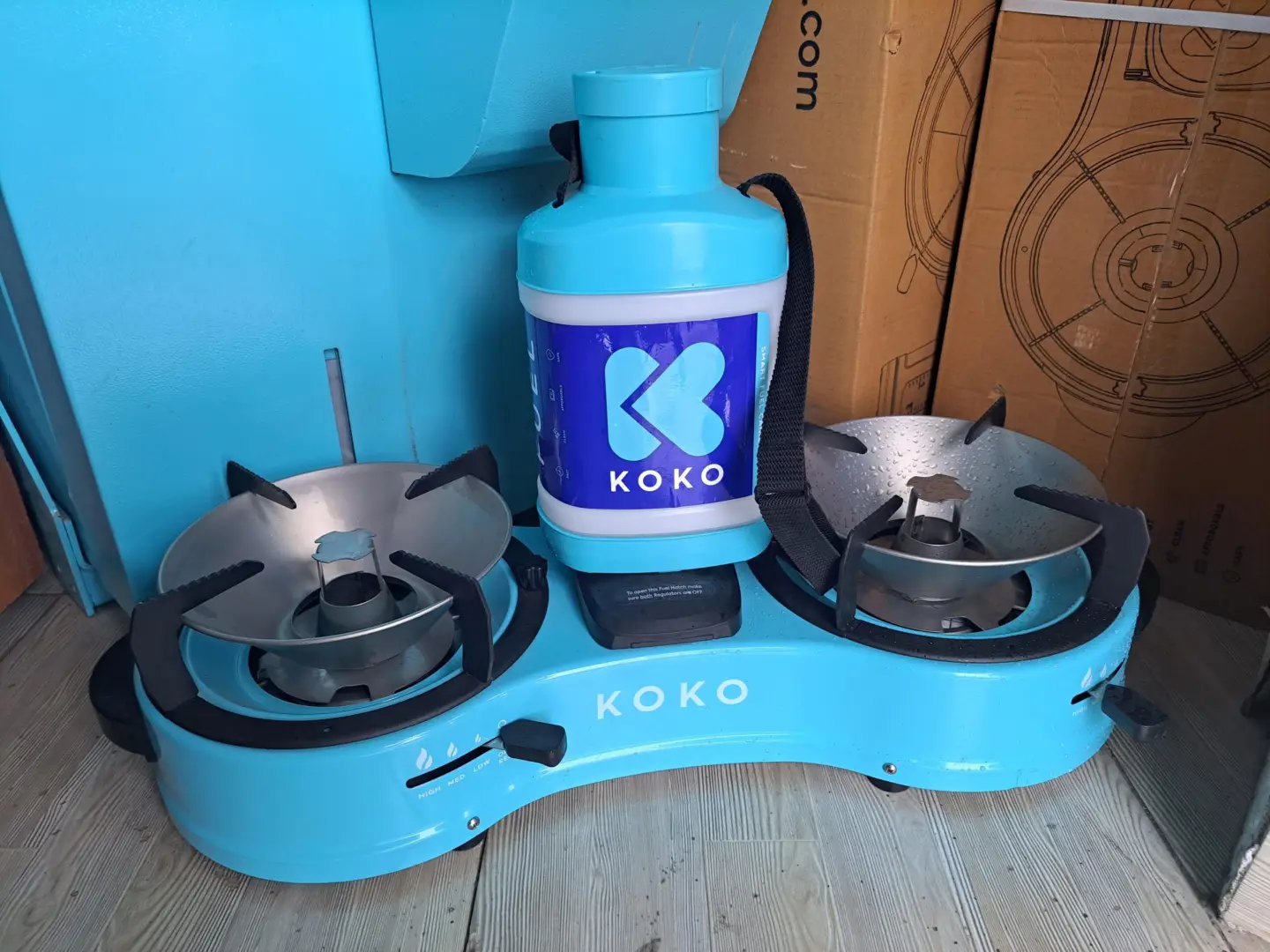
The company’s innovative distribution model featured over 3,000 automated fuel dispensing machines—dubbed “KOKOpoints”—strategically located inside corner shops across urban and peri-urban areas in Kenya. These high-tech, cloud-connected fuel ATMs allowed customers to refill their fuel canisters for as little as KSh 30 (approximately $0.23), making clean cooking accessible to even the poorest household segments.
The company manufactured its cookstoves through SAARUS, a product design and manufacturing company headquartered in India that KOKO acquired in 2018. For bioethanol procurement, KOKO Kenya maintained a supply agreement with Vivo Energy, sourcing fuel made from sugarcane by-products to reduce carbon emissions. This integrated approach—controlling manufacturing, distribution, and fuel supply—reflected the reality that in emerging markets, companies often cannot rely on existing ecosystems of subcontractors and must build comprehensive value chains themselves.
By August 2023, KOKO claimed to have surpassed 1 million households as customers across eight cities in Kenya. The company also expanded into Rwanda in 2022 through a partnership with venture capital firm Dalberg Ventures. At its peak, KOKO directly employed approximately 700 people across research and development, technology, manufacturing, utility operations, and customer service, while supporting the incomes of thousands of additional Kenyan families involved in the bioethanol supply chain through its network of shopkeeper partners.
KOKO’s achievements earned significant recognition. In 2021, the company was awarded the Financial Times / International Finance Corporation’s Transformational Business Award as the world’s leading emerging markets climate technology solution. The African Carbon Markets Initiative selected KOKO as a “Lighthouse” project, recognizing the high integrity nature of its business model and its potential to demonstrate scalable climate solutions for the continent.
One decision can change your entire career. Take that step with our Online courses in ACCA, HESI A2, ATI TEAS 7, HESI EXIT, NCLEX-RN, NCLEX-PN, and Financial Literacy. Join Serrari Ed and start building your brighter future today.
The Human Impact: Employees and Households in Limbo
The abrupt shutdown has created immediate hardship for multiple stakeholder groups. The 700 direct employees who lost their jobs represent families whose livelihoods depended on KOKO’s operations. Beyond direct employees, thousands of agents who operated KOKO’s distribution network—many of them female entrepreneurs who partnered with the company to earn supplementary income—now face the loss of this revenue stream.
For the estimated 1.5 million households that had adopted bioethanol as their primary cooking fuel, the closure forces a difficult transition back to traditional fuels. Many of these households had invested in KOKO cookstoves and canisters, which are now essentially obsolete without access to bioethanol fuel. The sudden unavailability of micro-refills for as low as KSh 100 means families must revert to charcoal, kerosene, or expensive liquefied petroleum gas (LPG)—options that are either more polluting or financially unaffordable for many low-income households.
The environmental and public health implications are equally concerning. Charcoal and wood burning are major contributors to indoor air pollution, which the World Health Organization estimates causes approximately 4 million premature deaths annually, with half the victims being children under five years old dying from pneumonia. KOKO’s bioethanol fuel produced a clean blue flame similar to cooking with gas, dramatically reducing household exposure to harmful particulate matter and other pollutants.
The shift back to charcoal also threatens to reverse hard-won gains in forest conservation. Kenya and East Africa more broadly have struggled with deforestation driven primarily by charcoal production. Each household cooking with charcoal generates over 5 tons of carbon dioxide equivalent emissions per year. By providing an affordable alternative, KOKO had been contributing to reducing this environmental pressure—gains that now risk being undone.
Kenya’s Clean Cooking Ambitions in Jeopardy
The KOKO shutdown represents a significant setback for Kenya’s clean cooking ambitions and broader climate commitments. At the time the MIGA guarantee was issued, KOKO had outlined plans to reach an additional three million customers by the end of 2027. This expansion would have brought KOKO’s total customer base in Kenya close to 4.5 million households—a substantial contribution toward universal access to clean cooking solutions.
The project was explicitly aligned with the World Bank Group’s Climate Change Action Plan 2021-2025 and supported the Kenyan government’s efforts to expand the distribution and use of clean cookstoves. The initiative also contributed to Kenya’s commitments under the Paris Agreement regarding low-carbon development, adaptation, and climate resilience goals.
The irony of the situation has not been lost on climate policy observers. Here was a company that had secured World Bank backing, attracted over $100 million in private investment, achieved operational scale with more than a million customers, and demonstrated a financially sustainable model for clean cooking through carbon finance—yet it collapsed due to the government’s failure to provide a regulatory authorization that would have unlocked the carbon credit revenues essential to the business model.
“KOKO showcases the transformative potential of innovative, private-sector-led solutions to address development challenges like energy access,” Hiroshi Matano, MIGA Executive Vice President, had stated when announcing the guarantee. The company’s collapse raises difficult questions about whether the Kenyan government fully understood the implications of withholding the letter of authorization and whether alternative pathways could have been explored to address whatever concerns motivated the decision.
The Business Model: Innovation Meets Vulnerability
KOKO’s business model represented both innovation and vulnerability. By tying affordability to carbon credit revenues, the company created a financing mechanism that could deliver clean energy access to populations that traditional commercial models struggled to serve. The company had delivered more than $100 million in subsidies to Kenyan households through carbon finance as of August 2023, demonstrating the scale of impact that carbon markets could enable.
However, this model also created acute dependency. Unlike businesses that generate revenues directly from customers at market-clearing prices, KOKO’s entire value proposition rested on the ability to sell products below cost, with the deficit covered by carbon credit sales. When the Kenyan government blocked the authorization needed for those carbon credit sales, there was no alternative revenue source that could bridge the gap.
The company’s expansion plans had been aggressive. From over one million customers in March 2025, KOKO aimed to add at least three million more by December 2027. The MIGA guarantee was intended to support this expansion by de-risking the significant capital investments required to deploy thousands of additional KOKOpoints, manufacture and distribute millions of cookstoves and canisters, and build out the logistics infrastructure to deliver bioethanol fuel across an expanding geographic footprint.
KOKO had also developed partnerships with major players in carbon markets. In 2023, the company signed an Emissions Reductions Purchase Agreement with ITOCHU Corporation, a major Japanese trading house, to support the marketing of KOKO’s carbon credits particularly in Japan and other Asian countries. Mizuho Bank also concluded a memorandum of understanding to support marketing KOKO credits to its client base. These arrangements reflected growing international demand for high-quality carbon credits from projects with clear sustainable development co-benefits.
The company’s credits were certified under Gold Standard—one of the most rigorous certification schemes in the carbon market—and were intended for compliance markets rather than voluntary corporate purchases. This positioning reflected KOKO’s ambition to tap into the more stable and higher-value compliance market segments, where regulatory requirements create sustained demand for credits. However, this strategy also meant navigating more complex regulatory requirements, including the letter of authorization that ultimately became the company’s undoing.
Broader Implications for Carbon Finance and Climate Startups
The KOKO collapse has profound implications for climate finance and the broader ecosystem of startups attempting to leverage carbon markets to deliver clean energy and other climate solutions in developing countries. The case starkly illustrates the risks inherent in business models that depend on government approvals in regulatory environments that may lack consistency or predictability.
For investors, the situation underscores the limitations of political risk insurance. While MIGA’s guarantee may ultimately compensate investors for financial losses, it cannot restore the operational business, preserve the jobs created, or maintain the environmental and public health benefits that KOKO was delivering. The guarantee addresses financial risk but not developmental impact risk—a distinction that matters greatly in the climate and development space.
The situation also highlights tensions in how carbon markets interface with national sovereignty and domestic policy priorities. Under Article 6 of the Paris Agreement, countries maintain discretion over whether and how to authorize carbon credit exports. This discretion serves important purposes, including ensuring that credits genuinely represent emissions reductions beyond what would have occurred otherwise and preventing double-counting when countries use international credits toward their own climate commitments.
However, the discretion also creates uncertainty for businesses. If governments can withdraw or withhold authorizations that companies have been led to expect—particularly after companies have made substantial investments and achieved operational scale—it undermines the bankability of carbon-finance-dependent business models. The chilling effect on future climate investment in Kenya, and potentially across Africa, could be substantial if investors conclude that regulatory risk is unmanageably high.
What Comes Next: Potential Resolutions and Lasting Consequences
As of the announcement, KOKO had not issued a detailed public response explaining the closure or outlining next steps for customers and employees. The company’s brief message to customers promised to “share next steps soon,” but the immediate reality for affected households is a forced transition back to traditional cooking fuels.
For employees, the abrupt nature of the shutdown—being told on Friday not to report to work on Monday—has created immediate financial hardship. Kenya’s labor laws provide for severance and notice pay, but questions remain about KOKO’s financial capacity to meet these obligations and the timeline for any payments.
The potential MIGA claim process could take months or years to resolve. If KOKO pursues arbitration alleging breach of contract, it would need to demonstrate that the Kenyan government’s actions violated legally binding commitments. The outcome could set important precedents for how political risk guarantees apply to carbon market-dependent projects and what obligations host governments have once they’ve provided initial regulatory approvals for such projects.
For Kenya’s climate policy, the KOKO shutdown represents a significant test. The country has positioned itself as a regional leader on climate action and has actively courted climate finance and green investment. Kenya hosted the Africa Climate Summit in 2023, where the African Carbon Markets Initiative was launched with ambitions to unlock billions of dollars in carbon finance for the continent. The initiative identified clean cooking as a priority sector for carbon market development.
The KOKO case will inevitably be scrutinized by other investors and companies considering climate projects in Kenya. It raises questions about regulatory consistency, the reliability of government partnerships, and whether the enabling environment truly supports the climate solutions the government publicly champions. Addressing these concerns credibly will be essential if Kenya hopes to maintain its position as a destination for climate finance and green innovation.
Lessons for the Clean Cooking Sector
The clean cooking sector more broadly must grapple with the lessons from KOKO’s collapse. The company represented one of the most promising models for achieving scale in clean cooking access—combining technology, carbon finance, and private sector efficiency to serve low-income populations. Its failure demonstrates that even well-designed, well-funded, and operationally successful models remain vulnerable to policy and regulatory risks.
Alternative approaches to clean cooking tend to face their own challenges. Pure commercial models struggle with affordability for low-income households. Subsidy-dependent models face fiscal sustainability challenges and political economy risks. Donor-funded programs often struggle to achieve scale and long-term sustainability. KOKO’s carbon-finance model had appeared to offer a path around these constraints, but its dependency on government authorization for carbon credit sales has now been revealed as a critical vulnerability.
Going forward, companies in the space may need to develop more diversified revenue models that don’t depend entirely on carbon finance, even if this means accepting slower growth or serving a narrower customer base. Alternatively, the carbon market architecture itself may need to evolve to reduce the discretionary authority of host governments over project authorizations once projects have achieved operational scale and demonstrated genuine impact.
The human cost of KOKO’s shutdown—in terms of lost livelihoods, environmental degradation, and health impacts—serves as a sobering reminder that in the climate and development space, business model failures translate directly into real-world suffering. The 700 employees without jobs, the 1.5 million households without clean fuel, and the forests that will face renewed pressure from charcoal production represent the tangible consequences of the regulatory decisions and business vulnerabilities that led to this outcome.
For the customers who received that brief “Samahani” message—sorry—the apology rings hollow without a clear path forward for maintaining access to the clean cooking solutions they had come to depend on. As Kenya and the broader clean energy sector reflect on the lessons from KOKO’s collapse, the ultimate question is whether these lessons will lead to more resilient models and more supportive policy environments, or whether they will discourage the innovation and investment that clean cooking solutions so desperately need.
A2, ATI TEAS 7 , HESI EXIT , NCLEX – RN and NCLEX – PN, Financial Literacy!🌟 Dive into a world of opportunities and empower yourself for success. Explore more at Serrari Ed and start your exciting journey today! ✨
Track GDP, Inflation and Central Bank rates for top African markets with Serrari’s comparator tool.
See today’s Treasury bonds and Money market funds movement across financial service providers in Kenya, using Serrari’s comparator tools.
photo source: Google
By: Montel Kamau
Serrari Financial Analyst
2nd February, 2026
Article, Financial and News Disclaimer
The Value of a Financial Advisor
While this article offers valuable insights, it is essential to recognize that personal finance can be highly complex and unique to each individual. A financial advisor provides professional expertise and personalized guidance to help you make well-informed decisions tailored to your specific circumstances and goals.
Beyond offering knowledge, a financial advisor serves as a trusted partner to help you stay disciplined, avoid common pitfalls, and remain focused on your long-term objectives. Their perspective and experience can complement your own efforts, enhancing your financial well-being and ensuring a more confident approach to managing your finances.
Disclaimer: This article is for informational purposes only and does not constitute financial advice. Readers are encouraged to consult a licensed financial advisor to obtain guidance specific to their financial situation.
Article and News Disclaimer
The information provided on www.serrarigroup.com is for general informational purposes only. While we strive to keep the information up to date and accurate, we make no representations or warranties of any kind, express or implied, about the completeness, accuracy, reliability, suitability, or availability with respect to the website or the information, products, services, or related graphics contained on the website for any purpose. Any reliance you place on such information is therefore strictly at your own risk.
www.serrarigroup.com is not responsible for any errors or omissions, or for the results obtained from the use of this information. All information on the website is provided on an as-is basis, with no guarantee of completeness, accuracy, timeliness, or of the results obtained from the use of this information, and without warranty of any kind, express or implied, including but not limited to warranties of performance, merchantability, and fitness for a particular purpose.
In no event will www.serrarigroup.com be liable to you or anyone else for any decision made or action taken in reliance on the information provided on the website or for any consequential, special, or similar damages, even if advised of the possibility of such damages.
The articles, news, and information presented on www.serrarigroup.com reflect the opinions of the respective authors and contributors and do not necessarily represent the views of the website or its management. Any views or opinions expressed are solely those of the individual authors and do not represent the website's views or opinions as a whole.
The content on www.serrarigroup.com may include links to external websites, which are provided for convenience and informational purposes only. We have no control over the nature, content, and availability of those sites. The inclusion of any links does not necessarily imply a recommendation or endorsement of the views expressed within them.
Every effort is made to keep the website up and running smoothly. However, www.serrarigroup.com takes no responsibility for, and will not be liable for, the website being temporarily unavailable due to technical issues beyond our control.
Please note that laws, regulations, and information can change rapidly, and we advise you to conduct further research and seek professional advice when necessary.
By using www.serrarigroup.com, you agree to this disclaimer and its terms. If you do not agree with this disclaimer, please do not use the website.
www.serrarigroup.com, reserves the right to update, modify, or remove any part of this disclaimer without prior notice. It is your responsibility to review this disclaimer periodically for changes.
Serrari Group 2025