










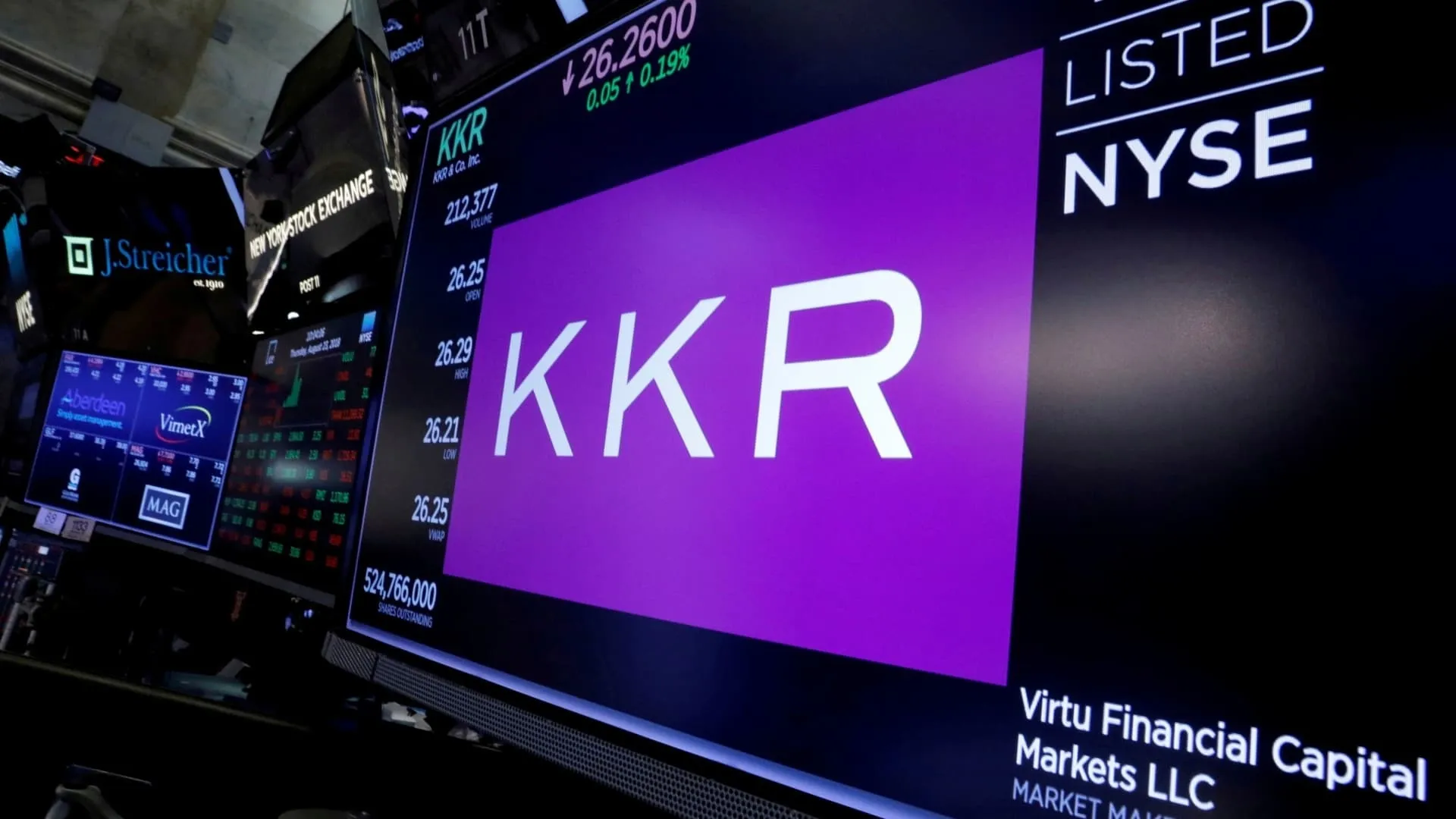
The global sports investment landscape is witnessing another transformative moment as KKR has emerged as the leading candidate to spearhead a €2.75 billion (US$3.26 billion) investment in CVC Capital Partners’ Global Sport Group (GSG), according to multiple industry sources. This development represents one of the most significant private equity moves in the sports sector and underscores the accelerating convergence between institutional capital and global sports properties.
Build the future you deserve. Get started with our top-tier Online courses: ACCA, HESI A2, ATI TEAS 7, HESI EXIT, NCLEX-RN, NCLEX-PN, and Financial Literacy. Let Serrari Ed guide your path to success. Enroll today.
The Deal Structure and Key Players
According to Sky News reporting, KKR is currently in advanced negotiations to acquire a stake in GSG, though the exact ownership percentage has not been disclosed publicly. The transaction structure remains fluid, with multiple financing options still under consideration by the parties involved. Industry sources suggest that other prominent investment firms, including Ares Management, could also participate in the equity investment, potentially creating a consortium of institutional investors backing the sports platform.
Furthermore, CVC is reportedly exploring a complementary debt raise that would provide additional financing for the sports investment vehicle. This dual approach—combining equity investment with debt financing—reflects the sophisticated capital structures increasingly common in large-scale sports transactions. The debt component would enable GSG to maintain operational flexibility while pursuing its aggressive expansion strategy across global markets.
KKR’s Strategic Sports Expansion
KKR’s pursuit of the GSG stake comes at a pivotal moment for the New York-based investment giant. The firm, which currently manages approximately $723 billion in assets as of September 2025, has been systematically building its sports and entertainment portfolio over the past several years. This strategic focus on sports investing reflects broader industry recognition of the asset class’s resilience, recurring revenue streams, and long-term growth potential.
The GSG investment opportunity emerged just weeks after KKR announced plans to acquire Arctos Partners in a transaction valuing the Dallas-based sports investment firm at approximately US$1 billion. The Arctos deal, which could reach $1.5 billion with performance-based incentives, significantly deepens KKR’s exposure to North American professional sports franchises. Arctos holds minority stakes in more than 20 professional teams across all five major U.S. leagues—the NFL, NBA, MLB, NHL, and MLS—making it the only private investment firm approved to own equity across all these competitions.
Under the terms of the Arctos transaction, KKR will fund the acquisition using its balance sheet and integrate Arctos into its asset management platform. Co-founder Ian Charles will remain as head of the business, with the founding team retaining existing carried interest while receiving KKR equity as incentives. However, the deal requires approval from major U.S. professional sports leagues before closing, with regulatory reviews expected to examine potential conflicts of interest.
The firm’s sports investment history includes previous ownership stakes in FanDuel, the American gambling and sports betting company, and the Ultimate Fighting Championship (UFC), both of which generated substantial returns. These earlier investments demonstrated KKR’s ability to identify sports properties with significant growth potential and operational improvement opportunities.
Beyond direct team and league investments, KKR has also made substantial commitments to sports-adjacent businesses. In August 2024, the firm completed its acquisition of Varsity Brands for $4.75 billion. The Dallas-based company operates through two main divisions: BSN Sports, the largest team dealer and online team sports outfitter in the United States, and Varsity Spirit, which organizes cheerleading competitions and training camps. According to KKR’s press release, Varsity Brands serves over 8 million athletes and students annually, distributing customized uniforms and equipment to more than 150,000 customers.
Additionally, in February 2022, KKR invested in PlayOn! Sports, a high school sports media and technology company that operates the NFHS Network in partnership with the National Federation of State High School Associations. This investment provided KKR with exposure to grassroots sports content distribution and the rapidly evolving landscape of youth sports media consumption.
Industry observers note that KKR is now focused on diversifying its assets to attract new individual investors, with sports representing a particularly compelling area for retail wealth expansion. The firm has been developing various fund structures, including interval funds and evergreen vehicles, designed to provide accredited investors with access to sports-related investment opportunities that were previously available only to institutional investors and ultra-high-net-worth individuals.
CVC’s Global Sport Group: A Portfolio Powerhouse
The target of KKR’s investment interest, Global Sport Group, represents one of the most ambitious consolidation efforts in sports private equity history. Launched by CVC in September 2025, GSG was created to consolidate the Luxembourg-based firm’s diverse sports holdings under a unified platform valued at approximately $14 billion. This structure enables CVC to maximize commercial synergies, share operational best practices, and create value through coordinated strategic initiatives across its portfolio properties.
At the helm of GSG is Marc Allera, the former chief executive of EE and BT’s consumer division. Allera brings extensive experience in telecommunications, media rights negotiation, and consumer engagement strategies to the sports platform. His appointment signals CVC’s intention to approach sports properties with the same strategic sophistication typically applied to telecommunications and media businesses, focusing on data analytics, digital transformation, and audience expansion.
Joining Allera in GSG’s leadership structure are several prominent sports and entertainment industry veterans. Michelle Wilson and George Barrios, former Co-Presidents of WWE and founders of their own private equity fund, will handle brand development, fan engagement, and content responsibilities. Former DAZN CEO Simon Denyer will focus on media rights and sports betting integration, while Alkit Patel, previously the chief operating officer of CVC’s rugby holdings, will oversee operations and governance across the portfolio.
GSG’s current portfolio spans eight unique leagues and competitions across multiple sports and geographic markets. In European football, the platform holds significant stakes in Spain’s LaLiga and France’s Ligue de Football Professionnel (LFP), which operates Ligue 1 and Ligue 2. The LaLiga investment, valued at €2 billion in exchange for 8.2% of broadcasting and sponsorship revenue over 50 years, exemplifies CVC’s preference for long-term commercial agreements that provide sustained income streams while allowing leagues to maintain operational independence.
In rugby, GSG controls Premiership Rugby, England’s top-tier competition, holds approximately 28% of the United Rugby Championship, and participates in the Six Nations Rugby Championship. These rugby investments have delivered mixed results, with some properties underperforming relative to initial projections while others have exceeded commercial expectations.
The platform also encompasses WTA Ventures, a joint venture to commercialize women’s professional tennis, and Volleyball World, which aims to globalize volleyball’s commercial operations. These investments reflect CVC’s strategic focus on sports with significant participation bases, international appeal, and untapped commercial potential, particularly in women’s sports where media rights values have historically lagged behind comparable men’s competitions.
The Equine Network Acquisition
GSG’s investment strategy received validation this week when the platform announced its acquisition of a controlling stake in Equine Network from Growth Catalyst Partners. While financial terms were not officially disclosed, industry sources familiar with the transaction have valued the deal at approximately US$300 million. The acquisition represents GSG’s first new league investment since the platform’s establishment and is expected to close in the second quarter of 2026 following customary regulatory approvals.
Founded and led by Tom Winsor, Equine Network has established itself as the largest for-profit equestrian sports platform in the United States, operating within an estimated $2.5 billion domestic market. The company has built its position through systematic consolidation of amateur and semi-professional competitions across both Western and English riding disciplines. Today, the business comprises approximately 40 owned and operated competitions plus more than 800 sanctioned third-party events, generating revenues primarily from event operations, league-level commercial partnerships, and member services.
Following the transaction’s completion, Michelle Wilson and George Barrios are expected to become Co-Chairs of Equine Network. Working alongside Winsor and the existing management team, they will implement GSG’s value creation framework, which emphasizes technology infrastructure development, enhanced fan engagement platforms, and expanded commercial opportunities in sponsorship and data services.
The Equine Network transaction demonstrates several key elements of GSG’s investment thesis. First, it provides meaningful exposure to the attractive U.S. market, complementing the platform’s existing European-centric portfolio. Second, it introduces a new sport to the GSG ecosystem, further diversifying revenue sources and reducing concentration risk. Third, it targets a participation-driven sports market where passionate audiences represent significant untapped commercial potential despite relatively modest current monetization levels.
Ares Management’s Potential Involvement
The possible participation of Ares Management in the GSG investment would bring another major sports-focused investor into the consortium. The Los Angeles-based alternative asset manager has been aggressively building its sports, media, and entertainment practice over the past five years, establishing dedicated investment teams and fund structures specifically designed to capitalize on opportunities in this sector.
Ares formalized its sports investing strategy during the COVID-19 pandemic in 2020, responding to league ownership groups that were asset-rich but cash-poor and seeking flexible institutional capital. The firm closed its first dedicated sports fund in 2022 with $3.7 billion in commitments from institutional investors. In early 2026, Ares held a first close for its second institutional sports fund at $1 billion, targeting $2 billion in total commitments.
The firm’s sports investments span multiple categories and structures. In professional sports franchises, Ares has acquired minority stakes in the Miami Dolphins of the National Football League, Inter Miami CF of Major League Soccer, and Chelsea Football Club of the English Premier League. Additionally, Ares holds positions in the Baltimore Orioles of Major League Baseball and has investments in European football properties including stakes in Liverpool FC and Paris Saint-Germain.
Beyond direct team ownership, Ares has developed expertise in providing debt and hybrid capital solutions to sports properties. The firm’s sports investment approach encompasses senior debt, convertible securities, and preferred equity structures, offering sports organizations various financing options tailored to their specific capital needs and growth objectives. This multi-product capability positions Ares to participate in complex sports transactions across the capital structure.
CEO Michael Arougheti has stated that Ares views the sports, media, and entertainment ecosystem as representing a potential $2.5 trillion investment opportunity across primary investments, adjacent strategies, and related infrastructure. The firm believes private equity capital can enhance team profitability, fund stadium and facility improvements, and enable ownership groups to invest more aggressively in player acquisition and retention.
In July 2025, Ares began marketing a sports and media fund specifically designed for individual investors and financial advisors, featuring quarterly redemption windows and lower minimum investment thresholds compared to traditional institutional vehicles. This semi-liquid structure reflects the broader industry trend of democratizing access to sports investment opportunities, allowing accredited investors to participate in strategies previously reserved for pension funds, endowments, and sovereign wealth funds.
One decision can change your entire career. Take that step with our Online courses in ACCA, HESI A2, ATI TEAS 7, HESI EXIT, NCLEX-RN, NCLEX-PN, and Financial Literacy. Join Serrari Ed and start building your brighter future today.
The Broader Private Equity Sports Investment Trend
The reported KKR-GSG transaction represents the latest development in private equity’s sustained expansion into professional sports and related assets. Over the past five years, the sector has witnessed unprecedented capital deployment as institutional investors have recognized sports properties’ defensive characteristics, predictable cash flows, and structural growth drivers.
Multiple factors are propelling institutional interest in sports investments. Rising franchise valuations across major leagues have created substantial wealth effects for early investors while attracting new capital seeking similar appreciation. Media rights values continue climbing as live sports remain among the few content categories that consistently drive appointment viewing and can command premium advertising rates. League expansion into international markets, particularly in Asia and the Middle East, presents significant revenue growth opportunities beyond saturated domestic markets.
The gradual relaxation of league ownership restrictions has also facilitated institutional participation. Historically, most major sports leagues severely limited or completely prohibited private equity ownership, preferring traditional individual or family ownership structures. However, financial pressures, generational wealth transfers, and recognition of private equity’s operational expertise have prompted most North American leagues to modify their rules.
The National Football League became the last major U.S. league to approve private equity investment in 2024, allowing pre-vetted firms to purchase up to 10% stakes in team franchises. The NBA, MLB, NHL, and MLS had previously established similar frameworks, each with specific restrictions on stake sizes, number of teams per fund, and governance rights. European football leagues and governing bodies have generally maintained more restrictive positions, though this too is gradually evolving.
Private equity firms have developed diverse investment approaches across the sports ecosystem. Some, like Arctos, specialize in minority stakes in team franchises, providing liquidity to existing owners while maintaining operational continuity. Others, including RedBird Capital Partners and Sixth Street Partners, have pursued controlling investments in clubs or have built multi-club ownership groups spanning different leagues and countries.
League-level investments, such as those pursued by CVC through GSG, represent another distinct strategy. These transactions typically involve acquiring minority stakes in commercial entities that control media rights, sponsorship sales, or licensing operations for entire competitions. This approach provides exposure to league-level economics while avoiding team-specific risks like player performance, competitive results, or local market dynamics.
Adjacent sports businesses, from media companies and betting platforms to equipment manufacturers and facility operators, constitute yet another category attracting institutional capital. These investments offer exposure to sports industry growth themes without direct participation in team or league operations, potentially providing more predictable returns and simpler governance structures.
Financial Projections and Strategic Objectives
GSG has established ambitious growth targets that underpin its investment thesis and justify the substantial valuations being discussed in the KKR negotiations. The platform forecasts revenue growth of approximately 10% per annum over the next five years, driven by a combination of organic growth within existing portfolio properties and strategic acquisitions of new leagues and competitions.
According to Financial Times reporting, GSG’s estimated annual earnings currently hover around €300 million, with the overall platform valued at approximately €9 billion. These valuations place GSG among the most aggressively priced sports assets globally, reflecting both the premium that institutional investors are willing to pay for diversified sports exposure and CVC’s successful track record of value creation in previous sports investments.
The company’s value creation strategy emphasizes several key initiatives. First, maximizing commercial potential through enhanced sponsorship arrangements, with GSG’s scale and cross-portfolio relationships enabling sponsors to reach multiple audiences through integrated packages. Second, developing sophisticated data and analytics capabilities that can drive fan engagement, personalize content delivery, and create new revenue streams through data licensing.
Third, renegotiating and optimizing media rights agreements by leveraging GSG’s aggregated bargaining power and industry expertise. Fourth, exploring new competitive formats and tournament structures designed to attract broader audiences, particularly younger demographics who consume sports content differently than traditional television viewers. Fifth, expanding international distribution of portfolio properties, particularly in high-growth markets across Asia, the Middle East, and North America.
Marc Allera has indicated that GSG is targeting “other premium leagues watched by hundreds of millions of people” in markets where passionate fanbases exist but commercial monetization remains substantially below potential. The platform seeks leagues with strong domestic audiences and management teams that recognize untapped opportunities for growth and development.
Financing Strategy and Capital Structure
The reported financing approach for the KKR-GSG transaction reflects the sophisticated capital structures that have become standard in large-scale sports deals. By combining equity investment from KKR and potentially other private equity firms with a substantial debt component, CVC aims to optimize its cost of capital while maintaining sufficient operational flexibility for future acquisitions and organic growth initiatives.
In January 2026, reports emerged that CVC had launched a €2.7 billion debt raising process to finance GSG’s expansion plans. This debt would be raised against the cash flows of the existing portfolio, effectively allowing CVC to monetize a portion of its sports assets’ value while retaining ownership and control. The debt proceeds would provide GSG with an “acquisition war chest” to pursue additional league investments and strategic opportunities as they emerge.
The dual fundraising effort—equity from strategic investors like KKR combined with debt from credit markets—enables CVC to achieve multiple objectives simultaneously. The equity investment brings sophisticated institutional partners who can contribute operational expertise, strategic relationships, and credibility with sports properties considering partnering with GSG. The debt financing provides immediate capital for acquisitions without diluting CVC’s ownership stake as extensively as a pure equity raise would require.
This structure also positions GSG for potential future liquidity events. Industry sources have speculated that CVC may eventually pursue either a sale of a larger minority stake to strategic investors or potentially an initial public offering on a major international stock exchange. The equity investment from KKR and others would help establish GSG as an institutionally-backed platform with sophisticated governance structures and professional management, enhancing its attractiveness to public market investors.
Regulatory Considerations and League Approvals
While the KKR investment in GSG faces fewer regulatory hurdles than the Arctos acquisition, given that GSG primarily holds league-level commercial stakes rather than direct team ownership, the transaction will still require careful navigation of various sports governance frameworks. Each of GSG’s portfolio properties operates under different league rules, national regulations, and governance structures that may impose restrictions on ownership changes, capital structure modifications, or strategic initiatives.
In European football, both LaLiga and the Ligue de Football Professionnel operate under UEFA regulations and national football association rules that govern commercial arrangements and ownership structures. Any significant changes to GSG’s ownership or capital structure could trigger review processes by these governing bodies, particularly if they impact competitive balance considerations or raise concerns about potential conflicts of interest.
Rugby competitions, including the Six Nations, Premiership Rugby, and United Rugby Championship, each have distinct governance frameworks established by their respective organizing bodies and national unions. These structures vary considerably in their approach to private investment and commercial partnerships, with some being more accommodating to institutional capital than others.
The WTA operates under its own constitution and bylaws, with commercial partnerships requiring approval from the organization’s board of directors. Similarly, Volleyball World’s governance structure includes various stakeholder groups whose consent may be necessary for significant ownership or structural changes.
For the Equine Network acquisition specifically, regulatory approvals are expected to be relatively straightforward, as equestrian sports in the United States operate with minimal centralized governance compared to major professional leagues. However, the transaction still requires customary regulatory clearances, including potential antitrust reviews and compliance with any state-level regulations governing sports competitions and betting.
Market Implications and Competitive Dynamics
The KKR-GSG transaction, if completed as reported, would represent a significant consolidation of sports investment capital and expertise under a unified platform. This development could accelerate several existing trends within the sports private equity sector while potentially creating new competitive dynamics among institutional investors pursuing sports opportunities.
First, the transaction would likely increase competitive pressure on sports properties to professionalize their commercial operations and maximize revenue generation. As institutional capital becomes more concentrated in platforms like GSG, leagues and competitions that remain independently operated may find themselves at a disadvantage in negotiating media rights deals, attracting sponsorship partners, and implementing technology initiatives.
Second, the creation of larger, more sophisticated sports investment platforms may raise barriers to entry for smaller private equity firms or family offices seeking to invest in sports properties. The operational infrastructure, industry relationships, and capital resources required to compete effectively with entities like a KKR-backed GSG could exceed the capabilities of many would-be investors, potentially leading to further consolidation within the sector.
Third, the transaction could influence valuation expectations for sports properties globally. If KKR and other institutional investors are willing to pay premium valuations for exposure to diversified sports portfolios, this may establish new pricing benchmarks that affect negotiations for individual league stakes, team franchises, and related assets.
Fourth, the involvement of multiple major private equity firms in a single sports platform could create interesting dynamics around governance, strategic decision-making, and exit planning. Managing the potentially divergent objectives and time horizons of different institutional investors represents a complex challenge that could influence how such platforms operate and evolve over time.
Conclusion
KKR’s emergence as the frontrunner to lead a €2.75 billion investment in CVC’s Global Sport Group marks a watershed moment in the institutionalization of sports as an asset class. The transaction brings together two of private equity’s most sophisticated investors in a platform that already spans eight major sports properties across multiple continents and will continue expanding through strategic acquisitions like the recently announced Equine Network deal.
For KKR, the GSG investment complements its acquisition of Arctos Partners and its existing sports-adjacent holdings in Varsity Brands and PlayOn! Sports, creating a comprehensive sports investment portfolio that spans team ownership, league-level commercial stakes, and supporting businesses. This diversified approach positions KKR to benefit from multiple facets of the sports industry’s continued growth while managing risks through strategic allocation across different property types and geographies.
For CVC and Global Sport Group, bringing in KKR and potentially other institutional investors provides both capital for continued expansion and validation of the platform’s strategic approach to sports investing. The partnership also brings additional operational expertise, industry relationships, and credibility that could prove valuable as GSG pursues new league partnerships and commercial initiatives.
More broadly, the transaction underscores the sports industry’s transformation from a primarily passion-driven, locally-oriented business to a globally integrated, professionally managed asset class attracting sophisticated institutional capital. As private equity continues expanding its presence across professional sports, the models pioneered by platforms like GSG—emphasizing operational improvements, commercial optimization, and portfolio diversification—will likely influence how sports properties are managed and valued for years to come.
The sports investment landscape remains dynamic and competitive, with multiple well-capitalized firms pursuing similar strategies across different sports and geographies. However, the reported KKR-GSG transaction represents one of the most significant developments in recent years, potentially establishing new benchmarks for scale, sophistication, and strategic ambition in sports private equity investing.
Original Variation
Ready to take your career to the next level? Join our Online courses: ACCA, HESI A2, ATI TEAS 7 , HESI EXIT , NCLEX – RN and NCLEX – PN, Financial Literacy!🌟 Dive into a world of opportunities and empower yourself for success. Explore more at Serrari Ed and start your exciting journey today! ✨
Track GDP, Inflation and Central Bank rates for top African markets with Serrari’s comparator tool.
See today’s Treasury bonds and Money market funds movement across financial service providers in Kenya, using Serrari’s comparator tools.
photo source: Google
By: Montel Kamau
Serrari Financial Analyst
30th January, 2026
Article, Financial and News Disclaimer
The Value of a Financial Advisor
While this article offers valuable insights, it is essential to recognize that personal finance can be highly complex and unique to each individual. A financial advisor provides professional expertise and personalized guidance to help you make well-informed decisions tailored to your specific circumstances and goals.
Beyond offering knowledge, a financial advisor serves as a trusted partner to help you stay disciplined, avoid common pitfalls, and remain focused on your long-term objectives. Their perspective and experience can complement your own efforts, enhancing your financial well-being and ensuring a more confident approach to managing your finances.
Disclaimer: This article is for informational purposes only and does not constitute financial advice. Readers are encouraged to consult a licensed financial advisor to obtain guidance specific to their financial situation.
Article and News Disclaimer
The information provided on www.serrarigroup.com is for general informational purposes only. While we strive to keep the information up to date and accurate, we make no representations or warranties of any kind, express or implied, about the completeness, accuracy, reliability, suitability, or availability with respect to the website or the information, products, services, or related graphics contained on the website for any purpose. Any reliance you place on such information is therefore strictly at your own risk.
www.serrarigroup.com is not responsible for any errors or omissions, or for the results obtained from the use of this information. All information on the website is provided on an as-is basis, with no guarantee of completeness, accuracy, timeliness, or of the results obtained from the use of this information, and without warranty of any kind, express or implied, including but not limited to warranties of performance, merchantability, and fitness for a particular purpose.
In no event will www.serrarigroup.com be liable to you or anyone else for any decision made or action taken in reliance on the information provided on the website or for any consequential, special, or similar damages, even if advised of the possibility of such damages.
The articles, news, and information presented on www.serrarigroup.com reflect the opinions of the respective authors and contributors and do not necessarily represent the views of the website or its management. Any views or opinions expressed are solely those of the individual authors and do not represent the website's views or opinions as a whole.
The content on www.serrarigroup.com may include links to external websites, which are provided for convenience and informational purposes only. We have no control over the nature, content, and availability of those sites. The inclusion of any links does not necessarily imply a recommendation or endorsement of the views expressed within them.
Every effort is made to keep the website up and running smoothly. However, www.serrarigroup.com takes no responsibility for, and will not be liable for, the website being temporarily unavailable due to technical issues beyond our control.
Please note that laws, regulations, and information can change rapidly, and we advise you to conduct further research and seek professional advice when necessary.
By using www.serrarigroup.com, you agree to this disclaimer and its terms. If you do not agree with this disclaimer, please do not use the website.
www.serrarigroup.com, reserves the right to update, modify, or remove any part of this disclaimer without prior notice. It is your responsibility to review this disclaimer periodically for changes.
Serrari Group 2025