










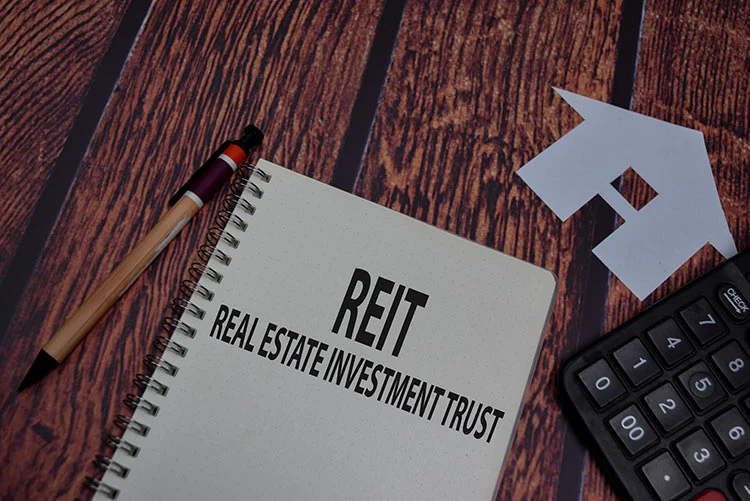
Kenya’s Real Estate Investment Trusts market has reached a valuation that would have seemed improbable just five years ago. Data from the Real Estate Investment Trust Association of Kenya shows total market capitalisation has nearly tripled to Sh24.6 billion from Sh9.8 billion in 2021, reflecting growing investor appetite for a regulated, liquid way to access real estate returns without the capital demands and management burdens of physical property ownership.
The acceleration is not simply a matter of existing instruments appreciating in value. Kenya’s REIT market is being reshaped by a succession of new listings that are broadening the asset class beyond its original base of office and retail properties into industrial logistics, student housing and green-certified commercial towers. The sharpest single-year increase in market capitalisation came between 2020 and 2021, when the figure jumped by Sh8.8 billion, largely driven by the launch of the Acorn Student Accommodation REITs. Market turnover for listed REITs dipped slightly to Sh1.5 billion in 2025, down from a five-year peak of Sh1.7 billion in 2024, but the direction of growth in terms of product diversity and overall valuation has been firmly upward.
The currently listed REITs in the Kenyan market include the Acorn D-REIT, Acorn I-REIT, ILAM Fahari I-REIT and LapTrust Imara I-REIT. The most recent addition — and arguably the most structurally significant — is the Africa Logistics Properties Industrial REIT, which made its debut on the Nairobi Securities Exchange on 11 March 2026. The Sh5 billion TRIFIC Income REIT is also in the pipeline for listing in the first half of this year, subject to regulatory approval, setting the industry up for further expansion.
Markets move fast; don’t get left behind. We’ve paired the Serrari Group Market Index with a curated Marketplace and a comprehensive Financial Literacy Course to ensure you have the data—and the skills—to act on it.
A Historic Industrial Listing
The ALP REIT listing marked a milestone for Kenya’s capital markets on multiple fronts. It is the first industrial-focused REIT in East Africa, and the first US dollar-denominated security ever to be listed and traded on the Nairobi bourse. The offering raised approximately $29.55 million, bringing the total listing value to $39.95 million after a property exchange of 15 million units and a restricted offer of 30 million units. The restricted offer achieved a subscription rate of 98.5 per cent, and with an additional $5 million commitment from InfraCo Africa Investment Limited, the overall subscription rate was pushed to 115.17 per cent.
The United Kingdom government was the strategic cornerstone investor, committing a total of $24 million through two vehicles: the Private Infrastructure Development Group (PIDG), which invested $15 million via its project development arm InfraCo, and the MOBILIST programme, which contributed $9 million. Both are backed by the UK’s Foreign, Commonwealth and Development Office.
Africa Logistics Properties Holdings Limited (ALPH), the developer behind the REIT, was founded in 2016 and has spent a decade developing Grade A logistics infrastructure in a market historically dominated by informal low-clearance “go-down” warehouses. Its portfolio currently includes two flagship green-certified industrial parks: ALP North at Tatu City, spanning 50,000 square metres, and ALP West at Tilisi, covering 20,000 square metres, both built to IFC EDGE Advanced green building standards. A third facility, ALP West Kivu, comprising 10,500 square metres, is under construction and expected to complete in Q3 2026.
The ALP REIT is structured as an Income REIT, legally mandating the distribution of at least 80 per cent of its distributable income to unit holders. NSE Chief Executive Officer Frank Mwiti called the listing a gateway for investors into Africa’s industrial logistics sector, combining hard currency stability with regional infrastructure growth potential.
The dollar denomination is particularly significant for domestic pension funds, which have historically been limited to shilling-denominated assets or illiquid real property. The listing was also admitted to the NSE’s Sustainable Finance Centre of Excellence, a programme supported by FSD Kenya, reinforcing its sustainability credentials.
The TRIFIC Green I-REIT in the Pipeline
The next major addition to Kenya’s REIT landscape is expected to be the TRIFIC Income REIT, a Sh5 billion ($37 million) green, USD-denominated instrument backed by rental income from the fully occupied North Tower within the Two Rivers International Finance and Innovation Centre Special Economic Zone.
TRIFIC, owned by Centum Investment Company, occupies 64 acres within the 106-acre Two Rivers Development along Nairobi’s Limuru Road and has operated under a Special Economic Zone licence since June 2023. The North Tower offers more than 16,000 square metres of lettable space and is already approximately 90 per cent leased to multinational service-exporting firms. Planning for a second tower is underway in response to growing demand.
TRIFIC’s CEO, Brenda Mbathi, described the I-REIT as a low-risk, income-generating and liquid asset designed to offer investors stable dollar yields with measurable environmental impact. She noted that the instrument’s long-term, dollar-based leases with guaranteed annual escalations create a reliable and growing income stream for investors. Centum has indicated the REIT is expected to deliver a dollar return of approximately 8 per cent.
If successfully listed, TRIFIC would be Kenya’s first USD-denominated green income-distributing REIT, adding yet another dimension to a market that is rapidly diversifying beyond its initial focus on conventional office and retail property.
The Acorn Student Housing Engine
Much of the growth in Kenya’s REIT market over the past five years has been driven by the Acorn Student Accommodation REITs, which have carved out a purpose-built student accommodation niche that has proven commercially resilient despite macroeconomic volatility.
In the first half of 2025, Acorn Investment Management Limited reported a combined profit of Sh457 million for its two REITs, a 32 per cent increase from Sh345 million a year earlier. The ASA I-REIT, which focuses on income-generating student housing, posted net income of Sh251 million, up from Sh164 million in the same period of 2024. The ASA D-REIT, which finances new student housing developments, reported net income of Sh205 million. Total assets under management climbed to Sh26.8 billion from Sh22.3 billion in June 2024.
Acorn’s student housing portfolio has expanded to approximately 20,000 beds across Kenya under its Qwetu and Qejani brands. The I-REIT has established partnerships with 99 institutions of higher learning, up from 92 at the beginning of 2025, and has maintained occupancy rates above 90 per cent at its flagship properties. Since its inception in 2021, the ASA I-REIT has delivered nine consecutive half-year distributions to its approximately 7,300 unit holders.
In a move to improve its financial efficiency, the I-REIT cut its total debt from Sh2.5 billion to Sh1.9 billion in July 2025 and reduced the weighted average interest rate from 17 per cent at the end of 2024 to 11.1 per cent. These savings are expected to improve full-year performance and expand distributable income.
Looking ahead, Acorn is expanding into Tier 2 university towns including Eldoret and Kakamega, deepening its national footprint. In January 2026, the company also secured CMA approval for a Sh2.2 billion Build-to-Rent D-REIT targeting affordable urban rental accommodation for young professionals, further broadening its product range beyond student housing.
Context is everything. While you follow today’s updates, use the Serrari Market Index and Marketplace to spot emerging shifts. Need to sharpen your edge? Our Financial Literacy Course turns these insights into a professional-grade strategy.
Outperforming the Broader Market
REITs Association of Kenya data shows that the Kenya REITs Price Only Index and the Kenya REITs Total Index have outperformed the NSE All-Share Index in three of the past five years. This track record of relative outperformance is helping to shift perceptions among both retail and institutional investors who have traditionally favoured direct property ownership or government securities.
Crispus Kamau, Executive Director at Sterling Investment Bank, noted that the continued expansion of REITs into specialised assets — from industrial logistics to affordable housing and student accommodation — means investors are likely to access consistently higher returns going forward. He pointed to ongoing stakeholder engagement with regulators on matters of tax harmonisation and structural efficiency as a potential catalyst for further policy reforms.
Kenya’s REITs currently enjoy a range of tax incentives, including exemptions from income tax on distributions, which are structured to make the instruments competitive with fixed-income alternatives. Under Capital Markets Authority rules, Income REITs must distribute at least 80 per cent of net profits as dividends, ensuring that a high proportion of rental income flows directly to investors.
A Capital Markets Revival
The growth of the REIT sector sits within a broader revitalisation of Kenya’s capital markets. As the Business Daily noted in a recent analysis, Kenya’s capital markets have started 2026 with a bang, with the Kenya Pipeline Company IPO ending a long listing drought on the NSE, Family Bank advancing toward its own listing, and corporate bond issuances from Safaricom and East African Breweries signalling renewed appetite for market-based financing.
The Central Bank of Kenya’s easing cycle, which has depressed prevailing interest rates, has created a favourable environment for yield-seeking investors to consider alternatives to government debt. This monetary backdrop — combined with rising awareness of REIT structures, improvements in financial technology that allow retail investors to participate with as little as Sh500 through platforms like Acorn’s Vuka, and a pipeline of new listings — is creating conditions for what market participants describe as a structural expansion of the asset class.
The REITs Association of Kenya has been lobbying regulators for greater predictability in dividend structuring and distribution, arguing that with support from the National Treasury, Kenya Revenue Authority and the CMA, the REIT market is ready to move from its early-stage phase into a mature, diversified product category.
Challenges and the Road Ahead
Despite the headline growth, Kenya’s REIT market still faces structural challenges. Trading volumes on the secondary market remain thin compared with equities, a problem that creates a feedback loop: low liquidity discourages risk-averse retail investors, which in turn suppresses volumes further. The ILAM Fahari I-REIT, Kenya’s first listed REIT when it debuted in November 2015, has seen its unit price decline from Sh20 at IPO to approximately Sh6 — a 70 per cent drop that has coloured public perception of REITs, even as newer instruments have performed more favourably.
By comparison, South Africa’s JSE REIT sector has a far larger market capitalisation supported by decades of tax incentives and a deeper culture of institutional property investment. Kenya’s path to similar maturity requires both continued product innovation and regulatory refinement.
The diversification underway — from student housing to industrial warehousing to green commercial property in special economic zones — is widening the appeal of REITs to different investor segments. Dollar-denominated instruments like the ALP REIT and the upcoming TRIFIC I-REIT address a specific demand among pension funds and institutional investors for hard currency exposure and a natural hedge against shilling depreciation.
Brenda Mbathi of TRIFIC captured the broader sentiment when she observed that Kenyans are increasingly realising they can invest in real estate and enjoy predictable incomes without the complications of constructing their own buildings. Whether the market can sustain its trajectory will depend on the quality of the underlying assets, the discipline of fund managers in maintaining occupancy and distribution rates, and the willingness of regulators to continue creating a favourable policy environment for an asset class that, at Sh24.6 billion and counting, is still in its early chapters.
Don’t just read the news—navigate it. Track trends with the Serrari Group Market Index, discover your next move in the Serrari Marketplace, and master the “how” with our Financial Literacy Course.
Photo Source: Google
By: Montel Kamau
Serrari Financial Analyst
17th March, 2026
Article, Financial and News Disclaimer
The Value of a Financial Advisor
While this article offers valuable insights, it is essential to recognize that personal finance can be highly complex and unique to each individual. A financial advisor provides professional expertise and personalized guidance to help you make well-informed decisions tailored to your specific circumstances and goals.
Beyond offering knowledge, a financial advisor serves as a trusted partner to help you stay disciplined, avoid common pitfalls, and remain focused on your long-term objectives. Their perspective and experience can complement your own efforts, enhancing your financial well-being and ensuring a more confident approach to managing your finances.
Disclaimer: This article is for informational purposes only and does not constitute financial advice. Readers are encouraged to consult a licensed financial advisor to obtain guidance specific to their financial situation.
Article and News Disclaimer
The information provided on www.serrarigroup.com is for general informational purposes only. While we strive to keep the information up to date and accurate, we make no representations or warranties of any kind, express or implied, about the completeness, accuracy, reliability, suitability, or availability with respect to the website or the information, products, services, or related graphics contained on the website for any purpose. Any reliance you place on such information is therefore strictly at your own risk.
www.serrarigroup.com is not responsible for any errors or omissions, or for the results obtained from the use of this information. All information on the website is provided on an as-is basis, with no guarantee of completeness, accuracy, timeliness, or of the results obtained from the use of this information, and without warranty of any kind, express or implied, including but not limited to warranties of performance, merchantability, and fitness for a particular purpose.
In no event will www.serrarigroup.com be liable to you or anyone else for any decision made or action taken in reliance on the information provided on the website or for any consequential, special, or similar damages, even if advised of the possibility of such damages.
The articles, news, and information presented on www.serrarigroup.com reflect the opinions of the respective authors and contributors and do not necessarily represent the views of the website or its management. Any views or opinions expressed are solely those of the individual authors and do not represent the website's views or opinions as a whole.
The content on www.serrarigroup.com may include links to external websites, which are provided for convenience and informational purposes only. We have no control over the nature, content, and availability of those sites. The inclusion of any links does not necessarily imply a recommendation or endorsement of the views expressed within them.
Every effort is made to keep the website up and running smoothly. However, www.serrarigroup.com takes no responsibility for, and will not be liable for, the website being temporarily unavailable due to technical issues beyond our control.
Please note that laws, regulations, and information can change rapidly, and we advise you to conduct further research and seek professional advice when necessary.
By using www.serrarigroup.com, you agree to this disclaimer and its terms. If you do not agree with this disclaimer, please do not use the website.
www.serrarigroup.com, reserves the right to update, modify, or remove any part of this disclaimer without prior notice. It is your responsibility to review this disclaimer periodically for changes.
Serrari Group 2025