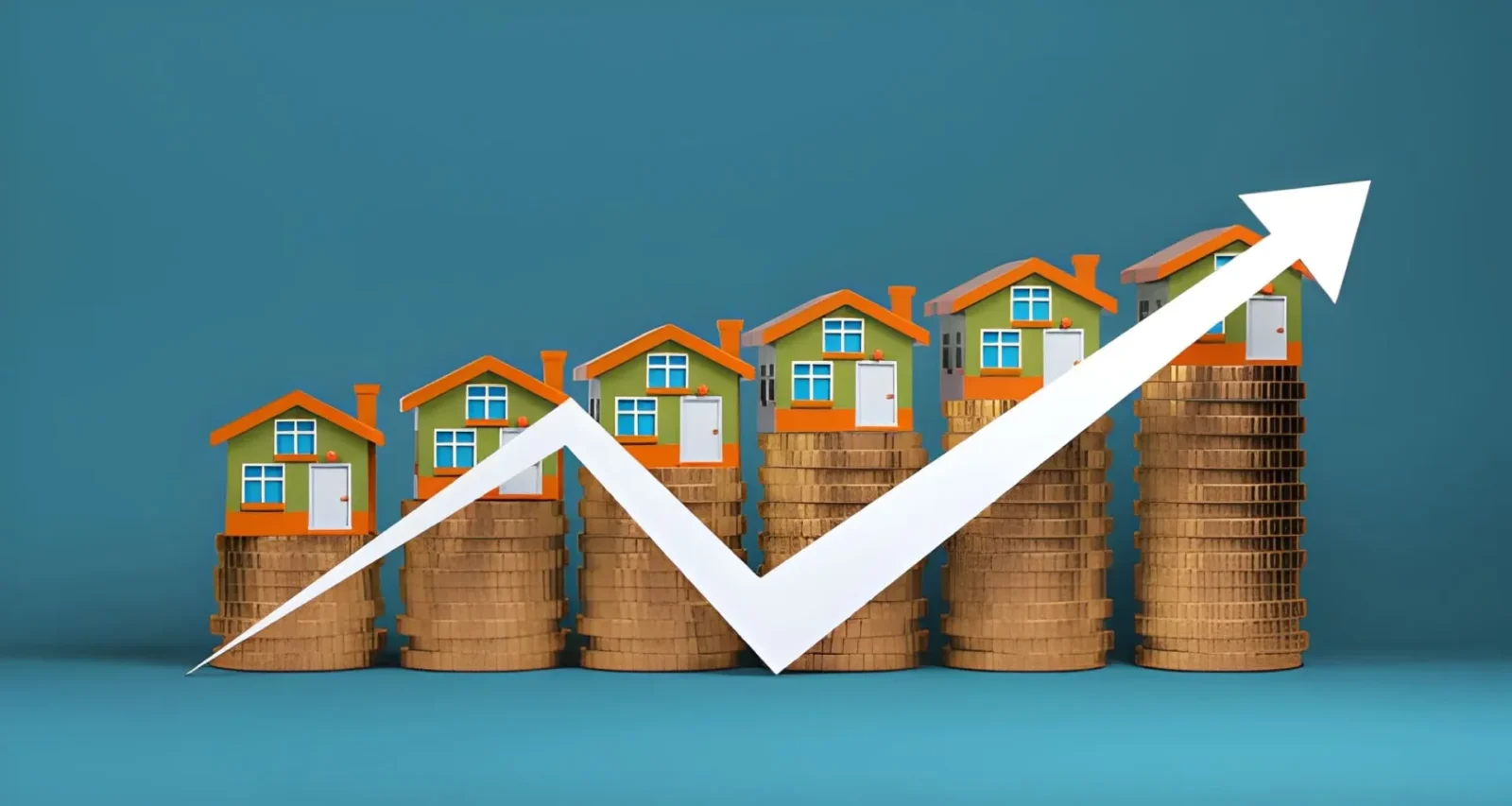
Kenya’s housing market is entering a new phase—one defined less by speculation and land banking, and more by a decisive shift toward completed, ready-to-live homes. New market data shows that house prices in Kenya are rising at their fastest pace since 2015, underscoring a widening gap between housing demand and supply, particularly in urban centres and fast-growing satellite towns around Nairobi.
At the same time, rental markets are softening, revealing a market increasingly shaped by owner-occupiers rather than yield-driven investors. The divergence between rising property prices and falling rents offers rare insight into how Kenyan housing preferences are evolving—and why developers who fail to adapt risk being left behind.
Build the future you deserve. Get started with our top-tier Online courses: ACCA, HESI A2, ATI TEAS 7, HESI EXIT, NCLEX-RN, NCLEX-PN, and Financial Literacy. Let Serrari Ed guide your path to success. Enroll today.
House Prices Accelerate to a Decade High
According to recent data reported by Business Daily, property prices rose by 7.7% in 2025, up from 5.2% in 2024, marking the strongest annual growth recorded since 2015.
The rebound represents more than just cyclical recovery. It reflects structural shifts in buyer behaviour, changing lifestyles, and the growing scarcity of serviced land in desirable locations. Unlike earlier cycles driven by speculative demand, the current upswing is being led by buyers seeking long-term homes rather than quick capital gains.
This shift is reshaping pricing dynamics across housing types, locations, and investment strategies.
Detached Houses Lead the Market
Data from the HassConsult Q4 2025 Property Index reveals that detached houses are at the forefront of the price surge.
- Detached house prices rose 9.5%
- Semi-detached homes gained 5.2%
- Apartments increased by just 2.5%
This performance gap reflects a clear buyer preference for space, privacy, and lower-density living—priorities that have become more pronounced since the pandemic era and amid shifting work patterns.
For many middle- and upper-income Kenyans, detached homes are no longer viewed as luxury assets, but as lifestyle investments offering long-term security, autonomy, and comfort.
Buying Homes, Not Land: A Structural Shift
One of the most notable changes in Kenya’s housing market is the growing preference for completed housing units over vacant land.
Historically, many Kenyans preferred to buy land first and build incrementally over time. That model is increasingly giving way to demand for ready-to-move homes, driven by several factors:
- Tighter land availability in urban and peri-urban areas
- Rising construction costs and uncertainty
- Lifestyle changes favouring convenience
- Time constraints among professional households
- Demand for gated, serviced communities
For buyers, completed homes reduce execution risk. For developers, they present an opportunity—but only if products align with evolving expectations around quality, layout, and location.
One decision can change your entire career. Take that step with our Online courses in ACCA, HESI A2, ATI TEAS 7, HESI EXIT, NCLEX-RN, NCLEX-PN, and Financial Literacy. Join Serrari Ed and start building your brighter future today.
Nairobi Prices Reflect Growing Affordability Pressure
By the end of December 2025, average house prices in Nairobi had climbed significantly:
- Average house price: KSh 39.6 million
- Apartments (4–6 bedrooms): KSh 45.1 million
- Smaller units (1–3 bedrooms): KSh 12.8 million
These figures highlight the affordability challenge facing urban buyers, particularly first-time homeowners. While demand remains strong, rising prices are pushing many buyers toward satellite towns where value propositions are more compelling.
Satellite Towns Still Growing—But at a Slower Pace
Land markets, particularly in satellite towns, are showing signs of moderation after several years of rapid appreciation.
In towns such as Ruaka, Syokimau, and Juja, land prices rose by an average of 6.21% per acre in 2025, down sharply from 10.62% in 2024. The average price per acre now stands at KSh 32.9 million.
In prime suburbs such as Muthaiga, Langata, and Lavington, land prices grew by 5.92% per acre, compared to 6.8% the previous year, with prices averaging KSh 226.8 million per acre.
The cooling in land appreciation suggests that speculative land buying is slowing, while capital is increasingly flowing into finished residential developments.
Juja Emerges as a Standout Performer
Among Nairobi’s satellite towns, Juja recorded the strongest annual house price growth at 12.2%, according to HassConsult. Although momentum slowed slightly in the final quarter of the year, growth remained robust.
By contrast, prices softened in Kiambu, Ngong, and Kiserian toward the end of 2025, reflecting localized affordability ceilings and buyer selectivity.
These variations reinforce the importance of micro-location analysis in today’s housing market. Broad regional trends matter—but individual neighbourhood fundamentals increasingly determine outcomes.
Rents Fall as Ownership Demand Dominates
While house prices surged, asking rents declined by 2.5% in 2025, after remaining flat the previous year. Rents also fell by 0.9% in Q4, with softness particularly evident at the coast and in other major cities.
This decline offered modest relief to tenants whose disposable incomes have been under pressure for nearly five years, amid rising living costs and slower wage growth.
The divergence between rising purchase prices and falling rents points to a market driven more by homebuyers than rental investors—a notable departure from earlier cycles when yield considerations dominated.
Why Investors Are Rethinking Rental Strategies
For years, buy-to-let strategies dominated residential investment in Kenya. Today, falling rents and slower rental growth are forcing investors to reassess.
Lower yields mean that returns increasingly depend on capital appreciation, favouring:
- Detached and semi-detached homes
- Low-density developments
- Well-planned satellite locations
Apartments, especially in oversupplied urban pockets, are facing pressure as rental demand weakens relative to supply.
Historical Perspective: From Speculation to Utility
The current housing cycle marks a significant shift from the speculative boom of the early 2010s. Back then, rapid price increases were driven by:
- Land speculation
- Easy credit expectations
- Rapid urban migration
Today’s growth, by contrast, is grounded in use-value rather than flipping potential. Buyers want homes they can occupy comfortably, with predictable costs and minimal construction risk.
This evolution mirrors trends seen in more mature markets, where housing is treated primarily as shelter and lifestyle infrastructure, rather than a trading asset.
Why This Matters: Implications for the Economy and Society
The acceleration in house prices—and the changing nature of demand—has far-reaching consequences.
1. Housing Affordability
Rising prices threaten to push homeownership further out of reach for middle-income households, particularly in Nairobi.
2. Urban Planning
Demand for completed homes underscores the need for serviced land, infrastructure, and zoning reform to prevent unplanned sprawl.
3. Investment Strategy
Developers who continue to build generic apartments risk weaker absorption. Product differentiation and quality are now decisive.
4. Social Outcomes
A preference for owner-occupation strengthens community stability but also raises questions about inclusivity and access.
Developers Face a Higher Bar
The market is no longer forgiving. Buyers are more discerning, price-sensitive, and value-driven. Successful developments increasingly share common traits:
- Clear master planning
- Secure, serviced environments
- Access to transport and amenities
- Efficient layouts and modern finishes
Developers who fail to align with these preferences may struggle, even in a rising market.
What Comes Next for Kenya’s Housing Market?
Looking ahead, several forces will shape the trajectory of house prices:
- Population growth and urbanisation
- Mortgage availability and interest rates
- Infrastructure expansion in satellite towns
- Government housing policy
While price growth may moderate, the underlying demand for quality housing is unlikely to fade.
Conclusion: A Market Redefined by Real Demand
Kenya’s housing market is no longer being driven by speculation alone. The fastest house price growth in a decade reflects real, structural demand for homes—not plots.
Detached houses are leading the charge, rents are softening, and buyers are prioritising convenience, space, and long-term value. For developers, investors, and policymakers, the message is clear: the future of housing lies not in land banking, but in delivering livable, well-located homes that meet the needs of modern Kenyan households.
Ready to take your career to the next level? Join our Online courses: ACCA, HESI A2, ATI TEAS 7 , HESI EXIT , NCLEX – RN and NCLEX – PN, Financial Literacy!🌟 Dive into a world of opportunities and empower yourself for success. Explore more at Serrari Ed and start your exciting journey today! ✨
photo source: Google
By : Elsie Njenga
3rd February ,2026