Kenya faces escalating economic challenges as recent data from the Central Bank of Kenya (CBK) underscores a decline in the nation’s competitiveness vis-à-vis East African counterparts, Uganda and Tanzania. The primary culprits behind this worrisome trend are a fall in foreign direct investment (FDI) and the depreciation of the Kenyan shilling.
During a recent media briefing on the December meeting of the Monetary Policy Committee, CBK Governor Kamau Thugge highlighted the consistent deterioration in crucial economic indicators. While Kenya shines in the growth of diaspora remittances—now the leading source of dollars—other facets of the economy paint a less rosy picture.
The stability of currencies against the dollar has been a deciding factor for foreign investors, favoring Uganda and Tanzania. Unfortunately, the Kenyan shilling has weakened significantly this year—18 percent against the Ugandan currency and 13.8 percent against the Tanzanian currency. Against the dollar, the shilling has depreciated by 19.5 percent since January, posing additional challenges to Kenya’s economic landscape.
Thugge emphasized that the nation’s declining competitiveness is evident in decreasing ratios such as exports of goods to GDP, which fell from 12.5 percent in 2011 to the current 6.5 percent. Travel receipts as a percentage of GDP also lag behind Uganda and Tanzania, indicating a concerning trend.
Furthermore, Kenya’s external debt service costs outweigh those of its neighbors, exacerbating the strain on official reserves. In 2023, Kenya’s external debt service costs, as a ratio of GDP, stand at three percent, surpassing Uganda (2.3 percent) and Tanzania (1.6 percent).
When it comes to FDI, Uganda leads with a 3.2 percent ratio to GDP, followed by Tanzania at 1.4 percent, leaving Kenya at 0.7 percent. Interestingly, Kenya’s peak in this metric was observed in 2011 when it led with 4.8 percent.
Kenya’s current account deficit in 2022, though narrower compared to Uganda and Tanzania, is fueled by external loan disbursements, creating strain on the currency. Thugge stressed the need for a strategic shift, as Kenya’s reliance on external debt to fund the deficit poses a significant challenge.
As Kenya grapples with these economic challenges, stakeholders and observers anticipate strategic interventions that will restore the nation’s competitive edge and economic stability in the region. The call for decisive action becomes increasingly urgent as the nation navigates uncertain economic waters.
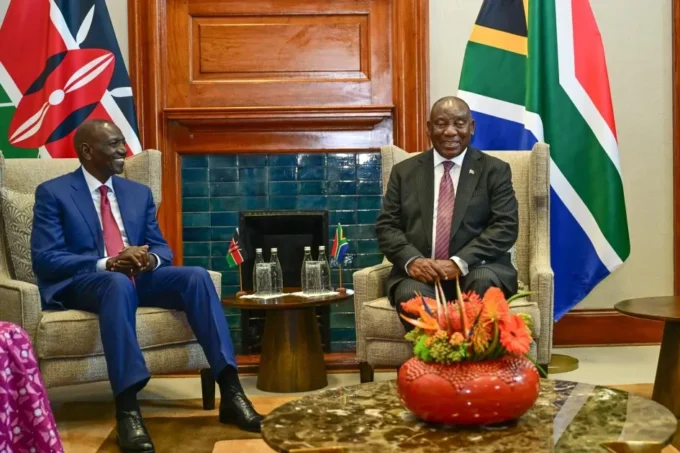
Photo (Standard Media)
By: Montel Kamau
Serrari Financial Analyst
10th December, 2023