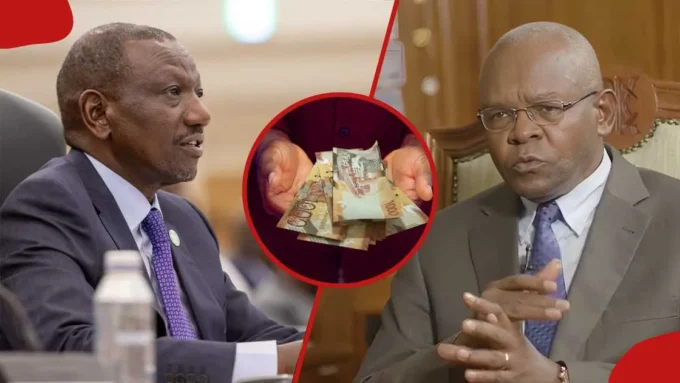
In a candid admission, the Central Bank of Kenya governor, Kamau Thugge, addressed a parliamentary committee on Tuesday, highlighting long-standing concerns about the overvaluation of the Kenyan shilling. This announcement comes as the shilling faces a steady decline, recently reaching historic lows, now exchanging at more than 150 against the US dollar. This represents a substantial drop of nearly 24% within the past year, compared to approximately 100 shillings to the dollar in October 2018.
Governor Thugge acknowledged, “For several years, we’ve operated with an overvalued exchange rate.” This marks a significant shift from prior efforts to artificially prop up the shilling, even at the cost of depleting international reserves. Financial institutions such as the International Monetary Fund (IMF) and the World Bank had indicated that the shilling was overvalued by up to 25% approximately five to six years ago.
Thugge, who assumed office in June this year, clarified that these endeavors to maintain an artificially strong exchange rate have led to the significant depletion of international reserves. At present, Kenya’s foreign exchange reserves stand at approximately 3.7 months of import cover. While this level is considered adequate for addressing unforeseen emergencies, it reflects a decrease in reserves attributed to safeguarding what may have been an overvalued exchange rate.
The sharp depreciation of the shilling has added to the economic challenges faced by Kenyans. These hardships are primarily driven by the escalating cost of living and the implementation of new or increased taxes. Consequently, this economic strain has led to widespread frustration, culminating in protests against President William Ruto’s administration, which is accused of failing to deliver on the promises made during the 2022 election campaign.
The government’s argument remains centered on the necessity of eliminating subsidies on items like fuel and introducing new taxes to strengthen public finances and reduce the national debt, which currently exceeds 10.1 trillion shillings, approximately $67 billion. The situation underscores the urgent need for Kenya’s leadership to address these economic challenges and restore confidence in the shilling’s value.
Photo (By Brian Ngugi)
By: Montel Kamau
Serrari Financial Analyst
26th October, 2023