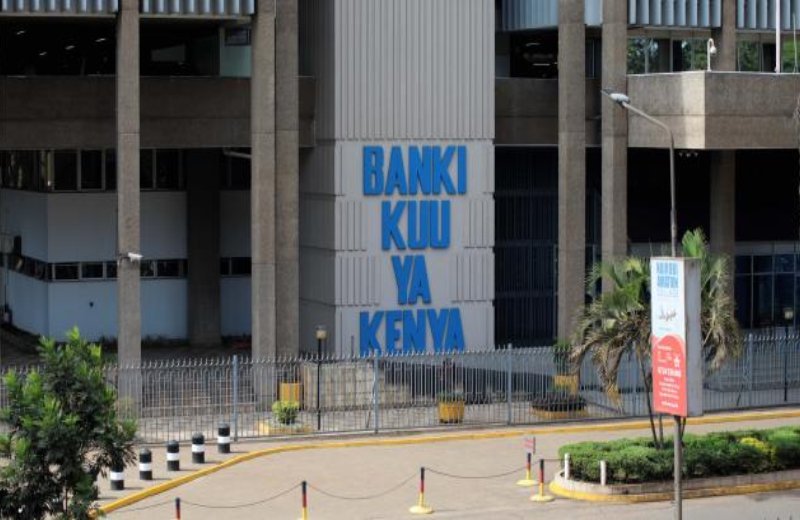
Tensions have mounted between investors and the Kenyan government as the recent sale of the October Treasury bond fell significantly short of expectations. The government aimed to raise Sh35 billion but only managed to secure Sh6.3 billion, representing less than 20 percent of the target.
Investors appear to be seeking higher returns and more attractive alternatives, pushing for interest rates that have reached their highest levels in over 16 years. The rates demanded have surpassed previous highs observed at the end of 2015 and early 2016 when they reached 16 percent.
Data from the Central Bank of Kenya (CBK) reveals that investors, encouraged by the government’s high fiscal deficit, demanded an average of 18.46 percent on the five-year bond and 17.96 percent on the two-year bond in the dual-tranche sale. However, only half of the offered Sh12.3 billion was taken up, with average yields of 17.99 percent for the five-year tranche and 17.74 percent for the two-year tranche.
Investor preference has recently tilted toward the 91-day Treasury bills, with many opting for this lower-risk option to avoid potential losses on bonds in case yields continue to rise. Banks, in particular, favor this strategy as rising secondary market yields can reduce the value of their bond holdings.
Analysts suggest that investors may also be waiting for the possibility of a tax-free infrastructure bond issuance in the near term. Despite this, the auction saw a significant undersubscription, with a performance rate of only 35.2 percent.
The CBK has, to some extent, resisted accepting expensive bids, signaling its commitment not to yield to investor pressure for costly debt. Balancing this stance with the government’s domestic borrowing targets has proved challenging, and interest rates on bonds with durations between two and five years have steadily risen to just below 18 percent, up from 14 percent in June.
Rising domestic debt costs have prompted the Treasury to revise its net borrowing target for the current fiscal year to Sh415.3 billion, down from the initial budgeted amount of Sh586.5 billion. To alleviate fiscal pressure, the government has also cut the recurrent budget of ministries and departments by 10 percent.
However, there are concerns that high-interest rates on domestic debt could impact private sector credit costs, potentially hindering economic growth by making it difficult for businesses to secure investment loans.
Analysts anticipate that the CBK may become more accommodating of higher investor bids in debt auctions in the near future, given these challenges. Nevertheless, investors appear reluctant to lower their rate demands, waiting to see if promised higher external borrowing materializes.
External market conditions remain challenging for sovereign borrowers due to elevated global interest rates and heightened risk aversion triggered by defaults in other nations. Kenya is also facing looming refinancing pressure on the $2 billion Eurobond set to mature in June 2024.
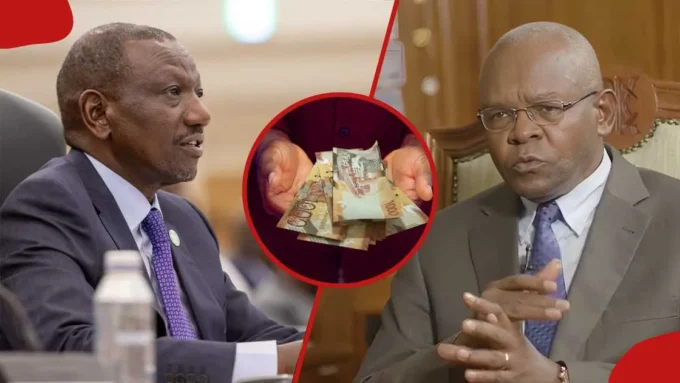
CBK Governor Kamau Thugge mentioned during the ongoing World Bank and IMF annual meetings that Kenya is eyeing commercial loans worth between $500 million and $1 billion from the Trade & Development Bank and the African Export-Import Bank. These funds would be used for buying back part of the Eurobond and for budgetary support.
Image sourced from www.dignited.com
October 15, 2023
By Delino Gayweh
Serrari Financial Analyst