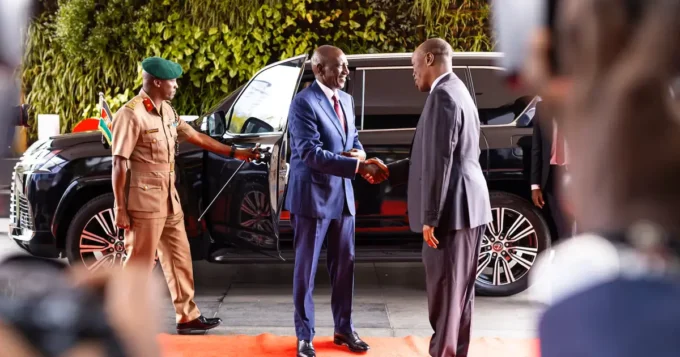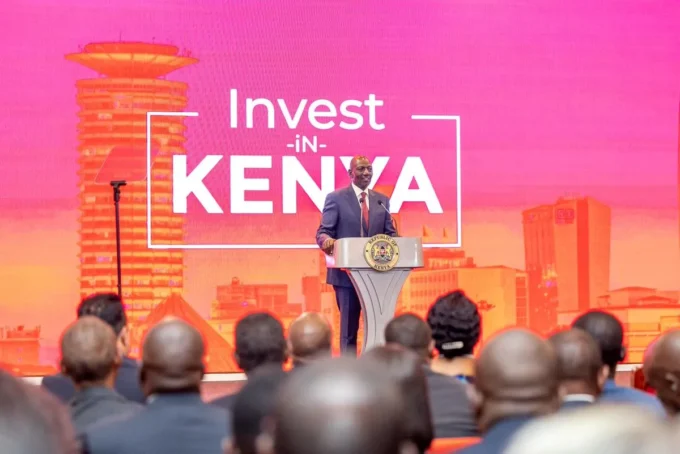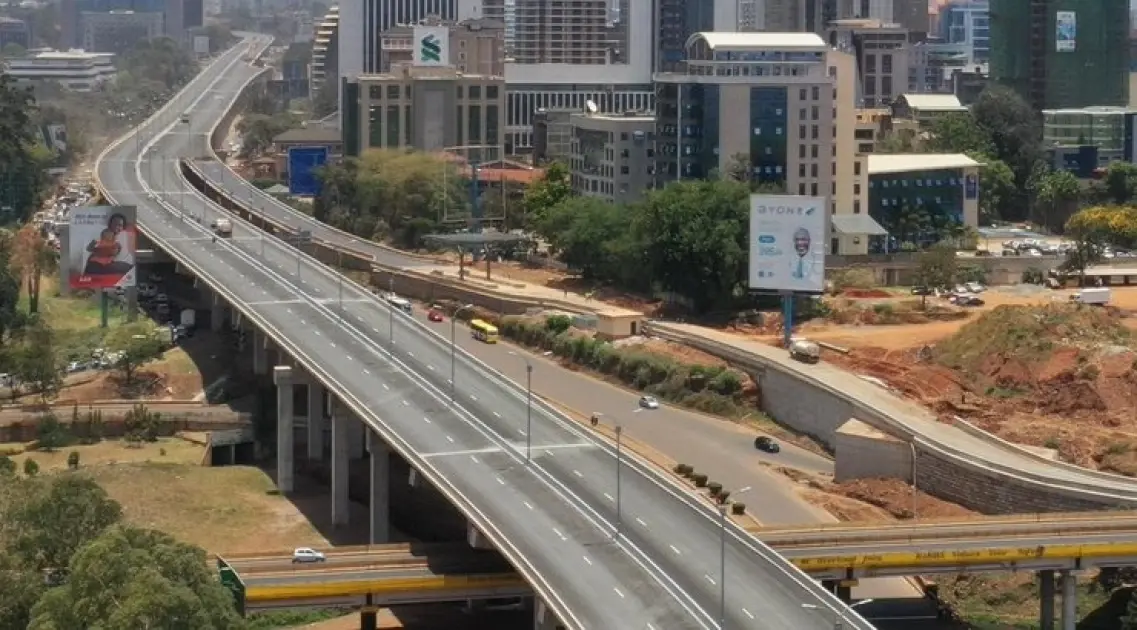
President William Ruto has announced a sweeping, multi-billion shilling overhaul of Kenya’s transport network, centered on aggressive decongestion projects for the Nairobi Metropolitan Region. During the Jamhuri Day celebrations held at Nyayo National Stadium on Friday, December 12, the President unveiled plans for a new, dedicated expressway linking Nairobi to Thika, alongside the immediate dualing of critical access roads serving the capital’s rapidly expanding southern suburbs.
These projects, combined with ongoing financing arrangements for routes like the Kiambu Road and the controversial Rironi-Mau Summit Expressway, form the backbone of the government’s ambitious goal to dual 2,500 kilometres of major highways and tarmac an additional 28,000 kilometres over the next decade. The President described the current scale of public infrastructure transformation as the largest ever undertaken in the region, estimating the total investment at Sh650 billion.
Build the future you deserve. Get started with our top-tier Online courses: ACCA, HESI A2, ATI TEAS 7, HESI EXIT, NCLEX-RN, NCLEX-PN, and Financial Literacy. Let Serrari Ed guide your path to success. Enroll today.
The Necessity of the New Thika-Museum Hill Expressway
The centerpiece of the urban infrastructure plan is the proposed construction of a new expressway linking Thika to Museum Hill in Nairobi. This declaration comes in response to the growing traffic crisis plaguing the northern corridor, a situation President Ruto acknowledged during his address: “Many citizens live in Thika, and now Thika Road has also become congested, with heavy traffic along the highway. I would like to announce that next year, just as we have the expressway from JKIA, we will also build an expressway from Thika to Museum Hill so that we can eliminate traffic in that road”.
The proposed route is estimated to cover approximately 45 kilometres, mirroring the premium, toll-based model successfully deployed on the existing Nairobi Expressway, which connects Jomo Kenyatta International Airport (JKIA) to Westlands. The existing Thika Superhighway, despite being a six-lane dual carriageway, has become increasingly overwhelmed, prompting the need for a high-speed, controlled-access alternative to support growing traffic demand.
The current Thika Superhighway was a landmark infrastructure achievement in its own right, commissioned during the administration of the late former President Mwai Kibaki. Constructed between 2009 and 2012, the 50-kilometre road was upgraded at a total cost of approximately Ksh 31 billion, jointly funded by the Government of Kenya, the African Development Bank (AfDB), and the People’s Republic of China. Its opening in November 2012 drastically reduced travel times between Thika and Nairobi from up to two hours to barely 30 to 45 minutes, fundamentally reshaping the economic landscape of the surrounding counties.
However, the sheer volume of population and business growth since 2012—driven in part by the Superhighway itself—has saturated its capacity. The new expressway is intended to siphon off through-traffic, offering relief to daily commuters and reducing the paralyzing congestion that characterizes peak hours.
Relieving the Southern Access Routes: Bomas to Kiserian
Beyond the northern corridor, President Ruto detailed immediate plans to improve mobility for commuters residing in the rapidly expanding towns south-west of the capital. These routes, including Kiserian, Rongai, and Ngong, have long been notorious for severe morning and evening gridlocks.
The President confirmed that in 2026, major roads feeding into these areas will be expanded into dual carriageways to ease movement. Specifically, the Magadi Road (Bomas–Rongai–Kiserian) and the Bomas–Karen–Ngong–Kiserian road will undergo significant upgrades. The Magadi Road stretch will be dualled from Bomas of Kenya all the way to Kiserian. Similarly, the Ngong corridor will be dualled from Bomas through Karen, Shade Hotel, Ngong, Bul Bul, and onward to Kiserian.
In the months preceding the dualing announcements, the government initiated other critical works to improve traffic flow in the capital. Notably, the President announced the comprehensive reconstruction and beautification of the lower deck of the Mombasa Road–Uhuru Highway corridor. This move, set to commence in December 2025, aims to restore the lower road surfaces between JKIA and ABC Place in Westlands. These sections suffered increasing strain during and after the construction of the overhead 27-kilometre Nairobi Expressway, requiring immediate remedial action to ensure Nairobi reflects its status as a modern capital city.
One decision can change your entire career. Take that step with our Online courses in ACCA, HESI A2, ATI TEAS 7, HESI EXIT, NCLEX-RN, NCLEX-PN, and Financial Literacy. Join Serrari Ed and start building your brighter future today.
The Ksh38.7 Billion Kiambu Road Expansion
Complementing the expressways and dual carriageway rollouts, the Cabinet has already approved the crucial dualling of the 23.5-kilometre Pangani–Muthaiga–Kiambu–Ndumberi road project. This upgrade, aimed squarely at eliminating the persistent traffic jams affecting commuters travelling between Kiambu County and Nairobi, is a major undertaking with a projected cost of approximately Ksh38.7 billion.
According to the Kenya National Highways Authority (KeNHA), the existing two-lane B32 road will be transformed into a four-lane dual carriageway. The scope of work is extensive, incorporating two-lane service roads, multiple pedestrian walkways, and the installation of six footbridges in busy areas such as Ridgeways, Thindigua, and Kiambu Town to enhance safety. The construction, which includes approximately Ksh7.4 billion for land acquisition and relocation of services, highlights the project’s complexity in densely populated areas.
The financing for the Kiambu Road dualling is secured primarily through a Ksh38.7 billion loan from China’s EXIM Bank, marking a return to major Chinese debt-backed infrastructure projects after a period of reduced borrowing. The project will be executed under an Engineering, Procurement, and Construction (EPC) contract over 36 months, followed by a 24-month defects liability period. The implementation is set to be managed by the Kenya Urban Roads Authority (KURA) in collaboration with China’s Sinohydro Corporation Limited.
The redesigned road is structured into three distinct sections:
- Muthaiga to Kirigiti Junction.
- Kirigiti Junction through Kiambu Town to the Governor’s Office.
- The Governor’s Office to Ndumberi, near Sasini Estate.
The route commences at Pangani, traverses past Muthaiga Golf Club, Ridgeways, Windsor, and Runda, before terminating at Ndumberi. Critical structural additions include new bridges and overpasses at various points, such as the Muthaiga Golf Club Spur, Mua Road, DCI, Coffee Garden, Tala Road, and the Ridgeways and Runda U-turns, demonstrating a comprehensive plan to modernize intersection efficiency.
The Rironi-Mau Summit: Cost Controversy and Project Status
The largest and most strategically vital project in the government’s pipeline is the dualing of the Rironi–Nakuru–Mau Summit highway, a centerpiece of the Northern Corridor linking the Port of Mombasa to the Great Lakes Region. This project, which President Ruto noted would soon see the launch of the first 170km from Rironi to Naivasha and expansion to six lanes up to Nakuru, has been embroiled in financial controversy.
In early 2025, the government terminated a concession agreement with a French consortium, citing concerns over the high cost of the project. The initial quotes for the 175-kilometre expressway had reportedly reached approximately Sh190 billion to Sh194 billion.
More recently, the project’s financing was publicly questioned by political figures. Former Deputy President Rigathi Gachagua criticized the current administration for allegedly inflating the project’s cost, claiming the reassignment from the French consortium to Chinese firms had resulted in a Ksh50 billion cost hike, moving the estimate from Ksh150 billion to Ksh200 billion.
Despite these political debates, the government has pushed forward with a different Public-Private Partnership (PPP) model, ultimately selecting a Chinese-led consortium featuring China Road and Bridge Corporation (CRBC) and the National Social Security Fund (NSSF). This consortium’s bid was favored due to its lower financial proposal, particularly regarding toll affordability. KeNHA disclosed that the CRBC-led group proposed a base toll rate of Sh8 per kilometre for passenger cars, undercutting a competing bid that had proposed Sh10 per kilometre. The total cost of the project under the new arrangement is variously quoted at around Sh180 billion or Sh90 billion for the 175-kilometre stretch, aiming for completion by mid-2027.
President Ruto affirmed that groundbreaking for the dualing of the 170km Rironi–Naivasha–Nakuru–Mau Summit Road and the 58km Rironi–Maai Mahiu–Naivasha Road is imminent, signifying the administration’s commitment to eliminating the persistent gridlock that paralyzes this major transport corridor, especially during holidays and weekends.
Financing the Ambition: Policy Shifts and Securitization
The scale of the infrastructure plan—dualling 2,500km and tarmacking 28,000km over the next decade—requires a radical shift in financing policy. President Ruto emphasized that this mega-programme will not rely on traditional, unsustainable borrowing or tax hikes, but rather on innovative financing models.
A key pillar of this strategy is the establishment of a new financial architecture: the National Infrastructure Fund and the Sovereign Wealth Fund. The National Infrastructure Fund is designed to ring-fence proceeds from privatization and leverage budgeted resources to attract private capital through robust Public-Private Partnerships. This shift aims to develop infrastructure that generates and preserves value, moving away from reliance on non-performing debt.
Furthermore, the government has begun implementing a strategy to securitize future revenue streams to plug significant funding gaps. The government plans to securitise an additional Ksh5 per litre of the Road Maintenance Levy (RMLF), a critical policy move necessary to bridge a massive Ksh900 billion funding gap in pending road projects.
This additional securitization will bring the total portion of the RMLF pledged to investors to Ksh12 per litre. The securitization framework allows the Kenya Roads Board (KRB) to issue infrastructure bonds, providing upfront liquidity to clear outstanding bills owed to contractors and accelerate stalled projects. Roads and Transport Cabinet Secretary Davis Chirchir confirmed that this move was essential given the limited annual allocation of approximately Ksh55 billion for road development from the ordinary budget.
This aggressive financing strategy underscores the administration’s determination to realize its “first-world economy” vision, which relies heavily on transforming transport and logistics into a competitive backbone for national and regional trade. By focusing on infrastructure, the government seeks to lower the cost of doing business, stimulate manufacturing, and reinforce Kenya’s status as a regional commercial hub. The plan touches every facet of the transport system, including modernization of major aviation hubs like Jomo Kenyatta International Airport (JKIA), Mombasa, and Lamu ports through PPPs, demonstrating a holistic approach to logistics transformation.
The massive scale of investment in infrastructure, from the new expressway to the dualling of key economic corridors like Mau Summit–Eldoret–Malaba and Athi River–Namanga, suggests a sustained push to transform Kenya’s logistical framework for generations to come, aiming to replicate the growth trajectories of the world’s most successful developing economies.
Ready to take your career to the next level? Join our Online courses: ACCA, HESI A2, ATI TEAS 7 , HESI EXIT , NCLEX – RN and NCLEX – PN, Financial Literacy!🌟 Dive into a world of opportunities and empower yourself for success. Explore more at Serrari Ed and start your exciting journey today! ✨
Track GDP, Inflation and Central Bank rates for top African markets with Serrari’s comparator tool.
See today’s Treasury bonds and Money market funds movement across financial service providers in Kenya, using Serrari’s comparator tools.
Photo source: Google
By: Montel Kamau
Serrari Financial Analyst
15th December, 2025