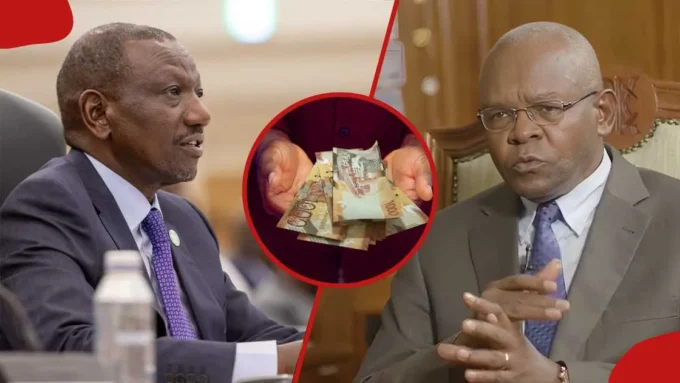
President William Ruto has launched an audacious appeal to the global investment community, calling for $40 billion in capital to finance Kenya’s decade-long national transformation programme—a comprehensive infrastructure modernization strategy designed to propel the East African nation toward first-world economic status without imposing additional debt burdens or tax increases on citizens.
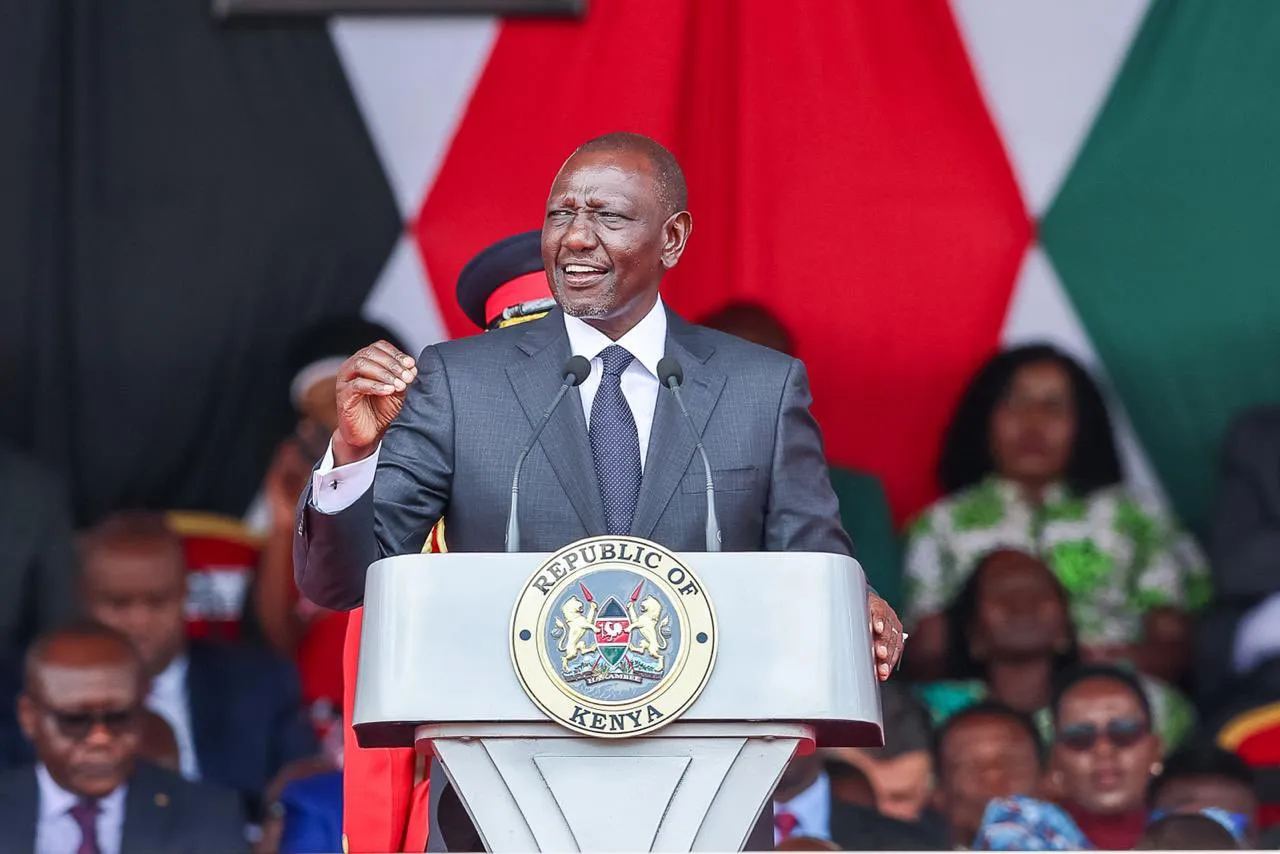
Speaking during the annual New Year diplomatic address to ambassadors, high commissioners, and heads of international organizations at State House, Nairobi, on February 9, 2026, President Ruto outlined an ambitious framework centered on the newly established National Infrastructure Fund, positioning it as a vehicle for long-term investment that delivers sustainable returns while financing critical infrastructure across transport, energy, agriculture, and education sectors.
The KSh5 trillion programme represents Kenya’s most comprehensive economic transformation blueprint since independence, drawing explicit inspiration from the rapid development trajectories of Singapore, South Korea, and China—nations that transitioned from developing to first-world economies within a single generation through strategic infrastructure investment, disciplined governance, and rejection of mediocrity.
Build the future you deserve. Get started with our top-tier Online courses: ACCA, HESI A2, ATI TEAS 7, HESI EXIT, NCLEX-RN, NCLEX-PN, and Financial Literacy. Let Serrari Ed guide your path to success. Enroll today.
The Architecture of Transformation
The National Infrastructure Fund, approved by Cabinet on December 15, 2025, alongside a complementary Sovereign Wealth Fund, forms the institutional backbone of Kenya’s transformation strategy. Structured as a limited liability company, the fund operates on a leverage model designed to crowd in private capital at scale—with each shilling of public investment expected to attract up to ten shillings from pension funds, development finance institutions, private equity investors, and sovereign partners.
“We estimate that these initiatives will require about $40 billion (KSh5 trillion) in investment,” President Ruto stated. “We are firmly resolved to mobilise the resources without adding unsustainable debt to our balance sheet or placing an additional tax burden on our citizens.”
This financing architecture represents a fundamental departure from Kenya’s historical reliance on concessional loans and commercial borrowing to fund infrastructure development. Following a decade of heavy borrowing that pushed the country to one of Africa’s highest debt-to-revenue ratios, budgetary pressure forced the government to implement fiscal consolidation measures including tax increases that triggered substantial public protests in 2024, ultimately compelling authorities to revise the Finance Act and launch a comprehensive audit of public borrowing in September 2024.
The National Infrastructure Fund addresses this constraint by mobilizing private capital through de-risking mechanisms that make commercially viable public infrastructure projects attractive to institutional investors. According to Treasury Cabinet Secretary John Mbadi, the government plans to make initial investments of approximately 20 percent of project costs to de-risk commercially viable infrastructure such as toll roads, with proceeds from successful Public Private Partnership projects subsequently funding non-commercial infrastructure including rural roads.
A parallel Sovereign Wealth Fund, operationalized in January 2026, provides long-term fiscal stability through a triple mandate: safeguarding wealth for future generations, stabilizing the economy during global shocks, and making strategic commercial investments aligned with national priorities. The fund will accumulate revenues from natural resources, dividends from state-owned enterprises, and portions of privatization proceeds.
Critically, legislative frameworks mandate that all privatization revenues be ring-fenced exclusively for infrastructure investment rather than recurrent expenditure or debt repayment. President Ruto emphasized this commitment in January 2026: “Any money proceeds of privatisation will be used for only one purpose—to develop the infrastructure of Kenya.”
Transport Infrastructure: Connectivity as Economic Foundation
Transport and logistics infrastructure commands a significant allocation within the transformation programme, with plans to dual 2,500 kilometers of highways, tarmac 28,000 kilometers of roads, and extend the Standard Gauge Railway from Naivasha to Malaba beginning in 2026. The rail extension will enhance regional connectivity by linking Kenya more effectively with Uganda and ultimately the broader East African Community market.
During his State of the Nation Address in Parliament on November 20, 2025, President Ruto outlined an extensive list of roads earmarked for expansion, including Muthaiga–Kiambu–Ndumberi, Machakos Junction–Mariakani, Mau Summit–Kericho–Kisumu, Kisumu–Busia, Athi River–Namanga, and numerous corridors across all regions designed to reduce transport costs, improve market access, and support manufacturing competitiveness.
Aviation infrastructure modernization represents another critical component. The government has consolidated frameworks for upgrading Jomo Kenyatta International Airport and developing a new airport facility to enhance Kenya’s position as a regional aviation hub. These projects advance in parallel with plans to modernize Mombasa and Lamu ports, addressing longstanding logistical bottlenecks that have constrained trade efficiency and raised costs for manufacturers and exporters.
The integrated transport strategy recognizes that infrastructure quality directly impacts industrial competitiveness, agricultural market access, and regional trade facilitation. By reducing transport costs and improving reliability, the programme aims to support Kenya’s manufacturing sector growth while enhancing its role as a logistics and transit hub serving landlocked neighbors including Uganda, Rwanda, Burundi, South Sudan, and eastern Democratic Republic of Congo.
Energy Expansion: Powering Industrial Ambitions
Energy generation capacity expansion forms a crucial pillar of the transformation strategy, with targets to increase national capacity from the current 3,300 megawatts to at least 10,000 megawatts by 2032 through geothermal, wind, solar, and potentially nuclear projects. President Ruto emphasized the critical linkage between energy availability and industrialization objectives: “We have to expand our generation of energy because at the moment we are living on the edge. It cannot be possible for us to industrialize if we don’t have sufficient reliable affordable energy.”
The ambitious energy targets reflect recognition that Kenya’s digitalization, industrialization, e-mobility adoption, and integration of emerging technologies depend fundamentally on reliable, affordable electricity supply. Industrial development requires energy security that current generation capacity cannot provide, making power expansion essential infrastructure rather than aspirational investment.
Renewable energy sources—particularly geothermal from the Rift Valley, wind from Turkana and coastal regions, and solar potential across much of the country—position Kenya advantageously to achieve generation targets through low-carbon pathways. This alignment between development objectives and climate commitments strengthens Kenya’s case for international climate finance and positions the country as a model for green industrialization in Africa.
Lower electricity costs resulting from expanded generation capacity would enhance manufacturing competitiveness, reduce production costs for existing industries, attract energy-intensive investors including data centers and processing facilities, and support value-addition in agriculture and extractives sectors. The economic multiplier effects of reliable, affordable electricity extend across virtually all productive sectors.
Agricultural Transformation: From Import Dependence to Export Potential
Agricultural infrastructure investment targets fundamental transformation of Kenya’s food security status through massive expansion of irrigated acreage. The programme proposes constructing 50 mega-dams, 200 mini-dams, and 1,000 micro-dams to bring an additional 2.5 million acres under cultivation, shifting Kenya from net food importer to potential agricultural exporter.
Targeted dam locations span diverse regions from High Grand Falls on the Daua River in Mandera to Soin Koru in Kisumu, Rumuruti in Laikipia, Kokwanyo in Homa Bay, and Thuci in Embu and Tharaka-Nithi. This geographic distribution ensures that water infrastructure benefits reach communities across the country’s varied agroecological zones, supporting different crop systems and production patterns.
Water storage, harvesting, and irrigation infrastructure expansion addresses Kenya’s vulnerability to rainfall variability and recurring droughts that undermine agricultural productivity and food security. By reducing dependence on rainfed agriculture, irrigation enables year-round production, supports crop diversification, enhances yields, and provides quality raw materials for agro-processing industries in special economic zones.
The agricultural transformation strategy recognizes that food security provides the foundation for broader economic development. Secure, affordable food supplies reduce household expenditure burdens, support nutritional outcomes, stabilize consumer prices, and free resources for investment in health, education, and productive assets. Agricultural productivity growth also generates rural employment, supports inclusive development, and reduces rural-urban migration pressures.
Education and Research: Building Human Capital
The transformation agenda commits to full realization of Kenya’s statutory obligation to allocate 2 percent of GDP to education, research, and development funding—up from the current 0.8 percent. This scaling represents a commitment to building toward a research kitty of KSh1 trillion over the next decade, supporting innovation capacity, skills development, and technology adoption essential for first-world economic status.
Kenya’s education budget increased substantially from KSh490 billion in 2021 to over KSh700 billion in 2025/2026, supporting reforms including improved school infrastructure and the recruitment of more than 100,000 teachers. President Ruto frequently cites the teacher hiring achievement as evidence of the government’s capacity to deliver on commitments previously deemed impossible by critics.
Enhanced investment in education and research addresses Kenya’s human capital requirements for technology-driven economic development. As the economy transitions toward manufacturing, technology services, and knowledge-intensive sectors, workforce skills, research capacity, and innovation systems become increasingly critical determinants of competitiveness and productivity growth.
The research investment commitment signals recognition that sustainable first-world status requires indigenous innovation capacity rather than perpetual technology transfer dependence. By building research infrastructure, supporting advanced training, and incentivizing applied research aligned with national priorities, Kenya aims to develop problem-solving capabilities relevant to local contexts while contributing to global knowledge frontiers.
One decision can change your entire career. Take that step with our Online courses in ACCA, HESI A2, ATI TEAS 7, HESI EXIT, NCLEX-RN, NCLEX-PN, and Financial Literacy. Join Serrari Ed and start building your brighter future today.
Public-Private Partnerships: Mobilizing Capital at Scale
The transformation plan explicitly creates opportunities for collaboration through public-private partnerships, positioning the National Infrastructure Fund as a mechanism for coordinating government resources with private sector capital and expertise. The model depends fundamentally on de-risking project structures sufficiently to attract institutional investors typically hesitant to deploy capital in frontier markets absent government risk mitigation.
Treasury officials describe the approach as converting government assets through privatization into commercially viable public infrastructure projects such as dualed, tolled highways. Initial government equity stakes reduce investor risk exposure, while toll revenues provide cash flows supporting debt service and equity returns. Successful project precedents then build track records that reduce perceived country risk and lower capital costs for subsequent infrastructure investments.
Critics, including former Budget and Appropriations Committee chairperson Ndindi Nyoro, characterize the leverage strategy as “borrowing outside the book” to circumvent Kenya’s ballooning debt portfolio. Nyoro argues that mechanisms such as leveraging, securitization, and crowding-in risk pushing the country into further debt without adequate public scrutiny: “They are basically saying that for one shilling, they borrow 10 shillings. What they are doing is to run away from the ballooning public debt to create a fund for another debt.”
These accountability concerns reflect broader governance questions about fund establishment without explicit parliamentary approval, management structures, utilization transparency, and mechanisms ensuring that privatization proceeds actually flow to infrastructure rather than recurrent expenditure despite legislative ring-fencing provisions.
Nonetheless, the government maintains that the approach provides Kenya’s only viable pathway to finance transformation-scale infrastructure without further debt accumulation or tax increases—both politically and economically unpalatable following recent fiscal pressures and public resistance to taxation measures.
Regional Peace and Global Engagement
President Ruto framed the infrastructure transformation within a broader foreign policy vision emphasizing regional stability, continental integration, and reformed global governance. He called for urgent international action to restore peace in Sudan through civilian-led processes, emphasizing that military solutions cannot address Sudan’s complex challenges and that inclusive political engagement provides the only viable pathway to sustainable peace.
The President similarly urged collaboration and dialogue to achieve stability in Democratic Republic of Congo and South Sudan, recognizing that regional instability undermines Kenya’s economic development objectives while generating refugee flows, disrupting trade routes, and creating security threats that divert resources from productive investment.
Within Africa, President Ruto advocated for stronger, better-funded continental institutions including enhanced financing for the African Union and its Peace Fund, more effective Pan-African Parliament operations, and operationalization of the African Court of Justice. He also called for full implementation of the African Continental Free Trade Area to enhance intra-African trade—critical for Kenya’s manufacturing sector development given that regional markets provide natural export destinations for Kenyan products.
Globally, President Ruto emphasized the indispensable role of strong United Nations and adherence to multilateral principles in addressing complex, interconnected global challenges. He noted that defunding UN agencies weakens multilateral cooperation and diminishes international capacity to respond to conflicts, humanitarian crises, global health threats, and development challenges.
The President highlighted Africa’s continued exclusion from permanent UN Security Council representation despite African issues constituting significant shares of Council agenda items and peacekeeping responsibilities. He argued that comprehensive reform including permanent African representation remains essential to the institution’s legitimacy and 21st century relevance.
President Ruto also emphasized the urgent need for global financial architecture reform to support domestic resource mobilization, sustainable debt management, and private capital mobilization for development—issues directly relevant to Kenya’s infrastructure financing strategy.
Strategic Bilateral Partnerships
Kenya has strengthened bilateral trade relationships through recent agreements with the European Union and United Arab Emirates, while negotiations on bilateral trade agreements with China and the United States have reached advanced stages. These partnerships provide market access, investment flows, technology transfer, and diplomatic support important for Kenya’s economic transformation objectives.
President Ruto announced that Kenya will host the Africa-France Summit in May 2026—the first time the summit convenes outside France or a Francophone African nation since its 1973 inception. Scheduled for May 11-12 under the theme “Africa Forward: Africa-France Partnerships for Innovation and Growth,” the summit will bring together African and French heads of state, business leaders, young entrepreneurs, civil society representatives, and international organization officials.
The summit agenda focuses on international financial architecture reform, energy transition, green industrialization, the blue economy, connectivity, artificial intelligence, sustainable agriculture, and health—areas aligned with Kenya’s transformation priorities. The event opens with a Business Forum showcasing innovations and success stories from African and French private sectors while spotlighting young entrepreneurs’ roles in shaping solutions to regional and global challenges.
Hosting this historic summit represents a diplomatic victory for Kenya and validates its positioning as a continental hub for diplomacy, trade, and sustainable development. The summit provides opportunities to attract foreign investment in green energy and sustainable development projects while elevating Kenya’s profile in global climate diplomacy following President Ruto’s leadership of the 2023 African Climate Summit.
Prime Cabinet Secretary Musalia Mudavadi traveled to Paris in January 2026 to meet with French Minister for Europe and Foreign Affairs Jean-Noël Barrot for preparatory discussions. During this visit, Mudavadi engaged with French companies including Airbus, Thales, and CFAO to strengthen Kenya-France cooperation while signing agreements with Agence Française de Développement supporting development financing partnerships.
Timeline and Execution Strategy
President Ruto has declared 2026 as the “Year of Execution,” signaling a pivot from economic stabilization toward aggressive delivery on transformation commitments. Speaking at the Tobung’u Lore cultural event in Turkana County in December 2025, the President projected confidence in accelerated implementation: “The five trillion plan we started yesterday, by next year, we will be halfway. Others are saying it is not possible, but I know it is possible.”
The President cited teacher recruitment exceeding 100,000 and completed road projects as evidence that the government delivers on pledges previously dismissed as impossible by skeptics. He maintained that tangible results across sectors demonstrate the administration’s capacity for implementation despite criticism.
The broader timeline articulated by President Ruto envisions a 30-year transformation journey positioning Kenya as a first-world economy by 2055—matching the development trajectories of Singapore, South Korea, and China which achieved similar transitions within comparable timeframes through strategic infrastructure investment, governance discipline, and human capital development.
However, the strategy faces substantial economic and political headwinds. Kenya’s 2026-2029 debt strategy still requires KSh906 billion in domestic borrowing, raising concerns about crowding out private sector credit access. Critics argue that high living costs and persistent poverty could undermine public support for long-term infrastructure investments that may not deliver immediate welfare improvements.
Public resistance to privatization of strategic state assets has emerged as another significant challenge, with civil society organizations and labor unions expressing concern about potential service quality degradation, tariff increases, and loss of national control over critical infrastructure if parastatals are sold to private investors.
Diplomatic Support and International Reactions
UN Office at Nairobi Director-General Zainab Hawa Bangura affirmed the organization’s commitment to working with Kenya on constructive collaboration to advance Sustainable Development Goals, stating that the UN will continue supporting achievement of Kenya’s development aspirations. This endorsement signals international institutional support for Kenya’s transformation agenda and creates potential pathways for technical assistance and financing facilitation.
Dean of the Diplomatic Corps Beyene Russom, who serves as Eritrea’s Ambassador to Kenya, commended President Ruto for hosting the diplomatic briefing focused on governance, economic development, and Kenya’s diplomatic orientation. He explained that such transparency enhances trust, ensures effective diplomatic relations, and enables the diplomatic corps to represent Kenya’s interests more accurately in their respective capitals.
The positive diplomatic reception reflects Kenya’s enhanced regional and international standing under President Ruto’s administration, which has prioritized active engagement in regional peace processes, continental initiatives, and global forums addressing climate change, development finance, and governance reform.
Conclusion: Ambition Meets Implementation Reality
Kenya’s KSh5 trillion transformation programme represents one of Africa’s most ambitious infrastructure modernization strategies, combining comprehensive sectoral coverage with innovative financing mechanisms designed to mobilize private capital at scale without increasing debt burdens or tax rates. The institutional architecture of the National Infrastructure Fund and Sovereign Wealth Fund, if implemented effectively, could provide sustainable financing pathways supporting long-term development objectives.
However, the programme’s success depends critically on execution capacity, governance integrity, private sector confidence, and sustained political commitment across electoral cycles. The tension between immediate welfare pressures and long-term infrastructure investment, combined with public skepticism about privatization and accountability concerns regarding fund management, present formidable political economy challenges.
International investor response will determine whether the leverage model successfully crowds in ten shillings of private capital for every public shilling invested, or whether risk perceptions and structural challenges limit actual capital mobilization. Development finance institutions, pension funds, and sovereign wealth funds evaluating potential participation will scrutinize project preparation quality, regulatory frameworks, contract enforceability, political risk factors, and expected returns relative to alternative emerging market opportunities.
For Kenya, the transformation agenda represents a defining test of developmental state capacity—whether political leadership, bureaucratic capability, and societal consensus can align sufficiently to execute infrastructure investment at transformation scale while maintaining macroeconomic stability, social cohesion, and democratic accountability. The coming years will reveal whether presidential ambition translates into concrete progress toward first-world economic status, or whether implementation realities constrain outcomes to incremental advancement within existing developmental trajectories.
As President Ruto courts international investment for this transformative vision, Kenya stands at a crossroads between aspiration and achievement, with the world watching to see whether the “Singapore of Africa” narrative becomes developmental reality or joins the long list of unfulfilled African economic transformation promises.
Ready to take your career to the next level? Join our Online courses: ACCA, HESI A2, ATI TEAS 7 , HESI EXIT , NCLEX – RN and NCLEX – PN, Financial Literacy!🌟 Dive into a world of opportunities and empower yourself for success. Explore more at Serrari Ed and start your exciting journey today! ✨
Track GDP, Inflation and Central Bank rates for top African markets with Serrari’s comparator tool.
See today’s Treasury bonds and Money market funds movement across financial service providers in Kenya, using Serrari’s comparator tools.
photo source: Google
By: Montel Kamau
Serrari Financial Analyst
10th February, 2026