











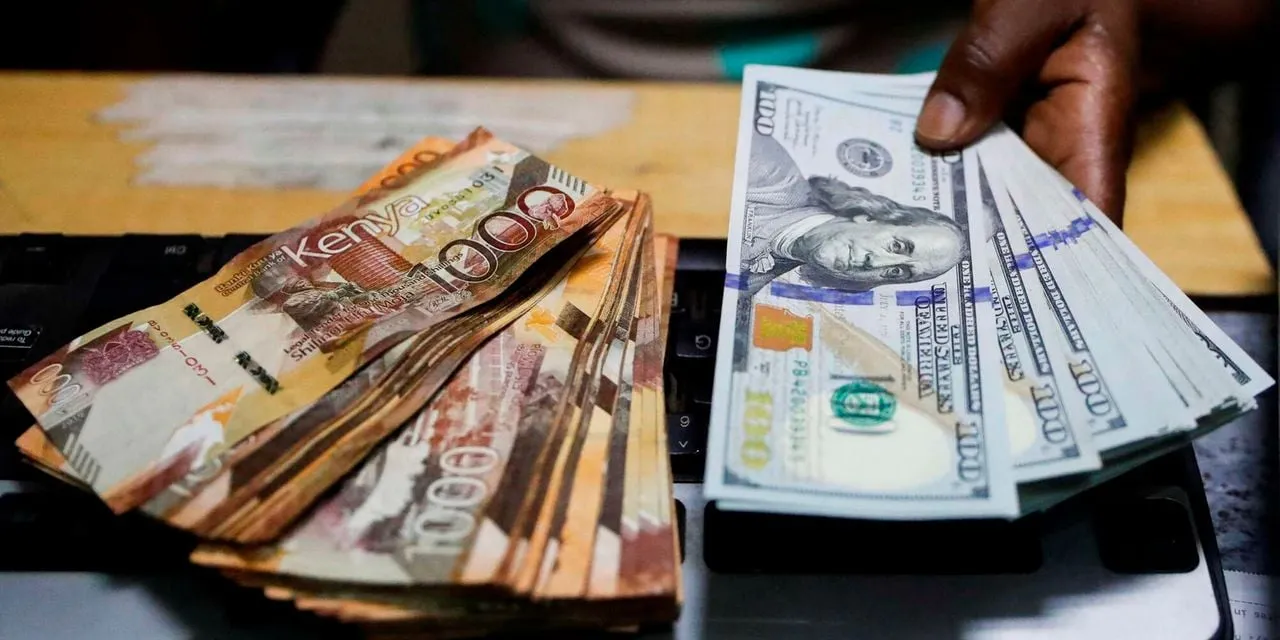
The Kenya shilling remained stable against major global and regional currencies during the week ending February 19, 2026, reinforcing the perception that Kenya’s foreign exchange market has entered a period of relative calm following years of volatility.
According to data released by the Central Bank of Kenya (CBK), the shilling traded at Ksh129.02 per U.S. dollar on February 19 — unchanged from February 12 — and maintained that level consistently from February 6 through February 19. Similar minimal fluctuations were observed against other major currencies, with the sterling pound trading between Ksh174.00 and 176.33, the euro between Ksh152.12 and 153.75, and stable performance against regional currencies including the Ugandan and Tanzanian shillings.
Currency stability coincided with robust demand in the government securities market and sustained liquidity within the domestic banking system. A Treasury bill auction held on February 19 attracted bids worth Ksh70.9 billion against an advertised amount of Ksh24.0 billion — representing an oversubscription rate of 295.6 percent. Meanwhile, commercial banks maintained excess reserves averaging Ksh44.3 billion above the required Cash Reserve Ratio (CRR), and the Kenya Shilling Overnight Interbank Average Rate (KESONIA) held steady at 8.77 percent.
Taken together, these developments signal a financial system operating under conditions of controlled liquidity, anchored monetary policy, and improved investor confidence.
But to appreciate the significance of this stability, one must consider Kenya’s recent exchange rate history, macroeconomic reforms, global headwinds, and the structural factors that now support the currency.
Build the future you deserve. Get started with our top-tier Online courses: ACCA, HESI A2, ATI TEAS 7, HESI EXIT, NCLEX-RN, NCLEX-PN, and Financial Literacy. Let Serrari Ed guide your path to success. Enroll today.
From Volatility to Stability: Historical Context of the Shilling
Kenya’s currency has not always enjoyed this level of stability.
Between 2022 and 2024, the shilling faced sustained depreciation pressures driven by:
- A widening current account deficit,
- Elevated global oil prices,
- Tight global monetary conditions,
- Reduced foreign portfolio inflows,
- Dollar shortages in the domestic market.
During periods of stress, the exchange rate experienced sharp swings that unsettled importers, exporters, and investors alike.
The shilling crossed key psychological thresholds in prior cycles, raising concerns about:
- External debt servicing costs,
- Imported inflation,
- FX liquidity imbalances.
However, 2025 marked a turning point.
Improved external financing conditions, enhanced monetary tightening discipline, and targeted FX management measures helped stabilize the currency. By early 2026, the shilling’s performance reflected this recalibration.
Holding steady at Ksh129.02 per dollar over multiple weeks is not merely a statistical footnote — it represents a meaningful shift in volatility dynamics.
Treasury Bill Oversubscription: A Key Anchor
One of the most important stabilizing forces during the week was the strong performance of the February 19 Treasury bill auction.
The auction attracted Ksh70.9 billion in bids against a Ksh24.0 billion target — an oversubscription rate approaching 296 percent.
This level of demand indicates:
- Strong domestic liquidity,
- High investor appetite for government securities,
- Confidence in Kenya’s sovereign credit profile at the domestic level.
When investors prefer holding shilling-denominated government securities rather than converting into foreign currency, it reduces pressure on the exchange rate.
Oversubscription also suggests that investors view current yields as attractive relative to inflation and alternative investments.
Strong domestic demand for government debt helps the central bank maintain exchange rate stability without aggressive market intervention.
Liquidity Conditions: Excess Reserves and System Stability
Commercial banks held excess reserves averaging Ksh44.3 billion above the required Cash Reserve Ratio.
This signals that:
- The banking system remains well-capitalized,
- Liquidity constraints are not binding,
- Interbank funding stress is absent.
Liquidity stability plays a central role in FX market confidence. When domestic liquidity is adequate, banks are less likely to aggressively source foreign currency to cover short-term imbalances.
Furthermore, the increase in interbank transaction values — rising to an average of Ksh9.1 billion from Ksh7.5 billion — reflects healthy market functioning.
The number of deals remained steady at 26, indicating that liquidity flows are stable rather than volatile.
KESONIA Stability: Monetary Policy Transmission
The Kenya Shilling Overnight Interbank Average Rate (KESONIA) held at 8.77 percent, marginally lower than the previous week’s 8.78 percent.
KESONIA reflects overnight borrowing costs between banks and serves as a barometer of short-term liquidity conditions.
A stable KESONIA implies:
- Balanced liquidity supply and demand,
- Predictable funding costs,
- Effective monetary policy transmission.
In prior stress periods, interbank rates often spiked, signaling funding tightness.
The current steady rate suggests that the central bank’s liquidity management framework is functioning efficiently.
Regional Currency Comparisons
The shilling’s stability against regional currencies, including the Ugandan and Tanzanian shillings, underscores broader East African macro alignment.
Regional currency stability is important for:
- Cross-border trade,
- Investment flows within the East African Community (EAC),
- Import-export pricing predictability.
When Kenya’s currency remains stable relative to its neighbors, it strengthens regional integration dynamics.
One decision can change your entire career. Take that step with our Online courses in ACCA, HESI A2, ATI TEAS 7, HESI EXIT, NCLEX-RN, NCLEX-PN, and Financial Literacy. Join Serrari Ed and start building your brighter future today.
External Environment: Global Headwinds Remain
While domestic conditions appear stable, global risks persist.
Key external factors include:
- U.S. Federal Reserve policy trajectory,
- Commodity price fluctuations,
- Geopolitical tensions,
- Global trade policy shifts.
Kenya, as a net importer of fuel and capital goods, remains sensitive to global price shocks.
However, stable foreign exchange reserves and disciplined domestic liquidity management provide a buffer against external volatility.
Why This Stability Matters
Currency stability affects nearly every segment of the economy.
1. Inflation Control
A stable exchange rate reduces imported inflation pressures, particularly in fuel and food.
2. Debt Servicing Costs
Kenya holds significant external debt. Exchange rate stability limits escalation of repayment costs.
3. Investor Confidence
Foreign investors prefer stable currency environments to mitigate FX risk.
4. Business Planning Certainty
Importers and exporters benefit from predictable exchange rates.
5. Monetary Policy Credibility
Stable currency performance strengthens the central bank’s credibility.
In emerging markets, currency volatility often becomes self-reinforcing. Stability, by contrast, can anchor expectations.
Risks to Monitor
Despite encouraging signs, several risks warrant attention.
1. Current Account Dynamics
A widening trade deficit could reintroduce FX pressure.
2. Oil Price Shocks
Sharp increases in global energy prices could increase dollar demand.
3. Capital Flow Reversals
Sudden foreign portfolio outflows could strain reserves.
4. Fiscal Pressures
Government borrowing needs may rise if revenue shortfalls emerge.
5. Global Liquidity Tightening
If global rates remain elevated, emerging market currencies could face renewed pressure.
Long-Term Outlook: Anchored but Vigilant
Kenya’s exchange rate outlook depends on sustained macro alignment.
Key supportive factors include:
- Strong domestic demand for government securities,
- Healthy banking sector liquidity,
- Stabilized interbank rates,
- Improved FX management frameworks.
If inflation remains contained and fiscal discipline holds, the shilling could maintain relative stability over the medium term.
However, Kenya’s structural exposure to external shocks means that vigilance remains essential.
Looking Ahead: Sustainability, Stress Tests, and Strategic Inflection Points
While the Kenya shilling’s stability at Ksh129.02 per U.S. dollar reflects improved monetary management and liquidity conditions, the durability of this equilibrium will depend on several interconnected macroeconomic variables over the coming quarters.
Currency stability in emerging markets is rarely accidental. It is typically the product of disciplined liquidity management, credible policy signaling, balanced capital flows, and supportive external conditions. The coming months will test whether Kenya’s current FX calm represents a transitional pause or a structurally anchored phase.
Several key forward-looking dynamics will determine the trajectory.
1. Treasury Auction Demand as a Sentiment Barometer
The near 296% oversubscription in the February 19 Treasury bill auction was a strong signal of domestic liquidity confidence.
Going forward, auction coverage ratios will serve as a weekly sentiment gauge.
If Treasury bill auctions continue to:
- Attract multiple times the advertised amount,
- Clear at gradually declining yields,
- Maintain stable bidder composition,
It would suggest that domestic capital remains comfortable holding shilling-denominated assets.
However, if coverage ratios begin to decline or yields spike unexpectedly, it may indicate:
- Liquidity tightening,
- Rising inflation expectations,
- Shifts in investor risk appetite,
- Or early FX conversion pressure.
Treasury auction performance is therefore not just about funding government operations — it is a real-time reflection of currency confidence.
2. Foreign Exchange Reserves and External Buffers
Kenya’s FX stability ultimately depends on reserve adequacy.
Reserves function as:
- A market confidence anchor,
- A buffer against sudden capital outflows,
- A stabilizer during external shocks.
Looking ahead, reserve sustainability will hinge on:
- Export earnings,
- Diaspora remittance inflows,
- Tourism receipts,
- Access to concessional and commercial financing.
If global conditions tighten — particularly if U.S. interest rates remain elevated — emerging markets may face renewed capital outflow risks.
Maintaining adequate import cover will be critical to preventing speculative attacks or sharp exchange rate repricing.
3. Global Monetary Policy Spillovers
Kenya’s FX path is partially tethered to global liquidity conditions.
If the U.S. Federal Reserve signals:
- Delayed rate cuts,
- Renewed tightening,
- Persistent inflation concerns,
The dollar could strengthen globally.
A stronger dollar environment typically:
- Pressures emerging market currencies,
- Increases debt servicing costs,
- Encourages capital repatriation.
Conversely, if global rate easing resumes meaningfully, frontier markets like Kenya could benefit from renewed yield-seeking capital inflows.
The global cycle will remain a dominant external variable.
4. Oil Prices and Trade Balance Sensitivity
Kenya remains a net importer of petroleum products.
Oil price volatility directly affects:
- Dollar demand,
- Import bill pressure,
- Inflation,
- Current account balance.
If oil prices spike significantly, dollar demand could intensify, placing downward pressure on the shilling.
However, if energy prices remain stable or decline, external balances may remain manageable.
Monitoring Brent crude price trends will remain essential for FX projections.
5. Inflation and Domestic Rate Alignment
Exchange rate stability and inflation dynamics are interlinked.
If inflation remains contained:
- Real interest rates improve,
- Shilling-denominated assets remain attractive,
- Speculative currency conversion pressures ease.
However, if inflation accelerates due to:
- Supply chain disruptions,
- Commodity price shocks,
- Fiscal imbalances,
Investors may demand higher yields, and FX pressure could re-emerge.
CBK’s policy discipline will be critical in anchoring expectations.
6. Capital Flow Composition: Domestic vs Foreign
One of the most important structural shifts in Kenya’s financial system is the increasing role of domestic institutional capital — including pension funds and insurance companies.
Domestic capital:
- Reduces vulnerability to volatile foreign flows,
- Provides structural liquidity,
- Enhances resilience during global stress.
Looking ahead, if foreign participation increases meaningfully — particularly in bond markets — it could strengthen the shilling further.
However, reliance on short-term foreign portfolio inflows also introduces reversal risk.
Balanced capital flow composition remains essential.
7. Fiscal Discipline and Sovereign Borrowing Strategy
Kenya’s fiscal consolidation trajectory will influence FX confidence.
Investors will closely monitor:
- Budget deficit projections,
- Revenue collection performance,
- External borrowing strategy,
- Debt rollover management.
If fiscal discipline holds and external refinancing remains smooth, exchange rate stability will likely persist.
If fiscal stress emerges, markets may price in higher sovereign risk premiums, affecting currency stability.
8. Regional and Continental Positioning
Kenya’s role as East Africa’s financial hub also affects currency dynamics.
If Kenya continues to attract:
- Regional capital flows,
- Cross-border trade settlements,
- Multinational corporate headquarters activity,
The structural demand for the shilling may increase.
Greater regional integration through the East African Community (EAC) could further anchor currency stability by expanding intra-regional trade settlement volumes.
9. Market Psychology and Expectation Anchoring
Currency stability often becomes self-reinforcing once expectations anchor.
If businesses, importers, and investors begin to assume that the shilling will remain within a narrow band:
- Hedging demand decreases,
- Panic conversions decline,
- Speculative pressure subsides.
Expectation anchoring is a powerful stabilizing force.
However, it can reverse quickly if disrupted by external shocks or policy missteps.
Maintaining credibility is therefore paramount.
10. Scenario Analysis: Three Possible Paths
Scenario 1: Continued Stability (Base Case)
- Treasury auctions remain oversubscribed.
- Inflation remains moderate.
- Global conditions remain neutral.
- Shilling trades within a narrow band around Ksh128–131.
Scenario 2: Mild Depreciation Pressure
- Oil prices rise.
- The global dollar strengthens.
- Treasury coverage moderates.
- Shilling gradually weakens toward Ksh132–135 but remains orderly.
Scenario 3: External Shock Stress Test
- Significant global liquidity tightening.
- Sharp capital outflows.
- Reserve drawdowns.
- Short-term volatility spikes above Ksh135 before stabilizing.
Current conditions favor Scenario 1, but external shocks remain the primary wildcard.
Strategic Implications for Investors and Businesses
For investors:
- Stable FX reduces portfolio currency risk.
- Local bond yields remain attractive relative to volatility.
- Predictable exchange rates enhance equity valuation clarity.
For businesses:
- Import pricing becomes more predictable.
- Debt servicing planning improves.
- Hedging costs decline in stable environments.
For policymakers:
- Stability provides room for calibrated policy adjustments.
- Confidence enhances monetary transmission effectiveness.
Conclusion: Stability as Strategic Achievement
The Kenya shilling’s steady performance at Ksh129.02 per U.S. dollar during the week ending February 19, 2026, reflects more than routine FX movement.
It signals:
- Effective liquidity management,
- Strong domestic bond demand,
- Anchored interbank rates,
- Improved investor confidence.
In contrast to past periods of volatility, the current environment suggests that Kenya’s monetary framework has strengthened.
While external risks remain, the combination of oversubscribed Treasury auctions, excess banking liquidity, and stable KESONIA rates provides a solid foundation for continued exchange rate resilience.
In emerging markets, currency stability is often hard-won and easily disrupted.
For now, Kenya appears to be maintaining that balance.
Ready to take your career to the next level? Join our Online courses: ACCA, HESI A2, ATI TEAS 7 , HESI EXIT , NCLEX – RN and NCLEX – PN, Financial Literacy!🌟 Dive into a world of opportunities and empower yourself for success. Explore more at Serrari Ed and start your exciting journey today! ✨
Track GDP, Inflation and Central Bank rates for top African markets with Serrari’s comparator tool.
See today’s Treasury bonds and Money market funds movement across financial service providers in Kenya, using Serrari’s comparator tools.
photo source: Google
By: Elsie Njenga
24th February,2026
Article, Financial and News Disclaimer
The Value of a Financial Advisor
While this article offers valuable insights, it is essential to recognize that personal finance can be highly complex and unique to each individual. A financial advisor provides professional expertise and personalized guidance to help you make well-informed decisions tailored to your specific circumstances and goals.
Beyond offering knowledge, a financial advisor serves as a trusted partner to help you stay disciplined, avoid common pitfalls, and remain focused on your long-term objectives. Their perspective and experience can complement your own efforts, enhancing your financial well-being and ensuring a more confident approach to managing your finances.
Disclaimer: This article is for informational purposes only and does not constitute financial advice. Readers are encouraged to consult a licensed financial advisor to obtain guidance specific to their financial situation.
Article and News Disclaimer
The information provided on www.serrarigroup.com is for general informational purposes only. While we strive to keep the information up to date and accurate, we make no representations or warranties of any kind, express or implied, about the completeness, accuracy, reliability, suitability, or availability with respect to the website or the information, products, services, or related graphics contained on the website for any purpose. Any reliance you place on such information is therefore strictly at your own risk.
www.serrarigroup.com is not responsible for any errors or omissions, or for the results obtained from the use of this information. All information on the website is provided on an as-is basis, with no guarantee of completeness, accuracy, timeliness, or of the results obtained from the use of this information, and without warranty of any kind, express or implied, including but not limited to warranties of performance, merchantability, and fitness for a particular purpose.
In no event will www.serrarigroup.com be liable to you or anyone else for any decision made or action taken in reliance on the information provided on the website or for any consequential, special, or similar damages, even if advised of the possibility of such damages.
The articles, news, and information presented on www.serrarigroup.com reflect the opinions of the respective authors and contributors and do not necessarily represent the views of the website or its management. Any views or opinions expressed are solely those of the individual authors and do not represent the website's views or opinions as a whole.
The content on www.serrarigroup.com may include links to external websites, which are provided for convenience and informational purposes only. We have no control over the nature, content, and availability of those sites. The inclusion of any links does not necessarily imply a recommendation or endorsement of the views expressed within them.
Every effort is made to keep the website up and running smoothly. However, www.serrarigroup.com takes no responsibility for, and will not be liable for, the website being temporarily unavailable due to technical issues beyond our control.
Please note that laws, regulations, and information can change rapidly, and we advise you to conduct further research and seek professional advice when necessary.
By using www.serrarigroup.com, you agree to this disclaimer and its terms. If you do not agree with this disclaimer, please do not use the website.
www.serrarigroup.com, reserves the right to update, modify, or remove any part of this disclaimer without prior notice. It is your responsibility to review this disclaimer periodically for changes.
Serrari Group 2025