October witnessed a commendable financial upswing for President William Ruto’s administration, with tax receipts showing a substantial 19.42% growth, totaling Sh170.48 billion compared to the same period last year. The surge can be attributed to the effective implementation of measures backed by the International Monetary Fund (IMF).
Under the Finance Act of 2023, the Kenya Revenue Authority (KRA) began reaping the benefits of the second round of Kenya Kwanza’s taxation measures. These measures, including the Export and Investment Promotion Levy on certain imports and a digital assets tax on online sales, contributed to a noteworthy increase, almost doubling the 10.55% rise observed in the previous three months through September.
The enforcement of various tax measures, such as the doubling of value-added tax (VAT) on fuel to 16% and the introduction of a 1.5% housing levy, did prompt concerns, especially regarding potential double taxation on personal earnings. Despite this, these measures played a pivotal role in achieving the remarkable revenue surge.
However, the positive fiscal news unfolded against a backdrop of reported job cuts in September, particularly in the construction and wholesale & retail sectors. Stanbic Bank Kenya’s Purchasing Managers Index (PMI) for October highlighted a “marked drop” in demand for goods and services, resulting in businesses implementing job cuts. Inflation, though only a modest increase to 6.9% in October from 6.8% the previous month, marked the first growth since May’s 8.0%.
Despite these economic challenges, tax revenues for the first four months of the financial year ending June 2024 demonstrated robust growth, reaching Sh684.75 billion, a 12.63% increase. These new taxes, impacting salaried workers and importers, play a crucial role in the Treasury’s fiscal consolidation plans for the current fiscal year, targeting a reduction in the budget hole to 4.4% of gross domestic product.
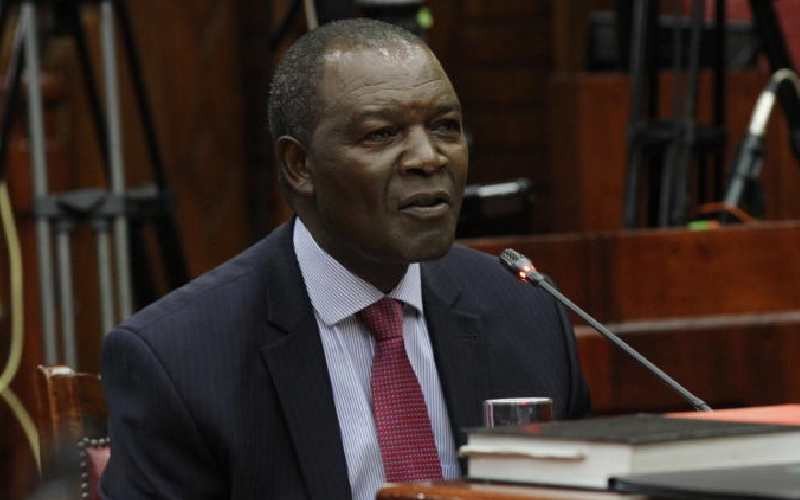
Central Bank of Kenya Governor Kamau Thugge stressed the importance of revenue mobilization to reduce borrowing and stabilize the country’s debt. President William Ruto has consistently expressed confidence in Kenya’s capacity to mobilize Sh3 trillion annually in taxes. The recent revenue surge reflects the efficacy of these measures in achieving fiscal goals.
Photo (standard media)
By: Montel Kamau
Serrari Financial Analyst
13th November, 2023