










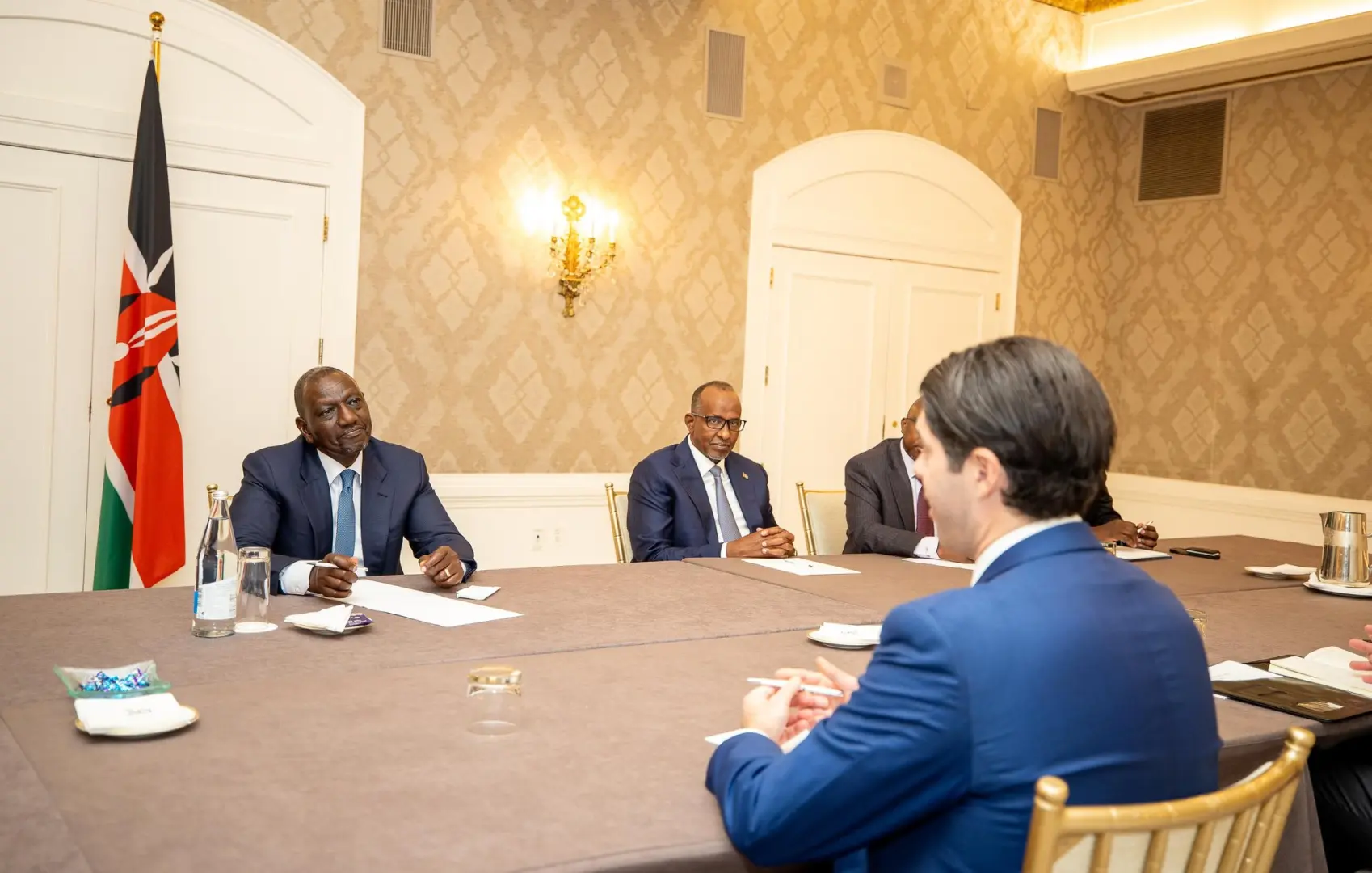
President William Ruto has announced a landmark agreement with the United States International Development Finance Corporation (DFC) that promises to reshape Kenya’s debt profile while unlocking billions in new infrastructure, energy, and technology investments. Following high-level talks with DFC Chief Executive Officer Ben Black in Washington, D.C. on December 3, 2025, Ruto revealed that the American development finance institution had agreed to proceed with a $1 billion debt-for-food security swap—a financial mechanism that will allow Kenya to replace expensive existing commercial loans with more affordable long-term financing.
The announcement, made via the President’s official X account on the night of December 3, represents a major diplomatic and economic breakthrough for Kenya as it grapples with one of the world’s heaviest debt service burdens. The agreement comes at a critical juncture for East Africa’s largest economy, which spends approximately one-third of its revenue on interest payments—among the highest ratios globally—leaving limited resources for essential services like healthcare, education, and social protection.
Build the future you deserve. Get started with our top-tier Online courses: ACCA, HESI A2, ATI TEAS 7, HESI EXIT, NCLEX-RN, NCLEX-PN, and Financial Literacy. Let Serrari Ed guide your path to success. Enroll today.
“We also appreciate DFC for agreeing to proceed with the $1 billion debt-for-food security swap to allow us to replace costly existing debt with lower-cost financing,” Ruto stated in his announcement. The debt-for-food security model, similar to debt-for-nature swaps that have gained traction globally in recent years, will enable Kenya to redirect savings from reduced interest payments toward critical food security programs including investments in agricultural infrastructure, climate-smart farming, nutrition initiatives, and hunger management systems.
Understanding the Debt-for-Food Security Innovation
The debt-for-food security swap represents an evolution of development financing mechanisms that have emerged as innovative solutions for heavily indebted developing nations. Under the arrangement, DFC will purchase a portion of Kenya’s expensive commercial debt, allowing the country to repay it under more favorable, lower-interest terms, with the savings from reduced interest payments channeled specifically toward food security initiatives rather than general budget support.
This financial engineering approach has precedent in recent international development finance. Countries including Ecuador, Belize, and Gabon have undertaken debt-for-nature deals in recent years, offering lower interest rates in exchange for environmental protection commitments. Ivory Coast completed the first major evolution of the model in December with a debt-for-education swap facilitated by a World Bank credit guarantee, demonstrating how the mechanism can be adapted for various development priorities.
Kenya had been planning this pioneering debt-for-food arrangement since mid-2025, with Finance Minister John Mbadi indicating ongoing discussions with the World Food Programme earlier in the year. The formalization of the agreement with DFC now provides the institutional framework and financial backing to implement what development finance experts view as a potential model for other food-insecure nations burdened by unsustainable debt.
For Kenya specifically, the deal addresses two interconnected crises simultaneously. The country’s debt sustainability challenges have severely constrained its fiscal capacity, while climate shocks and global inflation have worsened food insecurity across rural and urban populations. By linking debt relief directly to food security investments, the arrangement creates a virtuous cycle where fiscal breathing room translates into tangible improvements in agricultural productivity and household nutrition.
Kenya’s Debt Crisis: Context and Consequences
To fully appreciate the significance of the debt-for-food swap, one must understand the gravity of Kenya’s current debt situation. Kenya’s public debt rose to 11.81 trillion shillings ($91.3 billion), equivalent to 67.8 percent of GDP in June 2025, substantially above the International Monetary Fund’s 50 percent threshold for developing economies and representing an increase from 63 percent in 2024.
The composition of this debt burden reveals the challenge’s complexity. Of the 11.81 trillion shillings total, 6.33 trillion shillings was domestic debt while 5.48 trillion shillings represented external obligations owed to development partners and creditors including the World Bank, African Development Bank, China, and eurobond holders. The government spent 1.72 trillion shillings servicing debt in the 2024/25 fiscal year, with 1.14 trillion shillings paid to domestic lenders and 579 billion shillings to foreign creditors.
A recent report by the Kenya Human Rights Commission titled “The Economics of Repression” documented the social consequences of this debt burden. The commission found that 68 percent of all ordinary revenue is spent on servicing public debt and paying salaries, leaving less than one-third of the national budget for health, education, food security, water, housing, and social protection. Even more alarming, interest payments alone have surged from 18 percent to 25 percent of total government spending in just four years—a shift draining funds from frontline services and weakening social safety nets.
The debt accumulation trajectory illustrates how quickly fiscal sustainability can deteriorate. When former President Mwai Kibaki completed his term in 2013, Kenya owed 1.894 trillion shillings, equivalent to 51.7 percent of GDP. Through President Uhuru Kenyatta’s decade in power, Kenya borrowed 6.7 trillion shillings—nearly five times Kibaki’s total—primarily from commercial lenders and China to finance massive infrastructure projects including the Standard Gauge Railway linking Nairobi to Mombasa and 11,000 kilometers of tarmacked roads. While these projects delivered physical infrastructure, many failed to generate anticipated revenue streams, leaving Kenya servicing expensive commercial debt without corresponding income sources to offset repayment burdens.
President Ruto inherited this fiscal crisis and has faced intense political pressure to reduce debt levels while maintaining essential services. Attempts to raise revenues through tax increases sparked deadly protests in 2024 when the proposed Finance Bill included measures widely viewed as placing excessive burdens on already struggling citizens. The subsequent withdrawal of controversial tax provisions created a revenue gap that further constrained the government’s fiscal maneuverability, making alternative financing arrangements like the debt-for-food swap particularly attractive.
DFC’s Expanded Engagement with Kenya
Beyond the debt swap, President Ruto’s discussions with DFC CEO Ben Black revealed the American development finance institution’s ambitious plans for deepened engagement with Kenya across multiple strategic sectors. The DFC expressed strong interest in expanding its portfolio in food security, infrastructure, energy, and information and communications technology—sectors closely aligned with Kenya’s development priorities under the Vision 2030 framework.
“Held talks with the Chief Executive Officer of the United States International Development Finance Corporation (DFC), Ben Black, Washington, D.C., the United States,” Ruto stated in his announcement. “We welcome the DFC’s willingness to increase its scope of engagement with Kenya in the areas of food security, infrastructure, energy, and ICT. This mutually beneficial partnership aligns with our national priorities and supports our drive for sustainable growth.”
The DFC’s commitment represents continuation and expansion of an already substantial American development finance presence in Kenya. Earlier in 2024, DFC CEO Scott Nathan announced a financing package that elevated DFC’s exposure in Kenya above $1 billion, including investments across energy, e-mobility, digital connectivity, and affordable housing. The May 2024 announcement during President Ruto’s state visit to Washington included over $250 million in new DFC financing for critical projects such as $180 million for Acorn Holdings Limited to finance affordable student housing, $51 million for M-KOPA Kenya Limited to expand digital connectivity, and multiple loans totaling $30 million for e-mobility companies including Mogo Auto Kenya and BasiGo.
Renewable Energy: A Strategic Priority
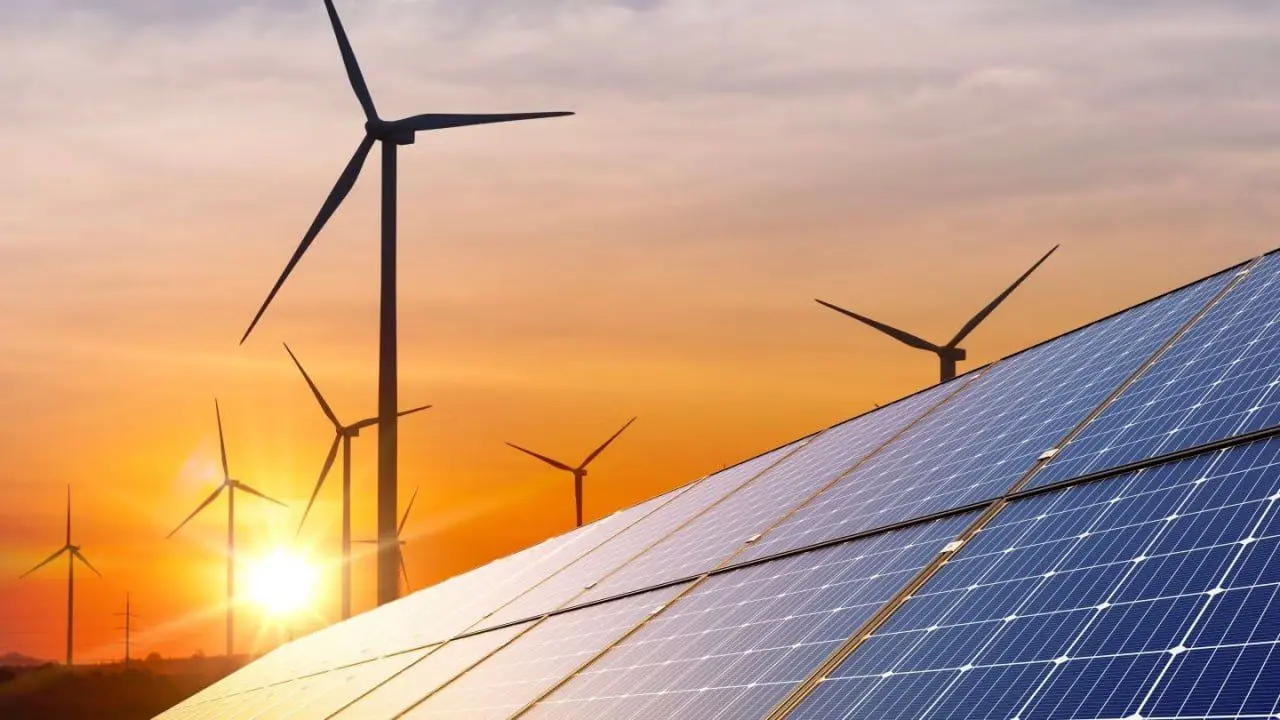
President Ruto disclosed that upcoming DFC cooperation will place significant emphasis on renewable energy, with the American institution keen to partner on Kenya’s geothermal fields, wind farms, and solar plants. “There is strong potential for collaboration in energy, especially in geothermal, wind, and solar, to reinforce our renewable power base,” the president stated.
Kenya’s renewable energy sector represents one of Africa’s most impressive success stories and offers compelling investment opportunities for international development finance. In 2021, 81 percent of Kenya’s electricity generation came from low-carbon sources including geothermal, hydro, wind, and solar power, positioning the country as a continental leader in clean energy transition. By 2024, that proportion had increased further, with Kenya’s electricity mix reaching 92 percent renewable.
Geothermal energy constitutes Kenya’s renewable energy foundation and primary competitive advantage. Geothermal contributes approximately 45 percent to the Kenyan electricity grid, drawn primarily from the country’s portion of the Great Rift Valley where high-temperature steam extracted from deep underground powers turbines around the clock. Kenya now ranks as Africa’s top geothermal producer, with installed capacity approaching 1,000 megawatts and massive potential still untapped in the Rift Valley region.
The Olkaria geothermal complex near Lake Naivasha represents one of the world’s largest geothermal operations, developed progressively since the 1980s with support from international development finance institutions including the European Investment Bank. The government established the Geothermal Development Company 20 years ago to lead exploration and drilling, reducing financial risks that had deterred private sector participation in what is inherently a high-risk, capital-intensive endeavor requiring drilling wells thousands of meters deep without certainty of finding commercially viable steam resources.
Kenya’s wind energy sector has expanded dramatically over the past decade, anchored by the Lake Turkana Wind Power Plant, Africa’s largest wind farm comprising 365 turbines generating 310 megawatts of clean electricity—enough to power over one million homes. The Lake Turkana project, financed by the African Development Bank, European Investment Bank, and Standard Bank with a €225 million EIB loan signed in 2014, consistently operates at a capacity factor around 57 percent, substantially above the global average of 28 to 40 percent, demonstrating the exceptional quality of Kenya’s wind resources.
Additional wind projects have followed, including the 100-megawatt Kipeto wind power plant funded by DFC and commissioned in late 2021, with GE Energy providing the technology. Kenya Power and Light Company (KenGen) has planned additional wind investments in Meru and Marsabit counties, capitalizing on Kenya’s estimated 3,000 megawatts of wind power potential.
Solar energy, while currently representing a smaller proportion of Kenya’s energy mix, is experiencing rapid growth driven by exceptional irradiation levels throughout the year. Solar contributes approximately 17 percent to the grid, with grid-connected solar capacity growing 20 percent in 2024 to reach around 340 megawatts of installed capacity. Kenya’s solar value chain could support 111,000 direct jobs by 2030, the highest tally on the continent after South Africa, according to recent forecasts.
Kenya’s ambitious target to achieve 100 percent renewable energy on the national grid by 2030 creates substantial opportunities for international development finance institutions like DFC to support grid modernization, energy storage systems, transmission infrastructure expansion, and deployment of additional renewable generation capacity. The government’s complementary goals include achieving 100 percent clean cooking by 2028 and reaching net-zero emissions by 2050, creating a comprehensive clean energy transition framework requiring sustained investment over multiple decades.
DFC’s renewable energy engagement in Kenya builds on established precedent. Previous DFC investments have supported a $10 million loan to Roam Electric Ltd. for electric vehicle production, $10 million loans each to Mogo Auto Kenya and BasiGo advancing e-mobility infrastructure, and various renewable energy projects aligned with President Ruto’s Africa Green Industrialization Initiative. The institution’s willingness to expand renewable energy financing signals confidence in Kenya’s policy environment, market fundamentals, and technical capacity to successfully implement large-scale clean energy projects.
One decision can change your entire career. Take that step with our Online courses in ACCA, HESI A2, ATI TEAS 7, HESI EXIT, NCLEX-RN, NCLEX-PN, and Financial Literacy. Join Serrari Ed and start building your brighter future today.
Infrastructure Investment Focus
President Ruto confirmed that DFC intends to support key infrastructure projects encompassing highway expansion and upgrading, port modernization, improvements at Jomo Kenyatta International Airport (JKIA), and investment in Kenya’s proposed National Infrastructure Fund. “We also see room for joint work in infrastructure development, including the expansion of key roads, ports, and the modernisation of Jomo Kenyatta International Airport,” Ruto stated. “DFC is also keen to invest in our proposed National Infrastructure Fund, which will help accelerate strategic projects across the country.”
Kenya’s infrastructure needs remain substantial despite significant investments over the past two decades. The country’s road network, while dramatically improved from previous decades, requires continuous expansion and upgrading to accommodate growing traffic volumes, support agricultural commercialization in rural areas, and facilitate regional trade. Port infrastructure at Mombasa, Kenya’s primary maritime gateway serving not only Kenya but landlocked neighbors including Uganda, Rwanda, Burundi, South Sudan, and eastern Democratic Republic of Congo, faces capacity constraints that limit throughput efficiency and increase logistics costs throughout the regional supply chain.
Jomo Kenyatta International Airport, East Africa’s busiest aviation hub handling millions of passengers annually and serving as a critical connection point between Africa, Europe, Asia, and the Middle East, requires modernization to maintain competitiveness as other regional hubs like Addis Ababa and Kigali expand their facilities and service offerings. Previous plans for JKIA modernization, including a controversial proposed lease arrangement with India’s Adani Group that sparked public opposition, demonstrate both the urgency of airport improvements and the political sensitivity surrounding infrastructure financing arrangements involving foreign entities.
The proposed National Infrastructure Fund represents a strategic financing vehicle designed to pool resources from government budgets, development partners, and private sector participants to accelerate implementation of priority infrastructure projects. By expressing willingness to invest in this fund structure, DFC signals support for Kenya’s efforts to create sustainable, locally managed infrastructure financing mechanisms rather than relying exclusively on project-by-project foreign financing that can create debt sustainability challenges.
Establishing a Permanent DFC Presence in Nairobi
In a move demonstrating long-term commitment to Kenya and the broader East African region, DFC announced it will station a permanent representative in Nairobi beginning January 2026, positioning Kenya as a key regional hub for American development financing activities. “To further support our engagements, DFC has agreed to send a representative to be based in Nairobi from January 2026,” President Ruto confirmed.
The opening of a regional DFC office at the U.S. Embassy in Nairobi was first announced in May 2024 during President Ruto’s state visit to Washington, with DFC CEO Scott Nathan explaining that the new office will significantly increase DFC’s capacity for business development and catalyze investment in vital sectors throughout Kenya and the region. The physical presence of DFC staff in Nairobi will facilitate more responsive engagement with potential borrowers, accelerate due diligence processes, enable closer monitoring of existing investments, and demonstrate visible American commitment to supporting Kenya’s development trajectory.
For prospective clients—whether Kenyan companies seeking expansion capital, regional businesses exploring growth opportunities, or international firms considering East African investments—the presence of DFC representatives in Nairobi reduces transaction costs and information asymmetries that can impede deal flow. Local presence also enables DFC to identify investment opportunities that might not emerge through Washington-based operations, understand local market dynamics and political economy considerations more thoroughly, and build relationships with government counterparts, private sector associations, and development partners that facilitate more effective collaboration.
The Nairobi office will serve a regional mandate extending beyond Kenya to support DFC’s engagement across East Africa, recognizing Kenya’s position as the regional economic anchor and its strategic importance as a gateway to markets in Uganda, Tanzania, Rwanda, Burundi, South Sudan, eastern Democratic Republic of Congo, Ethiopia, and Somalia. Kenya’s relatively developed financial sector, sophisticated professional services ecosystem, established logistics infrastructure, and stable governance structures make it an attractive base for regional operations.
Strategic Context: US-Kenya Partnership Evolution
The debt-for-food swap and expanded DFC engagement represent the latest chapter in evolving US-Kenya bilateral relations that have intensified significantly under the Biden and Trump administrations. Kenya received designation as a Major Non-NATO Ally in 2024, reflecting its importance to American strategic interests in East Africa including counterterrorism cooperation, maritime security, regional stability, and democratic governance.
President Ruto’s visit to Washington in December 2025 occurred in the context of witnessing the signing of the DRC-Rwanda Peace Agreement at the invitation of U.S. President Donald Trump, underscoring Kenya’s role as a diplomatic convener and peace facilitator in the Great Lakes region. Kenya’s leadership in regional peace processes, its troop contributions to peacekeeping missions, and its advocacy for multilateral approaches to continental challenges align with American interests in promoting stability and economic development across Africa.
The DFC’s expanded engagement with Kenya also reflects broader American development finance strategy emphasizing competition with China’s Belt and Road Initiative for influence in developing economies. China remains Kenya’s largest bilateral creditor, with approximately $8 billion of Kenya’s external debt owed to Chinese institutions, primarily for infrastructure projects including the Standard Gauge Railway. By offering attractive financing terms through institutions like DFC, the United States aims to provide alternative sources of development capital that come with different governance expectations, transparency requirements, and conditionality structures than Chinese lending.
Economic and Political Implications
The debt-for-food swap and associated DFC commitments carry significant economic and political implications for Kenya’s development trajectory. Economically, the arrangement provides fiscal space that has become increasingly scarce as debt service obligations consume growing proportions of government revenue. The ability to refinance expensive commercial debt at concessional terms reduces the government’s debt service burden, potentially freeing hundreds of millions of shillings annually that can be redirected toward development priorities rather than interest payments to commercial creditors.
The requirement that savings be channeled specifically toward food security investments creates accountability mechanisms ensuring that debt relief translates into tangible development outcomes rather than disappearing into general budget support that might be diverted toward less productive purposes. Food security investments—including agricultural infrastructure, climate-smart farming techniques, irrigation systems, crop storage facilities, agricultural extension services, and nutrition programs—can generate multiplier effects throughout rural economies while reducing Kenya’s vulnerability to climate shocks and global food price volatility that have repeatedly threatened household food security in recent years.
Politically, the agreement provides President Ruto with a visible diplomatic success demonstrating his ability to leverage Kenya’s strategic importance to secure favorable financing terms from international partners. The announcement comes amid ongoing political challenges including managing coalition dynamics within the Kenya Kwanza alliance, addressing public frustration over the cost of living, responding to demands for accountability regarding corruption and governance failures, and preparing for the next electoral cycle. Foreign policy achievements and successful debt management can help shore up political support by demonstrating competent leadership in challenging circumstances.
However, the arrangement also carries risks and limitations that merit recognition. Debt swap mechanisms, while innovative, do not eliminate Kenya’s underlying fiscal challenges—they merely restructure obligations and potentially extend repayment timelines. Without fundamental improvements in revenue mobilization, expenditure efficiency, and economic growth, Kenya will continue facing debt sustainability challenges regardless of individual debt relief arrangements. The savings generated by the swap, while meaningful, represent a fraction of Kenya’s overall debt service burden and will not by themselves restore fiscal sustainability.
The food security conditionality, while laudable in principle, raises implementation questions about governance structures, monitoring mechanisms, accountability frameworks, and potential fungibility issues. Ensuring that saved resources genuinely flow toward food security programs rather than substituting for resources that would have been allocated to those programs anyway requires robust verification systems and political commitment to honoring the spirit of the agreement beyond technical compliance.
Conclusion: A Strategic Recalibration
President Ruto’s announcement of the $1 billion debt-for-food swap with DFC, alongside commitments for expanded infrastructure and renewable energy investments and the establishment of a permanent DFC presence in Nairobi, represents a strategic recalibration of Kenya’s approach to development finance. Rather than continuing down a path of accumulating expensive commercial debt that has pushed Kenya to the brink of debt distress, the government is pursuing innovative financing mechanisms that link debt relief to specific development objectives while leveraging Kenya’s strategic importance to secure favorable terms from bilateral partners.
The arrangement reflects broader trends in international development finance where debt sustainability concerns have prompted experimentation with alternatives to traditional lending including debt swaps for nature conservation, education, or food security; credit guarantees that reduce borrowing costs; and blended finance structures combining concessional and commercial capital. As climate change intensifies pressure on vulnerable economies, as global food security challenges mount, and as debt burdens constrain fiscal capacity in many developing countries, these innovative mechanisms may become increasingly important tools in the development finance toolkit.
For Kenya specifically, success will depend not just on securing favorable financing terms but on using freed resources productively, accelerating economic growth to improve debt sustainability ratios, strengthening revenue mobilization to reduce dependence on borrowing, and implementing structural reforms that enhance competitiveness and productivity across the economy. The debt-for-food swap provides breathing room, but sustainable prosperity requires comprehensive economic transformation that generates inclusive growth, creates quality employment, and delivers improved living standards for Kenya’s rapidly growing population.
The DFC’s long-term commitment signaled by opening a Nairobi office suggests confidence in Kenya’s potential and recognition of the country’s strategic importance to American interests in Africa. Whether that confidence proves warranted will depend on Kenya’s ability to leverage this support effectively, implement agreed reforms, maintain macroeconomic stability, strengthen governance institutions, and navigate the complex political economy of development policy in a vibrant but challenging democracy. The foundations are being laid; the challenge now is building upon them to create lasting prosperity.
Catch Up With Our Other Headlines
4th December, 2025
South Africa’s Economic Growth Moderates to 0.5% in Q3 2025 as Mining Sector Propels Recovery
Kenya’s November 2025 Inflation Eases to 4.5% as Transport Costs Surge Despite Stable Fuel Prices
Ready to take your career to the next level? Join our Online courses: ACCA, HESI A2, ATI TEAS 7 , HESI EXIT , NCLEX – RN and NCLEX – PN, Financial Literacy!🌟 Dive into a world of opportunities and empower yourself for success. Explore more at Serrari Ed and start your exciting journey today! ✨
Track GDP, Inflation and Central Bank rates for top African markets with Serrari’s comparator tool.
See today’s Treasury bonds and Money market funds movement across financial service providers in Kenya, using Serrari’s comparator tools.
Photo source: Google
By: Montel Kamau
Serrari Financial Analyst
4th December, 2025
Article, Financial and News Disclaimer
The Value of a Financial Advisor
While this article offers valuable insights, it is essential to recognize that personal finance can be highly complex and unique to each individual. A financial advisor provides professional expertise and personalized guidance to help you make well-informed decisions tailored to your specific circumstances and goals.
Beyond offering knowledge, a financial advisor serves as a trusted partner to help you stay disciplined, avoid common pitfalls, and remain focused on your long-term objectives. Their perspective and experience can complement your own efforts, enhancing your financial well-being and ensuring a more confident approach to managing your finances.
Disclaimer: This article is for informational purposes only and does not constitute financial advice. Readers are encouraged to consult a licensed financial advisor to obtain guidance specific to their financial situation.
Article and News Disclaimer
The information provided on www.serrarigroup.com is for general informational purposes only. While we strive to keep the information up to date and accurate, we make no representations or warranties of any kind, express or implied, about the completeness, accuracy, reliability, suitability, or availability with respect to the website or the information, products, services, or related graphics contained on the website for any purpose. Any reliance you place on such information is therefore strictly at your own risk.
www.serrarigroup.com is not responsible for any errors or omissions, or for the results obtained from the use of this information. All information on the website is provided on an as-is basis, with no guarantee of completeness, accuracy, timeliness, or of the results obtained from the use of this information, and without warranty of any kind, express or implied, including but not limited to warranties of performance, merchantability, and fitness for a particular purpose.
In no event will www.serrarigroup.com be liable to you or anyone else for any decision made or action taken in reliance on the information provided on the website or for any consequential, special, or similar damages, even if advised of the possibility of such damages.
The articles, news, and information presented on www.serrarigroup.com reflect the opinions of the respective authors and contributors and do not necessarily represent the views of the website or its management. Any views or opinions expressed are solely those of the individual authors and do not represent the website's views or opinions as a whole.
The content on www.serrarigroup.com may include links to external websites, which are provided for convenience and informational purposes only. We have no control over the nature, content, and availability of those sites. The inclusion of any links does not necessarily imply a recommendation or endorsement of the views expressed within them.
Every effort is made to keep the website up and running smoothly. However, www.serrarigroup.com takes no responsibility for, and will not be liable for, the website being temporarily unavailable due to technical issues beyond our control.
Please note that laws, regulations, and information can change rapidly, and we advise you to conduct further research and seek professional advice when necessary.
By using www.serrarigroup.com, you agree to this disclaimer and its terms. If you do not agree with this disclaimer, please do not use the website.
www.serrarigroup.com, reserves the right to update, modify, or remove any part of this disclaimer without prior notice. It is your responsibility to review this disclaimer periodically for changes.
Serrari Group 2025