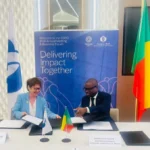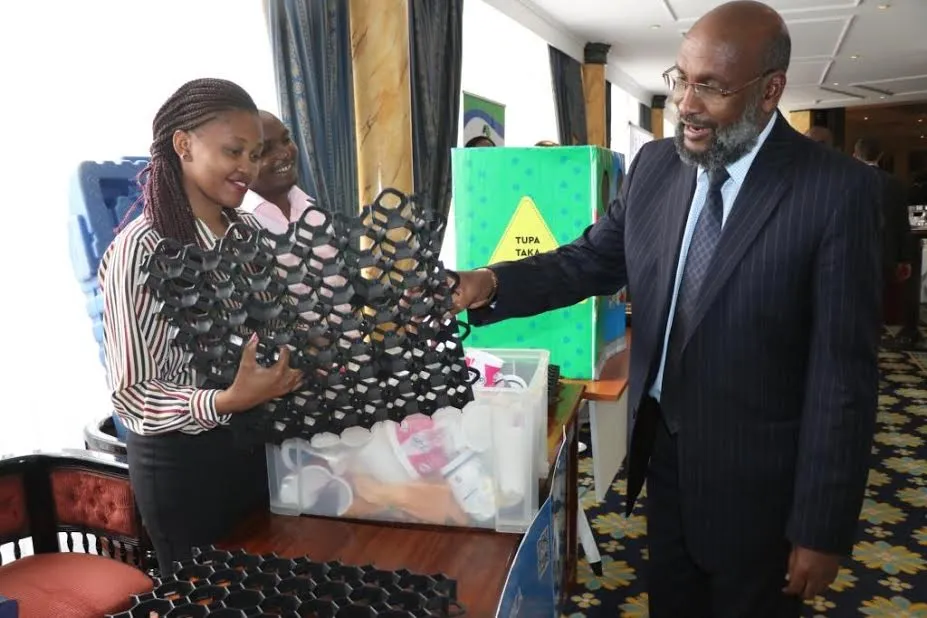
Principal Secretary for Foreign Affairs Dr. Korir Sing’Oei on December 10, 2025, presided over the signing of a transformative partnership that positions Kenya at the forefront of Africa’s battle against plastic pollution. The agreement establishes the Kenya National Plastics Action Partnership (NPAP Kenya), marking Kenya’s formal entry into a 25-country global network now reaching over 1.5 billion people worldwide.
The partnership between Kenya and the World Economic Forum’s Global Plastic Action Partnership (GPAP) creates a nationally owned, multi-stakeholder platform designed to accelerate the country’s transition toward a circular plastics economy while advancing its ambitious green industrialization agenda. This collaboration arrives at a critical juncture as plastic waste globally is expected to nearly double by 2040, threatening ecosystems, biodiversity, and human health across continents.
Build the future you deserve. Get started with our top-tier Online courses: ACCA, HESI A2, ATI TEAS 7, HESI EXIT, NCLEX-RN, NCLEX-PN, and Financial Literacy. Let Serrari Ed guide your path to success. Enroll today.
Building on Environmental Leadership
Kenya’s decision to join GPAP builds upon decades of environmental stewardship that has established the nation as a regional pioneer. The country’s 2017 plastic bag ban—one of the world’s strictest—demonstrated unwavering commitment to tackling pollution at its source. According to government assessments, the ban achieved an 80% success rate in enforcement, eliminating an estimated 6.2 billion bags from the waste stream.
Building on this momentum, Kenya banned single-use plastics in all protected areas and national parks in 2020, a move praised by the United Nations Environment Programme as exemplifying “sustainable management of waste” in pristine landscapes home to iconic wildlife species. These decisive actions positioned Kenya as an environmental leader not just nationally, but across the East African Community.
Kenya has been instrumental in advancing the East African Community Single-Use Plastics Bill, a landmark piece of regional legislation currently progressing through the East African Legislative Assembly (EALA). If enacted, the bill would harmonize environmental laws and prevent cross-border plastic leakage across Kenya, Uganda, Tanzania, Burundi, Rwanda, South Sudan, Somalia, and the Democratic Republic of Congo—creating regulatory certainty for businesses scaling circular manufacturing solutions across the region.
A Multi-Stakeholder Framework for Transformation
NPAP Kenya represents a fundamental shift from fragmented environmental initiatives to a coordinated national framework. The partnership brings together an unprecedented coalition of stakeholders: government agencies spanning environment, trade, and industrialization; private sector leaders from manufacturing and retail; civil society organizations working at grassroots levels; academic institutions conducting cutting-edge research; innovators developing sustainable materials; and development partners providing technical and financial support.
This collaborative model mirrors GPAP’s proven approach across its global network. Since its launch in 2018, GPAP has demonstrated that meaningful progress against plastic pollution requires co-creation among diverse stakeholders. The platform facilitates dialogue, aligns objectives, and leverages complementary resources to drive impact at scale.
NPAP Kenya’s mandate extends beyond environmental protection to encompass economic transformation. The partnership seeks to tackle plastic pollution while simultaneously unlocking inclusive and sustainable economic growth—recognizing that environmental and economic objectives must advance in tandem rather than in opposition.
Aligning with Kenya’s Green Industrialization Strategy
The timing of NPAP Kenya’s establishment aligns strategically with Kenya’s broader economic vision. The country’s Green Economy Strategy and Implementation Plan (GESIP) for 2016-2030 aims to embed sustainable development principles into the nation’s growth trajectory, building upon the foundation established by Kenya Vision 2030.
Kenya’s industrial policy has evolved significantly in recent years. The Green Economy Strategy emphasizes transitioning from resource-intensive linear economic models toward circular approaches that design out waste, keep materials in use, and regenerate natural systems. Manufacturing companies across Kenya are increasingly adopting circular innovations, driven by resource supply considerations and regulatory requirements.
Government officials have emphasized that Kenya’s current economic model—predominantly linear and resource-intensive—leaves the economy vulnerable to external shocks including fluctuations in global commodity prices and climate variability. As Principal Secretary Dr. Eng. Festus Ng’eno noted at the 2025 Annual Circular Economy Conference, “By establishing local resource loops, we will reduce our dependence on imported goods, thereby enhancing supply chain resilience.”
The partnership directly supports this vision by mobilizing investment in sustainable materials, fostering innovation in circular manufacturing processes, and strengthening recycling value chains nationwide. These efforts are expected to boost productivity and competitiveness, particularly among small and medium enterprises (SMEs) and manufacturers who form the backbone of Kenya’s industrial sector.
Economic Diplomacy and Global Standards
NPAP Kenya serves as more than an environmental initiative—it functions as a strategic instrument of economic diplomacy. The partnership enhances Kenya’s alignment with emerging global Environmental, Social, and Governance (ESG) standards that increasingly shape international investment decisions and market access.
As multinational corporations face growing pressure from investors and consumers to demonstrate environmental responsibility, they are restructuring supply chains to favor countries with robust sustainability frameworks. Kenya’s participation in GPAP—which includes partnerships with major multinationals like PepsiCo, The Coca-Cola Company, and Nestlé—positions Kenyan enterprises to access expanding green value chains and attract foreign direct investment in circular manufacturing.
The partnership also reinforces Kenya’s leadership in critical international environmental negotiations. Kenya has been actively engaged in the development of the UN Global Plastics Treaty through the Intergovernmental Negotiating Committee (INC) process. The country hosted INC-3 in November 2023 at UNEP headquarters in Nairobi, where over 1,900 delegates from 161 member states convened to negotiate what has been called the “Paris Agreement for plastics.”
While Kenya initially faced questions about its commitment after not signing certain declarations, the country has subsequently endorsed Rwanda’s proposal on plastic production caps, joining 42 African nations in supporting ambitious treaty language. Kenya has also lobbied to host the permanent Global Plastics Treaty Secretariat at UNEP headquarters in Nairobi, leveraging its position as a global hub for environmental governance.
Additionally, NPAP Kenya strengthens Kenya’s voice within the African Ministerial Conference on the Environment (AMCEN), where African environment ministers have consistently called for urgent and ambitious global action to address plastic pollution. This regional coordination ensures that Africa’s unique challenges and opportunities are reflected in global policy frameworks.
Joining a Proven Global Network
Through GPAP’s global network, Kenya joins a coalition of countries implementing national plastic action platforms across Africa and the Global South. The network expanded to 25 countries in January 2025 with the addition of seven new members: Angola, Bangladesh, Gabon, Guatemala, Kenya, Senegal, and Tanzania.
Across Africa, GPAP partnerships are already operational in Ghana, Nigeria, Senegal, Gabon, and Angola. Ghana’s National Plastic Action Partnership, for example, has played a prominent role in international negotiations, with its leader Kwame Asamoa Mensa-Yawson actively participating in INC-3 deliberations. Nigeria and Tanzania are also advancing their own tailored roadmaps for addressing plastic pollution while fostering economic opportunities.
Beyond Africa, the network extends to Indonesia, Vietnam, Brazil, and India—countries facing similar challenges of rapid urbanization, growing consumption, and inadequate waste management infrastructure. This South-South cooperation enables knowledge exchange, sharing of best practices, and collective learning from both successes and setbacks.
The scale of GPAP’s impact is substantial. Since 2018, the partnership has mobilized $3.17 billion in investments for waste management solutions, improved livelihoods for more than 12,000 informal waste workers, and published 10 evidence-based action roadmaps covering financing, biodiversity, and gender equality considerations.
One decision can change your entire career. Take that step with our Online courses in ACCA, HESI A2, ATI TEAS 7, HESI EXIT, NCLEX-RN, NCLEX-PN, and Financial Literacy. Join Serrari Ed and start building your brighter future today.
National Action Roadmaps: From Commitment to Implementation
Central to GPAP’s model are National Action Roadmaps—tailored, country-specific strategies that translate global commitments into concrete local action. These roadmaps are developed through extensive stakeholder consultation and are grounded in rigorous analysis of national circumstances, policy landscapes, and economic contexts.
Kenya’s roadmap development will examine the full plastics value chain, from production and consumption to collection, recycling, and disposal. It will identify priority interventions, quantify investment needs, assign implementation responsibilities, and establish monitoring frameworks for tracking progress. The roadmap methodology has been refined across GPAP’s existing partnerships, incorporating lessons learned and adapting to local contexts.
For Kenya, this means addressing specific challenges including: inadequate waste collection infrastructure, particularly in informal settlements; limited recycling capacity despite growing waste volumes; lack of markets for recycled materials; informal waste sector integration; and the need for extended producer responsibility frameworks. The roadmap will also identify opportunities such as Kenya’s strong manufacturing base, entrepreneurial culture, growing green finance sector, and policy momentum behind circular economy transitions.
Research indicates that Kenya’s circular solutions are currently inspired primarily by urgent waste management needs. NPAP Kenya offers an opportunity to expand focus beyond waste management toward designing long-lasting and restorative production patterns that prevent pollution at source.
Job Creation and Economic Opportunity
The circular economy transformation promises substantial employment benefits. GPAP estimates that circular solutions could create up to 6 million jobs globally by 2030, with the plastics sector driving much of this transformation. For Kenya, these opportunities span the value chain:
Collection and sorting: Expanding formal waste collection services while improving conditions and income for informal waste workers who currently perform much of this essential work. Organizations like Mr. Green Africa and Taka Taka Solutions have demonstrated viable business models.
Recycling and processing: Establishing or expanding facilities that transform plastic waste into usable materials. Government incentives introduced in the 2019/20 budget—including VAT exemptions for services to recycling plants and reduced corporation tax from 30% to 15% for the first five years of operation—aim to stimulate investment in this sector.
Manufacturing: Producing goods from recycled plastics, developing biodegradable alternatives, and designing products for circularity. Kenya’s manufacturing sector, concentrated in areas like Nairobi’s Ruaraka industrial area, is reaching what researchers describe as a moderate stage of greening with significant variability across industries.
Innovation and services: Creating circular business models including product-as-a-service, repair services, remanufacturing, and digital platforms connecting waste generators with recyclers.
The Kenya Private Sector Alliance (KEPSA) has emphasized that circular economy initiatives have “moved from theory to practice, from pilots to programmes, from Nairobi to counties, and from waste management to full systems redesign.” Youth-led startups, in particular, are innovating with waste-to-value solutions that address environmental challenges while creating livelihoods.
Climate and Environmental Benefits
Plastic pollution and climate change are interconnected crises. The plastics sector is responsible for an estimated 1.8 billion tonnes of greenhouse gas emissions annually—roughly 3.4% of global emissions. These emissions occur across the full lifecycle: extraction of fossil fuel feedstocks, energy-intensive manufacturing processes, transportation, and degradation of plastic waste in landfills where methane—over 80 times more potent than CO₂ in the short term—is released.
By promoting circular systems that keep plastics in use, GPAP aims to cut emissions from the plastics sector while simultaneously protecting land and ocean ecosystems. Kenya’s National Environment Management Authority has documented how plastic pollution disrupts ecosystems, clogs waterways contributing to flooding, contaminates soil affecting agricultural productivity, and threatens marine life along Kenya’s coastline.
The ban on single-use plastics in protected areas was explicitly motivated by these concerns. Research data revealed declines in plastic waste collected from conservation areas following the 2017 bag ban, demonstrating that policy interventions can yield measurable environmental improvements.
NPAP Kenya’s focus on systemic solutions—redesigning products, developing sustainable materials, improving collection systems, scaling recycling infrastructure—addresses pollution prevention rather than merely managing symptoms. This approach aligns with scientific consensus that comprehensive lifecycle interventions are necessary to meaningfully reduce plastic’s environmental footprint.
Regional Hub for Circular Innovation
Kenya’s geographic position, economic significance, and policy environment position the country to serve as a regional hub for circular-economy innovation. The country hosts numerous organizations and initiatives working on sustainability challenges: UNEP headquarters provides access to global environmental expertise; Nairobi’s vibrant startup ecosystem includes circular economy innovators; academic institutions like the University of Nairobi and Kenyatta University conduct relevant research; and civil society organizations provide implementation capacity.
The establishment of Special Economic Zones like Tatu City—which offers tax benefits and infrastructure for manufacturers—creates opportunities to cluster circular manufacturing facilities. Kenya’s membership in the East African Community and African Continental Free Trade Area provides market access that can support scaling of circular solutions beyond national borders.
Industry associations like the Kenya Association of Manufacturers and Kenya Private Sector Alliance have demonstrated commitment to sustainability. Initiatives like the LOOP Forum seek to showcase circular solutions, catalyze policy dialogues, and establish business-to-business collaborations to transition the Kenyan economy from linear to circular models.
The Kenya Extended Producer Responsibility Organization (KEPRO) and Kenya Plastics Pact bring different companies together to address waste prevention and management challenges within specific industries, demonstrating that coordinated action among competitors can yield collective benefits.
Implementation Challenges and Critical Success Factors
Despite promising momentum, Kenya’s circular economy transition faces significant obstacles that NPAP Kenya must address. Waste management infrastructure remains inadequate—the Dandora dumpsite in Nairobi symbolizes the challenges, with less than 10% of waste currently recycled and informal practices dominating the sector.
Financing remains a critical constraint, particularly for SMEs and startups lacking collateral or track records. While initiatives like Kenya Commercial Bank’s accreditation to the Green Climate Fund provide access to green financing, scaling these mechanisms requires sustained effort. Access to patient capital, technical assistance, and de-risking instruments will be essential for catalyzing private sector investment.
Policy coherence and regulatory enforcement must improve. While Kenya has enacted progressive policies including the Sustainable Waste Management Act (2022) and Extended Producer Responsibility regulations, implementation has been uneven. Coordination across national and county governments—where waste management responsibility is devolved—requires strengthening. Public awareness and behavior change are equally important; cultural attitudes toward littering and waste segregation must evolve.
The informal waste sector presents both a challenge and an opportunity. Thousands of waste pickers perform essential collection and sorting work but operate in precarious conditions with minimal income, no social protection, and safety risks. Integrating informal workers into formal systems while improving their livelihoods and working conditions is a social imperative that NPAP Kenya must prioritize.
Technology and innovation gaps exist despite Kenya’s entrepreneurial culture. Developing locally appropriate technologies—including mechanical recycling, chemical recycling, composting systems, and sustainable material alternatives—requires investment in research and development. Partnerships with academic institutions, technology transfer from GPAP’s global network, and support for local innovators will be critical.
Success will depend on sustained political commitment, adequate resourcing, effective coordination across stakeholders, and accountability mechanisms that ensure commitments translate into action.
Global Implications and the Path Forward
Kenya’s establishment of NPAP Kenya carries significance beyond its borders. As the largest global program tackling plastic pollution, GPAP’s expansion demonstrates growing recognition that plastic pollution is a solvable problem requiring coordinated action. Kenya’s participation sends a signal to other African nations that circular economy transitions are not aspirational luxuries but economic necessities aligned with development priorities.
The partnership arrives as negotiations continue on the UN Global Plastics Treaty. While talks in Geneva in August 2025 failed to reach final agreement, with divisions persisting over production caps and binding commitments, momentum toward a legally binding instrument remains strong. Kenya’s practical experience implementing NPAP can inform treaty negotiations by demonstrating what works at national level—providing evidence to support ambitious yet implementable treaty provisions.
Dr. Korir Sing’Oei, in presiding over the signing ceremony, emphasized that NPAP Kenya represents Kenya’s commitment to “leading by example” in confronting one of the 21st century’s defining environmental challenges. The Ministry of Foreign Affairs’ expression of appreciation to Clémence Reboul Schmid, GPAP Director, acknowledged the partnership’s potential to transform Kenya’s plastics management while positioning the country at the forefront of global sustainability efforts.
Looking ahead, NPAP Kenya’s success will be measured not only in tonnes of plastic diverted from landfills or emissions reduced, but in jobs created, businesses launched, communities empowered, and ecosystems restored. The partnership marks a major milestone in Kenya’s pursuit of a circular plastics future—one that strengthens national coordination, unlocks investment for sustainable industries, expands green job opportunities, and elevates Kenya’s leadership in regional and global environmental diplomacy.
As Kenya embarks on this journey, the world will be watching. The lessons learned, innovations developed, and models proven in Kenya will ripple across Africa and beyond, contributing to the collective global effort to end plastic pollution and build a sustainable, prosperous future for all.
Ready to take your career to the next level? Join our Online courses: ACCA, HESI A2, ATI TEAS 7 , HESI EXIT , NCLEX – RN and NCLEX – PN, Financial Literacy!🌟 Dive into a world of opportunities and empower yourself for success. Explore more at Serrari Ed and start your exciting journey today! ✨
Track GDP, Inflation and Central Bank rates for top African markets with Serrari’s comparator tool.
See today’s Treasury bonds and Money market funds movement across financial service providers in Kenya, using Serrari’s comparator tools.
Photo source: Google
By: Montel Kamau
Serrari Financial Analyst
11th December, 2025