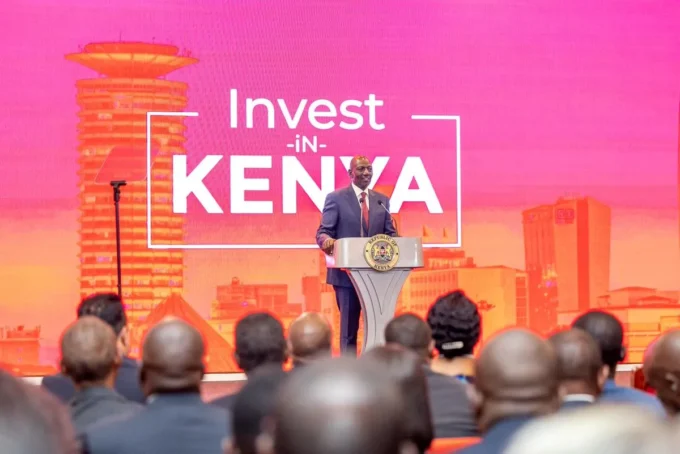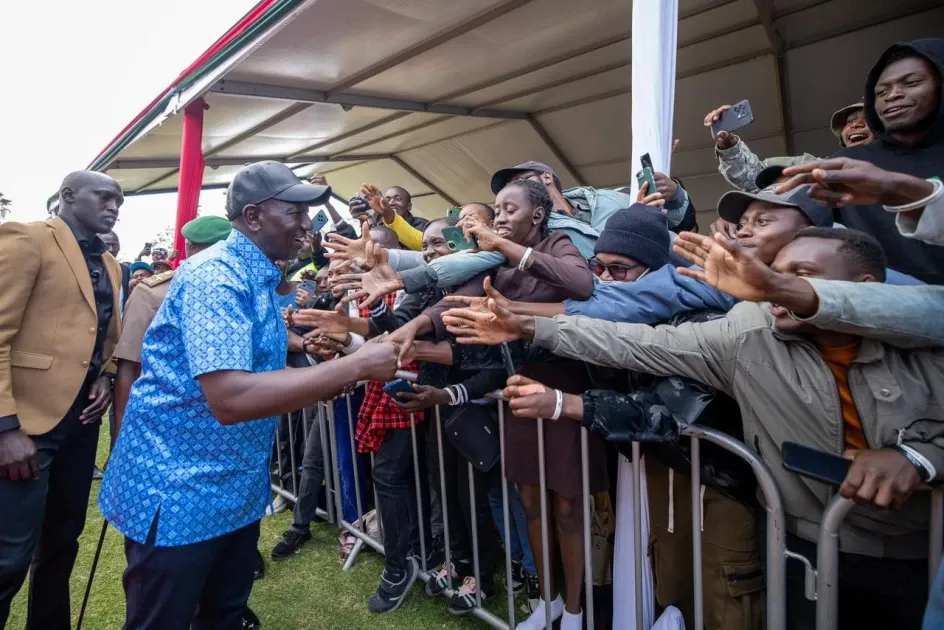
President William Ruto presided over a significant milestone in Kenya’s youth empowerment agenda on Monday, January 19, 2026, overseeing the disbursement of Ksh.258.4 million under the National Youth Opportunities Towards Advancement (NYOTA) business support programme at the Moi International Sports Centre, Kasarani.
The funds are set to benefit 10,337 young entrepreneurs from Nairobi, Kiambu, and Kajiado counties, with each beneficiary receiving an initial business start-up capital of Ksh.25,000 to establish or expand their businesses. This disbursement represents a critical phase in the government’s ambitious plan to transform the livelihoods of Kenya’s youth through structured financial support, skills development, and entrepreneurship training.
Build the future you deserve. Get started with our top-tier Online courses: ACCA, HESI A2, ATI TEAS 7, HESI EXIT, NCLEX-RN, NCLEX-PN, and Financial Literacy. Let Serrari Ed guide your path to success. Enroll today.
Structured Disbursement Model Promotes Financial Discipline
The NYOTA programme employs a carefully designed disbursement structure aimed at fostering both immediate business activity and long-term financial security. Of the Ksh.25,000 allocated to each beneficiary, Ksh.22,000 is credited directly to each recipient’s Pochi la Biashara account—a mobile money wallet specifically created for business transactions.
The remaining Ksh.3,000 is deposited into the beneficiaries’ Haba na Haba Savings Account, which is managed by the National Social Security Fund (NSSF). This mandatory savings component is designed to cultivate financial discipline and create a foundation for long-term wealth accumulation among young entrepreneurs.
According to government officials, the structured disbursement model—combining direct business capital with mandatory savings—is intended to promote accountability, financial discipline, and long-term economic sustainability among participants. The integration with NSSF also connects young entrepreneurs to Kenya’s formal social security system, potentially providing access to additional benefits and financial products.
Presidential Commitment to Digital Economy and Youth Empowerment
Speaking at the Kasarani event, President Ruto emphasized the government’s focus on empowering Kenyan youth through expanded enrollment in digital jobs and entrepreneurship opportunities. He urged young people to capitalize on the administration’s commitment to uplift their lives through initiatives with direct impact.
“Young people of Kenya, you have an opportunity to work on our digital work ecosystem without having to know anybody. You can assign yourself and work through the internet,” the President stated. “It is not just this space we are creating with NYOTA. We have opportunities on other platforms, housing, ICT, labour. We are not just giving you money, we are also going to train you, mentor you and walk with you.”
The President’s remarks underscore the government’s multi-faceted approach to youth empowerment, positioning NYOTA as one element within a broader ecosystem of support mechanisms including affordable housing programs, information and communications technology initiatives, and labor market interventions.
World Bank Partnership and Programme Scale
The NYOTA programme represents a five-year flagship partnership between the Government of Kenya and the World Bank, valued at Ksh.5 billion. This substantial investment reflects international recognition of Kenya’s youth unemployment challenges and the potential for structured entrepreneurship support to generate sustainable employment and economic growth.
The programme is designed to support 100,000 young people across the country, with at least 70 beneficiaries drawn from each of Kenya’s 1,450 wards. This distribution model ensures geographic equity and reaches youth in both urban and rural settings, from densely populated metropolitan areas to remote constituencies that have historically lacked access to formal financial services and entrepreneurship support.
World Bank Country Director Qimiao Fan, who has participated in NYOTA launch events across the country, reaffirmed the institution’s commitment to supporting youth employment initiatives: “The NYOTA project is one of the solutions to address the complex challenges of youth employment.”
Implementation Structure and Phased Rollout
Beneficiaries are expected to utilize the business grants strictly in accordance with approved business plans developed during mandatory training sessions. The programme provides continuous technical support to ensure effective fund utilization and business sustainability.
In the second phase of the NYOTA project, beneficiaries will receive an additional Ksh.25,000, bringing the total support per entrepreneur to Ksh.50,000. This staged disbursement approach allows project implementers to assess business progress and provide corrective support before releasing additional capital, while also creating accountability mechanisms that encourage responsible fund management.
The nationwide rollout of NYOTA has been conducted through regional disbursement events presided over by President Ruto, accompanied by cabinet secretaries, governors, and other government officials. The first tranche of start-up capital was disbursed on November 7, 2025, covering the Western Kenya cluster of Kakamega, Vihiga, Busia and Bungoma counties, where 12,155 beneficiaries received grants totaling Ksh.303.9 million.
The second phase, which includes the Nairobi metropolitan area disbursement at Kasarani, covers 27 counties across Kenya. The rollout schedule from January 8 to January 16, 2026, has seen President Ruto crisscrossing the country to personally oversee fund disbursements in various regional hubs including Eldoret, Nakuru, Nyeri, and Machakos.
The third phase disbursement schedule—covering 16 coastal and northeastern counties including Kilifi, Lamu, Tana River, Mombasa, Kwale, Taita Taveta, Kisumu, Siaya, Homa Bay, Migori, Nyamira, Kisii, Marsabit, Garissa, Mandera and Wajir—will be announced in due course by the implementing agencies.
Deputy President Endorses Inclusive Approach
Deputy President Kithure Kindiki lauded President Ruto for the NYOTA program, highlighting its focus on empowering youth venturing into entrepreneurship regardless of their educational background or skill level. Kindiki emphasized the initiative’s impact on many young lives and pledged his support for the Head of State’s ambitious plans.
“NYOTA is promoting inclusivity in helping our youth because it doesn’t consider only those who have skills or have gone to school,” Kindiki said. “Today, 70 young people from every ward in Kiambu, Nairobi and Kajiado will leave here with financial support from the NYOTA program. This is not the only youth-empowerment program we are having under the President’s leadership.”
The Deputy President’s remarks align with the programme’s targeting criteria, which focuses on vulnerable youth aged 18 to 29 years (up to 35 years for persons with disabilities) with Form Four education or below. This demographic has historically faced significant barriers to formal employment and has often been excluded from traditional financing mechanisms due to lack of collateral, credit history, or formal business experience.
Multi-Component Programme Architecture
Beyond the business start-up capital component that has garnered significant public attention, NYOTA encompasses several other interventions designed to address different facets of youth unemployment and underemployment.
On-the-Job Experience Component: The programme includes structured apprenticeships for 90,000 youth who will be placed under skilled master trainers for a period of six months before being certified. This component targets youth who may benefit more from hands-on skills transfer than from business grants, addressing the persistent skills mismatch between educational outputs and labor market demands.
President Ruto explained that beneficiaries of the On-the-Job training component will be attached to master craftsmen and women for skills transfer and will receive a Ksh.6,000 monthly stipend for six months. Importantly, the master craftsmen and women will also be compensated, and the government will cover the cost of beneficiaries’ certification, creating an incentive structure that encourages quality mentorship.
Recognition of Prior Learning (RPL): This component aims to train and issue certificates to 20,000 young people who have acquired skills through informal channels but lack formal credentials. RPL addresses a significant gap in Kenya’s labor market where many capable artisans and service providers cannot access formal employment or higher-tier opportunities due to lack of recognized qualifications.
Access to Government Procurement Opportunities (AGPO): Perhaps the most ambitious component in terms of scale, NYOTA will train 600,000 youth and women on how to access government procurement opportunities, empowering them to participate meaningfully in public supply chains. This component recognizes that government procurement represents a substantial market opportunity that has historically been inaccessible to young and informal entrepreneurs due to complex procedures, documentation requirements, and lack of information.
The AGPO training also covers e-Government Procurement (e-GP) platforms and access to catalytic funds, equipping participants with both the technical knowledge to navigate procurement systems and the financial literacy to leverage available support mechanisms.
Financial Inclusion and Savings Culture
A key pillar of the NYOTA Project is financial inclusion. The programme incorporates several mechanisms designed to connect beneficiaries to formal financial institutions and cultivate long-term savings habits.
The mandatory allocation of Ksh.3,000 per beneficiary to NSSF’s Haba na Haba savings accounts represents more than symbolic savings; it creates an entry point into Kenya’s social security system for young people who might otherwise remain entirely within the informal economy. The programme includes provisions for personal savings to be matched by the program, creating additional incentives for accumulation.
Notably, female beneficiaries who save an additional Ksh.400 per month for four consecutive months qualify for a Ksh.16,000 maternity benefit, addressing a specific vulnerability that disproportionately affects young women entrepreneurs. This gender-responsive design element recognizes that business continuity during pregnancy and early motherhood represents a critical challenge for women-led enterprises.
According to programme documentation, 190,000 beneficiaries will be enrolled into the NSSF-managed savings scheme overall, with a significant portion receiving matched savings support that amplifies their personal contributions.
One decision can change your entire career. Take that step with our Online courses in ACCA, HESI A2, ATI TEAS 7, HESI EXIT, NCLEX-RN, NCLEX-PN, and Financial Literacy. Join Serrari Ed and start building your brighter future today.
Accountability and Transparency Mechanisms
President Ruto has repeatedly emphasized that the NYOTA programme operates with high standards of transparency, fairness, and inclusivity. The entirely digital registration and application process, accessible via the USSD code *254#, is designed to minimize opportunities for corruption or favoritism.
“This programme involves a high level of accountability and transparency because it is about an individual’s efforts to initiate a project that transforms their life,” President Ruto explained during a disbursement event in Eldoret.
The selection process underwent a rigorous nationwide beneficiary validation exercise conducted on October 24 and 25, 2025, across all targeted constituencies. The validation was jointly overseen by Principal Secretaries in collaboration with government agencies and local stakeholders to confirm the eligibility of preselected youth applicants.
Businesses established with NYOTA funding are assessed periodically, including after two months of operation, to track progress and ensure effective use of funds. This monitoring framework allows implementing agencies to identify struggling enterprises early and provide additional support before complete business failure occurs.
Cabinet Secretary for Cooperatives and MSMEs Development Wycliffe Oparanya has emphasized the need for responsible fund utilization, clarifying that NYOTA business support funds will not be affected by Fuliza (mobile overdraft) or other lending products, ensuring that every beneficiary receives their full allocation without automatic deductions.
County-Level Support and Policy Integration
The NYOTA programme has garnered strong support from county governments, which have pledged complementary interventions to maximize programme impact. Governors from participating counties have announced various support measures including business license fee waivers, provision of business spaces within county-operated markets, access to business development services, improved market linkages, and the introduction of award programmes to recognize outstanding NYOTA entrepreneurs.
For example, Nakuru County Governor Susan Kihika offered county-level support including license waivers through the Department of Trade, access to Ziwani Market stalls, and free vocational training at county vocational training centres to enhance skills development among beneficiaries.
This multi-level government cooperation reflects a whole-of-government approach to youth empowerment, with national policy and financing complemented by county-level implementation support and local market access facilitation.
National Assembly Trade and Cooperatives Committee Vice Chair Marianne Keitany has noted that Parliament is considering the Start-Up Bill, which seeks to improve the operating environment for micro, small, and medium enterprises by mainstreaming business development services, enabling license waivers, and establishing structured capital support frameworks. The passage of this legislation would provide a more permanent policy foundation for initiatives like NYOTA.
Addressing Kenya’s Youth Unemployment Challenge
The NYOTA programme must be understood within the context of Kenya’s persistent youth unemployment challenge. Official statistics indicate that while Kenya’s overall unemployment rate stands at 5.4%, youth unemployment reaches 8.4%, with the majority of young people trapped in low-paying, unstable informal sector jobs.
An estimated 35% of young men and women between 18-34 years are either unemployed or underemployed, representing millions of individuals with limited economic prospects. Kenya’s demographic trajectory compounds this challenge, with the population projected to reach 63.9 million by 2030, including 22.3 million youths aged 15-34. The pressure to create sustainable employment opportunities continues to mount as each year brings hundreds of thousands of new labor market entrants.
The country faces a fundamental mismatch between its education system outputs and labor market absorption capacity. Only 10% of Kenya’s workforce is in formal employment, meaning the vast majority must create their own opportunities through entrepreneurship, informal employment, or subsistence activities.
Building on Past Experience: The KYEOP Legacy
NYOTA builds directly on lessons learned from the World Bank-supported Kenya Youth Employment and Opportunities Project (KYEOP), which was implemented by the government in partnership with the Kenya Private Sector Alliance (KEPSA) and the Micro and Small Enterprises Authority (MSEA).
KYEOP’s objective was to increase employment and earnings opportunities for targeted youths through four components: improving youth employability, supporting job creation, enhancing labor market information, and strengthening youth policy development and project management. The project addressed youth skills mismatch by engaging training providers and employers to offer both formal and informal work experience opportunities.
Over its implementation period, KYEOP achieved measurable results: 63,500 beneficiaries received skills training, with more than 33,000 earning skill certificates. Women were a central focus, with the program tackling barriers such as childcare and lack of capital by providing direct grants, targeted outreach, and mentoring. As a result, women experienced an 18.7% increase in employment, compared to an 18.3% increase for men.
These outcomes provided evidence that structured entrepreneurship and skills development programmes can generate meaningful employment gains when properly designed and implemented, creating the foundation for scaling up to NYOTA’s more ambitious targets.
Implementation Architecture and Institutional Coordination
NYOTA is implemented through a multi-agency approach coordinated by the State Department for Youth Affairs and Creative Economy. Partner agencies include the State Department for Labour and Skills Development, State Department for Micro, Small and Medium Enterprise Development, National Industrial Training Authority (NITA), National Employment Authority, Micro and Small Enterprises Authority (MSEA), and the National Social Security Fund (NSSF).
This institutional architecture reflects the complexity of youth employment challenges, which cannot be addressed by any single agency but require coordinated action across skills development, labor market intermediation, enterprise support, and social protection systems.
Principal Secretary for MSMEs Development, Susan Mang’eni, has emphasized that the project is designed to improve the livelihoods of vulnerable youth through enhanced employability, expansion of job opportunities, support for a youth savings culture, and improved access to markets. “We target to benefit young people in all wards. It is gender-inclusive, with emphasis on 50-50 gender parity,” she noted.
Presidential Entrepreneurship Narrative
Throughout NYOTA launch events, President Ruto has drawn on his personal entrepreneurship experience to connect with beneficiaries and emphasize the transformative potential of business ownership. The President frequently recounts how he began selling chickens with limited capital and developed it into a business that now employs thousands of people.
“Business is about hard work, and each one of us here will leave with their own money through their phone. I was a business person a while ago, and our biggest challenge was getting money to run the business. This money from the NYOTA project is very important and will help many businesspeople grow their businesses without interest,” he reiterated at a disbursement event.
The President has also warned youth against involvement in drugs and illicit substances, positioning NYOTA as a constructive alternative to behaviors that undermine young people’s potential. Deputy President Kindiki has similarly cautioned against political leaders inciting youth to violence and political confrontation, arguing that leaders should instead support initiatives that create genuine economic opportunities.
Regional Disbursement Progress
The scale of NYOTA’s rollout across Kenya has been substantial. By mid-January 2026, multiple regional clusters had completed their initial disbursements:
- Western Kenya (Kakamega, Vihiga, Busia, Bungoma): Ksh.303.9 million to 12,155 beneficiaries
- North Rift (Uasin Gishu, Elgeyo Marakwet, Nandi, Trans-Nzoia, Turkana, West Pokot): Ksh.235.6 million to 9,423 beneficiaries
- South Rift (Nakuru, Baringo, Narok, Bomet, Kericho): Ksh.245.6 million to 9,847 beneficiaries
- Central Kenya (Nyeri, Murang’a, Nyandarua, Kirinyaga): Ksh.173.2 million to 6,982 beneficiaries
- Lower Eastern (Machakos, Kitui, Makueni): Ksh.147.5 million to 5,901 beneficiaries
- Nairobi Metropolitan (Nairobi, Kiambu, Kajiado): Ksh.258.4 million to 10,337 beneficiaries
These figures demonstrate the programme’s rapid deployment and geographic reach, touching virtually every region of Kenya within a compressed timeframe.
Sector-Specific Opportunities
Cabinet Secretary for Investments, Trade and Industry, Lee Kinyanjui, has encouraged NYOTA beneficiaries in the built environment sector to tap into opportunities within the Affordable Housing Program, which represents a major government infrastructure initiative requiring extensive supply of materials, labor, and services that small enterprises can provide.
Similarly, beneficiaries have been encouraged to explore opportunities in the digital economy, renewable energy, agriculture value chains, and other priority sectors identified in Kenya’s development agenda. The government’s commitment to preferential procurement for youth-owned businesses through AGPO creates potential market access that can transform small start-ups into sustainable enterprises.
Looking Ahead: Sustainability and Scale
As NYOTA progresses through its five-year implementation timeline, questions of sustainability and long-term impact will become increasingly important. The programme’s success will be measured not just by the number of disbursements made but by the survival rate of enterprises established, the number of jobs created beyond the direct beneficiaries, and the extent to which participants transition from grant dependency to market competitiveness.
The integration of mentorship, business development services, and market linkages alongside capital provision represents a more comprehensive approach than simple cash transfer programs. However, the Kenyan business environment remains challenging, with infrastructure deficits, regulatory complexity, and limited access to follow-on financing potentially constraining enterprise growth even among well-trained entrepreneurs.
The government has signaled its intention to develop more permanent institutional frameworks for youth enterprise support, moving beyond project-based interventions to systematic policy reform. The success of NYOTA in demonstrating viable pathways from unemployment to entrepreneurship could build political support for such reforms and provide evidence for their design.
With nearly 50,000 youth having received initial disbursements by mid-January 2026, and another 50,000 expected to receive funds as the third phase rolls out, NYOTA represents one of the most ambitious youth employment interventions in Kenya’s history. Whether it succeeds in fundamentally altering youth employment outcomes will depend on effective implementation, sustained government commitment, and the entrepreneurial drive of the young Kenyans it aims to empower.
Ready to take your career to the next level? Join our Online courses: ACCA, HESI A2, ATI TEAS 7 , HESI EXIT , NCLEX – RN and NCLEX – PN, Financial Literacy!🌟 Dive into a world of opportunities and empower yourself for success. Explore more at Serrari Ed and start your exciting journey today! ✨
Track GDP, Inflation and Central Bank rates for top African markets with Serrari’s comparator tool.
See today’s Treasury bonds and Money market funds movement across financial service providers in Kenya, using Serrari’s comparator tools.
photo source : Google
By: Montel Kamau
Serrari Financial Analyst
20th January, 2026