Kenya has initiated a comprehensive overhaul of its National Environment Policy, marking a pivotal moment in the country’s approach to environmental governance as climate impacts intensify and economic pressures from natural resource degradation mount. The review of the policy, originally adopted in 2013, comes at a critical juncture when the East African nation faces escalating environmental challenges ranging from prolonged droughts in arid regions to recurrent flooding and mounting waste management crises in urban centers.
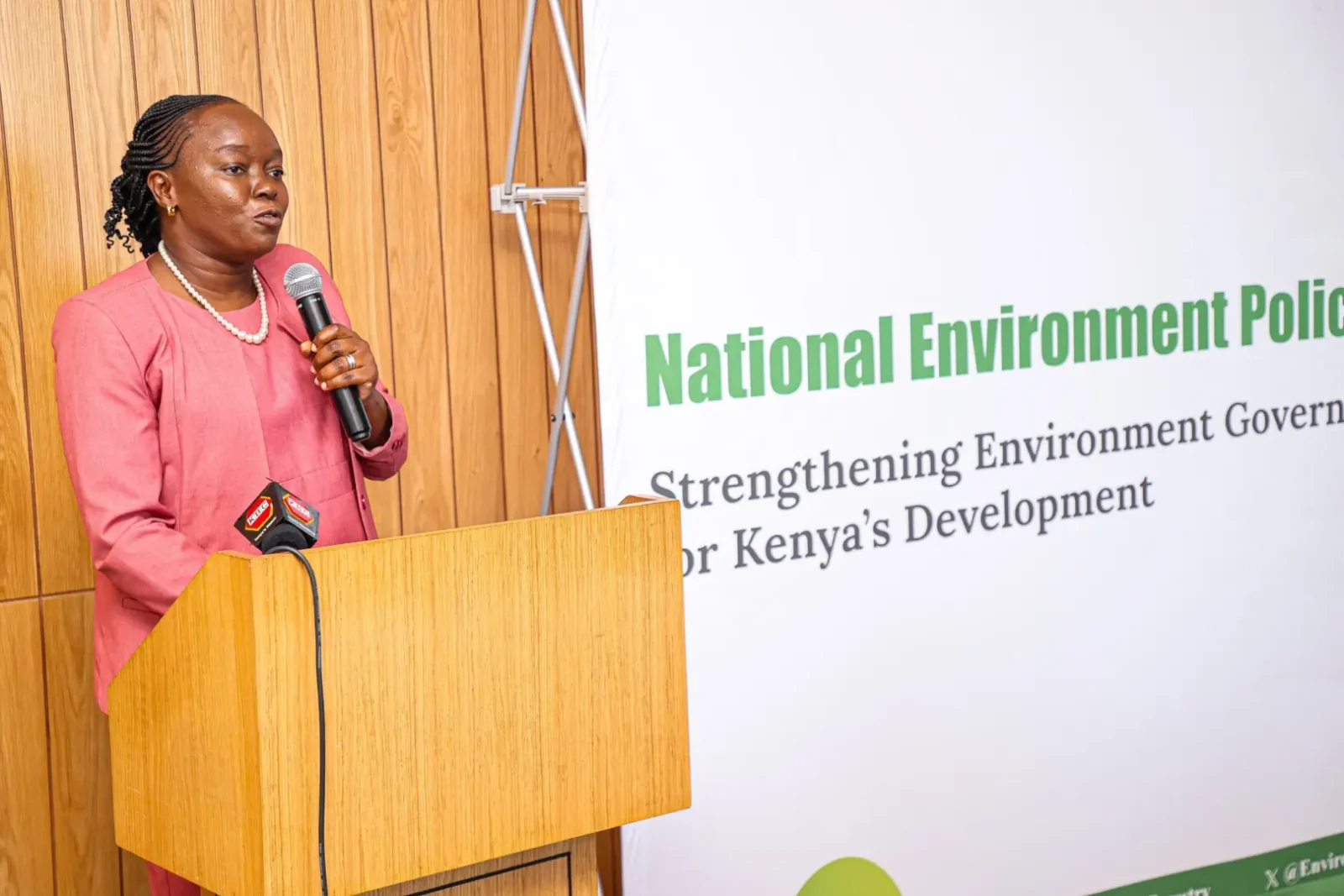
Speaking at a stakeholder forum in Nairobi, Principal Secretary for Environment and Climate Change Dr. Eng. Festus Ng’eno emphasized that the policy review is intended to modernize environmental governance and reposition Kenya to respond more effectively to climate change, biodiversity loss, and pollution. The existing framework, while foundational, no longer reflects the scale or complexity of today’s environmental realities, government officials acknowledged.
Build the future you deserve. Get started with our top-tier Online courses: ACCA, HESI A2, ATI TEAS 7, HESI EXIT, NCLEX-RN, NCLEX-PN, and Financial Literacy. Let Serrari Ed guide your path to success. Enroll today.
Constitutional Imperative and Development Alignment
Environmental protection in Kenya is not merely a policy preference but a constitutional obligation. Article 42 of Kenya’s Constitution guarantees every citizen the right to a clean and healthy environment, while environmental stewardship is embedded in the Constitution’s preamble, elevating it to a national obligation rather than a sectoral concern. This constitutional grounding provides the legal framework for the ambitious policy reforms now underway.
The revised policy is being strategically aligned with Kenya Vision 2030, the country’s long-term development blueprint, the Fourth Medium Term Plan 2023-2027, and the Bottom-Up Economic Transformation Agenda (BETA). At the international level, the policy aligns with commitments under the Paris Agreement, the Kunming-Montreal Global Biodiversity Framework, and the Sustainable Development Goals. This multi-level alignment reflects a growing recognition that environmental policy is inseparable from economic planning and development strategy.
Economic Toll of Climate Change
The economic imperative for the policy review cannot be overstated. According to Kenya’s updated Nationally Determined Contribution (NDC), adverse climate change-related events led to annual socioeconomic losses of 3-5% of total gross domestic product (GDP) between 2010 and 2020. These climate shocks are disrupting agriculture, damaging infrastructure, and increasing fiscal pressure through disaster response and recovery efforts.
The agriculture sector, which contributes about 20% of Kenya’s GDP and provides livelihoods for more than 40% of the population, faces particularly severe threats. Climate variability has resulted in reduced crop yields for staple crops, particularly maize and beans, while prolonged droughts and erratic rainfall patterns are disrupting production systems. Without effective adaptation measures, climate change is projected to reduce staple crop yields by as much as 20-30% in some areas by 2050, intensifying food insecurity across the nation.
Key sectors central to Kenya’s growth strategy—agriculture, water, energy, tourism, and housing—are increasingly exposed to climate risk. The livestock subsector is expected to suffer significant losses due to heat stress from projected temperature increases, disproportionately affecting pastoral communities in arid and semi-arid areas where poverty rates are already high. Water scarcity, including increased glacial loss and reduced river flows from Mount Kenya, is likely to have broad socioeconomic effects with adverse consequences for agricultural irrigation, hydropower generation, and sanitation.
Green and Blue Economy Opportunities
Ng’eno indicated that the revised policy will place stronger emphasis on job creation through green and blue economy opportunities, particularly targeting youth and women. Circular economy enterprises, agricultural waste management, and ecosystem-based livelihoods are expected to feature prominently as the government seeks to link environmental protection with employment generation and economic opportunity.
This focus on economic inclusion aligns with the government’s broader development agenda. The Fourth Medium Term Plan emphasizes that environmental and natural resources priorities include natural resource conservation, restoration and management, sustainable waste management and pollution control, sustainable exploitation of natural resources, and development of the blue economy.
Ambitious Tree-Planting Initiative
Ecosystem restoration represents a central pillar of the policy review. The revised framework is expected to reinforce the government’s commitment to grow 15 billion trees by 2032 and increase forest cover from the current 12.8% to 30%. This ambitious initiative, launched by President William Ruto, aims to reduce greenhouse emissions, stop and reverse deforestation, and restore 5.1 million hectares of deforested and degraded landscapes through the African Landscape Restoration Initiative.
Protecting critical water towers remains a priority given their role in food security, hydropower generation, and urban water supply. However, past restoration efforts have often struggled with weak enforcement, land tenure disputes, and limited community participation. As research has shown, tree-planting initiatives must be designed with farmers at the center—not just as recipients, but as guardians and active decision-makers shaping the future of their landscapes.
Analysts note that the success of the revised policy will depend on whether conservation targets are matched with viable livelihood alternatives for communities living in and around fragile ecosystems. The experiences from ongoing restoration efforts underscore that scaling sustainable practices requires integrated, context-specific approaches rooted in community ownership and long-term commitment.
One decision can change your entire career. Take that step with our Online courses in ACCA, HESI A2, ATI TEAS 7, HESI EXIT, NCLEX-RN, NCLEX-PN, and Financial Literacy. Join Serrari Ed and start building your brighter future today.
Sustainable Finance and Climate Funding
Financing represents a major focus of the policy review. Ng’eno pointed to plans to integrate sustainable finance instruments such as green bonds, carbon markets, and natural capital valuation into environmental governance. With public resources under pressure, the government is increasingly looking to private capital and blended finance to support climate adaptation, mitigation, and restoration efforts.
Kenya has emerged as a leader in African climate finance, with its public and private enterprises receiving significant voluntary carbon market credits. The country is developing a National Carbon Registry infrastructure to enhance transparency, integrity, and efficiency by providing visibility on all carbon projects implemented in the country. The signing of bilateral agreements with Switzerland and Sweden under Article 6.2 of the Paris Agreement promises to unlock further investment.
Kenya’s green bond market, which began in 2019 when Acorn Holdings issued East Africa’s first certified green bond, has shown steady growth. A sovereign-scale green or sustainability-linked bond was reported in mid-2025, with broad international demand pointing to growing appetite among global investors for Kenyan climate finance instruments.
The country recently submitted its Second Nationally Determined Contribution, committing to reducing greenhouse gas emissions by 35% relative to business-as-usual levels by 2035. A central focus is the energy sector, with ambitious reforms aimed at achieving 100% renewable electricity by 2035. However, experts note that without adequate funding, the removal of existing barriers, and addressing equity concerns in proposed policies, these ambitious targets may not be met.
Technology and Institutional Capacity
Advanced monitoring technologies are expected to play a larger role in environmental governance. The policy review proposes wider use of digital tools and data systems to strengthen enforcement, track environmental change, and improve early warning systems for climate-related disasters. However, observers caution that technology alone will not close governance gaps without stronger institutional capacity, particularly at the county level.
The decentralized nature of Kenya’s governance structure, with 47 counties having significant autonomy in natural resource management, presents both opportunities and challenges. Effective implementation of the revised policy will require robust coordination mechanisms between national and county governments, clear allocation of responsibilities, and adequate capacity building at the local level.
Inclusive Policy Development
Inclusivity has been positioned as a guiding principle of the review process. Ng’eno called on national and county governments, civil society, the private sector, development partners, and academia to actively engage, arguing that effective environmental policy must reflect both data and lived realities. The Nairobi stakeholder forum brought together representatives from the Kenya Climate Innovation Center, UNDP, UNODC, the National Treasury, and environmental agencies, signalling an attempt to build cross-sector ownership.
Previous environmental reforms in Kenya have often faltered at the implementation stage due to limited consultation and weak coordination across institutions. The government appears determined to avoid repeating these mistakes. Dr. Ng’eno emphasized that the State Department is conducting inter-ministerial meetings, planning an inception workshop, and organizing public participation forums to ensure broad stakeholder input.
The policy review process explicitly addresses cross-cutting elements including gender and social inclusion of women, youth, and persons living with disabilities, the rights of indigenous people and local communities, and the important issues of climate security. This comprehensive approach recognizes that environmental challenges cannot be addressed in isolation from social and economic equity concerns.
International Leadership Ambitions
Beyond domestic priorities, Kenya is positioning itself as a leader in global environmental governance. One of the key strategic priorities for 2026 is Kenya’s continued bid to host the Secretariat for the Intergovernmental Science-Policy Panel on Chemicals, Waste and Pollution (ISP-CWP) and the Plastics Treaty. This initiative leverages Kenya’s status as the global headquarters of the United Nations Environment Programme (UNEP), strengthening the country’s leadership in global environmental governance and ensuring a strong voice for the Global South, particularly African nations, in shaping international environmental policy.
Dr. Ng’eno has been instrumental in mobilizing financial resources, having secured over KSh 50 billion from various multilaterals and bilaterals including the World Bank, German Government (GIZ), Government of Italy, Global Environment Facility (GEF), Global Climate Fund (GCF), Climate Investments Funds (CIF), Adaptation Fund, and IUCN. He also oversaw the successful execution of the inaugural Africa Climate Summit and led Kenya’s organization of the UNEA 6 Summit while serving as the Technical Lead in Kenya’s participation in COP 28 in the UAE.
Legislative Framework Under Development
Several legal instruments crucial to implementing the revised policy are currently under development. These include carbon market laws, wetlands restoration regulations, and e-waste management frameworks, which are at the Attorney General’s office for formal drafting. The Climate Change Act of 2016 requires the government to develop five-year National Climate Change Action Plans to guide the inclusion of adaptation and mitigation actions into sector functions of national and county governments.
Additionally, the government has developed frameworks such as the Kenya Climate Smart Agriculture Strategy 2017-2026, which requires KSh 500 billion in funding for adaptation and mitigation actions for the agriculture sector up to 2026. This strategy aims to build resilience and adaptive capacity while reducing sectoral emissions to 30 MtCO2e relative to the business-as-usual trajectory projection of 37 MtCO2e in 2026.
Implementation Challenges and Critical Success Factors
The revised National Environment Policy arrives at a critical moment for Kenya. Climate change is no longer a future concern but a present economic and governance challenge. As environmental pressures intensify, the country faces a narrowing window to align development ambitions with ecological limits.
The success of the policy will hinge on several critical factors. First, adequate and sustained financing remains paramount. While Kenya has made strides in accessing climate finance, the scale of investment required far exceeds current mobilization levels. The government’s commitment to contribute 13% of required funding domestically, while seeking international support for the remainder, will need to be backed by concrete resource mobilization strategies and transparent allocation mechanisms.
Second, the policy must overcome the implementation gap that has plagued previous environmental initiatives. This requires not just good intentions but functional institutional arrangements, clear accountability mechanisms, and consequences for non-compliance. The role of county governments is particularly crucial, as much of the environmental management responsibility has been devolved under Kenya’s constitution.
Third, community participation and benefit-sharing arrangements will determine whether conservation targets translate into ground-level action. Communities living in and around protected areas must see tangible benefits from conservation efforts, whether through employment opportunities, sustainable livelihood programs, or equitable revenue-sharing from environmental services.
Fourth, the integration of traditional knowledge with modern technology and scientific approaches could enhance both the effectiveness and cultural appropriateness of environmental interventions. Kenya’s diverse ecosystems and communities have developed rich indigenous knowledge systems that, when properly recognized and integrated, can complement contemporary environmental management approaches.
Looking Ahead
The review of Kenya’s National Environment Policy represents more than a bureaucratic exercise—it is a strategic response to existential threats facing the nation. With climate impacts already costing the country 3-5% of GDP annually, the stakes could not be higher. The policy must balance ambitious environmental targets with economic development needs, protect vulnerable ecosystems while ensuring livelihoods for communities that depend on them, and mobilize unprecedented levels of finance while maintaining transparency and accountability.
As the consultation process unfolds, stakeholders will closely watch whether this review translates into meaningful action or becomes another well-intentioned document gathering dust on government shelves. The difference will lie in political will, adequate resourcing, effective coordination, and genuine partnership across government, private sector, civil society, and communities.
Kenya’s environmental future—and by extension, its economic prosperity and social stability—depends on getting this policy right. The window for action is narrowing, but with strong leadership, inclusive processes, and sustained commitment, the revised National Environment Policy could chart a path toward a more sustainable, resilient, and prosperous future for all Kenyans.
Ready to take your career to the next level? Join our Online courses: ACCA, HESI A2, ATI TEAS 7 , HESI EXIT , NCLEX – RN and NCLEX – PN, Financial Literacy!🌟 Dive into a world of opportunities and empower yourself for success. Explore more at Serrari Ed and start your exciting journey today! ✨
Track GDP, Inflation and Central Bank rates for top African markets with Serrari’s comparator tool.
See today’s Treasury bonds and Money market funds movement across financial service providers in Kenya, using Serrari’s comparator tools.
Photo source: Google
By: Montel Kamau
Serrari Financial Analyst
4th February, 2026