










In a decision that provided breathing room for millions of Kenyan motorists and transport operators, the Energy & Petroleum Regulatory Authority (EPRA) announced on March 14 that pump prices for all major petroleum products will remain unchanged through the March 15 to April 14, 2026 cycle. In Nairobi, Super Petrol continues to retail at Sh178.28 per litre, Diesel at Sh166.54, and Kerosene at Sh152.78 — the same rates that have applied since the previous review.
But the announcement comes with an important asterisk. The stability at the pump reflects not a stable global market — it reflects the timing of Kenya’s shipments. According to EPRA Director General Daniel Kiptoo Bargoria, the calculations are based on vessels received and discharged between February 10 and March 9, 2026 — the vast majority of which were February-priced cargoes procured before the US-Israel strikes on Iran began on February 28. “The effect of the situation in the Middle East has not had an effect on the prices yet,” Bargoria said. The word “yet” is doing significant work in that sentence.
Markets move fast; don’t get left behind. We’ve paired the Serrari Group Market Index with a curated Marketplace and a comprehensive Financial Literacy Course to ensure you have the data—and the skills—to act on it.
What the Numbers Actually Show
The freeze in pump prices does not mean import costs are frozen. EPRA’s own data, published alongside the announcement, shows that landed costs rose sharply across all three major fuel categories between January and February 2026. The average landed cost of Diesel jumped 8.46 percent, climbing from US$586.80 per cubic metre to US$636.45 per cubic metre. Kerosene rose 6.79 percent, moving from US$598.82 to US$639.48 per cubic metre. Super Petrol recorded the smallest increase, up 1.00 percent from US$576.34 to US$582.11 per cubic metre over the same period.
These increases were calculated before the full force of the Hormuz crisis hit global markets. In the weeks since February 28, Brent crude has surged above $100 per barrel for the first time since August 2022 and briefly touched $126 — with markets responding to what the International Energy Agency has called the largest supply disruption in the history of the global oil market. The pricing data underlying EPRA’s current decision predates that shock by weeks.
The Murban Crude benchmark — the reference price used in Kenya’s landed cost calculations — stood at USD63.06 per barrel in February 2026, actually down from USD65.53 in January and well below the USD80.22 recorded in March 2025. That declining crude baseline, combined with a relatively stable Kenyan shilling hovering around 129.44 per US dollar, helped prevent the February-priced cargoes from generating higher domestic pump prices. But those conditions no longer reflect what Kenya will be paying for future shipments procured during and after the conflict’s outbreak.
The Legal and Regulatory Framework Behind the Decision
EPRA’s pricing review is conducted under Section 101(y) of the Petroleum Act 2019 and Legal Notice No. 192 of 2022, which mandate the authority to calculate and gazette maximum retail prices of petroleum products each month. The prices are inclusive of the 16 percent Value Added Tax (VAT) in accordance with the Finance Act 2023, the Tax Laws (Amendment) Act 2024, and excise duty rates adjusted for inflation as outlined in Legal Notice No. 194 of 2020.
Bargoria described the purpose of the framework clearly: “The purpose of the Petroleum Pricing Regulations is to cap the retail prices of petroleum products already in the country so that importation and other prudently incurred costs are recovered while ensuring reasonable prices to consumers.” Kenya imports all its petroleum in refined form, meaning that international prices — denominated in US dollars and determined by global benchmark markets — directly feed into what consumers pay at the pump. The exchange rate between the Kenyan shilling and the US dollar is factored into each monthly calculation, making currency stability a critical component of domestic fuel affordability.
It is also worth noting that pump prices are not uniform across Kenya’s 223 towns. EPRA factors in transport costs from the Port of Mombasa when calculating prices for inland towns, meaning residents in remote counties pay significantly more. Mombasa remains the cheapest market in Kenya for fuel — Super Petrol at Sh175.00, Diesel at Sh163.26, and Kerosene at Sh149.49 per litre. At the other extreme, residents of Mandera in the far north-east pay Sh200.46 per litre for Super Petrol — more than Sh25 above the Mombasa price, reflecting the lengthy supply chains that serve the country’s most remote communities.
Behind the Scenes: Emergency Meetings and Tracked Tankers
While the March 14 announcement provided public relief, behind the scenes the Kenyan government has been in active crisis mode for nearly two weeks. Energy and Petroleum Cabinet Secretary Opiyo Wandayi convened an emergency meeting with oil marketing companies on March 10, hours after appearing at the official listing of Kenya Pipeline Company shares on the Nairobi Securities Exchange, where he sought to project public calm about fuel supply security.
Wandayi confirmed that the government has been in close contact with its three main fuel suppliers under the government-to-government (G-to-G) import deal: Saudi Aramco, the Abu Dhabi National Oil Company (ADNOC), and Emirates National Oil Company (ENOC). “We continue to engage very closely with our government-to-government suppliers — Saudi Aramco, ADNOC and ENOC — in terms of contingency planning,” Wandayi said. “For that reason, there is really no cause for alarm. In the short to medium term, we have security of supply.”
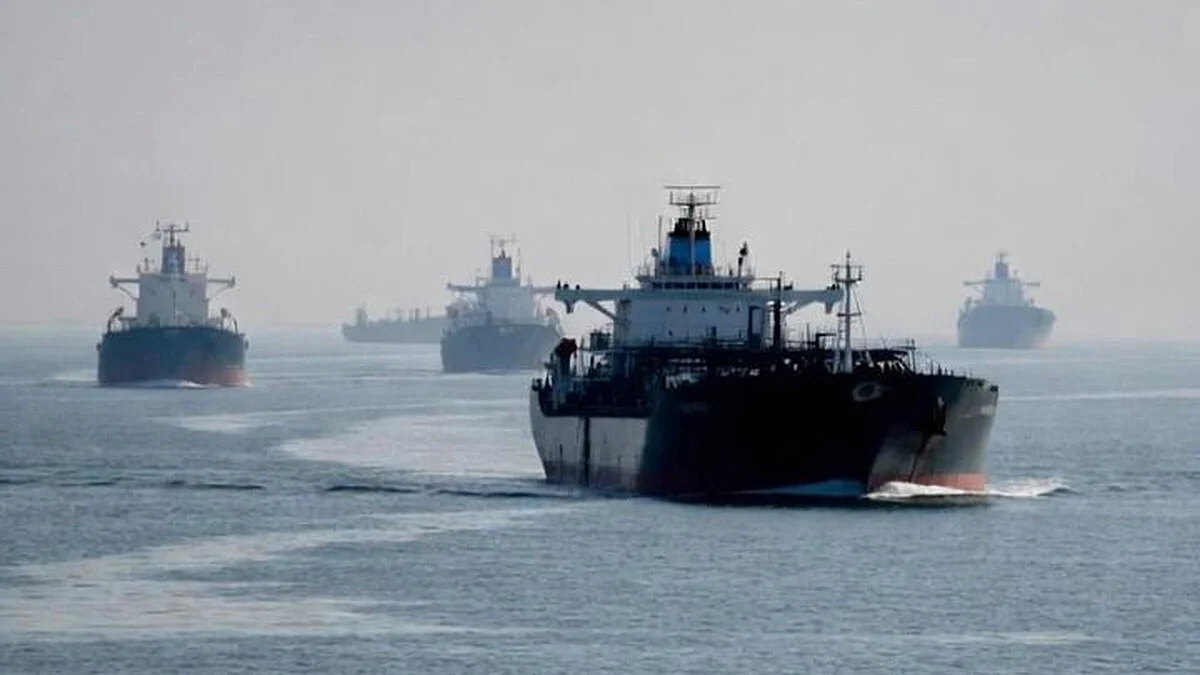
Those assurances were tested, however, by industry disclosures that one supplier was expected to deliver a vessel carrying 85 million litres of fuel but instead supplied only 60 million litres after the ship was unable to top up its cargo due to safety concerns along the Strait of Hormuz. EPRA Director General Bargoria separately confirmed that authorities were monitoring a critical tanker loading in the Red Sea on March 13, without naming the vessel, with the shipment expected to reach the Kenyan coast by the beginning of April. The episode underscores the fragility of Kenya’s supply chain despite official reassurances.
Nation reported that Kenya could be less than three weeks away from a biting fuel shortage based on current stock levels as shared in daily reports by Kenya Pipeline Company — a landlocked country that, like its neighbour Uganda which imports fuel through Kenyan infrastructure, has no domestic production buffer to draw upon.
Context is everything. While you follow today’s updates, use the Serrari Market Index and Marketplace to spot emerging shifts. Need to sharpen your edge? Our Financial Literacy Course turns these insights into a professional-grade strategy.
Political Pressure: Ndindi Nyoro’s Warning
The EPRA announcement was preceded by vocal political pressure to hold the line on prices. Kiharu Member of Parliament Ndindi Nyoro warned publicly on March 13 — the day before the announcement — that he had “reliable information” of plans to adjust prices upward and attribute the increase to the Iran situation. Nyoro argued that all fuel currently in Kenya had been imported before the regional instability took hold, and that consumers should not be made to pay more for stocks whose landed costs were calculated under pre-crisis market conditions.
“All the fuel in Kenya was imported before there was instability in Iran. That means the landing cost of the fuel already in the country was lower. Don’t confuse Kenyans by trying to raise fuel prices unnecessarily,” Nyoro was quoted as saying. EPRA’s subsequent decision to hold prices flat validated his argument for this cycle — though it does not address what happens when the March-April shipments, procured during peak crisis conditions, arrive and their costs must be factored into the May pricing round.
The Broader Supply Risk: What April Prices Could Look Like
The structural risk is clear. Kenya lacks strategic petroleum reserves of any meaningful scale. The government relies on Oil Marketing Companies (OMCs) that are required to hold stocks sufficient to cover only 15 days of national demand. That buffer, while adequate under normal market conditions, is dangerously thin in a scenario where vessel movements through the Strait of Hormuz are paralysed for weeks on end.
The Strait of Hormuz carries roughly 21 percent of global oil supply, and has been effectively closed to broad commercial shipping since Iran responded to the February 28 strikes by threatening and attacking vessels transiting the waterway. Qatar’s energy minister warned that Gulf producers may be forced to halt exports and declare force majeure, and Bahrain and Kuwait have both already done so. A Gulf refinery linked to one of Kenya’s suppliers was also reported to have been hit in Iranian strikes, directly affecting the volume of product available for export.
The Nation editorial board noted that beyond the immediate fuel supply risk, Kenya is losing approximately Sh300 million per week due to disruptions in exports to the Middle East — particularly Iran, which is a major buyer of Kenyan tea. A deal valued at nearly Sh5 billion to expand tea exports to Iran has been stalled by the conflict, compounding the economic damage beyond the energy sector alone.
Kenya’s G-to-G Safety Net: A Structural Advantage Under Pressure
One factor that has shielded Kenya from the worst immediate impacts is its government-to-government fuel procurement arrangement, which it renewed and extended to 2028 with Saudi Aramco, ADNOC, and ENOC. Under this arrangement, Kenya secures forward contracts for petroleum supplies at pre-negotiated terms, insulating the country from the volatility of spot market pricing and offering greater supply certainty than open-market procurement.
CS Wandayi confirmed that Kenya had already secured scheduled imports through the end of April 2026, providing a degree of near-term coverage even as spot market prices spiralled. “Kenya has sufficient petroleum products to cover both the country and the region in the wake of the crisis in the Middle East,” Wandayi said, emphasising that “proactive planning and forward contracting” had placed the country in a relatively stable position compared to neighbours who rely more heavily on spot purchases.
The G-to-G arrangement has drawn scrutiny during the crisis, however. The Middle East conflict is being described as a litmus test for Kenya’s G-to-G deal: the key question is whether long-term contracts with Gulf state companies can actually guarantee supply during a moment of active war in those companies’ home regions. The partial shortfall already reported — one vessel delivering 60 million rather than the expected 85 million litres — suggests that even contractual relationships have limits when physical shipping through conflict-affected waters becomes impossible.
EPRA has also indicated that it is working with suppliers to explore alternative loading points and ports to mitigate disruptions at specific locations, meaning that any partial closure of the Strait or operational challenges at certain Gulf terminals may not necessarily translate directly into a supply stoppage for Kenya. But rerouting adds time, insurance costs, and freight premiums — all of which will eventually be reflected in landed costs and future pump prices.
Looking Ahead: A Stable April, an Uncertain May
The consensus among analysts is that the April 14 pump price cycle will hold relatively steady, given that the shipments underpinning it were largely secured before or in the very early days of the conflict. The real inflection point is the May pricing round, which will reflect the full cost of procuring fuel in a global market where Brent crude surged past $100 per barrel for the first time in nearly four years and where insurance premiums, freight costs, and supply uncertainty have all risen sharply.
Analysts at EldoretLeo caution that the current price stability may be temporary and that future reviews could still see upward adjustments if international costs continue rising. The question for Kenyan consumers is not whether prices rise, but when — and by how much.
For now, EPRA’s announcement offers genuine short-term relief to households, transport operators, and businesses that rely on affordable fuel to sustain economic activity. Motorists will continue paying Sh178.28 for a litre of Super Petrol, Sh166.54 for Diesel, and Sh152.78 for Kerosene through April 14. But with diesel import costs already up 8.46 percent in the February data, with a global oil crisis still unresolved, and with Kenya tracking tankers through war-adjacent waters to maintain its fuel supply chain, the stability at the pump owes more to fortunate timing than to a truly stable global energy market.
As Bargoria himself acknowledged: the Middle East has not had an effect on the prices “yet.”
Don’t just read the news—navigate it. Track trends with the Serrari Group Market Index, discover your next move in the Serrari Marketplace, and master the “how” with our Financial Literacy Course.
photo source: Google
By: Montel Kamau
Serrari Financial Analyst
16th March, 2026
Article, Financial and News Disclaimer
The Value of a Financial Advisor
While this article offers valuable insights, it is essential to recognize that personal finance can be highly complex and unique to each individual. A financial advisor provides professional expertise and personalized guidance to help you make well-informed decisions tailored to your specific circumstances and goals.
Beyond offering knowledge, a financial advisor serves as a trusted partner to help you stay disciplined, avoid common pitfalls, and remain focused on your long-term objectives. Their perspective and experience can complement your own efforts, enhancing your financial well-being and ensuring a more confident approach to managing your finances.
Disclaimer: This article is for informational purposes only and does not constitute financial advice. Readers are encouraged to consult a licensed financial advisor to obtain guidance specific to their financial situation.
Article and News Disclaimer
The information provided on www.serrarigroup.com is for general informational purposes only. While we strive to keep the information up to date and accurate, we make no representations or warranties of any kind, express or implied, about the completeness, accuracy, reliability, suitability, or availability with respect to the website or the information, products, services, or related graphics contained on the website for any purpose. Any reliance you place on such information is therefore strictly at your own risk.
www.serrarigroup.com is not responsible for any errors or omissions, or for the results obtained from the use of this information. All information on the website is provided on an as-is basis, with no guarantee of completeness, accuracy, timeliness, or of the results obtained from the use of this information, and without warranty of any kind, express or implied, including but not limited to warranties of performance, merchantability, and fitness for a particular purpose.
In no event will www.serrarigroup.com be liable to you or anyone else for any decision made or action taken in reliance on the information provided on the website or for any consequential, special, or similar damages, even if advised of the possibility of such damages.
The articles, news, and information presented on www.serrarigroup.com reflect the opinions of the respective authors and contributors and do not necessarily represent the views of the website or its management. Any views or opinions expressed are solely those of the individual authors and do not represent the website's views or opinions as a whole.
The content on www.serrarigroup.com may include links to external websites, which are provided for convenience and informational purposes only. We have no control over the nature, content, and availability of those sites. The inclusion of any links does not necessarily imply a recommendation or endorsement of the views expressed within them.
Every effort is made to keep the website up and running smoothly. However, www.serrarigroup.com takes no responsibility for, and will not be liable for, the website being temporarily unavailable due to technical issues beyond our control.
Please note that laws, regulations, and information can change rapidly, and we advise you to conduct further research and seek professional advice when necessary.
By using www.serrarigroup.com, you agree to this disclaimer and its terms. If you do not agree with this disclaimer, please do not use the website.
www.serrarigroup.com, reserves the right to update, modify, or remove any part of this disclaimer without prior notice. It is your responsibility to review this disclaimer periodically for changes.
Serrari Group 2025