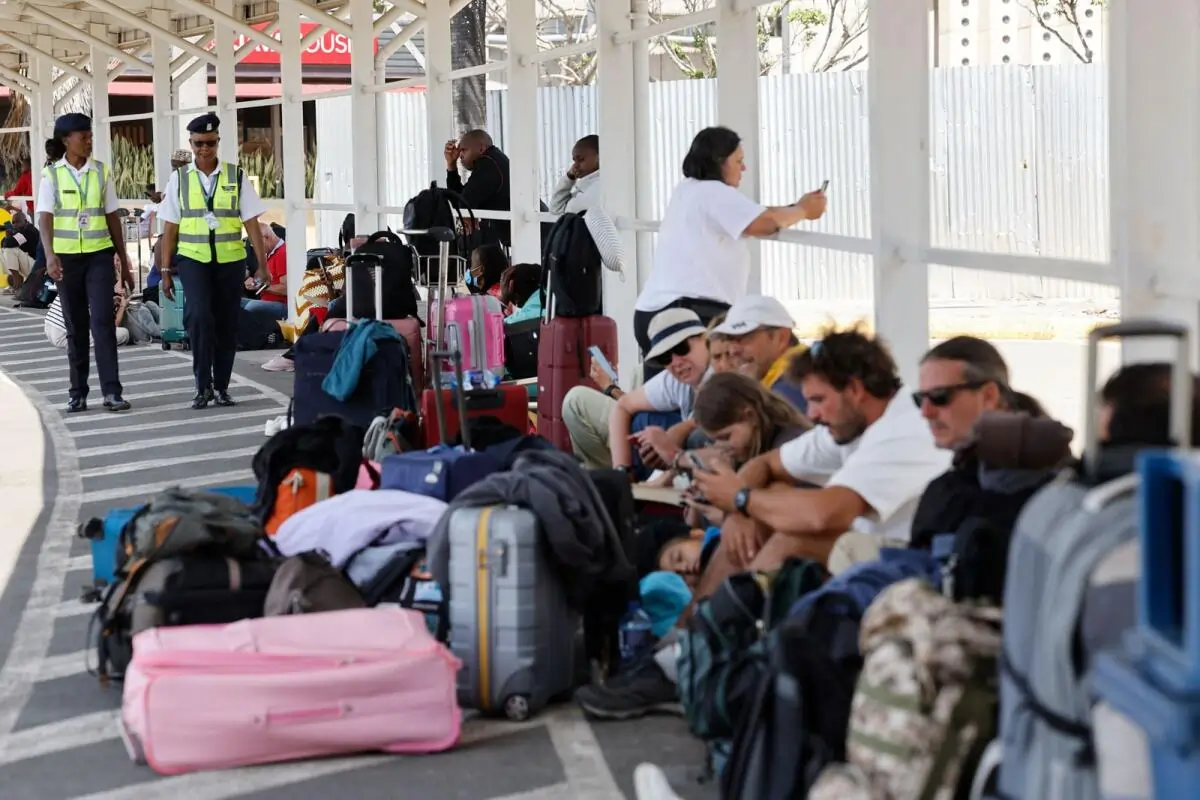
The ongoing strike by Kenyan airport workers at Jomo Kenyatta International Airport (JKIA) has brought a critical spotlight on the controversial takeover bid by India’s Adani Group. This industrial action has led to major disruptions, grounding flights, leaving passengers stranded, and triggering widespread chaos at one of Africa’s busiest air travel hubs. The planned buyout, which involves a 30-year lease deal, has sparked debates over its potential impact on the Kenyan aviation industry, workers’ job security, and the country’s economy.
The Adani Group’s Involvement
India’s Adani Group, a global infrastructure conglomerate, has proposed a $1.85 billion investment deal under a build-and-operate agreement. This deal is structured as a public-private partnership aimed at modernizing and expanding the JKIA. According to the Kenyan government, the agreement would result in much-needed upgrades to the airport, including the construction of a second runway and an additional terminal. These upgrades are crucial, as JKIA operates above capacity, handling 8.8 million passengers and 380,000 tonnes of cargo during 2022-2023, despite being plagued by issues like power outages and infrastructure problems.
The Adani Group’s involvement in global infrastructure projects is not new. The conglomerate has established a solid presence in port management, airports, and energy sectors in countries such as India, Australia, and Indonesia. However, its previous projects have sometimes attracted criticism, raising concerns over environmental sustainability and local economic impacts. This background has fueled opposition to its involvement in Kenya, with critics questioning whether the deal would genuinely benefit the country’s long-term interests.
Reasons Behind the Strike
At the heart of the strike are concerns raised by the Kenya Aviation Workers Union (KAWU). The union, which represents the majority of the airport’s workforce, strongly opposes the deal, arguing that it could lead to job losses and deterioration in employment conditions. Workers fear that the privatization of JKIA would lead to a reduction in job security, with thousands potentially losing their positions. There are also concerns that the Adani Group could impose tougher working conditions as it seeks to maximize profit.
The strike leader, Moses Ndiema, has been vocal about the need for the government to withdraw from the deal, calling it “bad for Kenya” and stating, “Adani must go. That is not optional.” The union’s stance is clear: without job assurances from the government, the workers will continue their protest until the agreement is scrapped or significantly altered.
Broader Economic Concerns
Beyond the immediate concerns of job security, critics of the deal have raised economic issues. JKIA is a significant contributor to Kenya’s economy, with freight and passenger fees accounting for over 5% of the country’s GDP. Privatizing such a strategic asset, opponents argue, would deny future profits to Kenyan taxpayers. The fear is that Kenya could lose control over one of its key economic drivers and become overly dependent on a foreign entity for its aviation infrastructure. Furthermore, they contend that the long-term returns from the airport’s operations could far exceed the $1.85 billion investment proposed by Adani.
The strike comes at a time when Kenya is already grappling with high inflation and rising unemployment. Tourism, a major contributor to the economy, represents more than 10% of Kenya’s GDP, and the country’s economic recovery post-pandemic depends significantly on the smooth operation of its transport infrastructure. Prolonged disruptions at JKIA could have a ripple effect, potentially hurting the country’s tourism, trade, and investment inflows.
Legal and Political Developments
The takeover deal has already sparked legal challenges. On Monday, the High Court of Kenya temporarily halted the implementation of the agreement, pending a review of a case filed by the Law Society of Kenya and the Kenya Human Rights Commission. These organizations argue that the deal could have far-reaching consequences on the country’s sovereignty and public interest.
The Kenyan government, however, maintains that the airport will not be sold outright and that the proposed partnership is essential for upgrading and modernizing JKIA. Transport Minister Kipchumba Murkomen emphasized that no final decision has been made on whether the deal will proceed, and that the government remains committed to addressing the concerns of all stakeholders.
Murkomen has also highlighted that the airport is currently operating above its designed capacity and urgently requires modernization to handle growing air traffic. The government sees the Adani Group’s investment as an opportunity to boost the airport’s capacity and improve its facilities, bringing it on par with other major international airports. The construction of a second runway, for example, is seen as a crucial step toward easing congestion at JKIA, which is currently one of the busiest airports in Africa, serving as a hub for the region.
Regional and Global Implications
The potential privatization of JKIA could also have wider regional and global implications. JKIA is a key transport hub for East and Central Africa, serving as a gateway for passengers traveling to and from Europe, Asia, and the Americas. Any disruption at JKIA impacts not just Kenya, but also neighboring countries like Uganda, Tanzania, Rwanda, and Ethiopia, all of which rely on Nairobi for air travel connections.
For the Adani Group, this deal represents a strategic move into Africa, a continent with immense potential for infrastructure development. Africa’s aviation market has been growing steadily, and the continent is home to some of the world’s fastest-growing economies. By establishing a foothold at JKIA, Adani could position itself as a key player in Africa’s burgeoning infrastructure and transport sectors, which are critical for the continent’s long-term economic growth.
However, the group’s previous controversies, including allegations of environmental violations in India and Australia, as well as recent financial scandals involving regulatory bodies like the Securities and Exchange Board of India (SEBI), have added fuel to the opposition in Kenya. These allegations stem from a damning report by Hindenburg Research that accused the Adani Group of market manipulation, fraudulent accounting, and money laundering. The fallout from the report saw Adani’s market value drop significantly, casting a shadow over its credibility in global markets.
Workers’ Demands and Possible Outcomes
The striking airport workers have a simple demand: they need written assurances from the government that their jobs will be protected under the new deal. Central Organization of Trade Unions (COTU) Secretary-General Francis Atwoli pointed out that the entire situation could have been avoided if the government had acted to provide such guarantees to workers. He noted that such an assurance is not only a moral obligation but a legal requirement, as per Kenyan labor laws.
At this point, the outcome of the strike is uncertain. With flights delayed or canceled and passengers facing long waits, the pressure on the Kenyan government to resolve the situation is mounting. The court’s involvement has also added another layer of complexity to the issue. Should the High Court rule against the deal, the government would need to find an alternative solution to modernize JKIA.
If the deal moves forward, the government will need to strike a delicate balance between safeguarding the interests of Kenyan workers and taxpayers, while also ensuring that the necessary investments in infrastructure are made to maintain JKIA’s status as a leading airport in Africa.
Conclusion
The strike at Jomo Kenyatta International Airport has brought to the forefront crucial issues regarding Kenya’s economic future, labor rights, and the role of foreign investment in strategic national assets. As the Adani Group continues to expand its global infrastructure portfolio, the potential JKIA deal serves as a microcosm of the challenges that come with public-private partnerships, particularly in developing countries. The coming days will determine the fate of the deal, as all eyes remain on the Kenyan government, the courts, and the striking workers.
Photo source: Google
By: Montel Kamau
Serrari Financial Analyst
12th September, 2024