










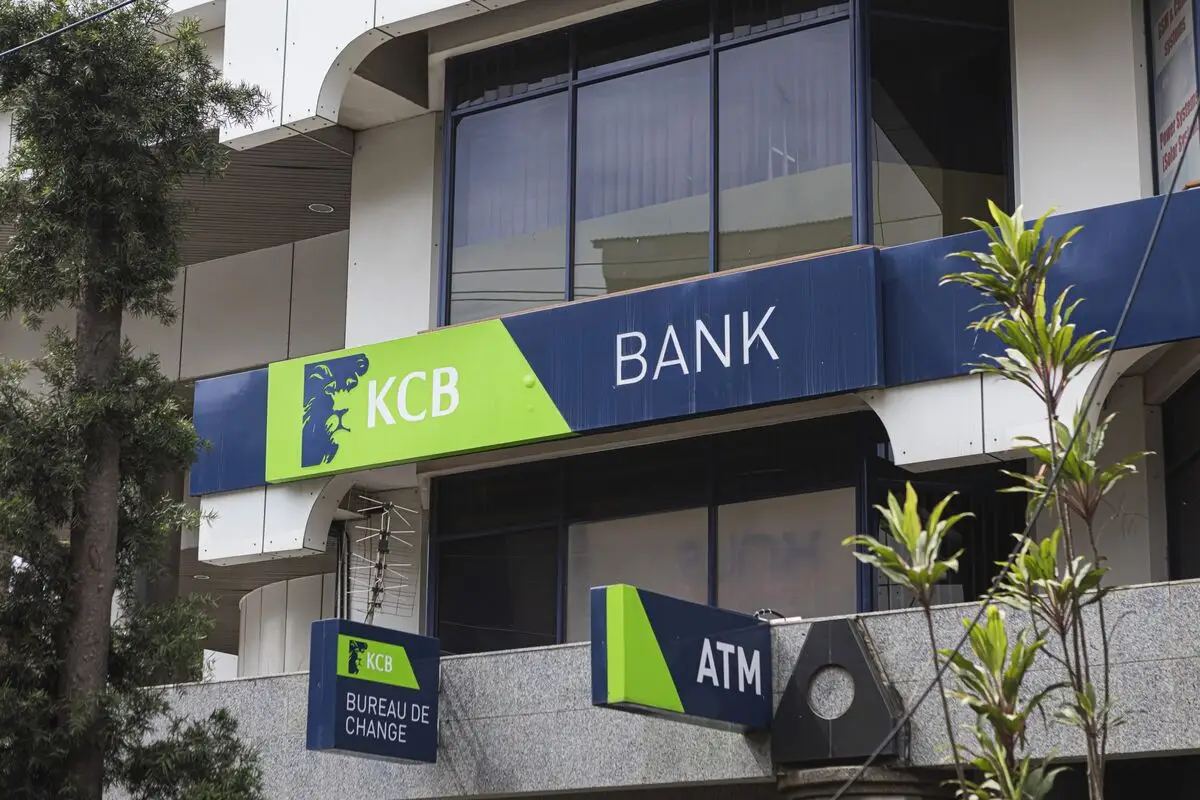
A banking ownership change has quietly reshuffled one of Kenya’s most ambitious road safety projects. KCB Bank has formally assumed the role previously held by National Bank of Kenya (NBK) in a Sh42 billion Public-Private Partnership that promises to digitise driver licensing, automate traffic enforcement, and install more than 1,000 surveillance cameras across the country — if the consortium can finally deliver on nearly a decade of delays.
The National Transport and Safety Authority (NTSA) confirmed the transition on February 24, 2026, disclosing that the smart driving licence project, originally contracted in 2017 between NTSA, NBK, and Pesa Print Limited, has now been restructured as a 21-year PPP with KCB stepping into NBK’s shoes. The transfer was formalised through a Deed of Novation, under which KCB undertook to perform all roles previously assigned to NBK under the original agreement.
Build the future you deserve. Get started with our top-tier Online courses: ACCA, HESI A2, ATI TEAS 7, HESI EXIT, NCLEX-RN, NCLEX-PN, and Financial Literacy. Let Serrari Ed guide your path to success. Enroll today.
How NBK’s Sale Triggered the Reshuffle
The ownership chain behind this transition is tangled but instructive. NBK was incorporated in 1968 as a wholly government-owned entity and was acquired by KCB Group in September 2019. It was in that capacity — as a KCB Group subsidiary — that NBK originally entered into the smart driving licence contract with NTSA and Pesa Print in 2017. But in March 2024, KCB Group entered a binding agreement to sell its 100% stake in NBK to Nigeria’s Access Bank Plc as part of the Nigerian lender’s East African expansion strategy.
That deal closed on May 30, 2025, for a total estimated consideration of $109.6 million, with NBK becoming a wholly owned subsidiary of Access Bank. The Central Bank of Kenya approved the acquisition on April 4, 2025, followed by the National Treasury Cabinet Secretary’s sign-off on April 10 — a sequence that also unlocked the transfer of certain NBK assets and liabilities to KCB Bank Kenya. The Treasury’s gazette notice formalising KCB’s assumption of NBK’s project roles was published on April 11, 2025, as Gazette Notice No. 4666, completing the legal groundwork for the transition.
The practical effect is that KCB Bank Kenya — no longer a parent of NBK but now an independent party — steps into a project it previously oversaw through a subsidiary. For Access Bank, the sale was purely commercial; the Kenyan road safety programme was not part of its interest in acquiring NBK. By retaining the project within Kenya’s largest lender by branch network, the government has sought continuity without a protracted competitive tender.
A Project Nine Years in the Making
The smart driving licence initiative has a history that is inseparable from the chronic challenges of public technology procurement in Kenya. The programme traces back to March 2017, when NTSA signed a three-year, $21.09 million contract with NBK to supply, install, and maintain five million second-generation chip-based driving licences. The contract was funded through National Treasury budgetary allocations.
Progress was painfully slow. Despite NBK supplying millions of blank cards under the agreement, issuance consistently lagged behind targets. Auditor-General Nancy Gathungu, in her report for the financial year ended June 2024, found that NTSA had printed only 1,637,930 smart licences out of more than four million blank cards already delivered by NBK. More troublingly, some 572,674 unprinted cards valued at Sh176 million were found sitting unused in NTSA stores with no deployment plan in place. “The uptake for the cards is still slow and the management did not demonstrate efforts to improve the situation,” the Auditor-General wrote. By June 2025, NTSA had issued about 2.1 million smart driving licences against a target of 5 million, and the programme had consumed nearly Sh1.83 billion in public funds.
In the financial year ended June 2025, NTSA printed 342,492 smart licences against a target of 400,000, falling short by over 14%. The authority attributed part of the shortfall to motorists opting for cheaper yearly electronic licences rather than the three-year smart cards that cost Sh3,000.
Confronting these persistent bottlenecks — limited geographical coverage, sluggish issuance, and the absence of a nationwide instant fines system — the government resolved to restructure the initiative from a direct government procurement arrangement into a full Public-Private Partnership, under which the private sector would bear the financing burden.
The New PPP Structure: What It Entails
The restructured project is substantially more ambitious than its predecessor. Under the new 21-year framework, KCB Bank Kenya and Pesa Print will finance, design, install, and maintain second-generation electronic driving licences and automated instant fines infrastructure across the country. The initial investment is estimated at Sh42 billion, funded exclusively through private debt and equity over the first two to three years — meaning no public funds will be used to kick-start the rollout.
Roles are clearly delineated within the consortium. Pesa Print will handle card design, pre-printing, personalisation, production management, and system connectivity. KCB will support enrolment, distribution, and licence issuance, while NTSA retains oversight of enforcement, regulatory compliance, and data governance.
The new smart cards will be made of five-layer polycarbonate material embedded with chips, enabling digital linkage to a central enforcement system. The consortium will produce five million secure smart cards every three years, targeting full migration away from legacy paper-based licences. More than 102 enrolment centres will be established nationwide, supported by the deployment of 392 enrolment kits, with production timelines set at 24 to 48 hours once the system is operational — a stark contrast to the current delays that have frustrated motorists.
The enforcement infrastructure is equally extensive. The project will deploy 700 fixed speed enforcement cameras on major highways and high-risk corridors, alongside 300 mobile units targeted at accident-prone areas and known speeding hotspots. All cameras will be supported by a National Command and Control Centre, creating a centralised oversight hub. Each device will capture traffic violations and automatically relay the information to NTSA, linking the offence to the driver’s profile through the smart driving licence system. Motorists caught speeding, using mobile phones while driving, failing to wear seat belts, or operating vehicles without valid inspection certificates will face instant fines payable via M-Pesa, USSD, or banking channels — entirely without human interface.
The instant fines will be applied under the Traffic (Minor Offences) Rules, 2016, while licence issuance, duplicate, and replacement fees are set at Sh3,000. NTSA has explicitly positioned the automation as a tool to reduce the bribery and corruption that have long undermined officer-led enforcement on Kenya’s roads.
The Road Safety Crisis Driving the Urgency
The ambition behind the project is anchored in the grimness of Kenya’s road safety statistics. NTSA’s own data shows that road fatalities increased from 3,875 in 2019 to over 5,100 in 2024, a trajectory that has persisted despite successive enforcement campaigns. The Kenya National Bureau of Statistics, in its 2025 Economic Survey, recorded 4,748 road deaths in 2024, a 5.2% rise from 4,513 the previous year, alongside 11,937 serious injuries and 11,173 total crashes — an 11.8% increase. The KNBS attributed the carnage primarily to speeding, overloading, failure to observe lane discipline, improper overtaking, and drunk driving.
The economic toll is equally staggering. The Ministry of Roads and Transport, at the launch of the National Road Safety Action Plan 2024-2028, estimated that road carnage costs the economy a staggering Sh450 billion annually — equivalent to approximately 5% of GDP. This figure encompasses medical care costs, lost productivity, and damage to property, placing road accidents among Kenya’s most costly preventable crises.
The five most dangerous roads in Kenya are all in Nairobi County — Thika Superhighway, Outering Road, the Mombasa-Nairobi Highway, Eastern Bypass, and Northern Bypass — which together account for 36% of all fatal crashes in the country despite representing only 2% of the road network. Pedestrians consistently top the fatalities list, followed by motorcyclists and passengers on public service vehicles. Currently, only approximately 1.3 million of Kenya’s estimated 5 million drivers have acquired smart driving licences — just over a quarter of the total motorist population.
One decision can change your entire career. Take that step with our Online courses in ACCA, HESI A2, ATI TEAS 7, HESI EXIT, NCLEX-RN, NCLEX-PN, and Financial Literacy. Join Serrari Ed and start building your brighter future today.
Regulatory Journey: From 2017 to Cabinet Approval
The path to the current PPP structure has wound through nearly every arm of government. After the original 2017 contract failed to achieve its targets, the government spent years deliberating the restructuring. The project received conditional approval from the PPP Committee in June 2024, followed by clearance from the Attorney General in January 2025. In December 2025, during a Cabinet meeting chaired by President William Ruto, the project received its final Cabinet approval, with ministers agreeing that private sector participation could accelerate delivery, improve efficiency, and reduce the burden on public finances.
NTSA has anchored the initiative in Kenya’s broader development frameworks, citing its alignment with Kenya Vision 2030, the Bottom-Up Economic Transformation Agenda (BETA), the National Road Safety Action Plan 2024–2028, and the Fourth Medium-Term Plan 2023–2027.
Key government stakeholders involved in implementation extend well beyond NTSA. The National Treasury will oversee PPP structuring and fiscal risk assessment, the Ministry of Roads and Transport will provide policy direction, and the Ministry of Interior will give guidance on public security. The National Police Service will handle traffic rule enforcement, the Office of the Director of Public Prosecutions will manage prosecutions, and the Judiciary will administer justice for contested fines. The framework reflects a whole-of-government approach to a problem that has historically been siloed within NTSA.
Infrastructure Reversion and Contract Terms
One notable structural element of the 21-year PPP is the asset reversion clause. Upon expiry or early termination of the contract, core infrastructure — including speed cameras, the National Command and Control Centre, and enrolment systems — will revert to NTSA. However, the private consortium will retain ownership of non-core assets such as smart poles, vehicles, and certain software components. This arrangement mirrors standard PPP practice and is designed to ensure public ownership of critical enforcement infrastructure at the end of the concession period.
The project is implemented under the Public Private Partnerships Act, and NTSA has indicated that disclosure of the project’s details is intended to “enhance transparency and public awareness regarding the project, in line with legal requirements governing PPP arrangements.”
Challenges That Must Be Overcome
Despite the renewed momentum, the project faces structural challenges that contributed to its earlier failure. Slow uptake of smart licences has been a persistent problem, with motorists frequently opting for cheaper yearly electronic licences over the three-year smart card. NTSA will need a robust public awareness and incentive strategy to shift behaviour at scale.
The auditor’s findings of hundreds of thousands of unprinted cards lying idle in NTSA stores — with “no clear deployment plan” — suggest that the authority’s own operational capacity will be tested by a rollout several multiples larger than anything previously attempted. The Auditor-General’s concerns about weak internal management will need to be addressed if the private sector’s Sh42 billion investment is to yield the enforcement efficiency gains NTSA is promising.
There is also the question of equitable access. Establishing more than 102 enrolment centres is a significant step toward geographic coverage, but the country’s boda boda sector — with an estimated 2.5 million registered motorcycles, of which 1.8 million are active — will require particular attention to reach riders in rural and peri-urban areas where licensing compliance is weakest.
A High-Stakes Bet on Technology-Led Enforcement
At its core, the KCB-Pesa Print consortium is taking on a transformational bet: that technology can succeed where human-led enforcement has consistently failed. The integration of smart licences with automated cameras, instant fines, and a driver merit-and-demerit system represents a shift in paradigm for Kenyan road safety governance.
If successful, the project would deliver one of the most comprehensive digital traffic enforcement systems in sub-Saharan Africa. If it encounters the same implementation fatigue that plagued its predecessor, it risks consuming Sh42 billion in private capital with limited public benefit — and eroding confidence in the PPP model for critical infrastructure more broadly.
The transfer of the project from NBK to KCB, triggered by a banking acquisition, is ultimately incidental to the larger story. What matters now is whether the new institutional arrangement — backed by Cabinet approval, a clear regulatory path, and private sector financing — can finally translate years of planning into cameras on highways, chips in wallets, and fewer deaths on Kenya’s roads.
Ready to take your career to the next level? Join our Online courses: ACCA, HESI A2, ATI TEAS 7 , HESI EXIT , NCLEX – RN and NCLEX – PN, Financial Literacy!🌟 Dive into a world of opportunities and empower yourself for success. Explore more at Serrari Ed and start your exciting journey today! ✨
Track GDP, Inflation and Central Bank rates for top African markets with Serrari’s comparator tool.
See today’s Treasury bonds and Money market funds movement across financial service providers in Kenya, using Serrari’s comparator tools.
photo source: Google
By: Montel Kamau
Serrari Financial Analyst
27th February, 2026
Article, Financial and News Disclaimer
The Value of a Financial Advisor
While this article offers valuable insights, it is essential to recognize that personal finance can be highly complex and unique to each individual. A financial advisor provides professional expertise and personalized guidance to help you make well-informed decisions tailored to your specific circumstances and goals.
Beyond offering knowledge, a financial advisor serves as a trusted partner to help you stay disciplined, avoid common pitfalls, and remain focused on your long-term objectives. Their perspective and experience can complement your own efforts, enhancing your financial well-being and ensuring a more confident approach to managing your finances.
Disclaimer: This article is for informational purposes only and does not constitute financial advice. Readers are encouraged to consult a licensed financial advisor to obtain guidance specific to their financial situation.
Article and News Disclaimer
The information provided on www.serrarigroup.com is for general informational purposes only. While we strive to keep the information up to date and accurate, we make no representations or warranties of any kind, express or implied, about the completeness, accuracy, reliability, suitability, or availability with respect to the website or the information, products, services, or related graphics contained on the website for any purpose. Any reliance you place on such information is therefore strictly at your own risk.
www.serrarigroup.com is not responsible for any errors or omissions, or for the results obtained from the use of this information. All information on the website is provided on an as-is basis, with no guarantee of completeness, accuracy, timeliness, or of the results obtained from the use of this information, and without warranty of any kind, express or implied, including but not limited to warranties of performance, merchantability, and fitness for a particular purpose.
In no event will www.serrarigroup.com be liable to you or anyone else for any decision made or action taken in reliance on the information provided on the website or for any consequential, special, or similar damages, even if advised of the possibility of such damages.
The articles, news, and information presented on www.serrarigroup.com reflect the opinions of the respective authors and contributors and do not necessarily represent the views of the website or its management. Any views or opinions expressed are solely those of the individual authors and do not represent the website's views or opinions as a whole.
The content on www.serrarigroup.com may include links to external websites, which are provided for convenience and informational purposes only. We have no control over the nature, content, and availability of those sites. The inclusion of any links does not necessarily imply a recommendation or endorsement of the views expressed within them.
Every effort is made to keep the website up and running smoothly. However, www.serrarigroup.com takes no responsibility for, and will not be liable for, the website being temporarily unavailable due to technical issues beyond our control.
Please note that laws, regulations, and information can change rapidly, and we advise you to conduct further research and seek professional advice when necessary.
By using www.serrarigroup.com, you agree to this disclaimer and its terms. If you do not agree with this disclaimer, please do not use the website.
www.serrarigroup.com, reserves the right to update, modify, or remove any part of this disclaimer without prior notice. It is your responsibility to review this disclaimer periodically for changes.
Serrari Group 2025