










The East African cement market is currently witnessing one of its most definitive shifts in corporate control, as Tanzania’s Kalahari Cement has officially confirmed its acquisition of a substantial additional equity stake in the East African Portland Cement Plc (EAPC). This strategic maneuver, executed through a Share Purchase Agreement (SPA) with the National Social Security Fund (NSSF), effectively grants Kalahari Cement, a subsidiary of the prominent pan-African conglomerate Amsons Group, majority control and operational command of the Nairobi Securities Exchange (NSE)-listed Kenyan cement manufacturer.
The transaction centers on the acquisition of a further 27% equity stake in EAPC from NSSF, a deal valued at a significant Ksh 1.6 billion, positioning Kalahari Cement as the single largest and controlling shareholder. The public notice published recently confirmed that the SPA was executed on Tuesday this week, detailing the terms of the agreement. Kalahari Cement is set to acquire twenty-four million, three hundred thousand (24,300,000) ordinary shares at a negotiated price of Ksh 66 per share in the issued share capital of EAPC from NSSF. This specific pricing detail warrants close analysis, as the Ksh 66 per share price represents a substantial premium over EAPC’s typically volatile trading price on the Nairobi Securities Exchange (NSE), highlighting the strategic value placed on operational control and assets, rather than just market capitalization. The completion of this transaction remains subject to final regulatory approvals from bodies such as the Capital Markets Authority (CMA) and the Competition Authority of Kenya (CAK).
Build the future you deserve. Get started with our top-tier Online courses: ACCA, HESI A2, ATI TEAS 7, HESI EXIT, NCLEX-RN, NCLEX-PN, and Financial Literacy. Let Serrari Ed guide your path to success. Enroll today.
The Path to Majority Control: Consolidating Influence
The acquisition of the NSSF stake is the culminating step in a calculated campaign by Amsons Group to establish dominance within EAPC. Prior to this landmark SPA, Kalahari Cement had already secured a significant 29.2% stake in the company. This initial tranche was acquired from the previous international shareholders, Associated International Cement Limited (AIC) and Cementia Holding AG, marking the first signal of the conglomerate’s aggressive regional expansion strategy.
With the closure of the NSSF deal, Kalahari Cement’s total shareholding in EAPC vaults to 56.2%, moving the Tanzanian entity from a substantial strategic investor to the effective controlling shareholder. This places the firm in a commanding position to dictate EAPC’s strategic direction, overhaul its governance structures, and implement a comprehensive turnaround strategy aimed at restoring the manufacturer’s profitability and market share. Furthermore, the Amsons Group’s influence extends through an affiliated entity, Bamburi Cement Plc, which already holds approximately 12.5% of the ordinary shares in EAPC. When factoring in the total, non-Kalahari stake held by Bamburi Cement, the combined influence of Amsons Group and its related parties within EAPC exceeds 68%, solidifying its unchallenged strategic leverage in the Kenyan cement sector. This consolidation raises pertinent questions regarding market competition and potential monopolistic practices within the local construction material supply chain, which the Competition Authority of Kenya (CAK) is expected to scrutinize closely.
Navigating the Regulatory Maze: The CMA Exemption
A central and critical aspect of this transaction is Kalahari Cement’s stated intention not to make a full takeover offer, officially termed a General Offer, to all remaining shareholders of EAPC. According to Kenyan capital markets regulations, specifically under the Takeovers and Mergers Regulations, any entity acquiring a stake that results in effective control—typically defined as holding 30% or more of the voting shares—is generally mandated to extend an offer to acquire all the remaining voting shares from the public.
Amsons Group Managing Director, Mr. Edha Nahdi, has explicitly confirmed this stance. He stated that Kalahari Cement does not intend to initiate a general offer to acquire all the voting shares in EAPC, and critically, will be applying to the Capital Markets Authority (CMA) for an exemption from this mandatory requirement.
Nahdi also provided assurances to the market regarding the long-term status of EAPC, emphasizing that Kalahari does not intend to delist EAPC from the NSE after the completion of the proposed transaction. This commitment is viewed favorably by market participants, as it ensures continued participation by minority shareholders and preserves the listing status of one of Kenya’s legacy industrial firms, contributing to the overall liquidity and depth of the capital markets regime, which Nahdi highlighted as vital for Kenya’s economic prosperity.
The successful granting of a CMA exemption will depend on Kalahari’s ability to demonstrate that the acquisition aligns with the interests of minority shareholders and that the controlling entity has no plans to materially alter the structure of the business in a way that disadvantages the public shareholders. The regulatory decision will set an important precedent for future strategic acquisitions in publicly listed companies within the region.
The Amsons Group Vision: Shared Prosperity and Turnaround
The rationale behind the Amsons Group’s aggressive investment is rooted in a vision of long-term strategic value creation and market stabilization. Mr. Nahdi framed Kalahari Cement’s role not merely as an acquirer but as a long-term strategic investor committed to assisting EAPC in achieving its defined strategic objectives.
“As I have previously mentioned, as a long-term strategic investor, Kalahari Cement will assist EAPC to achieve its strategic objectives through a shared prosperity model with all stakeholders, from staff, trade partners, and government of Kenya agencies,” Nahdi reiterated. This holistic approach suggests a focus on sustainable growth that balances investor returns with broader social and economic impact, a model increasingly favored by pan-African business conglomerates.
The proposed transaction is designed to build long-term value for EAPC by strengthening the firm’s infrastructure and providing access to additional resources, both financial and technical. For EAPC, this influx of capital and management expertise is desperately needed. The company has faced significant headwinds over the past few years, grappling with persistent debt and operational inefficiencies that have severely impacted its financial performance. The firm has often been in the news for its struggles to clear supplier and employee dues, making the promise of a robust “turnaround partnership” an urgent necessity. Nahdi’s commitment—“At Amsons Group, we do not intend to spare any resource, financial or otherwise, in our turnaround partnership with all EAPC Stakeholders”—underscores the scale of the planned capital injection and modernization efforts required. This commitment likely includes investments in modern clinker production technology and energy-efficient systems to lower the overall cost of production, thereby making EAPC more competitive against regional rivals who benefit from newer, more efficient plants.
One decision can change your entire career. Take that step with our Online courses in ACCA, HESI A2, ATI TEAS 7, HESI EXIT, NCLEX-RN, NCLEX-PN, and Financial Literacy. Join Serrari Ed and start building your brighter future today.
EAPC: A Legacy Brand in Need of Modernization
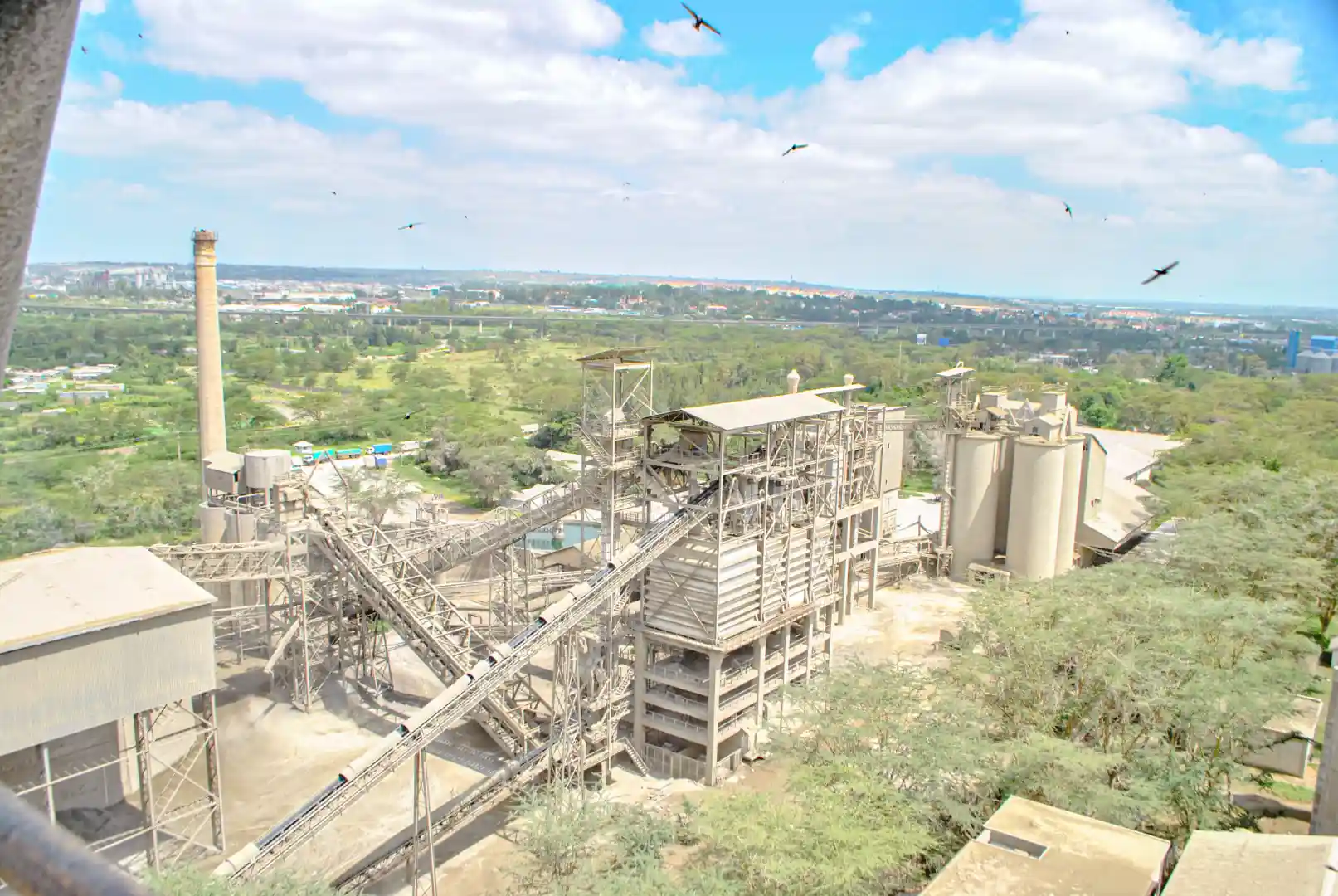
East African Portland Cement Plc holds a significant place in Kenya’s industrial history, owning an integrated cement plant located on the outskirts of Kenya’s capital, Nairobi. The company’s brand portfolio includes Blue Triangle Cement, its longest-standing and most recognizable brand in the Kenyan market, which has been instrumental in the country’s construction sector for decades.
In recent years, EAPC has demonstrated an effort to adapt to the evolving demands of the environmentally conscious construction sector and global sustainability mandates. This is evident in the launch of its innovative product, Green Triangle Cement. This product is specifically designed with less clinker and consequently requires lower energy consumption during its manufacturing process. This strategic pivot provides a sustainable alternative that aligns with growing consumer demand for building materials with a smaller carbon footprint.
The Amsons Group’s acquisition is expected to accelerate this sustainability drive. Modern cement production requires massive investment in new grinding mills and alternative fuel sources. Kalahari’s strategic investment will likely facilitate the necessary capital expenditure to overhaul the aging machinery at the EAPC plant, pushing the firm further into the domain of high-efficiency, lower-emission cement production. This is crucial for maintaining relevance in a market increasingly regulated by environmental standards and looking towards green building certifications.
Market Dynamics: Competition and Consolidation
The Kenyan cement industry is fiercely competitive, characterized by high production capacity and intense price wars. EAPC competes directly with several established players, including its related entity Bamburi Cement (controlled by Holcim), Mombasa Cement, and Savannah Cement. The consolidation of ownership under the Amsons Group banner introduces new market dynamics.
The direct affiliation with Bamburi Cement, a dominant player, through shared ownership by Amsons Group, creates a powerful combined entity. While Kalahari Cement and Bamburi Cement operate as distinct legal entities, the common strategic oversight provided by Amsons Group will inevitably lead to potential synergies in raw material procurement, logistics, and market strategy. This level of market concentration raises potential antitrust issues, which are typically assessed by the CAK based on the Herfindahl–Hirschman Index (HHI) to determine the degree of market power held by the merged or associated entities.
Industry analysts suggest that the primary benefit of this consolidation for Amsons Group is not merely market share, but securing EAPC’s valuable limestone reserves and land assets. The EAPC plant sits on substantial tracts of land outside Nairobi, and its mineral rights are a critical, long-term strategic resource in the competitive sector. The immediate priority under the new ownership will be to leverage these assets and stabilize the company’s financial structure, which had become untenable under the prolonged period of public sector inertia and financial mismanagement.
Financial and Economic Ripple Effects
The Ksh 1.6 billion injection into EAPC is also significant for the National Social Security Fund (NSSF). The divestment allows the state-owned pension fund to monetize a historically volatile and underperforming asset. By selling its stake at a substantial premium, NSSF can reallocate the capital towards more liquid or higher-yield investments that better serve its members’ long-term interests. This move is part of a broader trend of state institutions divesting from non-core, non-strategic holdings to optimize their financial portfolios.
For the Nairobi Securities Exchange (NSE), the promise of maintaining EAPC’s listing is a welcome relief. Listed companies often struggle to remain compliant when facing sustained financial losses and operational challenges. The stability offered by a committed majority shareholder, backed by the financial muscle of the Amsons Group, is likely to increase investor confidence in EAPC’s future, potentially leading to a re-rating of the stock in the medium term.
The broader economic impact hinges on the successful implementation of the promised turnaround. If Kalahari Cement delivers on its pledge to strengthen infrastructure and inject capital, this will directly translate into job security for EAPC’s workforce, increased procurement from local suppliers, and potentially, increased tax revenues for the Kenyan government. The strategic objectives articulated by Mr. Nahdi—focusing on modernization and shared prosperity—will be the key metrics against which the success of this landmark cross-border acquisition will be measured over the coming years.
The Tanzanian conglomerate’s strategic focus, moving beyond its traditional strongholds, underscores a growing trend of East African regional integration through corporate investment. As the Amsons Group embeds its vision of shared prosperity within EAPC, the entire Kenyan cement sector anticipates a new era of competitive intensity and, potentially, operational excellence driven by the deep pockets and long-term commitment of its new majority owners. The coming months will be crucial as Kalahari Cement formalizes its control, secures the CMA exemption, and begins the arduous but vital task of executing one of Kenya’s most significant corporate turnarounds in the industrial sector. The future of Blue Triangle Cement, a staple in Kenyan construction, now rests squarely on the shoulders of its new pan-African stewards. This transaction, more than a simple stake purchase, represents a decisive strategic realignment in the regional cement industry that will reshape competitive dynamics for the next decade. The commitment to maintaining the listing on the NSE further cements EAPC’s role as a publicly accessible, though foreign-controlled, anchor in the Kenyan industrial landscape. Kalahari’s initial steps, including the immediate application for the CMA exemption and the clear articulation of a non-delisting policy, are tactical moves designed to reassure minority shareholders and the regulatory bodies that their strategy is focused on rehabilitation and sustained growth, rather than rapid asset stripping or private optimization. This regulatory transparency is essential for gaining the necessary approvals and maintaining market trust. The details of the capital injection are expected to be unveiled in a comprehensive strategic plan document, which will outline the timeline for modernization of the production facilities, including investments in raw material handling and the reduction of clinker import reliance, a major cost center for EAPC. The successful execution of this plan will determine whether the Ksh 66 per share premium was a justified price for the promise of control and a regional industrial foothold.
Catch Up With Our Other Headlines
4th December, 2025
South Africa’s Economic Growth Moderates to 0.5% in Q3 2025 as Mining Sector Propels Recovery
Kenya’s November 2025 Inflation Eases to 4.5% as Transport Costs Surge Despite Stable Fuel Prices
Ready to take your career to the next level? Join our Online courses: ACCA, HESI A2, ATI TEAS 7 , HESI EXIT , NCLEX – RN and NCLEX – PN, Financial Literacy!🌟 Dive into a world of opportunities and empower yourself for success. Explore more at Serrari Ed and start your exciting journey today! ✨
Track GDP, Inflation and Central Bank rates for top African markets with Serrari’s comparator tool.
See today’s Treasury bonds and Money market funds movement across financial service providers in Kenya, using Serrari’s comparator tools.
Photo source: Google
By: Montel Kamau
Serrari Financial Analyst
4th December, 2025
Article, Financial and News Disclaimer
The Value of a Financial Advisor
While this article offers valuable insights, it is essential to recognize that personal finance can be highly complex and unique to each individual. A financial advisor provides professional expertise and personalized guidance to help you make well-informed decisions tailored to your specific circumstances and goals.
Beyond offering knowledge, a financial advisor serves as a trusted partner to help you stay disciplined, avoid common pitfalls, and remain focused on your long-term objectives. Their perspective and experience can complement your own efforts, enhancing your financial well-being and ensuring a more confident approach to managing your finances.
Disclaimer: This article is for informational purposes only and does not constitute financial advice. Readers are encouraged to consult a licensed financial advisor to obtain guidance specific to their financial situation.
Article and News Disclaimer
The information provided on www.serrarigroup.com is for general informational purposes only. While we strive to keep the information up to date and accurate, we make no representations or warranties of any kind, express or implied, about the completeness, accuracy, reliability, suitability, or availability with respect to the website or the information, products, services, or related graphics contained on the website for any purpose. Any reliance you place on such information is therefore strictly at your own risk.
www.serrarigroup.com is not responsible for any errors or omissions, or for the results obtained from the use of this information. All information on the website is provided on an as-is basis, with no guarantee of completeness, accuracy, timeliness, or of the results obtained from the use of this information, and without warranty of any kind, express or implied, including but not limited to warranties of performance, merchantability, and fitness for a particular purpose.
In no event will www.serrarigroup.com be liable to you or anyone else for any decision made or action taken in reliance on the information provided on the website or for any consequential, special, or similar damages, even if advised of the possibility of such damages.
The articles, news, and information presented on www.serrarigroup.com reflect the opinions of the respective authors and contributors and do not necessarily represent the views of the website or its management. Any views or opinions expressed are solely those of the individual authors and do not represent the website's views or opinions as a whole.
The content on www.serrarigroup.com may include links to external websites, which are provided for convenience and informational purposes only. We have no control over the nature, content, and availability of those sites. The inclusion of any links does not necessarily imply a recommendation or endorsement of the views expressed within them.
Every effort is made to keep the website up and running smoothly. However, www.serrarigroup.com takes no responsibility for, and will not be liable for, the website being temporarily unavailable due to technical issues beyond our control.
Please note that laws, regulations, and information can change rapidly, and we advise you to conduct further research and seek professional advice when necessary.
By using www.serrarigroup.com, you agree to this disclaimer and its terms. If you do not agree with this disclaimer, please do not use the website.
www.serrarigroup.com, reserves the right to update, modify, or remove any part of this disclaimer without prior notice. It is your responsibility to review this disclaimer periodically for changes.
Serrari Group 2025