










Iran has signalled a bold and potentially destabilising move in the ongoing crisis gripping global energy markets: allowing a limited number of oil tankers to pass through the Strait of Hormuz — but only if the oil cargo is priced and settled in Chinese yuan rather than the dominant US dollar. The disclosure, made by a senior US official speaking to CNN, has sent shockwaves through financial markets and triggered a furious debate among economists, policymakers, and energy analysts about whether Tehran is rewriting the rules of global oil trade under the cover of war.
The potential policy represents far more than a logistical arrangement. Analysts have described it as a calculated act of economic warfare through de-dollarisation — a strategic effort by Tehran to bypass the US financial system, chip away at Western sanctions, and draw Beijing deeper into the geopolitical conflict as a quasi-guarantor of the world’s most critical maritime chokepoint.
Markets move fast; don’t get left behind. We’ve paired the Serrari Group Market Index with a curated Marketplace and a comprehensive Financial Literacy Course to ensure you have the data—and the skills—to act on it.
A Waterway That Controls Global Energy
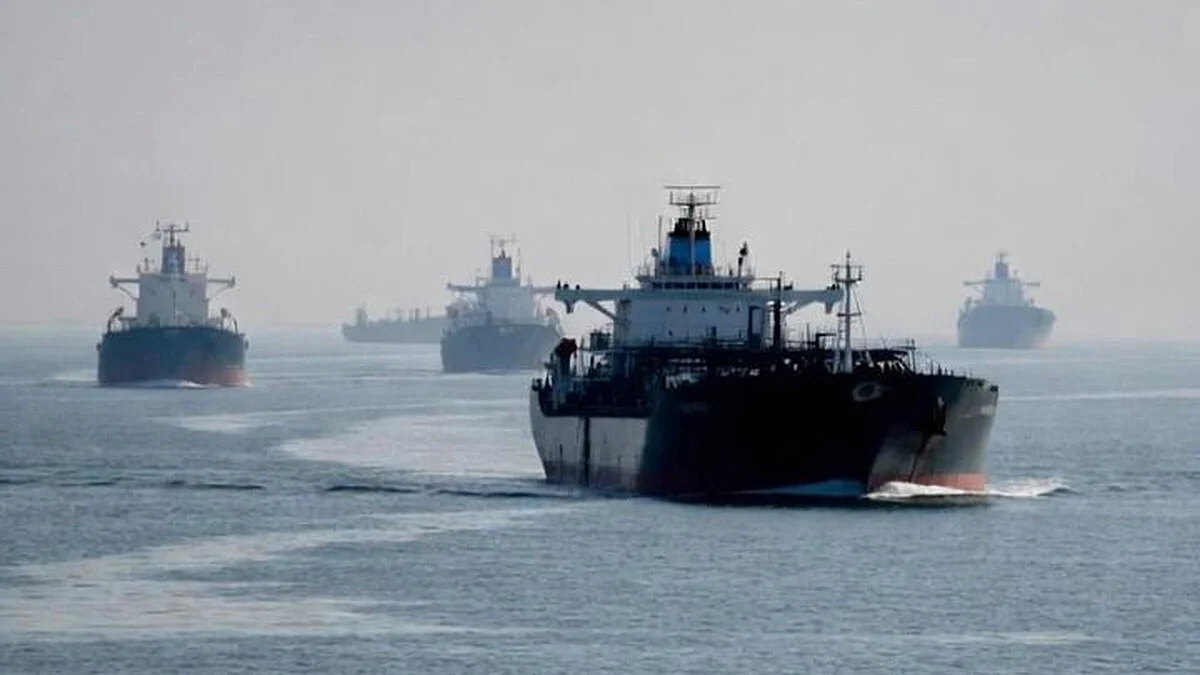
The Strait of Hormuz, a narrow passage connecting the Persian Gulf to the Gulf of Oman, handles approximately one-fifth of the world’s oil and gas supplies, or around 20 million barrels per day. Since the United States and Israel launched coordinated air strikes against Iran on February 28 under what has been described as Operation Epic Fury — targeting military facilities, nuclear sites, and senior leadership — the waterway has been almost entirely paralysed.
The strikes killed Supreme Leader Ayatollah Ali Khamenei, triggering his son, Mojtaba Khamenei, to assume power as Iran’s new Supreme Leader. Within days, Mojtaba pledged to maintain the closure of the Strait as a “tool of pressure” against the United States and Israel for as long as the war continues — while leaving open the possibility of selective passage “according to interests.”
The International Energy Agency has described the disruption as “the largest supply disruption in the history of the global oil market,” with crude and oil product flows through the Strait plunging from around 20 million barrels per day before the war to a near-trickle. Gulf producers including Saudi Arabia, Iraq, Kuwait, the UAE, and Qatar have all substantially reduced production because tankers are unable to transport crude to market and storage tanks are filling to capacity.
Oil Prices Hit Multi-Year Highs
The consequences for energy markets have been severe. Brent crude surged above $100 per barrel for the first time since August 2022 — the first time since Russia’s full-scale invasion of Ukraine drove energy markets to crisis levels — and briefly traded as high as $126 per barrel at peak panic. West Texas Intermediate futures similarly surged past $95 per barrel.
The EIA revised its full-year Brent forecast sharply upward to an average of $79 per barrel for 2026 — a dramatic jump from its February estimate of just $58 — underscoring how rapidly global energy balances have shifted since hostilities began. ING bank analysts warned in a note that “the only way to see oil prices trade lower on a sustained basis is by getting oil flowing through the Strait of Hormuz.”
In a bid to stabilise markets, 32 nations — led by the United States — agreed to release 400 million barrels of oil from emergency stockpiles in what the IEA described as the largest emergency release of crude reserves in its 50-year history. The US alone committed to releasing 172 million barrels from its Strategic Petroleum Reserve. However, markets largely shrugged off the announcement: crude prices continued to rise even after the stockpile release was confirmed, highlighting trader scepticism that reserve drawdowns can substitute for the actual reopening of the Strait.
The Yuan Proposal: Calculated Leverage or Empty Threat?
The yuan-linked transit proposal has been met with cautious scepticism, particularly in China. Analysts in Beijing warned that while the plan could symbolically advance the internationalisation of the renminbi, it faces steep operational and security challenges and risks straining China-US relations at an already fraught moment.
Verifying that oil cargoes have been priced in yuan in real time — across the complex web of shipping arrangements, intermediary traders, and national buyers — presents formidable technical hurdles. Countries such as South Korea and Japan, which rely heavily on Middle East crude, would face a painful dilemma: comply with yuan payment conditions to secure energy access, or seek costlier alternatives such as rerouting shipments around the Cape of Good Hope or increasing purchases from non-Middle Eastern producers like Russia and the United States.
The proposal is widely viewed as a form of financial warfare against Western sanctions. By demanding yuan-denominated transactions, Tehran seeks simultaneously to shield its oil revenues from US dollar-based financial monitoring, to use Chinese economic leverage as implicit protection for the waterway, and to drive a wedge between Washington and its Asian allies who depend on uninterrupted Gulf energy flows.
Global oil trade is overwhelmingly conducted in US dollars, with the notable exception of sanctioned Russian oil, which is often traded in roubles or yuan. China has long sought to expand the use of the yuan in energy transactions, but the dollar remains the world’s primary reserve currency and the bedrock of the global petroleum trade — a status Iran’s proposal would directly challenge if enforced.
Iran’s Double Game: Selective Passage and Continued Attacks
Even as Tehran floats the yuan proposal, its military and naval forces have maintained a dual-track approach to the Strait — allowing a trickle of politically favoured vessels through while continuing to attack commercial shipping in the wider Arabian Gulf.
Iran has sent at least 11.7 million barrels of crude oil through the Strait of Hormuz since the war began on February 28, all destined for China, according to TankerTrackers.com, which monitors vessel movements with satellite imagery. An Iranian supertanker was recently spotted north of the Strait with its destination listed as China, suggesting that Iran-China oil flows continue to move even as broader shipping has halted.
Iran has also resumed loading tankers at the Jask oil and gas terminal along the Gulf of Oman — Iran’s only crude export outlet on the Sea of Oman that bypasses the Strait of Hormuz entirely — signalling that Tehran is actively exploring alternative export routes. The Jask facility has rarely been used in the past five years due to its lower efficiency compared to Kharg Island, but its revival suggests Iran is hedging against the disruption it has itself created.
Meanwhile, the International Maritime Organization confirmed that ten vessels in or near the Strait came under Iranian attack within the first two weeks of the conflict, killing at least seven seafarers. Tehran has intensified attacks on commercial vessels across the Arabian Gulf, expanding the reach of its maritime pressure campaign well beyond the Strait itself.
Context is everything. While you follow today’s updates, use the Serrari Market Index and Marketplace to spot emerging shifts. Need to sharpen your edge? Our Financial Literacy Course turns these insights into a professional-grade strategy.
India’s Tankers: A Window of Selective Diplomacy
A rare crack in the near-total blockade emerged when Iranian Ambassador to India, Mohammad Fathali, confirmed on Saturday that Tehran had granted some Indian vessels safe passage through the Strait — a notable exception that underscored Iran’s approach of leveraging selective access as diplomatic currency.
An Indian government official confirmed that two LPG tankers had successfully crossed the Strait of Hormuz. However, 22 Indian-flagged vessels remain stranded west of the waterway, including four crude oil tankers, six LPG tankers, and one liquefied natural gas carrier. New Delhi is reportedly pushing for safe passage for the remaining ships, which have been caught in the standoff despite India’s historically close ties with Tehran.
The selective nature of Iran’s transit permissions has provoked concern among neutral nations. Turkey’s transport minister also confirmed that Iran had approved the passage of a Turkish vessel, while Chinese-flagged bulk carriers have openly broadcast their ownership to request transit rights — with China-linked vessels transiting the Strait after signalling their ownership status.
Kharg Island: Trump’s Strikes and Iran’s Lifeline
At the centre of the escalation is Kharg Island, Iran’s dominant oil export terminal located roughly 15 miles off the coast of the Iranian mainland. The island processes approximately nine out of every ten barrels of Iran’s crude exports — the overwhelming majority of which are destined for China — making it the financial engine of the Iranian oil economy.
US President Donald Trump announced on Saturday that the United States had conducted precision air strikes against military targets on Kharg Island, stating publicly that US forces had struck “more than 90 Iranian military targets” while deliberately preserving the island’s oil infrastructure. Trump indicated he might reconsider that restraint if navigation in the Strait of Hormuz faces further Iranian obstruction, warning that attacks on energy facilities and infrastructure remain an option.
US Central Command confirmed the operation, noting that the strikes targeted military installations rather than oil export infrastructure. However, analysts have noted that any future expansion of strikes to include oil processing infrastructure would dramatically escalate the global supply shock, potentially sending Brent crude prices toward $150 per barrel or higher. Iranian officials have warned in turn that they would target energy facilities linked to the US across the region if Iranian oil infrastructure is directly attacked.
The Islamic Revolutionary Guard Corps Digs In
Iran’s Islamic Revolutionary Guard Corps has remained the primary enforcer of the Strait’s closure. The IRGC stated that it would maintain the blockade in accordance with the orders of Mojtaba Khamenei — adding a blunt threat: “We will deal the strongest blows to the enemy.” The IRGC has conducted drone and missile attacks on commercial vessels throughout the Arabian Gulf, effectively extending the zone of danger far beyond the Strait itself.
However, in an apparent contradiction of the IRGC’s maximalist position, Iran’s Foreign Ministry has maintained that many ships could still pass through the Strait if they first coordinate with the Iranian Navy — a position consistent with Iran’s selective transit policy and its emerging yuan-linked conditions. The dual messaging reflects the fractious nature of Iranian decision-making during the crisis, with the military establishment taking a harder line than the diplomatic corps.
The US Response: Navy Escorts and Coalition Building
US Treasury Secretary Scott Bessent outlined Washington’s medium-term strategy in an interview with Sky News, stating that the US Navy would begin escorting commercial vessels through the Strait as soon as military conditions allowed. “My belief is that as soon as it is militarily possible, the US Navy, perhaps with an international coalition, will be escorting vessels through,” Bessent said.
Bessent noted in the interview that Iranian tankers and some Chinese-flagged vessels had already successfully transited the Strait, confirming that the waterway has not been mined. The G7 nations released a joint statement indicating they had “agreed to establish coordination” to restore freedom of navigation in the region — a significant multilateral commitment given the economic stakes for Europe, North America, and Northeast Asia.
Italy confirmed coordination with the UK and Germany to protect Hormuz through the EU Aspides maritime security mission, which covers the Red Sea, Gulf of Aden, Arabian Sea, Gulf of Oman, and Persian Gulf. Energy Secretary Chris Wright separately told CNBC that the US military was not yet ready to provide escorts, as assets were focused on degrading Iran’s offensive missile capabilities, but that readiness was approaching.
A Crisis That Is Reshaping the Global Energy Order
The convergence of the Strait of Hormuz crisis and Iran’s yuan proposal has made this confrontation something qualitatively different from previous Middle East conflicts. It is not merely a military standoff but a direct challenge to the dollar-dominated architecture of the global oil market that has underpinned American financial power since the 1970s.
If Tehran succeeds in establishing even a limited precedent for yuan-denominated oil transit conditions, the implications extend far beyond the immediate crisis. Beijing has sought for years to expand yuan usage in energy transactions without success, constrained by the dollar’s entrenched role as the world’s reserve currency. Iran’s gambit — forged in the fires of a shooting war — may provide an opening that years of diplomacy could not.
The IEA’s March 2026 oil market report captures the historical weight of the moment: “The war in the Middle East is creating the largest supply disruption in the history of the global oil market.” With over 150 tankers anchored outside the Strait, Gulf producers cutting output by at least 10 million barrels per day, and oil prices oscillating violently above $100 per barrel, the world is contending with an energy crisis unlike any since the 1970s oil embargo — with the added dimension of a currency war now threatening to compound the damage.
How long the Strait remains effectively closed, and on whose terms it eventually reopens, may determine not only the trajectory of oil prices in 2026 but also the balance of financial and military power in the global economy for years to come.
Don’t just read the news—navigate it. Track trends with the Serrari Group Market Index, discover your next move in the Serrari Marketplace, and master the “how” with our Financial Literacy Course.
photo source: Google
By: Montel Kamau
Serrari Financial Analyst
16th March, 2026
Article, Financial and News Disclaimer
The Value of a Financial Advisor
While this article offers valuable insights, it is essential to recognize that personal finance can be highly complex and unique to each individual. A financial advisor provides professional expertise and personalized guidance to help you make well-informed decisions tailored to your specific circumstances and goals.
Beyond offering knowledge, a financial advisor serves as a trusted partner to help you stay disciplined, avoid common pitfalls, and remain focused on your long-term objectives. Their perspective and experience can complement your own efforts, enhancing your financial well-being and ensuring a more confident approach to managing your finances.
Disclaimer: This article is for informational purposes only and does not constitute financial advice. Readers are encouraged to consult a licensed financial advisor to obtain guidance specific to their financial situation.
Article and News Disclaimer
The information provided on www.serrarigroup.com is for general informational purposes only. While we strive to keep the information up to date and accurate, we make no representations or warranties of any kind, express or implied, about the completeness, accuracy, reliability, suitability, or availability with respect to the website or the information, products, services, or related graphics contained on the website for any purpose. Any reliance you place on such information is therefore strictly at your own risk.
www.serrarigroup.com is not responsible for any errors or omissions, or for the results obtained from the use of this information. All information on the website is provided on an as-is basis, with no guarantee of completeness, accuracy, timeliness, or of the results obtained from the use of this information, and without warranty of any kind, express or implied, including but not limited to warranties of performance, merchantability, and fitness for a particular purpose.
In no event will www.serrarigroup.com be liable to you or anyone else for any decision made or action taken in reliance on the information provided on the website or for any consequential, special, or similar damages, even if advised of the possibility of such damages.
The articles, news, and information presented on www.serrarigroup.com reflect the opinions of the respective authors and contributors and do not necessarily represent the views of the website or its management. Any views or opinions expressed are solely those of the individual authors and do not represent the website's views or opinions as a whole.
The content on www.serrarigroup.com may include links to external websites, which are provided for convenience and informational purposes only. We have no control over the nature, content, and availability of those sites. The inclusion of any links does not necessarily imply a recommendation or endorsement of the views expressed within them.
Every effort is made to keep the website up and running smoothly. However, www.serrarigroup.com takes no responsibility for, and will not be liable for, the website being temporarily unavailable due to technical issues beyond our control.
Please note that laws, regulations, and information can change rapidly, and we advise you to conduct further research and seek professional advice when necessary.
By using www.serrarigroup.com, you agree to this disclaimer and its terms. If you do not agree with this disclaimer, please do not use the website.
www.serrarigroup.com, reserves the right to update, modify, or remove any part of this disclaimer without prior notice. It is your responsibility to review this disclaimer periodically for changes.
Serrari Group 2025