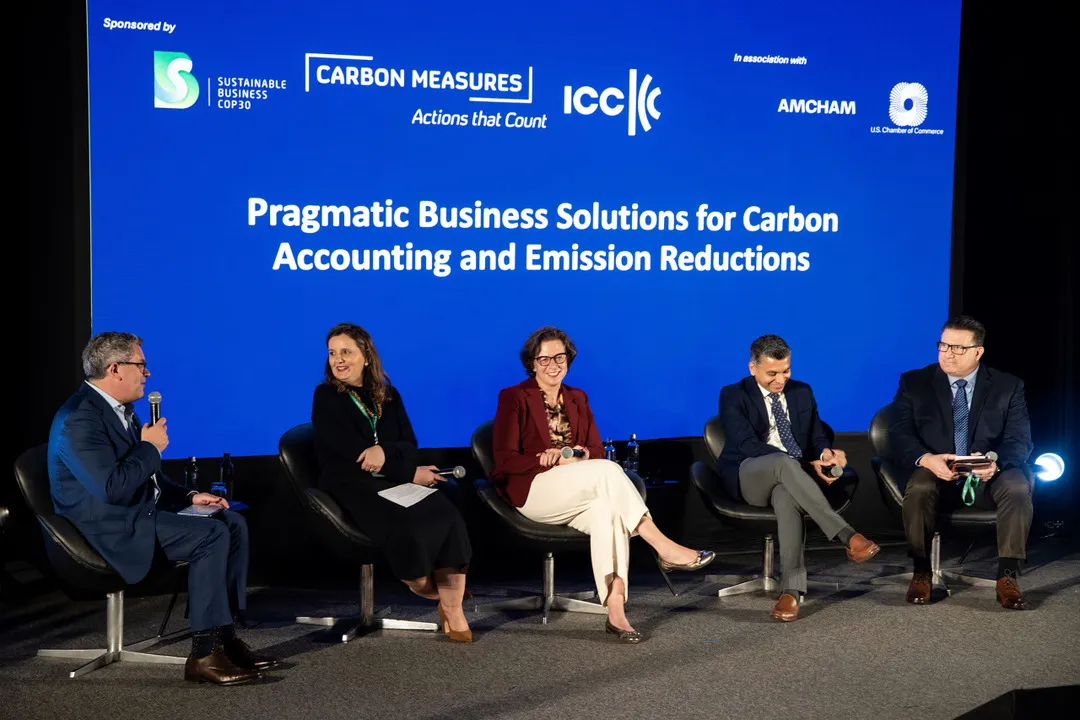
The International Chamber of Commerce and Carbon Measures have named the first cohort of experts to a new Technical Expert Panel on Carbon Accounting, marking a significant milestone in efforts to establish standardized global greenhouse gas emissions measurement. Their mandate is to design a comprehensive framework for tracking emissions at the product level across value chains through a timely, accurate and verifiable ledger-based system that could fundamentally influence corporate disclosure requirements, standards setting procedures, and policymaking approaches to climate action.
The panel consists of ten specialists drawn from industry, academia, science and civil society, representing diverse disciplines, geographies and professional backgrounds. Members include corporate sustainability chiefs, former industrial executives, public policy scholars and financial sector representatives from the United States, Europe, India, Japan and Singapore. The proposed system seeks to bring data integrity and comparability into product-level emissions accounting, an area that remains fragmented across voluntary standards, sectoral initiatives, and competing methodologies that often produce inconsistent or incomparable results.
By focusing on value chain emissions tracking, the panel expects to inform real-world decision making for companies, investors, standards bodies and governments operating in an increasingly carbon-constrained economy where accurate emissions data determines market access, regulatory compliance, and competitive positioning. The initiative comes as governments worldwide explore carbon-based trade measures, public procurement rules, and industrial decarbonization incentives that all fundamentally depend on reliable, verified emissions data at granular product and company levels.
Build the future you deserve. Get started with our top-tier Online courses: ACCA, HESI A2, ATI TEAS 7, HESI EXIT, NCLEX-RN, NCLEX-PN, and Financial Literacy. Let Serrari Ed guide your path to success. Enroll today.
Drawing Historical Parallels to Financial Accounting Standards
The panel will be co-chaired by Amy Brachio, CEO of Carbon Measures, and Karthik Ramanna, Professor of Business and Public Policy and Director of the Transformational Leadership Fellowship at the University of Oxford’s Blavatnik School of Government. Ramanna, who also serves as Co-Founder and Principal Investigator at the E-ledgers Institute, draws explicit historical parallels between the current carbon accounting challenge and the development of financial accounting standards nearly a century ago.
“About 90 years ago, a small group of experts from business and academia gathered in the wider public interest to create GAAP for financial accounts,” Ramanna stated in announcing the panel’s formation. “Their innovation allowed capital markets to scale like never before. We are at a stage today where a similar set of rigorous, technologically agnostic, policy-neutral accounting principles are needed for supply-chain emissions.”
The reference to Generally Accepted Accounting Principles (GAAP) carries significant weight. GAAP terminology was first used in 1936 by the American Institute of Accountants, emerging from collaborative efforts between accounting professionals and government regulators following the 1929 stock market crash and subsequent Great Depression. These standardized financial reporting principles, established through the Committee on Accounting Procedure in 1939, eventually provided the transparent framework that enabled modern capital markets to function with investor confidence.
The carbon accounting panel aims to replicate this transformative impact for emissions measurement, establishing principles that would enable markets to accurately price and differentiate low-carbon products while providing policymakers with reliable data to structure effective climate regulations. S&P Global Commodity Insights will serve as the panel’s independent knowledge partner, providing research, data acquisition, expert analysis and independent thinking throughout the standards development process.
Addressing Critical Gaps in Current Carbon Accounting Practices
Current emissions accounting methodologies suffer from significant deficiencies that the new framework aims to address. According to research from MIT’s Sustainable Supply Chain Lab, Scope 3 emissions—which include indirect emissions occurring along a company’s value chain—account for 75 percent of a company’s overall emissions on average. Yet organizations struggle profoundly to track these emissions due to intricate webs of supplier and customer relationships and their extended business work streams.
The Greenhouse Gas Protocol’s Scope 3 Standard, currently the only internationally accepted method for companies to account for value chain emissions, recognizes 15 categories of Scope 3 activities spanning both upstream and downstream operations. However, calculating these emissions remains problematic due to the complex web of supplier relationships, with current calculations proving inflexible and prone to error, rendering them inaccurate for regulatory compliance and market differentiation purposes.
Companies face two fundamental challenges in Scope 3 accounting: different sources of data and incongruent emissions information resulting from different carbon tracking methodologies. The spend-based method, which estimates emissions by multiplying economic value data of purchased goods with industry-average emission factors, is often used when direct emissions data from suppliers are unavailable. While more accurate reporting methods exist, they require organizations to track information that may pose privacy concerns, making them difficult to implement at scale.
Arguments against comprehensive Scope 3 reporting frequently focus on data collection and accounting challenges, including lack of primary data, reliance on industry average data, and potential double-counting of emissions between reporting entities. Counterarguments emphasize that Scope 3 emissions are essential for understanding climate-related financial risks and preventing companies from claiming lower emissions by outsourcing carbon-intensive activities, effectively ‘moving’ emissions from Scope 1 or 2 classifications to Scope 3 without actual reductions.
Global Composition and Technical Breadth of Expert Panel
The first cohort of panelists includes distinguished leaders with deep technical knowledge and longstanding commitment to emissions reductions. Members include Alicia Seiger, Director of Climate at Chan Zuckerberg Initiative, Dr. Amy Luers, Head of Sustainability Science and Innovation at Microsoft, former Bayer Head of Engineering and Technology Armin Knors, Dr. Benedikt Plümper, Head of ESG Portfolio Management at Banco Santander, and Resources for the Future CEO Billy Pizer.
Also named to the panel were Jakob Stausholm, Fellow at the Blavatnik School of Government and former Rio Tinto CEO, Stanford Professor Kate Maher, Tata Steel Limited Executive Director and Chief Financial Officer Koushik Chatterjee, private family office managing director Rachel Teo, and Mitsui Executive Strategist Tatsuya “Todd” Hoshino. All panelists will serve in a personal capacity rather than representing their organizations, an approach that ICC views as critical for preserving independence and technical candor in developing foundational accounting principles.
“Each of these experts brings deep technical knowledge and a long-standing commitment to reducing emissions,” said Amy Brachio, CEO of Carbon Measures. “What’s been most striking is the caliber of interested candidates we’ve seen globally—lifelong leaders who want to lend their experience to help get this right. The first group reflects a shared ambition to establish a system that will accurately differentiate low-carbon products, enabling policy and market competition to accelerate meaningful emissions reductions.”
ICC Deputy Secretary-General Andrew Wilson emphasized the diversity of expertise required for this undertaking. “The initial appointments to the panel bring an exceptional depth and range of experience reflecting the diversity of expertise that will be required to unlock carbon accounting as a tool to accelerate decarbonization across the economy,” Wilson stated. “We look forward to working with Carbon Measures to further build out the panel in the coming weeks, and are encouraged by the strong response from experts across a wide range of disciplines and markets.”
Governance Structure and Expanding Panel Composition
ICC is managing the selection process to ensure geographical diversity and deep technical specialization across chemical engineering, financial accounting, industrial processes, public policy, and carbon markets expertise. Shortlisted candidates are reviewed by the panel co-chairs, with Carbon Measures and ICC jointly approving final selections to maintain independence from any single constituency or commercial interest.
Strong international interest in joining the panel prompted ICC and Carbon Measures to extend the application deadline to February 15, 2026, to allow additional experts to join ahead of the group’s inaugural session expected later in the first quarter of 2026. The extended timeline reflects recognition that assembling the right combination of technical expertise, geographical representation, and institutional knowledge requires careful vetting to ensure the resulting framework commands broad credibility across diverse stakeholder groups.
The panelists’ work will be supported by an Advisory Group of 25 members comprising representatives of the private sector and non-profit organizations. Advisory Group members—represented by their CFOs, CSOs or other C-suite leaders—will be selected based on their willingness to act as ambassadors for the initiative and provide in-kind or financial support to advance the panel’s work. The Advisory Group will convene no less than four times annually, with individual consultations scheduled as needed to address sector-specific challenges and implementation considerations.
One decision can change your entire career. Take that step with our Online courses in ACCA, HESI A2, ATI TEAS 7, HESI EXIT, NCLEX-RN, NCLEX-PN, and Financial Literacy. Join Serrari Ed and start building your brighter future today.
Comprehensive Mandate and Implementation Roadmap
The panel faces an ambitious mandate spanning multiple dimensions of carbon accounting standards development. First, they will develop guiding principles for a carbon emissions accounting framework that builds on positive attributes of existing approaches while addressing current challenges and enabling global alignment. These principles will draw on learnings from chemistry, financial accounting practices, and product-level standard-setting successes to create a technically sound foundation.
Second, the panel will apply these principles to develop concrete proposals that can underpin adoption by standard-setters and policymakers across different jurisdictions. This requires translating abstract accounting principles into operational frameworks that regulators, stock exchanges, and industry bodies can implement within their existing governance structures without creating unmanageable compliance burdens.
Third, the panel will develop detailed product-level implementation roadmaps to foster real-world adoption across different industrial sectors. These roadmaps must account for varying levels of technological sophistication, data availability, and supply chain complexity across industries ranging from heavy manufacturing to consumer goods to digital services.
Fourth, they will recommend specific approaches to improve data quality, measurement methods, and governance mechanisms necessary for global alignment while building consensus among stakeholders with potentially conflicting interests. This includes addressing fundamental questions about verification standards, enforcement mechanisms, and acceptable tolerance ranges for measurement uncertainty.
Finally, the panel will determine an implementation roadmap including proposed standard-setters for adoption and conditions necessary to support successful scaling. This encompasses identifying implementing organizations, establishing attestation standards, defining enforcement requirements, creating education programs, and structuring oversight mechanisms to maintain system integrity over time.
Intersection with Emerging Regulatory Frameworks
For corporate leaders and investors, carbon accounting at the product level intersects with multiple emerging frameworks that are rapidly reshaping competitive dynamics and market access. These include Scope 3 disclosure requirements being incorporated into securities regulations, embodied carbon standards for construction materials and industrial products, green procurement strategies being adopted by governments and major corporations, and carbon-based trade policies including border adjustment mechanisms.
Accurate differentiation between low-carbon and high-carbon products carries profound implications for pricing power, market access, and regulatory treatment across industries. The European Union’s Carbon Border Adjustment Mechanism (CBAM), which puts a price on carbon-intensive products imported into EU member states, already demonstrates how emissions accounting directly translates into trade policy and competitive positioning. CBAM considers both direct and indirect emissions across Scope 1, Scope 2, and certain Scope 3 categories, with initial industry coverage including electricity, hydrogen, cement, fertilizers, aluminum and iron & steel.
Additional industrial sectors including oil refining, all metals, pulp & paper, glass & ceramics, acids & organic chemicals, aviation, maritime transport and lime production will be added to CBAM coverage by 2030. This expansion underscores the growing importance of product-level carbon accounting for international trade competitiveness, with companies unable to provide verified emissions data facing significant tariff disadvantages in major export markets.
Governments worldwide are exploring similar mechanisms linking carbon performance to market access. The draft U.S. Clean Competition Act includes 25 sectors subject to tariffs based on the difference between actual product emissions and U.S. baseline emissions, creating direct economic incentives for low-carbon production processes and penalizing high-emission imports regardless of country of origin.
Addressing Data Asymmetries and Market Failures
While the panel is still forming, the initiative points to a wider industrial shift toward standardized emissions measurement and verification systems capable of reducing information asymmetries that currently plague climate-related decision-making. For heavy industry, energy, transport, agriculture and consumer goods sectors, a ledger-based accounting system could help mitigate data gaps that currently complicate climate reporting, project finance structuring, carbon market functionality, and regulatory compliance regimes.
The International Chamber of Commerce represents more than 45 million companies in over 170 countries, providing the institutional reach necessary to drive global adoption of new accounting standards. ICC’s mission to make business work for everyone, every day, everywhere positions it uniquely to convene industries around standards that businesses can adopt across borders, leveraging nearly a century of experience in international commercial rule-making.
“ICC plays an integral role in supporting businesses around the world,” said Andrew Wilson, Deputy Secretary-General of ICC. “For nearly 100 years, we’ve convened industries to set standards that businesses can adopt across borders. With a network of 45 million businesses in 170 countries, we know the demand is there for a shift that enhances market precision around carbon tracking and allows businesses to differentiate their products based on verified environmental performance.”
Carbon Measures, as a global coalition of leading businesses committed to advancing a ledger-based carbon accounting framework, brings corporate perspective and practical implementation considerations to the standards development process. The organization calls for new policy frameworks that unlock innovation, competition and market-based solutions to emissions reductions rather than relying solely on command-and-control regulatory approaches that may stifle technological development or create perverse incentives.
Market Implications and Competitive Dynamics
Amy Brachio emphasized the market-making potential of accurate carbon accounting. “This is a necessary step that builds and improves on current systems to unleash market forces that enhance transparency and can be used by policymakers to underpin regulation that aligns incentives, unlocks capital, and ultimately reduces emissions,” Brachio stated. “The panel will help design the system needed to provide timely and accurate data to ensure carbon is tracked and attributed correctly, because you can’t effectively manage what you can’t accurately measure.”
This principle—that measurement enables management—has proven central to financial market efficiency and is expected to produce similar benefits for climate action. Without reliable product-level emissions data, markets cannot efficiently allocate capital toward low-carbon innovations, consumers cannot make informed purchasing decisions, and policymakers lack the information necessary to design effective interventions that reward genuine emissions reductions rather than accounting gimmicks or greenwashing.
The World Resources Institute notes that nearly all climate disclosure users surveyed by the Task Force on Climate-related Financial Disclosures responded that Scope 3 emission disclosures are useful for investment decision-making, and most preparers either estimate or plan to estimate Scope 3 emissions despite acknowledging measurement difficulties. The most common challenges identified include difficulty accessing relevant data (83 percent of respondents), challenges selecting or applying calculation methodologies (60 percent), and lack of internal expertise or resources for calculating Scope 3 emissions (29 percent).
The panel’s work addressing these methodological challenges through standardized principles and calculation frameworks could significantly reduce compliance costs while improving data quality, enabling broader participation in carbon accounting systems and creating more level competitive playing fields across industries and geographies.
Technology and Future-Proofing Considerations
The emphasis on “technologically agnostic” principles reflects recognition that accounting standards must remain robust across evolving measurement technologies, from manual data collection to artificial intelligence-driven emissions tracking systems. Machine learning algorithms can identify pollution sources and patterns in emissions data, providing near-real-time updates on emissions levels by analyzing various data streams, enhancing accuracy and reliability of emissions inventories while enabling timely interventions to mitigate environmental impacts.
Traditional emissions-tracking methods frequently rely on recurring reporting cycles and estimates that are often outdated and inaccurate by the time they reach decision-makers. Advanced data analytics and continuous monitoring systems represent powerful tools in global efforts to combat climate change and achieve sustainability goals, but they require standardized data formats and calculation methodologies to function effectively across organizational boundaries and supply chain networks.
The panel’s challenge involves creating principles flexible enough to accommodate technological innovation while maintaining sufficient rigor to ensure comparability and verifiability across different measurement approaches, technological platforms, and implementation contexts spanning developed and developing economies with vastly different data infrastructure capabilities.
Path Forward and Stakeholder Engagement
Additional appointments to the panel will be announced ahead of its inaugural session, with the complete roster expected to be finalized in early 2026 to enable substantive work to begin on framework development. ICC and Carbon Measures will publish and endorse reports from the panel to build credibility and drive adoption among standards-setting bodies, regulatory agencies, and market participants.
If the system gains traction among key institutional actors, it could profoundly influence how global markets recognize and reward low-carbon products, how policy frameworks structure competition in carbon-constrained economies, and how capital allocation decisions incorporate climate considerations. Success will require navigating complex political economy considerations, technical measurement challenges, and institutional coordination problems that have historically impeded international standards harmonization.
The initiative represents recognition that incremental improvements to existing fragmented carbon accounting approaches will prove insufficient for the scale and urgency of climate action required. Instead, a fundamental rethinking of emissions measurement principles—drawing on lessons from financial accounting while addressing the unique technical challenges of greenhouse gas attribution—offers the most promising path toward creating the transparent, verifiable data infrastructure that effective climate policy and efficient low-carbon markets require.
For industries facing increasing pressure to demonstrate emissions reductions, the prospect of standardized accounting principles offering clear implementation pathways and regulatory acceptance across multiple jurisdictions presents significant value. The coming months will reveal whether the panel can translate ambitious vision into operational frameworks commanding sufficient credibility and practical utility to reshape how the global economy measures, manages, and ultimately reduces its carbon footprint.
Ready to take your career to the next level? Join our Online courses: ACCA, HESI A2, ATI TEAS 7 , HESI EXIT , NCLEX – RN and NCLEX – PN, Financial Literacy!🌟 Dive into a world of opportunities and empower yourself for success. Explore more at Serrari Ed and start your exciting journey today! ✨
Track GDP, Inflation and Central Bank rates for top African markets with Serrari’s comparator tool.
See today’s Treasury bonds and Money market funds movement across financial service providers in Kenya, using Serrari’s comparator tools.
photo source: Google
By: Montel Kamau
Serrari Financial Analyst
20th January, 2026