










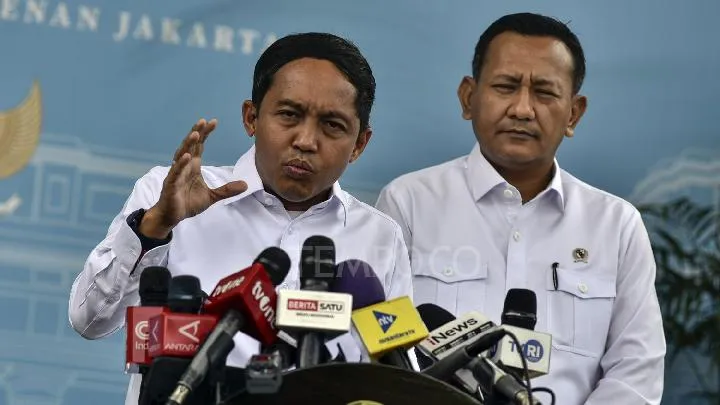
Indonesia has formally joined the Coalition to Grow Carbon Markets, marking a significant milestone in the Southeast Asian nation’s commitment to high-integrity carbon finance and global climate action. The announcement, made by Forestry Minister Raja Juli Antoni during a roundtable discussion at Standard Chartered’s London headquarters on Tuesday, January 20, 2026, positions Indonesia as the eleventh government member of this influential international initiative aimed at scaling up carbon markets while maintaining environmental integrity and supporting sustainable development.
The timing of Indonesia’s membership announcement is strategically significant, coming immediately after a high-level meeting between Indonesian President Prabowo Subianto and British Prime Minister Keir Starmer that launched the UK–Indonesia Strategic Partnership. This diplomatic context underscores the increasing recognition among global leaders that carbon markets represent a critical tool for mobilizing the massive climate finance flows required to meet Paris Agreement targets while enabling economic growth in developing nations.
Build the future you deserve. Get started with our top-tier Online courses: ACCA, HESI A2, ATI TEAS 7, HESI EXIT, NCLEX-RN, NCLEX-PN, and Financial Literacy. Let Serrari Ed guide your path to success. Enroll today.
Bringing Unparalleled Natural Capital to the Table
Indonesia’s entry into the Coalition carries particular weight given the nation’s extraordinary natural endowments. As the country with the world’s third-largest tropical rainforest, covering 52.1 percent of its total land area, Indonesia possesses substantial natural capital that makes it uniquely positioned to supply high-quality nature-based carbon credits to global markets. Beyond its rainforests, Indonesia hosts some of the planet’s most extensive and carbon-dense ecosystems, including vast mangrove forests and tropical peatlands that collectively store enormous quantities of carbon vital to global climate stability.
The ecological significance of Indonesia’s forests cannot be overstated. These diverse ecosystems, composed of species including dipterocarps, mangroves, and peatland trees, collectively store approximately 13 billion metric tons of carbon. Particularly remarkable are Indonesia’s peatland forests, which can hold up to 20 times more carbon per hectare than other forest types due to their deep carbon-rich soils formed over millennia. These ancient ecosystems, some formed over 15,000 years, represent 74 percent of Indonesia’s soil carbon pool and act as critical fire-resistant carbon sinks when undisturbed.
Indonesia’s peatlands, concentrated primarily in Kalimantan, Sumatra, and Papua, represent approximately one-third of the world’s tropical peatland areas. In Kalimantan alone, tropical peatlands covering 5.4 million hectares exhibit remarkable carbon storage capabilities, with peat reaching depths of up to 6 meters and storing an impressive 3,000 metric tons of carbon per hectare. When these waterlogged ecosystems are disturbed by drainage or fire—often associated with land conversion for agriculture—they transform from carbon sinks into catastrophic emitters, releasing stored carbon that has accumulated over thousands of years.
Minister Raja Juli Antoni emphasized Indonesia’s unique position during his London address, stating that through the coalition, Indonesia will work with like-minded countries to increase demand for high-integrity carbon credits from the forestry sector and other nature-based solutions, supporting green growth not only for Indonesia but for the world. This commitment reflects recognition that Indonesia’s natural resources represent global public goods whose protection requires international cooperation and fair compensation.
A Coalition Built on Shared Principles
The Coalition to Grow Carbon Markets was launched during London Climate Action Week in June 2025 and has rapidly gained momentum as a government-led initiative to strengthen voluntary demand for carbon credits. Co-chaired by the governments of Kenya, Singapore, and the United Kingdom, the coalition now includes Canada, France, Panama, Peru, Switzerland, New Zealand, and Zambia as full members, with Indonesia joining as the eleventh government participant.
The coalition’s foundation rests on its Shared Principles for Growing High-Integrity Use of Carbon Credits, which were unveiled at the COP30 climate summit in Brazil in November 2025. These principles address a critical challenge that has long hindered investment in carbon markets: policy fragmentation across different jurisdictions that creates uncertainty for companies seeking to use carbon credits as part of credible climate transition plans. By providing a consistent framework across countries, the Shared Principles aim to boost corporate demand for high-integrity carbon credits as a complement to direct emissions reductions.
The principles have garnered substantial international support beyond the coalition’s formal membership. At COP30, Germany, the Netherlands, and South Africa publicly welcomed the principles, while Indonesia’s announcement of support during the coalition launch event in Brazil signaled its intention to join as a full member. This expanding base of government backing reflects growing urgency for companies in advanced economies to take responsibility for emissions they cannot yet reduce and to channel climate finance toward projects in emerging economies where mitigation opportunities are most abundant and cost-effective.
Alongside the Shared Principles, the coalition issued a Plan of Action setting out its forward-looking agenda to promote carbon market development through supportive policies and incentives. The current focus centers on developing action plans to align national and regional policies, sustaining buyer and investor interest through engagement with private sector networks, and ensuring that carbon credit transactions meet rigorous standards for environmental integrity, transparency, and benefit-sharing with local communities.
Addressing an Urgent Climate Finance Gap
The coalition’s work addresses a fundamental challenge in global climate policy: the world will miss its climate targets unless significantly more finance flows to projects and businesses that can reduce emissions quickly and affordably while promoting growth and development. Current climate finance flows, while increasing, fall dramatically short of the trillions of dollars annually required to achieve the transformational changes necessary to limit global warming to 1.5 degrees Celsius.
Indonesia itself faces substantial climate finance needs. The country has committed to reducing greenhouse gas emissions by 31.89 percent by 2030 under its own efforts and up to 43.2 percent with international support, while pledging to reach net zero emissions by 2060. Meeting these ambitious targets requires massive investment in renewable energy, forest protection, peatland restoration, sustainable agriculture, and climate adaptation infrastructure—investments that cannot be financed solely through domestic resources or traditional development assistance.
High-integrity carbon markets offer a mechanism to mobilize private sector capital at scale for climate action. By enabling companies to invest in verified emissions reduction or removal projects as part of their decarbonization strategies, carbon markets can channel billions of dollars toward nature protection, clean energy deployment, and community resilience building. For Indonesia, participation in well-governed carbon markets represents an opportunity to monetize its vast natural capital while ensuring environmental protection and equitable benefit distribution.
UK Climate Envoy Rachel Kyte welcomed Indonesia’s membership, emphasizing that the country’s experience in nature-based solutions would help mobilize private-sector investment into high-quality carbon projects. Kyte noted that carbon markets can play an important role in delivering progress toward national climate targets while ensuring financing flows to protect nature and build resilience—objectives that align closely with Indonesia’s development priorities.
Indonesia’s Carbon Market Evolution
Indonesia’s decision to join the coalition comes at a pivotal moment in the country’s own carbon market development. In January 2025, the Indonesia Carbon Exchange (IDX Carbon) opened trading to international investors for the first time, marking a significant shift toward global integration after its initial domestic-only phase. The exchange, officially launched in September 2023 under supervision of Indonesia’s Financial Services Authority, operates as a platform for trading both emissions allowances under the country’s cap-and-trade system and voluntary carbon offset credits.
However, Indonesia’s domestic carbon market has faced challenges in generating substantial trading volumes since its launch. From March to September 2025, total transaction values remained modest at approximately IDR 1 billion (USD 72,621), with an average carbon price around IDR 67,047 per ton (approximately USD 4). These figures highlight the early-stage nature of Indonesia’s carbon trading infrastructure and underscore the importance of international integration to enhance market liquidity and price discovery.
To strengthen its carbon market framework and facilitate foreign investment, Indonesia has pursued strategic Mutual Recognition Agreements with major international carbon standard setters. In 2025, the country entered into agreements with Verra and Gold Standard, two of the most widely recognized voluntary carbon market certification programs. These agreements allow projects certified under international standards to be recognized in Indonesia’s national registry, enhancing market integrity and accessibility for global buyers while ensuring consistency with domestic regulations and benefit-sharing requirements.
The regulatory evolution extends beyond voluntary markets to compliance mechanisms. Indonesia confirmed its participation in the Carbon Offsetting and Reduction Scheme for International Aviation (CORSIA) starting January 2026, positioning itself to meet rising demand for high-quality aviation offsets. Additionally, the country is developing a hybrid “cap-tax-and-trade” system where emissions trading operates concurrently with a carbon tax, with facilities failing to meet trading obligations subject to taxation aligned with domestic market prices.
One decision can change your entire career. Take that step with our Online courses in ACCA, HESI A2, ATI TEAS 7, HESI EXIT, NCLEX-RN, NCLEX-PN, and Financial Literacy. Join Serrari Ed and start building your brighter future today.
Leveraging Proven Experience in Nature-Based Projects
Indonesia brings substantial practical experience to the coalition through its extensive involvement in forest-based carbon projects and nature-based solutions. The country has been among the most active participants in Japan’s Joint Crediting Mechanism (JCM), a bilateral framework recognized as consistent with Article 6 of the Paris Agreement, with one of the highest numbers of registered projects among JCM host countries.
Several large-scale projects demonstrate Indonesia’s capacity to deliver verified emissions reductions through forest conservation and restoration. The Katingan Mentaya Project in Central Kalimantan represents one of the world’s largest nature-based carbon offset initiatives, protecting over 150,000 hectares of tropical peatland forest—ecosystems that store up to 30 times more carbon than regular forests. By preventing illegal logging and deforestation, the project avoids the release of millions of tons of CO₂ while providing alternative livelihoods to over 40 villages through eco-agriculture, small businesses, and education programs.
Similarly, the Rimba Raya Biodiversity Reserve in Central Kalimantan protects nearly 65,000 hectares of tropical forest that were slated for palm oil plantations, combining carbon conservation with protection of endangered species including the critically threatened Bornean orangutan. These projects exemplify Indonesia’s approach of integrating climate mitigation with biodiversity conservation and community development—an integrated model that the coalition seeks to promote and scale globally.
Mangrove restoration represents another area of Indonesian expertise with substantial carbon implications. Coastal mangrove forests provide extraordinary carbon storage capacity, with an acre of mangrove storing five to ten times as much carbon as an acre of rainforest. Beyond their climate benefits, mangroves deliver critical ecosystem services including coastal protection from storms and erosion, nursery habitat for commercial fish species, and livelihoods for coastal communities. Large-scale restoration projects in North Sumatra and Aceh led by organizations like the Yagasu Foundation demonstrate viable models for mangrove conservation that generate carbon credits while enhancing coastal resilience.
The Role of International Finance and Technical Support
Indonesia’s participation in the coalition has been facilitated and supported by key international partners, notably Standard Chartered, which hosted the London roundtable discussion where the membership was announced. As a long-standing partner to both Indonesia and the United Kingdom, Standard Chartered has played an active role in developing sustainable finance mechanisms, including strengthening high-integrity carbon markets.
Donny Donosepoetro, CEO of Standard Chartered Indonesia, emphasized that Indonesia’s participation would contribute significantly toward improving quality standards, transparency, and demand for high-integrity carbon credit markets, particularly those supporting nature-based solutions. The bank’s involvement reflects growing recognition among financial institutions that carbon markets represent both a climate imperative and a substantial business opportunity as companies worldwide seek credible mechanisms to address unavoidable emissions.
The coalition itself receives technical and administrative support from the Voluntary Carbon Markets Integrity Initiative (VCMI), which hosts the coalition’s Secretariat and works closely with partners and a dedicated Business Advisory Group to ensure alignment between policy frameworks and market needs. This institutional infrastructure helps translate high-level principles into practical guidance for both sellers and buyers of carbon credits.
Addressing Past Criticisms and Building Credibility
Indonesia’s commitment to high-integrity carbon markets comes amid ongoing scrutiny of voluntary carbon market quality and effectiveness. Critics have raised concerns about the accuracy of emissions reduction calculations, additionality of carbon projects, permanence of carbon storage, and equitable distribution of benefits to local and Indigenous communities. Some analyses have suggested that Indonesia’s forest carbon accounting may have overestimated emissions reductions or underestimated baseline deforestation rates, potentially inflating the climate impact of conservation projects.
The coalition’s emphasis on high-integrity standards, transparent reporting, and alignment with recognized certification frameworks aims to address these concerns. The Shared Principles explicitly reference the Core Carbon Principles developed by the Integrity Council for the Voluntary Carbon Market (ICVCM), which establish rigorous criteria for carbon credit quality including real, additional, quantified, permanent, and verified emissions reductions or removals. Projects must also demonstrate sustainable development benefits and respect for Indigenous and local community rights.
For Indonesia, participation in the coalition represents an opportunity to demonstrate commitment to continuous improvement in carbon market governance while leveraging international expertise to strengthen domestic systems. The coalition’s focus on capacity building, knowledge sharing, and alignment of best practices can help Indonesia address technical challenges in measurement, reporting, and verification while ensuring that carbon finance flows support genuine climate action rather than greenwashing.
Implications for Global Carbon Market Development
Indonesia’s membership in the Coalition to Grow Carbon Markets carries significant implications for the evolution of global carbon finance. As a major developing economy with substantial forest assets and ambitious climate commitments, Indonesia’s approach to carbon markets will influence how other nations in Southeast Asia, Africa, and Latin America navigate similar decisions about participation in international carbon trading.
The coalition’s expansion demonstrates growing alignment among governments on the principle that high-integrity carbon markets should complement—not replace—direct emissions reductions and that carbon credit revenues should support sustainable development objectives alongside climate mitigation. This consensus challenges earlier narratives that positioned carbon offsetting as mere “greenwashing” divorced from authentic decarbonization efforts.
At COP30 in Brazil, the coalition’s Shared Principles complemented other carbon market initiatives including the Paris Agreement Crediting Mechanism under Article 6.4 and Brazil’s proposed Open Coalition on Compliance Carbon Markets, which aims to harmonize standards and link existing carbon credit trading systems across jurisdictions. Together, these initiatives signal potential transformation of fragmented carbon markets into a more integrated global system with greater liquidity, transparency, and environmental integrity.
For Indonesia specifically, coalition membership provides political endorsement and technical support as the country works to position itself as a major supplier of carbon credits to global markets. With estimates suggesting Indonesia could generate up to 13.4 billion tons of carbon credits from forest protection, peatland restoration, renewable energy, and other climate projects, the potential economic value ranges from $130 billion to $670 billion depending on market prices—revenues that could fundamentally transform Indonesia’s capacity to invest in sustainable development while meeting climate commitments.
Balancing Economic Development and Environmental Protection
Indonesia’s carbon market strategy must navigate complex tensions between economic development aspirations and environmental protection imperatives. As a rapidly developing economy with a growing population, Indonesia faces pressure to expand agricultural production, extract natural resources, and build infrastructure—activities that historically have driven deforestation and ecosystem degradation.
The country has made significant progress in recent years. From 2001 to 2023, Indonesia lost 30.8 million hectares of tree cover, but deforestation rates, which once exceeded 1 million hectares annually, have declined substantially through policy interventions including forest moratoriums, enhanced law enforcement against illegal logging, and sustainable land-use planning. The Peatland and Mangrove Restoration Agency, established in 2016, has worked to restore millions of acres of degraded peatlands following devastating fires in 2015 that contributed more than one-fifth of Indonesia’s annual carbon emissions.
Carbon markets offer a potential pathway to reconcile development and conservation by providing economic returns from standing forests and restored ecosystems that can compete with conversion to agriculture or other extractive uses. However, realizing this potential requires ensuring that carbon revenues flow equitably to local and Indigenous communities who bear opportunity costs of conservation, that benefit-sharing mechanisms are transparent and enforceable, and that carbon projects genuinely deliver on promises of community development alongside environmental protection.
The Path Forward: Challenges and Opportunities
As Indonesia embarks on its journey as a coalition member, several challenges and opportunities lie ahead. Building domestic capacity for carbon project development, measurement, reporting, and verification will require sustained investment in technical training, technology infrastructure, and institutional strengthening. Ensuring that carbon market participation benefits rather than displaces local and Indigenous communities demands careful attention to land tenure rights, free prior and informed consent, and equitable benefit-sharing mechanisms.
Price volatility in voluntary carbon markets presents another challenge. While demand for nature-based carbon credits has grown, prices can fluctuate significantly based on market sentiment, regulatory changes in buyer countries, and perceptions of credit quality. Indonesia will need to work with coalition partners and market infrastructure providers to promote price stability and long-term offtake agreements that provide predictable revenue streams for conservation and restoration projects.
Opportunities abound for Indonesia to leverage its coalition membership to attract increased climate finance, strengthen bilateral partnerships with carbon credit buyers, and position Indonesian projects as premium offerings in a quality-conscious market. The coalition’s Business Advisory Group provides channels for engaging with major corporate buyers seeking credible carbon credits, while the Shared Principles offer assurance to investors that Indonesia-sourced credits meet rigorous integrity standards.
Coalition membership also strengthens Indonesia’s voice in ongoing negotiations about international carbon market architecture, including implementation of Article 6 of the Paris Agreement and development of common carbon credit data standards. As these frameworks evolve, Indonesia can advocate for rules that recognize the particular challenges facing tropical forest nations while ensuring environmental integrity and sustainable development co-benefits.
Conclusion: A Strategic Commitment to Climate Leadership
Indonesia’s decision to join the Coalition to Grow Carbon Markets reflects strategic recognition that global climate goals cannot be achieved without massive mobilization of finance for nature protection and restoration, and that well-governed carbon markets can play a vital role in channeling that finance to where it can achieve maximum impact. For a nation endowed with the world’s third-largest tropical rainforest, extensive peatlands storing vast carbon reserves, and rich mangrove ecosystems providing coastal protection and biodiversity habitat, participation in high-integrity carbon markets aligns environmental stewardship with economic opportunity.
The coalition provides Indonesia with international political backing, technical support, and access to networks of carbon credit buyers as the country works to scale up its carbon market infrastructure and project pipeline. Conversely, Indonesia brings to the coalition unparalleled natural capital, practical experience in large-scale nature-based projects, and a demonstrated commitment to advancing climate action through ambitious national targets and policy reforms.
Success will require sustained effort to strengthen governance systems, ensure equitable benefit-sharing, maintain scientific rigor in emissions accounting, and resist pressures to compromise on integrity standards in pursuit of short-term revenues. But if Indonesia can navigate these challenges while delivering verified emissions reductions that support biodiversity conservation and community development, it can demonstrate a model for tropical forest nations worldwide—proving that nature-based solutions, when properly designed and implemented, can simultaneously address climate change, protect ecosystems, and advance sustainable development.
As global leaders gather for future climate negotiations and carbon market stakeholders work to operationalize the Shared Principles, Indonesia’s experience as a coalition member will provide crucial real-world evidence about whether the promise of high-integrity carbon markets can be realized at the scale required to meet the climate challenge. The eyes of the international community will be watching as Indonesia charts its course in the rapidly evolving world of carbon finance.
Ready to take your career to the next level? Join our Online courses: ACCA, HESI A2, ATI TEAS 7 , HESI EXIT , NCLEX – RN and NCLEX – PN, Financial Literacy!🌟 Dive into a world of opportunities and empower yourself for success. Explore more at Serrari Ed and start your exciting journey today! ✨
Track GDP, Inflation and Central Bank rates for top African markets with Serrari’s comparator tool.
See today’s Treasury bonds and Money market funds movement across financial service providers in Kenya, using Serrari’s comparator tools.
photo source: Google
By: Montel Kamau
Serrari Financial Analyst
28th January, 2026
Article, Financial and News Disclaimer
The Value of a Financial Advisor
While this article offers valuable insights, it is essential to recognize that personal finance can be highly complex and unique to each individual. A financial advisor provides professional expertise and personalized guidance to help you make well-informed decisions tailored to your specific circumstances and goals.
Beyond offering knowledge, a financial advisor serves as a trusted partner to help you stay disciplined, avoid common pitfalls, and remain focused on your long-term objectives. Their perspective and experience can complement your own efforts, enhancing your financial well-being and ensuring a more confident approach to managing your finances.
Disclaimer: This article is for informational purposes only and does not constitute financial advice. Readers are encouraged to consult a licensed financial advisor to obtain guidance specific to their financial situation.
Article and News Disclaimer
The information provided on www.serrarigroup.com is for general informational purposes only. While we strive to keep the information up to date and accurate, we make no representations or warranties of any kind, express or implied, about the completeness, accuracy, reliability, suitability, or availability with respect to the website or the information, products, services, or related graphics contained on the website for any purpose. Any reliance you place on such information is therefore strictly at your own risk.
www.serrarigroup.com is not responsible for any errors or omissions, or for the results obtained from the use of this information. All information on the website is provided on an as-is basis, with no guarantee of completeness, accuracy, timeliness, or of the results obtained from the use of this information, and without warranty of any kind, express or implied, including but not limited to warranties of performance, merchantability, and fitness for a particular purpose.
In no event will www.serrarigroup.com be liable to you or anyone else for any decision made or action taken in reliance on the information provided on the website or for any consequential, special, or similar damages, even if advised of the possibility of such damages.
The articles, news, and information presented on www.serrarigroup.com reflect the opinions of the respective authors and contributors and do not necessarily represent the views of the website or its management. Any views or opinions expressed are solely those of the individual authors and do not represent the website's views or opinions as a whole.
The content on www.serrarigroup.com may include links to external websites, which are provided for convenience and informational purposes only. We have no control over the nature, content, and availability of those sites. The inclusion of any links does not necessarily imply a recommendation or endorsement of the views expressed within them.
Every effort is made to keep the website up and running smoothly. However, www.serrarigroup.com takes no responsibility for, and will not be liable for, the website being temporarily unavailable due to technical issues beyond our control.
Please note that laws, regulations, and information can change rapidly, and we advise you to conduct further research and seek professional advice when necessary.
By using www.serrarigroup.com, you agree to this disclaimer and its terms. If you do not agree with this disclaimer, please do not use the website.
www.serrarigroup.com, reserves the right to update, modify, or remove any part of this disclaimer without prior notice. It is your responsibility to review this disclaimer periodically for changes.
Serrari Group 2025