British International Investment has committed $33 million to India’s GreenCell Mobility as part of an $89 million mezzanine financing package that signals accelerating momentum in the country’s transition from diesel-powered public transport to zero-emission electric buses. The investment, structured alongside the International Finance Corporation and Tata Capital, represents one of the most significant capital deployments into India’s urban mobility sector and positions electric buses as a cornerstone of the nation’s climate strategy.
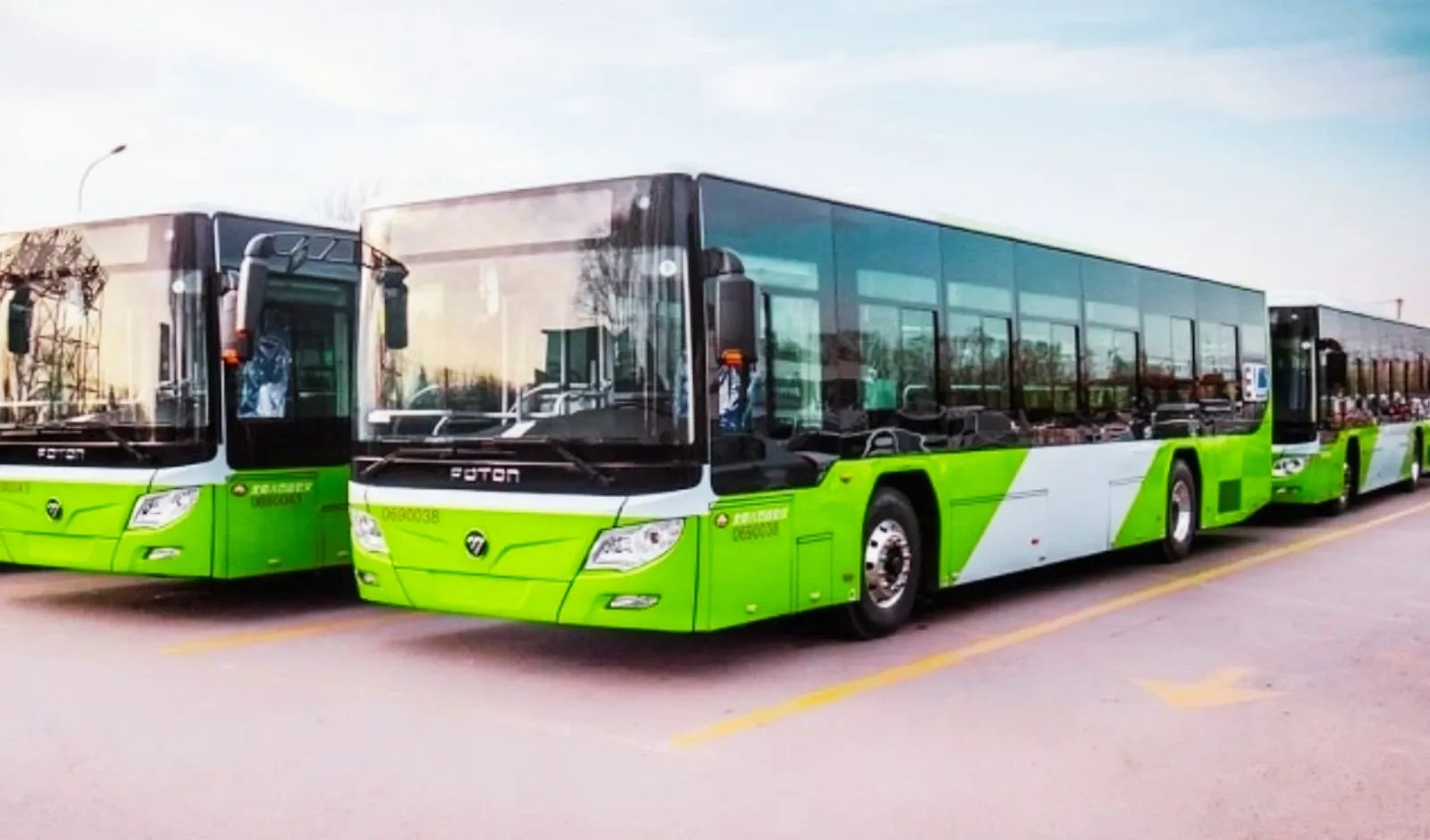
GreenCell Mobility, backed by climate impact investor Eversource Capital, operates India’s largest manufacturer-agnostic electric bus platform. The company currently manages a fleet exceeding 1,200 electric buses serving both intra-city and intercity routes, supported by more than 270 charging stations distributed across the country. The new financing will enable the company to expand its fleet to 3,700 buses, representing a threefold increase in operational capacity. The expansion will extend services across Delhi, Madhya Pradesh, Andhra Pradesh, Bihar, and the Union Territory of Puducherry through contracts awarded under India’s National E-Bus Program and PM Seva E-Mobility initiative.
Build the future you deserve. Get started with our top-tier Online courses: ACCA, HESI A2, ATI TEAS 7, HESI EXIT, NCLEX-RN, NCLEX-PN, and Financial Literacy. Let Serrari Ed guide your path to success. Enroll today.
India’s Transport Emissions Challenge Drives Electric Bus Adoption
India’s transport sector accounts for approximately 12 percent of the country’s energy-related greenhouse gas emissions, with road transport representing the overwhelming majority of sectoral emissions. This concentration makes public transit electrification a high-impact intervention for emissions reduction. Urban air pollution has emerged as both a public health crisis and an economic productivity concern across Indian cities, with particulate matter pollution contributing to more than 1.6 million deaths annually according to air quality monitoring data.
The severity of India’s air quality challenge extends beyond major metropolitan areas. Recent satellite analysis indicates that both rural and urban populations face exposure to particulate matter concentrations well above World Health Organization guidelines, creating a nationwide imperative for emissions reduction across multiple sectors. Transport emissions contribute significantly to this burden through both direct exhaust particulates and secondary pollutants formed in the atmosphere.
Against this backdrop, the Government of India has established a national target of 30 percent electric vehicle penetration by 2030, with specific sectoral targets that include 40 percent penetration for buses. This goal reflects recognition that mass transit electrification delivers outsized environmental benefits relative to private vehicle conversion, given the high utilization rates and urban concentration of bus fleets. Meeting these targets requires aggressive fleet expansion, supportive financing mechanisms, and coordinated procurement programs across state and municipal governments.
Strategic Role of Mezzanine Finance in Scaling Clean Mobility
The $89 million financing package represents a sophisticated deployment of mezzanine capital—a hybrid instrument that combines features of debt and equity to provide growth capital without the immediate dilution that pure equity investment would entail. For capital-intensive sectors like electric mobility, where upfront vehicle and infrastructure costs create financing bottlenecks, mezzanine structures allow operators to scale faster than senior debt alone would permit while maintaining operational flexibility.
Mezzanine financing carries higher returns than traditional debt to compensate lenders for increased risk, but offers more favorable terms than equity for companies demonstrating proven business models and stable revenue streams. In GreenCell’s case, the structure reflects investor confidence in the company’s execution capabilities and the underlying economics of electric bus operations under long-term contracted revenue models.
British International Investment’s participation exemplifies how development finance institutions use risk-tolerant capital to catalyze private investment in early-stage climate technologies. By accepting risk profiles that commercial lenders might decline, these institutions help establish track records that subsequently attract mainstream capital. The co-investment with IFC and Tata Capital demonstrates this catalytic effect, combining concessional development finance with commercial capital in a structure designed to prove market viability.
Shilpa Kumar, Managing Director and Head of India at BII, emphasized the strategic rationale: “Climate action is a key priority for BII in India, with electric mobility as a key pillar of our climate investment strategy. Getting more electric buses on the roads is an effective way to decarbonise public transport at scale. Our investment in GreenCell Mobility reflects our commitment to supporting proven platforms that accelerate clean mobility.”
National Procurement Programs Create Market Certainty
GreenCell’s expansion is anchored in contracts secured through India’s systematic approach to public transit electrification. The National E-Bus Program and PM Seva E-Mobility initiative represent the government’s coordinated strategy to replace diesel and CNG bus fleets with electric alternatives across tier-two and tier-three cities. These programs combine demand aggregation, standardized procurement processes, and payment security mechanisms to reduce counterparty risk for private operators.
The PM-eBus Sewa scheme, launched with a budgetary outlay of INR 3,435.33 crore, aims to deploy more than 38,000 electric buses over five years from 2024-25 through 2028-29. The program operates on a Gross Cost Contract model where private operators invest in vehicle procurement and charging infrastructure while receiving fixed per-kilometer payments from public transport authorities. This structure transfers operational risk to experienced operators while providing predictable costs for government agencies.
A critical innovation within the PM-eBus Sewa framework is the Payment Security Mechanism, which addresses a longstanding impediment to private sector participation in public transport operations. Under this arrangement, Convergence Energy Services Limited maintains a dedicated fund to ensure timely payments to operators in case of defaults by public transport authorities. This guarantee substantially reduces financing costs by removing payment default risk from lenders’ credit assessments.
Katherine Koh, Regional Industry Manager for Infrastructure and Natural Resources at IFC Asia and Pacific, highlighted the program’s significance: “Electrifying buses is central to India’s urban transformation agenda, and our mezzanine investment in GreenCell will accelerate the rollout of sustainable public transport for thousands of people across India’s tier-2 and tier-3 cities. It will create jobs while catalyzing private capital through innovative financing and payment-security models.”
Eversource Capital’s Climate Investment Platform
GreenCell Mobility operates as a flagship company within the portfolio of Eversource Capital, a joint venture between Everstone Group and Lightsource BP that manages India’s largest climate impact fund. Eversource closed its Green Growth Equity Fund at $741 million in 2022, making it one of the largest single-country funds focused on climate mitigation and adaptation. The firm’s investment thesis centers on early-stage platform building in electric mobility, renewable energy, and resource efficiency sectors where India faces critical sustainability transitions.
The investment strategy emphasizes control positions and operational engagement rather than passive capital allocation. Eversource’s team works with portfolio companies to develop full-ecosystem solutions, addressing not just vehicle deployment but also charging infrastructure, fleet management systems, driver training, and maintenance networks. This comprehensive approach aims to overcome the coordination failures that can impede new technology adoption in fragmented markets.
Dhanpal Jhaveri, Vice Chairman of Everstone Group and CEO of Eversource Capital, explained the funding’s strategic context: “Through this funding round for GreenCell Mobility, we are deepening our partnership with IFC, BII and Tata Capital, who are leaders in sustainable investments. The transaction exemplifies the catalytic role that private, development and institutional capital can play in accelerating India’s clean transport revolution. GreenCell’s expanded operations will deliver transformation and efficient transportation to cities and commuters while generating returns.”
The GreenCell investment sits alongside Eversource’s other mobility platforms, including Lithium Urban Technologies, which operates electric vehicle fleets for corporate employee transportation and freight logistics. This portfolio approach allows knowledge transfer across different electric mobility segments and creates opportunities for infrastructure sharing and procurement optimization.
Operational Economics and Infrastructure Requirements
Electric buses present both opportunities and challenges compared to conventional diesel fleets. On the cost side, electric buses typically carry upfront capital costs two to three times higher than diesel equivalents, driven by battery expenses and charging infrastructure requirements. However, these higher acquisition costs are substantially offset by lower operating expenses over the vehicle lifecycle.
Electric buses benefit from significantly reduced fuel costs, given electricity’s price advantage over diesel and the superior efficiency of electric drivetrains. Maintenance costs also run considerably lower due to fewer moving parts and the elimination of complex engine systems, exhaust treatment, and transmission components. Studies of Indian electric bus operations indicate total cost of ownership advantages emerging within 6-8 years of deployment under current operating conditions.
Charging infrastructure represents a critical enabler and potential bottleneck for fleet expansion. GreenCell’s current network of more than 270 charging stations provides foundation infrastructure, but the planned expansion to 3,700 buses will require substantial additional investment in depot charging facilities and supporting electrical grid capacity. The company’s manufacturer-agnostic platform allows flexibility in vehicle procurement while creating complexity in managing charging compatibility across different bus models and battery technologies.
Range requirements vary significantly between intra-city and intercity operations, influencing both vehicle specifications and charging strategies. Intra-city routes with predictable schedules and centralized depot locations favor overnight charging strategies with smaller, less expensive charging installations. Intercity routes require longer-range vehicles and potentially opportunity charging capabilities at route endpoints to enable economical operations without excessive battery capacity.
Devndra Chawla, Managing Director and CEO of GreenCell Mobility, emphasized operational priorities: “This fundraise marks a significant milestone in GreenCell Mobility’s journey to build electric mobility as a mainstream, scalable public transport solution for India. The participation of IFC, BII and Tata Capital reflects strong conviction in our platform, our operating model, and our ability to execute at scale. As we expand our fleet and charging infrastructure across states under programmes such as PM Seva E-Mobility, our focus remains on delivering reliable, cost-efficient and zero-emission transport for cities and intercity corridors.”
One decision can change your entire career. Take that step with our Online courses in ACCA, HESI A2, ATI TEAS 7, HESI EXIT, NCLEX-RN, NCLEX-PN, and Financial Literacy. Join Serrari Ed and start building your brighter future today.
Climate Impact and Energy Transition Alignment
The environmental case for electric bus deployment in India extends beyond direct emissions reduction to encompass grid decarbonization trajectories and energy security considerations. While current electricity generation in India remains heavily dependent on coal-fired power plants, the emissions intensity of the grid is declining as renewable energy capacity expands rapidly toward the government’s target of 500 GW of non-fossil fuel capacity by 2030.
Electric buses operated on today’s grid already deliver lifecycle emissions reductions compared to diesel buses when accounting for the complete fuel cycle including refining and distribution. As grid composition shifts toward renewables over the coming decade, the carbon advantage of electric buses will strengthen progressively. This creates a virtuous cycle where early deployment establishes operational expertise and infrastructure while the environmental benefits compound as clean electricity generation increases.
The strategic timing of India’s electric bus expansion positions the country to influence broader emerging market approaches to public transport electrification. Successful demonstration of large-scale e-bus deployment under Indian operating conditions—including high temperatures, varied terrain, and intense utilization patterns—can provide proof points for policy design and investment decisions across Asia, Africa, and Latin America.
India’s approach also addresses energy security objectives by reducing dependence on imported petroleum products. The transport sector represents a major component of India’s oil import bill, creating economic vulnerability to global price volatility and supply disruptions. Electrification of public transit, when powered by domestically-generated electricity including indigenous renewable resources, reduces this exposure while creating domestic value chains in vehicle manufacturing, battery production, and charging infrastructure.
Market Structure and Competitive Dynamics
GreenCell’s manufacturer-agnostic platform distinguishes it from vertically-integrated competitors that combine vehicle manufacturing with fleet operations. This approach allows the company to procure buses from multiple original equipment manufacturers based on performance specifications, pricing, and delivery timelines rather than being constrained to a single supplier’s product roadmap. The strategy provides procurement flexibility while creating natural quality competition among bus manufacturers.
The competitive landscape for electric bus operations in India includes both established public sector undertakings and emerging private operators. Public transport authorities in many cities operate their own fleets, though operational efficiency and financial sustainability vary widely. Private operators compete primarily on execution capabilities, access to capital, and expertise in managing complex charging infrastructure and fleet optimization.
Success in this market requires capabilities spanning multiple domains: vehicle procurement and maintenance, charging infrastructure development and operation, driver recruitment and training, route optimization, customer interface systems, and regulatory compliance. Few organizations possess all these capabilities internally, creating opportunities for specialized platform operators like GreenCell that can develop integrated solutions while partnering with municipalities and state transport undertakings.
Market growth is driven not just by new route development but also by fleet replacement as aging diesel buses reach end-of-life. This creates a substantial addressable market beyond the government’s targets for new route electrification, particularly as air quality regulations tighten and cities face increasing pressure to demonstrate climate action progress.
Investment Implications for Clean Mobility Sector
The GreenCell transaction illustrates several trends shaping climate infrastructure investment in emerging markets. First, the convergence of public health imperatives, climate commitments, and industrial policy creates multiple stakeholder constituencies supporting the same infrastructure transitions. This alignment strengthens political sustainability and reduces policy reversal risk that has historically complicated long-term infrastructure investment.
Second, blended finance structures combining concessional development capital with commercial funding are proving effective at de-risking early-stage climate technologies and establishing investable track records. As projects demonstrate operational reliability and financial performance, they attract progressively more commercial capital on improving terms. This progression from donor-supported pilots to commercially viable platforms represents the intended trajectory for many climate infrastructure sectors.
Third, payment security mechanisms addressing government counterparty risk enable private sector participation at scale in markets where fiscal constraints might otherwise limit infrastructure development. The PM-eBus Sewa payment security structure provides a template potentially applicable to other infrastructure sectors facing similar challenges around government payment reliability.
Finally, the transaction demonstrates appetite among both development finance institutions and commercial investors for climate infrastructure assets that offer reasonable risk-adjusted returns while delivering measurable environmental and social benefits. As climate investment markets mature, this capital is increasingly flowing to operational platforms with proven business models rather than technology development or early-stage ventures.
For investors evaluating the electric mobility sector in India and comparable markets, the GreenCell case highlights several factors supporting commercial viability: long-term contracted revenue models reducing demand risk, standardized procurement processes lowering political and regulatory uncertainty, payment security mechanisms addressing counterparty concerns, improving economics as battery costs decline and grid decarbonizes, and strong policy support across multiple levels of government.
Infrastructure and Skills Development Requirements
Successful scaling of India’s electric bus fleet depends on parallel development of supporting infrastructure and human capital. Beyond vehicle procurement and charging stations, the ecosystem requires maintenance facilities equipped for high-voltage electrical systems, technician training programs covering battery management and electric drivetrains, supply chains for specialized components and replacement parts, and grid infrastructure capable of supporting concentrated charging loads.
The expansion to 3,700 buses under GreenCell’s current funding round will create employment opportunities across multiple skill levels, from bus operators and charging station attendants to electrical engineers and fleet managers. Training programs must address the specific requirements of electric vehicle systems while building on existing automotive maintenance expertise. This skills transition represents both a challenge and an opportunity for workforce development in the transportation sector.
Grid infrastructure planning requires coordination between transport authorities, fleet operators, and electricity distribution companies to ensure adequate capacity at depot locations and manage load profiles to minimize peak demand charges. Smart charging strategies that shift charging to off-peak hours can significantly reduce electricity costs while avoiding grid strain, but require sophisticated energy management systems and coordination with utility operators.
The manufacturer-agnostic approach followed by GreenCell creates additional complexity in maintaining diverse fleet compositions but also drives knowledge development across multiple vehicle platforms and technologies. This experience base becomes valuable as the broader market scales and different applications require different vehicle specifications and charging strategies.
Regional Context and Policy Environment
India’s electric mobility transition is unfolding within a regional context where several Asian countries are pursuing similar objectives at different paces. China has achieved the most extensive deployment globally, with hundreds of thousands of electric buses operating across major cities. This experience provides both lessons and caution for Indian policymakers, demonstrating both the feasibility of large-scale deployment and the challenges of ensuring commercial sustainability without ongoing subsidies.
Southeast Asian countries including Indonesia, Thailand, and Vietnam are developing their own electric bus programs, creating potential knowledge exchange opportunities and regional supply chain development. The scale of India’s deployment, combined with the country’s manufacturing capabilities, positions Indian companies to potentially serve broader Asian markets as the sector matures.
India’s policy environment for electric mobility continues evolving through both national frameworks and state-level initiatives. The recently launched PM E-DRIVE scheme represents the latest iteration of support mechanisms, moving beyond pure demand subsidies toward more comprehensive ecosystem development including charging infrastructure, manufacturing incentives, and research and development support. State governments are simultaneously implementing their own policies addressing vehicle taxation, charging infrastructure deployment, and procurement mandates.
Regulatory frameworks are gradually standardizing around safety requirements, charging protocols, and vehicle specifications. This standardization reduces complexity for operators managing multi-state fleets while potentially constraining innovation if regulations become overly prescriptive. The balance between ensuring safety and interoperability while preserving space for technology evolution remains an ongoing policy challenge.
Future Outlook and Scaling Challenges
The path from 1,200 to 3,700 buses represents substantial operational scaling for GreenCell, requiring not just capital deployment but organizational capacity building across multiple functions. Successful execution will require maintaining quality control across an expanding fleet, developing robust supply chains for maintenance and replacement parts, scaling charging infrastructure in coordination with local utilities, recruiting and training hundreds of additional employees, and managing relationships with multiple municipal and state government counterparts.
The broader question of whether India will achieve its 30 percent electric vehicle penetration target by 2030 remains subject to uncertainty. Current trajectories suggest the target is ambitious relative to present adoption rates, requiring accelerated deployment across multiple vehicle categories. However, the combination of policy support, improving economics, and growing institutional capacity suggests more rapid adoption is possible if financing mechanisms continue developing and procurement processes streamline.
Long-term commercial sustainability of electric bus operations will depend on several factors beyond the initial deployment phase. As subsidy programs phase down, operations must demonstrate economic viability based on market revenues and actual cost savings relative to diesel alternatives. This transition is most likely to succeed if battery costs continue declining, electricity remains competitively priced relative to diesel, charging infrastructure achieves high utilization rates, and vehicles achieve expected lifespans.
The GreenCell investment exemplifies how patient capital from development finance institutions can accelerate climate infrastructure deployment by accepting risk profiles that commercial lenders initially decline. As track records develop and operational models prove sustainable, commercial capital is likely to follow on progressively more competitive terms. This graduation from concessional to commercial financing represents a critical milestone for sector maturity.
India’s electric bus expansion carries implications extending beyond national borders. Successful deployment at the scale India is targeting would provide substantial proof points for other emerging markets considering similar transitions. It would also strengthen supply chains, drive technology improvements through operational learning, and potentially establish Indian companies as global players in electric mobility solutions.
The convergence of climate imperatives, public health concerns, and energy security objectives creates a robust rationale for electric bus deployment that transcends any single policy driver. This multi-dimensional value proposition strengthens the political and economic case for sustained investment even as administrations change and fiscal pressures fluctuate.
As India progresses toward its 2030 climate targets and 2070 net-zero commitment, the transport sector will require comprehensive transformation across multiple modes and vehicle categories. Electric buses represent one component of this broader transition, but their concentration in urban areas, high visibility, and measurable air quality benefits position them as a critical demonstration of climate action in practice. The success or failure of programs like PM-eBus Sewa will influence not just public transport policy but broader perceptions of India’s capacity to deliver on its climate commitments while maintaining economic growth and improving quality of life.
BII’s investment in GreenCell builds on its wider support for India’s electric vehicle ecosystem and reflects the institution’s broader climate strategy across its investment markets. For India, the strategy combines health, mobility, and industrial goals, positioning electric buses as a practical bridge between climate ambition and on-the-ground implementation. The demonstration of commercially viable, environmentally beneficial public transport solutions serves both immediate needs and longer-term transformation objectives in one of the world’s most dynamic and consequential emerging economies.
Ready to take your career to the next level? Join our Online courses: ACCA, HESI A2, ATI TEAS 7 , HESI EXIT , NCLEX – RN and NCLEX – PN, Financial Literacy!🌟 Dive into a world of opportunities and empower yourself for success. Explore more at Serrari Ed and start your exciting journey today! ✨
Track GDP, Inflation and Central Bank rates for top African markets with Serrari’s comparator tool.
See today’s Treasury bonds and Money market funds movement across financial service providers in Kenya, using Serrari’s comparator tools.
photo source: Google
By: Montel Kamau
Serrari Financial Analyst
27th January, 2026