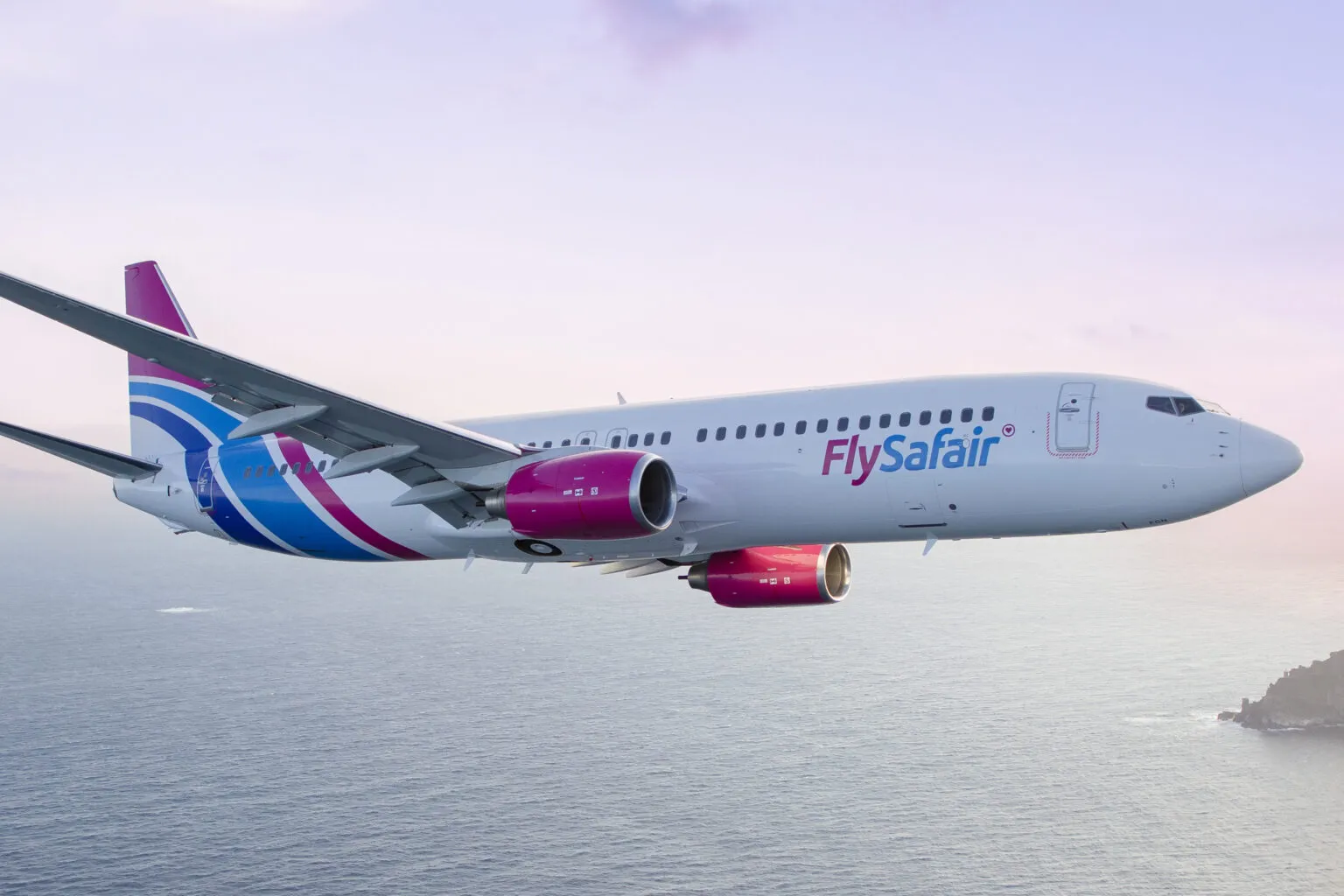
Pan-African infrastructure investor Harith General Partners has entered into a sale and purchase agreement to acquire FlySafair, South Africa’s largest domestic airline, in a transaction that marks a pivotal moment for the country’s aviation sector. The deal, announced on February 10, 2026, represents Harith’s second attempt to secure an airline asset after its high-profile bid to acquire state-owned South African Airways collapsed in 2024.
The acquisition will see Harith, which manages approximately $3 billion in assets under management and focuses on infrastructure investments across Africa, take full ownership of the budget carrier through a special purpose vehicle called Harith Aviation. While financial terms were not disclosed, Chairman Tshepo Mahloele indicated that the investment will represent about 15% of Harith’s overall portfolio and will be financed through a mix of equity and debt.
The transaction remains subject to regulatory approvals, including clearance from the Competition Commission and relevant aviation licensing authorities. According to Mahloele, the deal is expected to conclude by the fourth quarter of 2026, with parties continuing to engage constructively with the relevant authorities as part of normal oversight applicable to licensed airlines.
Build the future you deserve. Get started with our top-tier Online courses: ACCA, HESI A2, ATI TEAS 7, HESI EXIT, NCLEX-RN, NCLEX-PN, and Financial Literacy. Let Serrari Ed guide your path to success. Enroll today.
Resolving Years of Regulatory Pressure
The acquisition is expected to help address long-standing regulatory pressure on FlySafair to comply with South African ownership rules. The airline, which controls more than 60% of domestic seat capacity, has been at the center of an ownership dispute that threatened its operating license and cast uncertainty over the country’s aviation market.
The controversy stems from South Africa’s Air Services Act, which requires domestic airlines to retain at least 75% local ownership, while the International Air Services Act requires a “substantial” local shareholding for international operations. However, regulators determined that Irish-based ASL Aviation Holdings effectively held a 74.86% stake in FlySafair through a complex corporate structure involving trusts and corporate entities rather than individual citizens.
When ASL Aviation Holdings first established FlySafair in 2014, it set up a shareholding structure whereby 25% remained in its direct possession while the remaining 75% was held locally through two other shareholders: the Safair Investment Trust, holding about 50% ownership, and an employee share scheme holding 25%. However, following formal complaints lodged by competitors Airlink and Global Aviation (operator of LIFT) in 2022, regulators ruled that the trust structure did not meet requirements around voting rights being held by resident citizens.
In late 2024, the International Air Services Licensing Council warned FlySafair of potential sanctions, including license suspension or cancellation. The airline was given 12 months to resolve the issue—a deadline that had been looming over the carrier’s operations. FlySafair filed an urgent interdict against the ruling and won a court suspension of the February 2026 deadline in October 2025, when the Gauteng High Court in Pretoria set aside an Air Services Licensing Council order pending judicial review.
According to FlySafair Chief Marketing Officer Kirby Gordon, the transaction with Harith “could assist with the licensing challenges,” though the airline would still need to follow due process with regulatory authorities.
The Rise of a Market Dominant Player
FlySafair’s journey to market dominance has been remarkable. Since bursting onto the scene in October 2014 with only two aircraft operating between Johannesburg and Cape Town, the low-cost carrier has grown to operate more than 30 aircraft and now commands an estimated 67% of available seat capacity among all domestic carriers in South Africa.
The airline’s dramatic market share expansion accelerated following the collapse of Comair Limited in June 2022. Comair, which operated both the Kulula.com budget brand and British Airways flights under franchise, had held approximately 40% of South Africa’s domestic seat capacity before its liquidation. The carrier’s demise, caused by a combination of pandemic-related financial pressures and a controversial grounding by aviation authorities over unproven safety concerns, removed roughly 12 British Airways and 10 Kulula aircraft from the market.
FlySafair’s pre-pandemic market share stood at approximately 25%, but following Comair’s collapse, the airline rapidly scaled up operations to fill the capacity gap. According to industry data, FlySafair now operates up to 160 flights daily, serving approximately 130,000 passengers daily across its domestic and regional network.
The airline currently operates nine domestic routes and has been expanding its regional footprint with services to destinations including Mauritius, Zanzibar, Harare, Victoria Falls, and Windhoek. According to Gordon, the airline’s regional expansion commenced shortly after the COVID-19 pandemic and “while small relative to the South African domestic market, forms an important part of the airline’s long-term expansion plans.”
The carrier operates an all-Boeing 737 fleet configured in an all-economy layout, with the 737-800 variant forming the backbone of operations. FlySafair is notably the only commercial airline operating scheduled passenger flights from Lanseria Airport, Johannesburg’s secondary international airport, which is also part of Harith’s investment portfolio.
Harith’s Aviation Ambitions Realized
For Harith General Partners, the FlySafair acquisition represents the fulfillment of a long-held ambition to own an airline, following the collapse of its attempt to acquire South African Airways.
In June 2021, the South African government selected the Takatso Consortium—comprising Harith General Partners and aviation group Global Aviation—to acquire a 51% stake in the state-owned carrier for a nominal R51 (approximately $3), with the government retaining 49%. The proposed transaction was supported by then-Public Enterprises Minister Pravin Gordhan, who characterized the airline as a long-standing burden on public finances that had received several government bailouts before entering bankruptcy proceedings in 2019.
However, the SAA deal became mired in controversy and political storms, ultimately collapsing in 2024 when the private equity firm walked away from the transaction. According to Mahloele, the breakdown stemmed from fundamental disagreements: “There were issues on control and pricing in the end and we had to move on, but our ambitions to add an airline onto our transport sector continued.”
Following the SAA deal’s collapse, Harith immediately began searching for alternative airline acquisition opportunities. The firm also considered acquiring a stake in Comair before that carrier’s liquidation in 2022, according to Mahloele, who noted: “In the end, the FlySafair opportunity has been the best proposition so far. There is a great management team and it holds significant market share.”
Strategic Fit Within Harith’s Infrastructure Portfolio
Founded in 2006, Harith marks its twentieth year as an established long-term investor in strategic infrastructure across Africa, with a focus on energy, connectivity, transportation, and logistics. The firm describes itself as “a pioneer in mobilising capital for infrastructure developments across Africa,” and the FlySafair acquisition aligns squarely with its strategy of strengthening an integrated transport ecosystem that connects African markets.
Harith’s existing transport and logistics portfolio includes significant holdings that create natural synergies with airline operations. The firm owns a stake in Lanseria International Airport, located northwest of Johannesburg, and holds an investment in Traxtion, described as Africa’s largest private rail operator. By adding FlySafair to this portfolio, Harith aims to create connectivity across multiple transport modes—airports, rail, and airlines—into an integrated network.
According to Chebet Chikumbu, Harith’s managing director for Growth and Strategy, the firm’s approach to the FlySafair acquisition reflects its “value-focused, long-term investment” philosophy. Speaking to reporters, Chikumbu emphasized: “The vision, again, is as a value investor looking at an investment in the airline over a long period of time. There’s no sort of revolution anticipated. So there’s capital available to do what needs to be done to run the airline and to take advantage of opportunities as and where they exist within the limits of the model.”
The transaction follows what Harith describes as a “long-standing shareholder exit process” at FlySafair that has been under consideration for several years. The deal will see current owners, including Ireland-based ASL Aviation Holdings, exit the business entirely.
Continuity and Growth Plans
A critical element of the transaction is Harith’s commitment to operational continuity. Both parties have emphasized that FlySafair will continue to operate under its existing brand, leadership, and strategy, with the current management team remaining in place.
“Consistent with Harith’s value-focused, long-term investment approach, the intention is to support FlySafair as a disciplined and successful business, maintaining continuity under its existing leadership and further bolstering Harith’s strategy to secure an integrated transport network,” the company stated in its official announcement.
FlySafair’s management, which has successfully built the airline into a dominant player over 12 years, will stay in position under Harith Aviation ownership. According to Gordon, the proposed investment is “aligned with FlySafair’s existing trajectory and supports the airline’s continued focus on operational excellence and sustainable growth.”
For passengers and employees, FlySafair has reassured stakeholders that it remains “business as usual” during the regulatory approval process, with flight operations continuing normally.
One decision can change your entire career. Take that step with our Online courses in ACCA, HESI A2, ATI TEAS 7, HESI EXIT, NCLEX-RN, NCLEX-PN, and Financial Literacy. Join Serrari Ed and start building your brighter future today.
Market Impact and Competitive Landscape
The acquisition comes at a pivotal moment for South African aviation. The sector has undergone significant consolidation in recent years, with the collapses of Comair, state-owned Mango Airlines, and the downsizing of South African Airways creating both challenges and opportunities for remaining carriers.
South Africa’s domestic aviation market currently features five key players: FlySafair, Airlink, South African Airways, LIFT, and CemAir. However, FlySafair’s 60% market share dwarfs its competitors—a concentration higher than even the peak held by Comair before its collapse.
The airline’s dominant position has raised questions about market concentration and competitive dynamics. According to a report in The Citizen newspaper, the Harith deal could potentially give the firm indirect influence over 76% of the domestic aviation market when considering FlySafair’s 60% share plus potential connections to South African Airways through government relationships, though this assessment remains speculative.
Other major carriers have carved out distinct competitive positions. Airlink, while holding the largest fleet in South Africa with 64 aircraft, focuses more on regional connectivity, serving 17 domestic and 33 international destinations across Africa. Qatar Airways acquired a 25% stake in Airlink in 2024, providing the carrier with strategic backing for expansion.
South African Airways, meanwhile, has shown signs of recovery after emerging from business rescue proceedings. The national carrier recently posted revenue of R8.8 billion for the 2024/2025 financial year, increased from R6.5 billion in the previous period, and returned to profitability. However, SAA operates just eight aircraft compared to 28 in 2019 and serves only three domestic routes, representing a shadow of its former scale.
Pricing Implications and Passenger Impact
The potential grounding of FlySafair due to ownership issues would have had catastrophic implications for South African travelers. Aviation experts warned that removing the carrier’s substantial capacity would immediately constrain the market and cause flight prices to spike to levels not seen even after Comair’s collapse.
Flight prices in South Africa have already risen significantly in recent years due to reduced capacity following airline collapses. The loss of Comair wiped out roughly 40% of domestic seat capacity, causing ticket costs to soar as remaining carriers struggled to meet demand with limited fleets.
FlySafair’s business model as a low-cost carrier has been instrumental in keeping air travel accessible for millions of South Africans. The airline’s focus on operational efficiency, simple fleet configuration, and high aircraft utilization rates has allowed it to maintain competitive pricing even as fuel costs and operational expenses have increased.
Gordon noted that while fuel costs remain a concern for the industry, the airline’s fundamental challenge is economic growth: “Similarly we need to see the South African economy grow so that we can get customers—both in terms of individuals with disposable income to fly and businesses that need to travel to do business. Ours is a business that is generally very deeply impacted by domestic and global economic shifts, but which ultimately needs to be able to survive and even thrive in spite of them.”
Regulatory Path Forward
The transaction now enters a crucial regulatory review phase that will determine its ultimate success. The Competition Commission must evaluate whether the acquisition raises anti-competitive concerns, given FlySafair’s dominant market position and Harith’s existing infrastructure holdings, including Lanseria Airport.
Additionally, both the Air Services Licensing Council (ASLC), which regulates domestic air services, and the International Air Services Licensing Council (IASLC), which oversees international operations, must review and approve the transaction as part of standard aviation oversight processes.
The regulatory timeline is uncertain, though Mahloele has indicated the deal should conclude by the fourth quarter of 2026 if approvals proceed as anticipated. According to FlySafair, the parties have already begun engaging constructively with regulatory authorities.
For the ownership compliance issue specifically, Harith’s acquisition should provide a clear resolution. By bringing FlySafair under full local ownership through a South African Black-empowerment investment firm, the transaction addresses the fundamental regulatory concern about foreign control. This should remove the legal challenges and uncertainty that have plagued the airline’s operations for the past several years.
However, aviation analyst Guy Leitch has warned that the stringent interpretation of ownership laws by regulators—requiring individual natural persons rather than corporate entities to hold voting rights—could have “devastating consequences” for the broader South African airline industry if strictly applied across all carriers.
Implications for African Aviation Investment
The Harith-FlySafair transaction signals growing interest from African infrastructure investors in aviation assets that can generate steady cash flow. Budget airlines, with their high aircraft utilization rates, simple fleet configurations, and strong domestic demand, represent attractive investment opportunities even in slow-growth economies.
For Harith, the deal fits a broader strategic vision of creating an integrated transport network spanning airports, rail, and air services. By controlling multiple nodes in the transportation value chain, the firm can potentially optimize connections, improve operational efficiency, and create synergies across its portfolio companies.
The transaction also demonstrates that private capital is stepping in where state-led airline strategies have struggled. After decades in which state-owned carriers like SAA enjoyed privileged positions, South African aviation is entering what industry commentators describe as an era of more level competitive playing fields, with private operators driving growth and efficiency.
ASL Aviation Holdings’ exit from FlySafair marks the end of a contentious chapter in the airline’s history. ASL Group Chief Executive Dave Andrew stated: “ASL Aviation Holdings is proud to have supported the growth of a fledgling airline to become a leader in African aviation, opening air travel to millions of South Africans for the first time.”
Long-Term Strategic Vision
Looking ahead, Harith has articulated an ambitious vision for FlySafair’s role within its broader African infrastructure strategy. The firm aims to leverage its existing investments across the continent to create connectivity advantages for the airline.
According to Mahloele, “South Africa is FlySafair’s stronghold and important to their strategy, and we believe their model can also be competitive regionally.” This suggests potential for expanded cross-border operations, building on the airline’s existing regional routes to neighboring countries.
The investment also aligns with Harith’s mandate as a bridge between long-term institutional capital and Africa’s critical infrastructure needs. Chikumbu emphasized the firm’s collaborative approach: “We don’t do it alone. We do it alongside partners and institutional investors. And obviously, all of that is governed by risk controls and independent committees that ensure fiduciary standards and controls are adhered to.”
For South African travelers, the hope is that Harith’s patient capital approach and commitment to operational continuity will ensure FlySafair continues providing affordable, reliable air service while resolving the regulatory uncertainties that have threatened its operations. The airline’s strong operational performance record—including ranking as the second most punctual airline globally in the Official Aviation Guide’s 2023 Punctuality League—provides a solid foundation for future growth under new ownership.
Conclusion: A New Chapter in South African Aviation
The Harith General Partners acquisition of FlySafair represents far more than a simple change in ownership. It resolves a multi-year regulatory saga that threatened to ground South Africa’s largest airline, provides a clear path forward for local compliance, and integrates the carrier into a broader pan-African infrastructure portfolio with significant growth potential.
For Harith, the transaction fulfills its aviation investment ambitions after the SAA disappointment, adding a profitable, well-managed airline to complement its airport and rail holdings. For FlySafair, the deal provides regulatory clarity, access to patient capital, and continuity for the management team that built a dominant market position through operational excellence.
For the South African aviation market, the outcome depends on how effectively regulators balance concerns about market concentration with the need for financially stable carriers that can provide reliable, affordable service. The transaction demonstrates that private infrastructure investors see value in African aviation assets, potentially opening the door to additional private capital flowing into a sector that has historically depended heavily on state support.
As the transaction moves through the regulatory approval process over the coming months, industry stakeholders will watch closely to see whether this deal marks a turning point toward greater stability and private-sector leadership in South African aviation—or whether concerns about market dominance and competitive dynamics will complicate the path forward.
What remains clear is that with Harith’s deep pockets, long-term investment horizon, and strategic vision for integrated transport infrastructure, FlySafair is positioned to play a central role in shaping the future of air travel in South Africa and potentially across the broader African continent for years to come.
Ready to take your career to the next level? Join our Online courses: ACCA, HESI A2, ATI TEAS 7 , HESI EXIT , NCLEX – RN and NCLEX – PN, Financial Literacy!🌟 Dive into a world of opportunities and empower yourself for success. Explore more at Serrari Ed and start your exciting journey today! ✨
Track GDP, Inflation and Central Bank rates for top African markets with Serrari’s comparator tool.
See today’s Treasury bonds and Money market funds movement across financial service providers in Kenya, using Serrari’s comparator tools.
photo source: Google
By: Montel Kamau
Serrari Financial Analyst
11th February, 2026